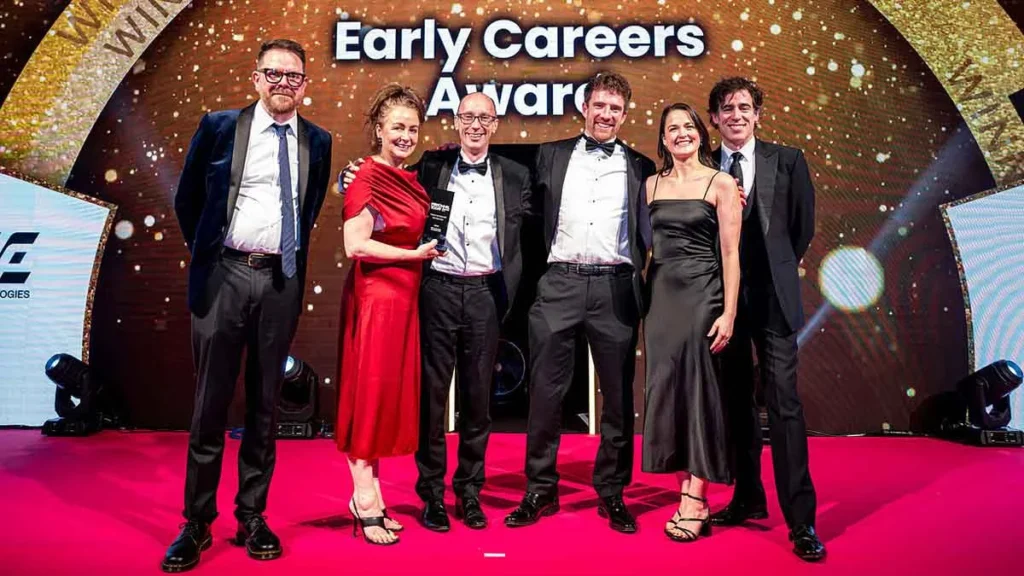
In a dynamic and increasingly challenging labour market, the cultivation of early career talent has emerged as a paramount strategic imperative for organisations across the United Kingdom. With a backdrop of persistent skills shortages, an ageing workforce, and the concerning rise in the number of young people not in education, employment, or training (NEETs), providing robust first steps onto the career ladder through comprehensive early careers hiring and learning programmes is more critically important than ever. The Personnel Today Awards 2026, a prestigious event recognising excellence in human resources, will once again shine a light on the companies leading this charge, with a particularly competitive shortlist for the Early Careers Award. This accolade celebrates organisations that are not only addressing their immediate talent needs but are also actively shaping the future workforce, fostering diversity, and promoting social mobility.
The Urgent Need for Early Career Development in the UK
The UK labour market currently navigates a complex interplay of factors that underscore the critical role of early career programmes. Official statistics from the Office for National Statistics (ONS) consistently highlight a proportion of young people (aged 16-24) who are NEETs, often hovering between 11-13% in recent quarters. This demographic represents a significant untapped talent pool and a societal challenge, with long-term implications for individual prospects and national productivity. Simultaneously, many sectors face acute skills gaps, from STEM fields and healthcare to engineering and digital roles, exacerbated by an impending wave of retirements from an ageing workforce. The economic landscape, marked by inflationary pressures and a cost-of-living crisis, further intensifies the need for accessible, well-structured pathways into stable employment for young people.
Against this backdrop, the Personnel Today Awards’ focus on Early Careers is not merely an acknowledgement of good practice but a vital platform for showcasing models that can be scaled and replicated across industries. The shortlisted organisations demonstrate innovative approaches to attraction, recruitment, development, and retention, all designed to build sustainable talent pipelines and foster inclusive workplaces. These efforts are crucial for the UK’s long-term economic resilience and social cohesion.
Personnel Today Awards: A Beacon of HR Excellence
The Personnel Today Awards have long been a benchmark for excellence in human resources, celebrating the strategic impact of HR professionals and teams across various categories. Established decades ago, the awards recognise innovation, best practice, and outstanding achievements that drive business success and enhance employee experience. The Early Careers Award, in particular, has gained prominence as organisations increasingly realise that investing in the next generation of talent is not just a moral obligation but a strategic business imperative. It acknowledges the foresight and commitment required to build diverse, skilled, and adaptable workforces from the ground up, moving beyond traditional recruitment methods to embrace holistic development. The 2026 iteration promises to highlight cutting-edge strategies that redefine how companies engage with and nurture emerging talent.
Spotlight on the Shortlisted Innovators for the Early Careers Award 2026
The following organisations have distinguished themselves through their exemplary early careers initiatives, each tackling unique challenges within their respective sectors with remarkable success.
AWE in Partnership with Spotted Zebra: Revolutionising STEM Recruitment with AI
Atomic Weapons Establishment (AWE), a global scientific and engineering organisation with a critical national security mission, returns to the shortlist after winning last year. Partnering again with Spotted Zebra, AWE has demonstrated an impressive commitment to building a visible, multi-channel employer brand and achieving ambitious female hiring targets. Each year, AWE recruits between 400-500 early careers candidates across more than 50 specialist roles, including apprentices, graduates, and STEM placements, drawing from a vast national talent pool comprising tens of thousands of applications.
AWE’s primary hiring challenges revolved around the quality of hiring decisions and the sheer capacity required to process such high volumes. Their renewed partnership with Spotted Zebra leveraged advanced AI tools to transform their recruitment process. These tools converted thousands of CVs into ranked shortlists, simultaneously screened hundreds of candidates, facilitated faster assessments, and enabled stronger, more objective interview decisions. Crucially, every candidate was assessed against a specific skills profile for their target role, ensuring a precise match. The impact has been profound: AWE reported a dramatic reduction in first-year attrition rates and a halving of offer rejection rates, while processing capacity has grown exponentially. This innovative application of AI showcases how technology can enhance both efficiency and fairness in high-volume, highly specialised recruitment, addressing the STEM skills gap with data-driven precision.
Frimley Health NHS Foundation Trust: Widening Access to Healthcare Careers
Frimley Health NHS Foundation Trust (FHFT), employing over 11,500 colleagues across various hospital and community services, serves approximately 900,000 people across Berkshire, Hampshire, Surrey, and South Buckinghamshire. The Trust faced significant workforce challenges driven by an ageing population, escalating service demand, and national skills shortages within the NHS. Traditional recruitment approaches, which often prioritised formal qualifications and prior NHS experience, inadvertently excluded a diverse pool of potential candidates, thereby limiting access and workforce supply. Recognising the urgency highlighted by the NHS Long-Term Workforce Plan to expand domestic workforce pipelines through apprenticeships and early careers pathways, FHFT embarked on a transformative journey.
The Trust strategically set out to dismantle barriers, broaden participation, cultivate a sustainable talent workforce, improve diversity, enhance retention, and establish clear progression routes into professional roles. These ambitious objectives are deeply embedded within FHFT’s overarching people plan, which unequivocally prioritises early careers as a critical enabler of organisational success and the delivery of high-quality patient care. Collaborating closely with its HR, workforce, and resourcing teams, FHFT fundamentally redesigned its recruitment methodology, shifting focus from traditional qualifications to assessing potential, aligning with values, and identifying aspiration.

Key innovations included the elimination of unnecessary entry requirements, such as GCSEs and prior experience, and the replacement of formal applications with informal, values-based interviews conducted at community outreach events. By actively partnering with schools, colleges, and local authorities, the Trust significantly expanded its reach to under-represented groups and delivered targeted outreach in communities historically showing low NHS representation. Furthermore, through a strategic collaboration with the Department for Work and Pensions (DWP), FHFT successfully launched the ‘New to Care Programme,’ providing a clear and accessible entry point into healthcare for many previously excluded individuals. This holistic approach has not only opened pathways for those who traditionally struggled to access NHS roles, directly fostering social mobility and inclusion, but has also ensured that its apprenticeship programme is meticulously aligned with current workforce requirements, guaranteeing that training directly addresses critical business needs. Through a combination of innovation and robust leadership, Frimley Health NHS Foundation Trust has effectively addressed its specific workforce challenges while simultaneously establishing a new benchmark for impactful early careers programmes within the wider NHS, demonstrating a profound commitment to building a diverse and resilient healthcare workforce.
Howden Group Holdings: Building Fairness and Diversity in Insurance
Howden Group Holdings, a prominent employee-owned insurance intermediary, champions the empowerment of its people to drive change across retail, speciality, wholesale, underwriting, reinsurance, and capital markets. Howden identified that a significant barrier to employment was often not a lack of ability, but the recruitment process itself. Their existing campaigns tended to be reactive, lacking a long-term strategic focus, and the company sought to significantly increase the diversity of its candidate pool.
In response, Howden implemented a skills-based approach, meticulously embedding fairness into every stage of the process. They proactively engaged with 385 schools, prioritising those in communities with high pupil-premium rates, and directly interacted with over 1,000 students. Crucially, they extended their engagement to parents and carers through informative webinars, addressing common concerns surrounding apprenticeship routes and career pathways. A digital-first engagement strategy, utilising platforms like TikTok, provided transparent advice on application procedures and what candidates could expect, demystifying the recruitment journey.
During the assessment process, Howden systematically removed common barriers: travel costs for in-person stages were paid upfront, and the assessment environment was designed to be supportive rather than high-pressure. This included the deliberate omission of CV requests to mitigate unconscious bias, the use of gamified assessments via Willo, and strengths-based assessments facilitated by Arctic Shores. Candidates were invited to an immersive office day, participating in engaging activities that offered insights into the company culture while providing an informal assessment opportunity.
Upon receiving an offer, successful candidates benefit from comprehensive pre-joining activities, opportunities to connect with future peers, and a detailed briefing call from the early careers team. Line managers undergo specialised ‘student to professional’ training, equipping them to effectively support new starters transitioning into early career roles. Feedback is consistently provided at every stage of the hiring process. These initiatives have led to exceptional levels of candidate satisfaction and a significant increase in the diversity of applicants, showcasing Howden’s commitment to building a truly inclusive workforce within the financial services sector.
Lumo: Cultivating Rail Talent Through Apprenticeships
Lumo, an innovative ‘open access’ rail operator providing services on the East and West Coasts of the UK, has firmly established its commitment to early careers as a cornerstone of its success. Throughout the past year, Lumo not only expanded its services, including the launch of the West Coast route, but also maintained excellent scores for customer satisfaction and trust. The company attributes much of this growth and operational excellence to its robust apprenticeship programme, which has enabled scalable expansion without compromising the critical quality, safety, or capability of its services.
A substantial percentage of Lumo’s current workforce are graduates of their comprehensive apprenticeship programme, which integrates both rigorous theoretical and practical training and assessments. This is complemented by invaluable on-the-job learning from Lumo’s experienced team. The programme ensures that virtually every role is filled by dedicated professionals who possess a deep understanding of the paramount importance of safety in rail environments and are fully immersed in Lumo’s distinctive customer-first culture.
Recognising that developing an exceptional workforce specifically tailored to its unique operations would necessitate significant investment in talent training and development, Lumo strategically partnered with Train’d Up. This provider boasts extensive experience in delivering rail industry apprenticeships and support, aligning perfectly with Lumo’s objective to offer early career opportunities and attract individuals genuinely passionate about the rail industry and dedicated to assisting customers on their journeys. As ardent advocates of continuous learning and personal development, Lumo has successfully recruited individuals from diverse backgrounds, many with minimal prior knowledge of working within the rail sector, and has transformed them into industry exemplars. The commitment to training extends beyond the completion of apprenticeships, as Lumo actively encourages employees to continuously build their qualifications and experience, fostering a culture of lifelong learning and professional growth within a vital national industry.
Morrisons: Developing Future Leaders in Retail and Manufacturing
Morrisons, a national supermarket chain, operates at a scale where capability gaps directly impact business performance. In a typical recruitment cycle, Morrisons manages significant volumes of graduate registrations, applications, and degree apprenticeship applications. Alongside this complexity, the company identified a specific challenge in attracting candidates into operational and manufacturing roles, which are often underrepresented or misunderstood within the wider career landscape. This posed a risk of limiting access to key career pathways and reducing diversity within the talent pipeline. Morrisons also recognised the imperative to enhance accessibility and reduce barriers to entry, as candidate insights revealed friction at key stages of the recruitment process. Concurrently, their early careers strategy needed to achieve beyond immediate hires, aiming to build future leadership capability for the long term.
To attract untapped talent, efficiently manage high volumes, and deliver consistent, long-term development outcomes aligned with business needs, Morrisons developed a comprehensive early careers ecosystem. This ecosystem comprises graduate schemes, degree apprenticeships, industrial placements, and summer internships, collectively creating multiple accessible entry points into the business. Their targeted approach has significantly strengthened both reach and diversity, evidenced by a high proportion of applicants from ethnically diverse backgrounds and a majority of offers extended to female candidates. The strategic use of an AI-enabled WhatsApp assistant proved instrumental in supporting numerous candidate conversations and improving progression rates through the recruitment funnel.
Overall, Morrisons’ meticulously crafted early careers strategy has delivered substantial value at every level. It has created accessible and meaningful opportunities for individuals, while simultaneously building a diverse, highly capable, and future-ready workforce essential for sustaining performance and innovation within the competitive retail and manufacturing sectors.
Network Rail in Partnership with Parallel Project Training: Engineering the Future of UK Infrastructure

Network Rail, the custodian of one of the UK’s most complex infrastructure systems, faces a critical need to secure a robust pipeline of project professionals. These professionals are essential for leading increasingly intricate projects within a highly regulated operational environment, necessary to meet future investment and delivery demands. With approximately one-third of the rail workforce aged over 50, there is an urgent imperative to attract, develop, and retain the next generation of talent. Network Rail also grappled with the challenge of attracting diverse candidates who might not traditionally consider a career in the rail industry. The overarching goal was not merely to recruit graduates, but to forge an innovative early careers programme that would rapidly cultivate confident project professionals capable of making significant contributions to business performance and progressing into future leadership roles.
Network Rail’s project management graduate scheme is a meticulously designed two-year programme that seamlessly integrates inclusive recruitment, structured learning, practical experience, and professional development. An ‘inclusive by design’ recruitment approach focuses intently on identifying future potential, widening participation, and attracting candidates from a broad spectrum of backgrounds. To reach untapped talent pools, Network Rail implemented school outreach programmes, internships, and targeted attraction activities, including engagement with non-traditional universities. Applicants receive comprehensive support throughout the recruitment process, with reasonable adjustments readily available at every stage. Crucially, Network Rail guarantees progression to the next stage for applicants with disabilities or long-term conditions who meet the essential criteria, underscoring its commitment to true inclusivity.
In a strategic move, Network Rail partnered with Parallel Project Training to create a bespoke 15-week project management development programme, fully embedded within the graduate scheme. This programme ingeniously integrates a professional qualification, real-world workplace experience, and leadership development into a single, structured learning journey. Graduates acquire project management theory, immediately apply it within live rail projects, and reinforce their learning through practical application modules. This holistic approach has enabled Network Rail to construct a sustainable talent pipeline, fully capable of supporting future project delivery requirements and proactively addressing long-term succession planning challenges. The programme stands as a testament to its commitment to securing the future capability of both Network Rail and the wider UK rail industry.
ScottishPower: Powering the Green Energy Transition
ScottishPower, an integral part of the Iberdrola Group—one of the world’s largest integrated utility companies and a global leader in wind energy—has strategically shaped its early careers strategy around a clear and compelling business reality. The ambitious transition to a low-carbon economy necessitates a workforce equipped with new, continuously evolving, and often scarce skillsets. This imperative defines ScottishPower’s approach to talent development.
While ScottishPower’s ambition is distinctly long-term, the company faced immediate challenges that demanded a specific and integrated approach: one that seamlessly connects attraction, selection, and development into a single, scalable system meticulously aligned to its core business needs. The overarching goal was to attract untapped talent, effectively integrate them into the organisation, and empower them to grow into critical roles over time, particularly those vital for the green energy sector.
Their innovative solution involved building a fully integrated early careers ecosystem, specifically designed to create multiple, accessible entry points into ScottishPower and to establish clear pathways for progression into long-term careers. This comprehensive ecosystem includes a diverse range of programmes such as apprenticeships, pre-apprenticeships, placements, scholarships, and graduate roles, ensuring a broad appeal and diverse intake. The measurable impact of ScottishPower’s early careers strategy is evident across several key performance indicators: enhanced attraction rates, increased diversity within its talent pool, robust capability development tailored to future energy demands, and ultimately, a significant contribution to long-term organisational performance in the rapidly evolving renewable energy landscape.
Overarching Themes and Strategic Imperatives from the Shortlist
The impressive initiatives showcased by the Personnel Today Awards 2026 Early Careers shortlist highlight several critical trends shaping modern talent acquisition and development:
- The Rise of Skills-Based Hiring: A clear departure from over-reliance on traditional qualifications, prioritising potential, values, and demonstrable skills. This approach significantly broadens talent pools and enhances diversity.
- Leveraging Technology and AI: Advanced AI tools are being strategically deployed for efficient screening, unbiased assessment, and improved candidate engagement, allowing organisations to manage high volumes while enhancing decision quality.
- Proactive Diversity and Inclusion: Companies are making concerted efforts to reach under-represented groups through community outreach, partnerships with non-traditional educational institutions, and inclusive recruitment practices (e.g., guaranteed interviews for disabled applicants).
- Integrated Development Pathways: The focus extends beyond initial recruitment to structured, long-term development programmes, apprenticeships, and mentorship, ensuring new talent is nurtured into future leaders.
- Strategic Partnerships: Collaborations with specialist training providers (Spotted Zebra, Parallel Project Training, Train’d Up), government departments (DWP), schools, and colleges are crucial for enhancing reach, expertise, and programme efficacy.
- Addressing Sector-Specific Challenges: Each shortlisted organisation demonstrates a deep understanding of its industry’s unique talent needs, from STEM skills in national security to healthcare workforce demands, rail infrastructure specialists, green energy engineers, and diverse retail roles.
Broader Impact and Future Outlook
The work of these shortlisted organisations has implications far beyond their individual businesses. By investing in early careers, they are contributing significantly to social mobility, offering opportunities to individuals who might otherwise face barriers to entry. They are actively combating the NEETs challenge, integrating young people into productive roles, and equipping them with essential skills for the future. Furthermore, these programmes are building resilient, adaptable workforces capable of navigating technological advancements, demographic shifts, and evolving economic landscapes.
For the wider HR community, these case studies provide invaluable blueprints for effective early career strategies. They underscore that successful talent acquisition in the 21st century requires innovation, empathy, strategic foresight, and a willingness to challenge conventional recruitment wisdom. As the UK continues to grapple with economic uncertainty and a competitive global talent market, the lessons learned from these pioneers will be instrumental in shaping the workforce of tomorrow.
The Personnel Today Awards 2026 will undoubtedly be a celebration of these achievements, recognising the vital role HR plays in building a prosperous and inclusive future. The exemplary work of the Early Careers Award shortlisted companies offers a compelling vision for how organisations can proactively address current labour market challenges and cultivate the talent required for sustained success.
Organisations and professionals interested in celebrating these achievements and networking with industry leaders are encouraged to book their tables for the 2026 Personnel Today Awards.