
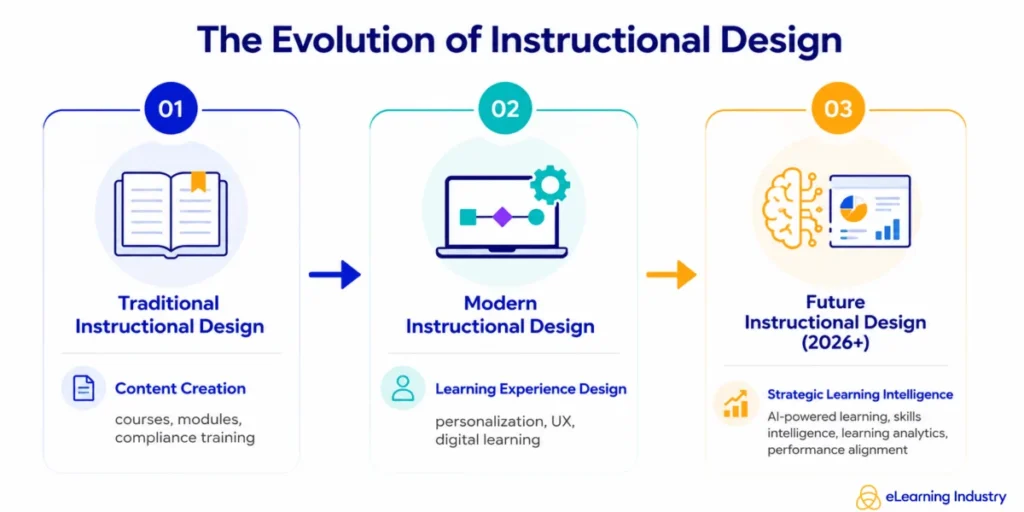
The field of Instructional Design is undergoing a fundamental metamorphosis, transitioning from a back-office content creation role to a frontline strategic business function. In the current corporate landscape, learning and development (L&D) is no longer viewed as a discretionary expense or a simple "check-the-box" compliance activity. Instead, it has emerged as the primary engine for organizational growth, performance optimization, and workforce resilience. As organizations navigate a volatile global economy and the rapid advancement of technology, the traditional models of Instructional Design (ID) are being replaced by sophisticated, data-driven systems designed to deliver measurable business results.
The Strategic Pivot: From Content Creation to Performance Engineering
The contemporary state of Instructional Design is characterized by a shift in focus from "outputs" to "outcomes." For decades, the success of an Instructional Designer was measured by the number of courses produced or the completion rates of specific modules. However, the modern era demands a focus on performance engineering. Today’s L&D leaders are increasingly concerned with how learning interventions solve specific business problems, such as reducing time-to-productivity for new hires, increasing sales conversion rates, or closing critical technical skill gaps.
This shift is driven by the realization that content alone does not change behavior. The modern Instructional Designer must understand the nuances of learning science, behavioral economics, and data analytics to create environments where learning is both effective and sustainable. This has led to the rise of "Learning Experience Engineering," a discipline that blends traditional ID principles with user experience (UX) design and data science.
A Chronology of Change: The Path to the New Era
To understand the current state of Instructional Design, it is essential to trace its evolution through several distinct technological and pedagogical phases:
- The Foundation (1940s – 1960s): Rooted in military training during World War II, the field focused on systematic training and behaviorism. The development of the ADDIE model (Analysis, Design, Development, Implementation, Evaluation) provided a structured framework that remains a cornerstone of the industry.
- The Digital Dawn (1990s – 2000s): The rise of the internet introduced "eLearning." Early efforts were often "page-turners"—digital versions of textbooks—but they established the foundation for Learning Management Systems (LMS) and standardized content via SCORM.
- The Social and Mobile Era (2010s): The proliferation of smartphones and social media shifted the focus toward microlearning and social learning. The 70-20-10 model—which suggests 70% of learning happens through experience, 20% through others, and 10% through formal coursework—gained mainstream adoption.
- The Intelligence Era (2020s – Present): The current phase is defined by the integration of Artificial Intelligence (AI), big data, and immersive technologies. Learning is now personalized, adaptive, and integrated directly into the workflow.
Supporting Data: The Economic and Functional Drivers
Recent industry data underscores the urgency of this evolution. According to the 2024 LinkedIn Workplace Learning Report, 72% of L&D leaders agree that learning and development has become a more strategic function within their organizations. Furthermore, the report highlights that "aligning learning programs to business goals" is the top priority for L&D professionals globally.
The demand for these changes is also reflected in the "half-life" of skills. Research from the World Economic Forum suggests that the average half-life of a learned skill is now approximately five years, and even shorter in technical fields. This reality necessitates a shift from one-time training events to continuous, skills-based learning ecosystems. Organizations are no longer looking for "full-stack" employees but rather "ever-learning" employees who can pivot as market demands change.
Five Defining Trends Shaping Instructional Design in 2026
As we look toward 2026, five key trends are redefining the boundaries of what is possible in Instructional Design.
1. AI-Augmented Design and Hyper-Automation
The integration of Artificial Intelligence is the most significant disruptor in the history of the field. AI is not replacing the Instructional Designer; rather, it is augmenting their capabilities. Generative AI tools are being used to automate the "heavy lifting" of content creation, such as drafting learning objectives, generating assessment questions, and creating initial storyboards. This allows designers to focus on high-level strategy and complex experience design. Beyond content generation, AI-driven predictive analytics help designers identify which learners are at risk of failing or where content is failing to resonate, allowing for real-time adjustments.
2. The Move Toward Skills-Based Learning Architectures
Organizations are moving away from traditional "job titles" toward "skill sets." Instructional Designers are now tasked with mapping learning content to specific competencies and skills. This requires a deep integration between L&D and Human Resources, utilizing "skills taxonomies" to ensure that every minute of training contributes to a verifiable skill that the business requires. This trend is supported by the rise of digital badges and micro-credentials, which provide a tangible way for employees to demonstrate their growth.
3. Hyper-Personalization Through Adaptive Learning
The "one-size-fits-all" approach to training is officially obsolete. Leveraging data from Learning Record Stores (LRS), modern systems can provide hyper-personalized learning paths. If an employee demonstrates mastery of a concept during an initial assessment, the system automatically skips the introductory material, focusing instead on advanced applications. This level of personalization respects the learner’s time and significantly increases engagement by ensuring the content is always relevant to the individual’s current level of expertise.

4. Immersive Learning and Cognitive Simulations
Virtual Reality (VR) and Augmented Reality (AR) have moved beyond the "hype" phase and are now practical tools for high-stakes training. In fields such as healthcare, aviation, and manufacturing, immersive simulations allow learners to practice complex procedures in a zero-risk environment. These technologies leverage the "embodied cognition" theory, which suggests that we learn better when our bodies are involved in the process. By simulating real-world pressure and environments, Instructional Designers can build "muscle memory" and decision-making skills that traditional video or text-based training cannot replicate.
5. Learning in the Flow of Work
Perhaps the most practical shift is the move toward "embedded learning." Instead of requiring employees to leave their workstations to attend a seminar or log into an LMS, learning is delivered via the tools they already use, such as Microsoft Teams, Slack, or Salesforce. This "just-in-time" support provides the specific information needed to complete a task at the exact moment of need. It bridges the gap between learning and doing, ensuring that knowledge is applied immediately.
The Technological Ecosystem: LXP, LRS, and the Future of Infrastructure
The infrastructure supporting Instructional Design is also evolving. The traditional Learning Management System (LMS) is being supplemented or replaced by Learning Experience Platforms (LXPs) and Learning Record Stores (LRSs).
An LXP functions much like a "Netflix for learning," offering a user-centric interface that recommends content based on interests and past behavior. Meanwhile, the LRS uses the xAPI (Experience API) standard to track learning experiences that happen outside of a formal course—such as reading an article, watching a YouTube video, or participating in a peer mentorship session. This allows Instructional Designers to gain a holistic view of how learning actually occurs within an organization, providing a much richer data set than simple "course completion" metrics.
Industry Reactions and Stakeholder Perspectives
The shift toward a more strategic ID role has met with enthusiastic support from executive leadership. Christopher Pappas, CEO of eLearning Industry, notes that "Instructional Design is no longer defined by content creation alone. It is becoming the intelligence layer of organizational learning, where AI, skills data, and learning analytics come together to shape how businesses build capability at scale."
HR leaders are also recognizing the value of this evolution. Many Chief Human Resources Officers (CHROs) are now advocating for "learning-first" cultures, where the ability to learn is treated as a core competency for all employees. However, this transition is not without its challenges. Many existing L&D teams are struggling to keep pace with the technical demands of the new era, leading to a significant "skills gap" within the Instructional Design profession itself.
Addressing the Barriers: Ethics, Bias, and Data Privacy
As the field becomes more data-reliant, new challenges have emerged. The use of AI in content creation brings risks of algorithmic bias, where certain groups may be unfairly represented or disadvantaged by automated systems. Furthermore, the extensive tracking of learner behavior raises significant data privacy concerns. Instructional Designers must now act as ethical stewards, ensuring that learning systems are inclusive, transparent, and compliant with global data protection regulations like GDPR.
Content overload also remains a persistent issue. With the ability to generate content rapidly using AI, organizations risk burying their employees under a mountain of low-value information. The role of the Instructional Designer is shifting from "creator" to "curator," with a focus on filtering and structuring information to ensure that only the most impactful content reaches the learner.
Broader Impact and Strategic Implications
The implications of this new era of Instructional Design extend far beyond the corporate training room. As the boundaries between work and learning blur, organizations that successfully integrate these trends will enjoy a significant competitive advantage. They will be more agile, better able to pivot their workforces in response to market changes, and more attractive to top talent who prioritize professional development.
For the individual Instructional Designer, the future is bright but demanding. The role now requires a multidisciplinary approach, combining the skills of a teacher, a data scientist, a psychologist, and a software engineer. Those who embrace this complexity will find themselves at the heart of organizational strategy, shaping the future of how humanity learns and works in the 21st century. The era of simple content creation is over; the era of strategic learning engineering has begun.






