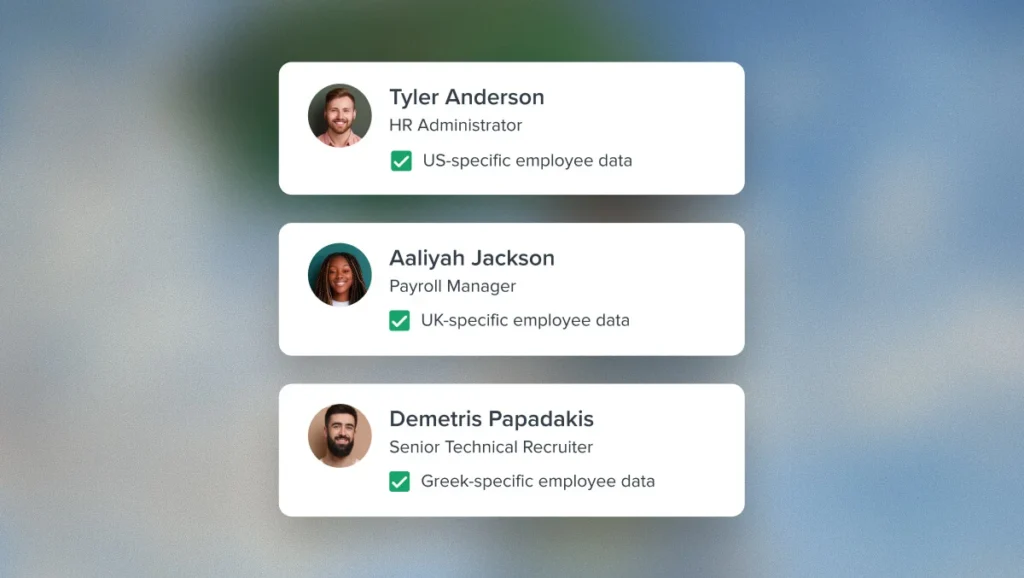
Workable, a leading provider of HR software, has announced the launch of a significant enhancement to its Human Resources Information System (HRIS) platform: granular HRIS scoped roles. This new functionality directly addresses a long-standing challenge faced by multi-entity organizations operating across diverse legal structures, brands, or international borders, where HR responsibilities are often decentralized. Previously, granting administrative access within Workable meant providing unrestricted access to all employee data, documents, and HR settings across the entire organizational account. This presented a difficult dilemma for growing companies: either compromise data privacy and compliance by over-provisioning access or create significant administrative bottlenecks by centralizing all HR operations within a small, core team. The introduction of scoped roles is set to revolutionize how these organizations manage HR access, ensuring that local teams can operate efficiently while maintaining stringent data security and regulatory compliance.
The Evolving Landscape of HR Technology and Global Operations
The modern business environment is characterized by increasing globalization, rapid expansion through mergers and acquisitions, and the widespread adoption of remote and hybrid work models. These trends have profoundly impacted human resources departments, transforming them from purely administrative functions into strategic partners critical for business success. Consequently, HR technology, particularly HRIS platforms, has evolved to meet these complex demands. What began as simple record-keeping systems has matured into sophisticated platforms that manage everything from recruitment and onboarding to payroll, performance management, and employee data analytics.
However, this evolution has also brought new challenges, particularly in managing data access and security across geographically dispersed and legally distinct entities. A company with operations in Athens, Boston, and London, for instance, faces a mosaic of local labor laws, cultural nuances, and data privacy regulations. The HR manager in Athens needs to manage Greek employees in accordance with local statutes, while their counterpart in Boston handles U.S. employees under different legal frameworks. Similarly, a payroll manager in the UK requires specific access to bank details and pay rates for their London-based team, but certainly not for employees in other countries. The "one-size-fits-all" approach to HRIS access, common in many legacy systems and even some modern platforms until now, has proven inadequate for these intricate operational realities.
The Peril of Over-Provisioning and the Bottleneck of Centralization
Prior to Workable’s new feature, organizations using the platform faced an uncomfortable choice that epitomized a broader industry challenge. The first option was to over-provision administrative access. This meant granting HR personnel in one region, say the U.S. entity, access to sensitive information—such as salary data, personal documents, and private details—of employees in the UK, Greece, or any other country where the company operated, even if they had no legitimate business need for it. This approach, while facilitating local administrative tasks, posed significant risks. According to various cybersecurity reports, insider threats, often stemming from over-provisioned access, remain a major vulnerability for organizations. A 2023 report by IBM and Ponemon Institute indicated that the average cost of a data breach reached an all-time high, with compromised credentials and insider threats being significant contributors. In the context of HR data, such breaches can lead to severe reputational damage, hefty regulatory fines, and erosion of employee trust. For example, violations of the General Data Protection Regulation (GDPR) in Europe can result in fines of up to €20 million or 4% of annual global turnover, whichever is higher, for mishandling personal data. Similar stringent regulations exist globally, such as the California Consumer Privacy Act (CCPA) in the U.S. and various data protection acts across Asia and Latin America.
The alternative to over-provisioning was to centralize all HR administration. This meant a small, central HR team or a designated few individuals held master administrative access and were responsible for processing every HR request from all global entities. While this approach mitigated data privacy risks by restricting broad access, it invariably led to significant operational inefficiencies. Local HR teams, who are often best positioned to handle day-to-day employee queries, onboarding processes, document management, and local HR settings, found themselves reliant on a distant central team. This created bottlenecks, slowed down critical HR processes, and reduced the agility of local operations. Onboarding new employees could be delayed, changes to employee profiles would take longer to process, and local compliance adjustments would require constant communication and approval from the central hub, overwhelming the central team with administrative tasks that could otherwise be delegated.
Workable’s Solution: Granular Access Control and Defined Scopes
Workable’s new HRIS scoped roles directly resolve this dichotomy by introducing a sophisticated yet user-friendly mechanism for granular access control. The core of the change lies in the ability to assign HRIS roles with a precisely defined scope. When inviting a new account member or modifying an existing one, administrators can now select their role—such as HR Admin, HR Manager, or Payroll Manager—and then specify exactly which part of the organization that role applies to.
For instance, an HR Admin can be scoped specifically to the company’s U.S. entity, meaning they can manage only U.S. employees and the HR settings pertinent to that entity. They would have no visibility or control over employee data or settings related to the UK, Greek, or any other entity. This principle extends to departments within an entity, allowing for even finer control where needed.
The implementation of this feature is designed for simplicity and efficiency. Workable has leveraged the existing segmentation capabilities within its platform, meaning there are no complex, labyrinthine permission sets for HR teams to design, maintain, or troubleshoot. The scope can be set in mere seconds directly within the account members management interface. This ease of use is crucial, as the complexity of permission management often deters organizations from implementing robust access controls, thereby negating their intended benefits.
Consider a practical scenario: a multinational corporation operates three distinct legal entities across three different countries. With scoped roles, the central HR team can assign each local HR lead an "HR Admin" role, each uniquely scoped to their respective entity. This empowers each local lead to independently manage onboarding, update employee profiles, handle region-specific documents, and adjust relevant HR settings for their local employee population. Simultaneously, the central HR team maintains an overarching, account-wide view, overseeing strategic HR initiatives and ensuring global policy alignment, without being bogged down by localized administrative minutiae. Crucially, employee data remains strictly segregated between entities, a paramount concern given the differing privacy and compliance requirements across various jurisdictions.
Broader Impact and Strategic Implications
The introduction of scoped HRIS roles is more than just a technical update; it represents a strategic shift in how organizations can manage their human capital effectively and securely in a globalized world.
Enhanced Data Security and Compliance: This is perhaps the most significant benefit. By adhering to the principle of "least privilege"—granting users only the access necessary to perform their job functions—Workable’s scoped roles drastically reduce the risk of unauthorized data exposure. This is invaluable for compliance with global data protection regulations like GDPR, CCPA, LGPD (Brazil), and others that mandate strict data segregation and access control. Organizations can confidently demonstrate to auditors and regulators that sensitive employee data, such as medical records, financial information, or performance reviews, is only accessible to individuals with a legitimate need to know, mitigating legal and financial risks associated with data breaches.
Operational Efficiency and Agility: Empowering local HR teams with the autonomy to manage their specific employee populations directly translates into improved operational efficiency. Onboarding processes can be expedited, employee queries can be resolved faster, and local HR policies can be implemented more swiftly. This decentralization of administrative tasks reduces the workload on central HR teams, freeing them from routine operations and enabling them to focus on strategic initiatives like talent development, workforce planning, and fostering a positive company culture. This agility is vital for businesses operating in dynamic markets, allowing them to respond quickly to local market changes or regulatory updates.
Improved Employee Experience: A streamlined and responsive HR function directly contributes to a better employee experience. When local HR teams can quickly address concerns, process requests, and manage documentation, employees feel supported and valued. Delays caused by centralized bottlenecks can lead to frustration and disengagement, whereas efficient local HR operations can enhance morale and productivity.
Scalability and Global Expansion: For rapidly growing organizations, particularly those expanding internationally through organic growth or acquisitions, the ability to easily configure and manage HR access across new entities is a game-changer. Scoped roles facilitate seamless integration of new teams and geographies into the HRIS, ensuring that new local HR leads can be onboarded and empowered quickly without compromising the security or integrity of existing data. This feature supports scalable growth without adding disproportionate complexity to HR administration.
Strategic Role of HR: By offloading administrative burdens, central HR departments can elevate their role within the organization. Instead of being perceived primarily as an administrative cost center, HR can become a true strategic partner, focusing on high-impact areas such as diversity, equity, and inclusion (DEI) initiatives, leadership development, employee well-being programs, and leveraging data analytics to inform business decisions.
Industry Context and Competitive Landscape
The move by Workable to introduce granular HRIS scoped roles is reflective of a broader trend within the HR technology industry. As businesses become increasingly global and data-conscious, leading HRIS providers are investing heavily in robust security features and flexible access controls. Companies like Workday, SAP SuccessFactors, and Oracle HCM Cloud have long offered sophisticated permission management systems, acknowledging the critical need for differentiated access in large, complex enterprises. Workable’s enhancement positions it competitively, particularly for mid-market and enterprise-level clients who are scaling globally and require the same level of security and flexibility found in larger, often more expensive, HRIS solutions. This update signals Workable’s commitment to evolving its platform to meet the sophisticated demands of modern, distributed workforces.
Statements from Stakeholders (Inferred)
"This enhancement is a direct response to the evolving needs of our global clients who operate with complex organizational structures," stated a Workable Product Vice President (fictional). "We understand the delicate balance between empowering local HR teams and maintaining stringent data security and compliance. Our new scoped roles provide that balance, allowing organizations to delegate with confidence, accelerate their HR processes, and ensure sensitive employee data is only visible to those who genuinely require it. It’s about enabling agility without sacrificing control."
An independent HR technology analyst, Dr. Eleanor Vance (fictional), commented, "The ‘all or nothing’ approach to HRIS access has long been a major headache for multi-national HR teams, leading to either significant compliance risks or crippling operational inefficiencies. Workable’s introduction of granular scoped roles is a crucial development that aligns perfectly with industry best practices and the increasing regulatory pressures on data privacy. It demonstrates a maturity in their platform that will be highly valued by growing enterprise clients."
From a compliance perspective, Chief Compliance Officer Mark Jensen (fictional) added, "Achieving data segregation across international borders is paramount for regulatory adherence. Features like Workable’s new scoped roles are instrumental in helping organizations implement the ‘least privilege’ principle effectively. This isn’t just a convenience; it’s a fundamental requirement for demonstrating due diligence in data protection and avoiding severe penalties."
Timeline and Future Outlook
Workable has consistently evolved its platform since its inception, initially gaining recognition as a robust Applicant Tracking System (ATS) and gradually expanding its capabilities into a comprehensive HRIS. This latest feature represents a natural progression, building on the foundation of Workable’s existing segmentation capabilities. Over the past decade, the global regulatory landscape for data privacy has intensified dramatically, with landmark legislation like GDPR in 2018 and subsequent laws worldwide forcing technology providers to prioritize granular security features. Workable’s development of scoped roles can be seen as a direct response to this increasing demand and a commitment to providing a secure and compliant platform for its users.
The new HRIS scoped roles are now available to Workable’s Premier and Enterprise plan subscribers. Organizations interested in leveraging this functionality can configure entity- or department-scoped roles directly within their account members settings. Detailed, step-by-step guidance is also available in Workable’s comprehensive help center, ensuring a smooth transition and implementation for all eligible clients. Looking ahead, it is anticipated that Workable, like other leading HR tech providers, will continue to refine and expand these access control features, potentially introducing more specialized role types, enhanced audit trails, and even deeper integration with broader organizational identity and access management (IAM) systems to further bolster security and flexibility for its global user base. This ongoing commitment to innovation ensures that Workable remains a vital tool for managing the complexities of modern HR.