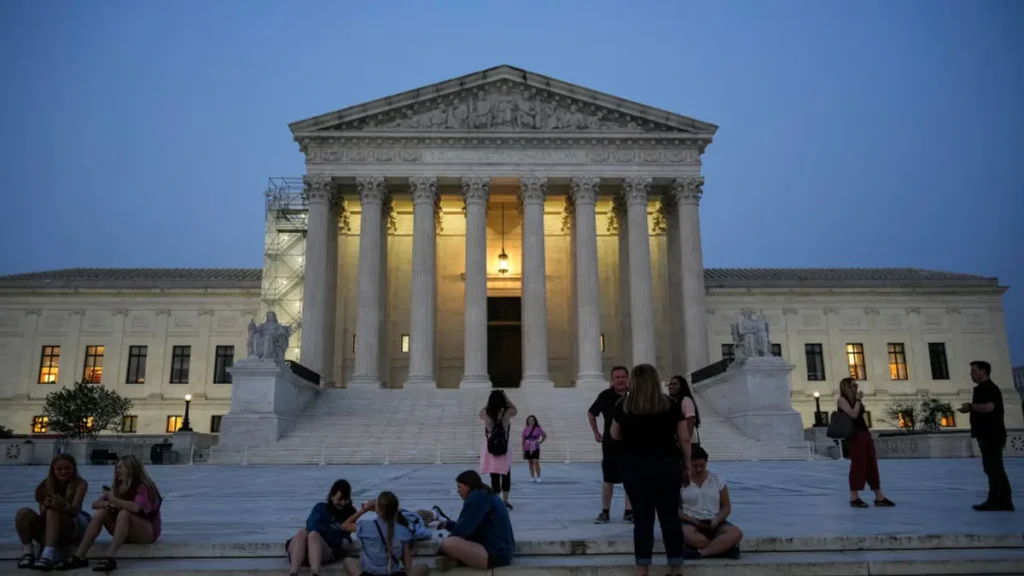
The U.S. Equal Employment Opportunity Commission (EEOC) announced on Tuesday, July 1, 2026, the rescission of its long-standing affirmative action guidelines, effectively eliminating an interpretation of workplace equity that had shaped employment practices for four decades. This pivotal decision, coming just shy of America’s 250th birthday, signals a profound shift in the federal government’s approach to diversity and inclusion in the workplace, aligning the agency’s stance with a more conservative interpretation of federal anti-discrimination law and recent Supreme Court rulings.
According to a June 30 statement from the EEOC, the now-rescinded interpretive guide and its related compliance manual were deemed to “run afoul” of Title VII of the Civil Rights Act of 1964. This re-evaluation by the commission also considers more recent U.S. Supreme Court precedents, particularly the landmark decision issued almost three years prior in Students for Fair Admissions, Inc. v. Harvard. That 2023 ruling dismantled race-conscious admissions practices in higher education, declaring them unconstitutional. While initially focused on academic institutions, legal and HR experts at the time widely predicted a "chilling effect" on workplace diversity, equity, and inclusion (DEI) initiatives across corporate America. The EEOC’s latest action confirms these predictions, bringing the federal government’s enforcement arm directly into the evolving legal landscape surrounding affirmative action.
A History of Affirmative Action and Evolving Legal Interpretations
To fully grasp the significance of the EEOC’s 2026 decision, it is essential to understand the historical trajectory of affirmative action in the United States. The concept of affirmative action emerged from the Civil Rights Movement of the 1960s, aimed at redressing historical and systemic discrimination against racial minorities and women. President John F. Kennedy first used the term in Executive Order 10925 in 1961, directing federal contractors to "take affirmative action to ensure that applicants are employed, and employees are treated during employment, without regard to their race, creed, color, or national origin." This was further solidified by the Civil Rights Act of 1964, particularly Title VII, which prohibits employment discrimination based on race, color, religion, sex, or national origin.
Following the passage of Title VII, the EEOC was established to enforce these protections. Over the decades, the agency developed guidelines and interpretations to help employers comply with the law, including those related to affirmative action. These guidelines generally supported voluntary affirmative action plans by employers designed to remedy the effects of past discrimination or to achieve diversity goals, provided they were narrowly tailored, temporary, and did not result in quotas or unduly infringe on the rights of non-minority individuals.
The legal validity of affirmative action has been a subject of continuous debate and numerous Supreme Court challenges. Key cases such as Regents of the University of California v. Bakke (1978) established that while quotas were impermissible, race could be a factor in admissions to achieve a diverse student body. Later, Grutter v. Bollinger (2003) affirmed this principle for higher education, emphasizing the educational benefits of diversity, while Gratz v. Bollinger (2003) struck down a more mechanistic points-based system. Throughout these rulings, the courts sought to balance the goal of promoting diversity with the constitutional mandate of equal protection under the law, often allowing for narrowly tailored race-conscious programs in specific contexts. For nearly 40 years, the EEOC’s guidelines reflected these complex legal nuances, offering a framework for employers to pursue diversity initiatives within what was then understood as legal boundaries.
The SFFA v. Harvard Decision (2023): A Turning Point
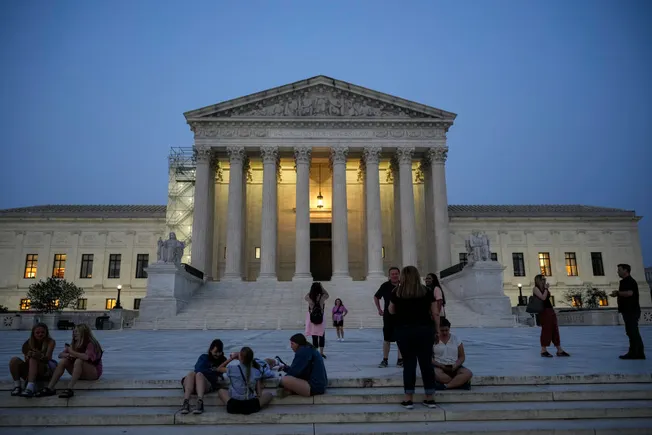
The landscape dramatically shifted with the Supreme Court’s June 2023 ruling in Students for Fair Admissions, Inc. v. Harvard and Students for Fair Admissions, Inc. v. University of North Carolina. In a 6-3 decision, the Court’s conservative majority effectively ended race-conscious admissions in higher education, holding that such policies violated the Equal Protection Clause of the Fourteenth Amendment. Chief Justice John Roberts, writing for the majority, stated that "the Harvard and UNC admissions programs cannot be reconciled with the guarantees of the Equal Protection Clause," asserting that "eliminating racial discrimination means eliminating all of it."
While the ruling directly applied to colleges and universities, its implications for the corporate sector were immediately apparent. Legal experts like Justice Gorsuch, in his concurring opinion, suggested that the decision’s principles could extend beyond higher education, potentially impacting corporate DEI initiatives. Many workplace attorneys and HR professionals warned that the ruling could prompt a wave of reverse discrimination lawsuits and force companies to re-evaluate their diversity programs. A survey conducted in late 2023 by a prominent legal firm indicated that over 60% of Fortune 500 companies were already reviewing or planning to review their DEI policies in light of the SFFA decision, anticipating federal regulatory shifts. This widespread concern highlighted the vulnerability of existing corporate diversity frameworks to new legal interpretations.
EEOC’s Strategic Realignment Under the Trump Administration
The EEOC’s decision in 2026 is not an isolated event but rather a culmination of a sustained strategic realignment under the second term of President Donald Trump’s administration. Since 2025, the commission’s priorities have demonstrably shifted towards a more conservative agenda, emphasizing individual meritocracy and colorblind policies over group-based diversity initiatives. This shift was foreshadowed by earlier actions, including the EEOC’s rejection of disparate impact liability theories in certain contexts—a legal concept that allows for challenges to practices that, while neutral on their face, disproportionately harm protected groups. This move, widely criticized by civil rights advocates, signaled a broader intent to narrow the scope of anti-discrimination enforcement.
EEOC Chair Andrea Lucas, a prominent voice in this new direction, articulated the rationale behind the rescission in her June 30 statement. “As our nation approaches its 250th birthday, we are reminded that the Founders’ vision rested on the enduring principle that every individual is created equal and therefore is entitled to equal treatment under the law,” Lucas stated. “This week’s action reaffirms that Title VII’s protections apply equally to all American workers and that equal opportunity remains a defining commitment of our democracy.” This statement underscores a philosophical pivot: moving from an interpretation of equal opportunity that might necessitate proactive measures to correct historical imbalances, to one that emphasizes identical treatment for all individuals, regardless of group affiliation, in the present moment. This perspective aligns with a strict "colorblind" application of Title VII, potentially limiting employer discretion in designing programs intended to foster diversity.
The New Enforcement Plan (NEP) Through 2029: A Comprehensive Overhaul

Further solidifying this new direction, the EEOC had already published a newly minted enforcement plan (NEP) last month, outlining its priorities through 2029. This comprehensive document provides a clear roadmap for the agency’s enforcement activities and offers employers critical insights into areas of heightened scrutiny. The NEP explicitly highlights several key areas that will be subject to increased regulatory attention:
- Crackdown on Disparate Impact Liability Theories: The plan signals a more aggressive stance against challenges to employment practices based solely on their disproportionate impact on protected groups, absent evidence of intentional discrimination. This could make it significantly harder for plaintiffs to challenge seemingly neutral policies that perpetuate systemic inequalities.
- Scrutiny of "Encouraging" Job Advertisements: The EEOC will now closely examine job advertisements that "encourage" or implicitly target specific demographic groups. This could include language that, while seemingly benign (e.g., "women and minorities encouraged to apply"), might now be viewed as signaling a preference based on protected characteristics, potentially leading to claims of reverse discrimination.
- Targeting Staffing Agencies and Fellowships: Programs offered by staffing agencies, fellowships, or other talent pipelines that select participants based on diversity-related criteria will face rigorous scrutiny. This could include initiatives designed to increase representation from underrepresented groups in specific industries or leadership roles.
- Focus on Diversity, Equity, and Inclusion (DEI) Programs: Perhaps most significantly, the NEP explicitly targets DEI programs, or those using "similar euphemisms." This indicates a broad intention to scrutinize any corporate initiative that uses protected characteristics as a basis for selection, promotion, or participation, even if the stated goal is to enhance diversity or foster an inclusive environment. Employers will need to demonstrate that such programs are strictly merit-based and do not inadvertently (or intentionally) provide preferential treatment.
These priorities collectively paint a picture of an enforcement agency that will actively challenge practices perceived to deviate from a strict interpretation of individual, colorblind equality, moving away from a framework that historically allowed for proactive measures to address underrepresentation.
Divided Reactions from Stakeholders
The EEOC’s decision has predictably elicited strong and divided reactions across the spectrum of legal, advocacy, and business communities.
Advocacy Organizations: Lauren Khouri, Senior Director of Workplace Equality at the National Women’s Law Center (NWLC), immediately decried the change. In a statement, Khouri asserted, “This is just the latest action by the EEOC to sow confusion and deter employers from taking lawful steps to ensure their workplace practices are fair and inclusive.” This sentiment is likely shared by many civil rights organizations, who view the rescission as a step backward for equity and a blow to efforts to create more diverse and representative workforces. They argue that without clear federal guidance supporting proactive diversity efforts, employers may become overly cautious, leading to a stagnation or even reversal of progress in workplace diversity. These groups often highlight persistent disparities in employment outcomes that they believe necessitate more than just a colorblind approach.
Conversely, conservative legal advocacy groups and organizations that have long opposed affirmative action have praised the EEOC’s move. They contend that the decision upholds the true intent of Title VII—to prohibit all forms of discrimination, including so-called reverse discrimination—and reinforces the principle that individuals should be judged solely on their merits, not their demographic characteristics.
Management-Side Attorneys: For employers, the immediate aftermath is characterized by a mix of concern and a renewed focus on compliance. Randi Hyatt, a partner at Whiteford, Taylor & Preston and a management-side attorney, offered critical advice in an analysis following the announcement. Hyatt emphasized that the takeaway from the new plan should not be to “abandon lawful EEO efforts, but to ensure policies do not use protected characteristics as selection criteria.” This distinction is crucial: employers are still obligated to provide equal employment opportunity, but the methods by which they pursue diversity or address underrepresentation must be fundamentally re-evaluated.

Hyatt further advised HR departments to review all kinds of programs with diversity-related criteria sooner rather than later to mitigate future risk. “The best preparation is a proactive compliance review focused on how policies operate in practice — not just on paper,” she wrote. This includes scrutinizing recruitment strategies, mentorship programs, leadership development initiatives, and even internal affinity groups to ensure they are inclusive of all employees and do not inadvertently create preferences. Legal counsel across the country are advising clients to focus on broad outreach, skill-based assessments, and creating genuinely inclusive cultures without relying on explicit demographic targets.
Implications for Employers and the Future of DEI
The EEOC’s rescission of affirmative action guidelines and its new enforcement plan usher in a new era for workplace diversity, equity, and inclusion, with significant implications for employers:
- Increased Legal Risk: Companies that continue to implement programs based on the old guidelines, or those that retain policies with explicit demographic preferences, face a heightened risk of litigation. This could include challenges from individuals alleging reverse discrimination or direct enforcement actions from the EEOC under its new priorities.
- Redefining DEI: The very nature of DEI programs will need to undergo a fundamental transformation. The emphasis will likely shift from achieving specific numerical diversity targets to fostering truly equitable processes and inclusive environments that naturally attract and retain a diverse workforce based purely on merit. Programs must demonstrate that they are open to all, provide universal benefits, and address systemic barriers without resorting to preferential treatment for any protected group.
- Recruitment and Hiring Strategies: Employers will need to meticulously review their recruitment advertisements, outreach programs, and hiring processes. Language that "encourages" specific groups may need to be rephrased to emphasize broad appeal and equal opportunity for all qualified candidates. The focus will be on casting a wide net and evaluating candidates based on skills, qualifications, and experience, rather than demographic characteristics.
- Training and Development: Internal training programs, especially those related to unconscious bias or leadership development, will need to be re-evaluated to ensure they align with the new legal framework. The focus will be on fostering inclusive behaviors and fair evaluation practices, rather than setting targets for diverse representation in leadership pipelines.
- Data and Metrics: While companies may still wish to track diversity metrics to understand their workforce composition, the way these metrics inform decision-making will be critical. Using diversity data to set goals for broad outreach is likely acceptable, but using it to justify selection criteria based on protected characteristics will not be.
- Workplace Culture: The challenge for HR professionals will be to maintain and enhance an inclusive workplace culture that values diversity of thought and experience, without relying on the tools and frameworks that are now deemed problematic. This will require a greater emphasis on psychological safety, equitable access to opportunities, and transparent, merit-based processes.
Broader Societal Impact and the Road Ahead
The EEOC’s decision is more than just a regulatory change; it is a significant development in the ongoing national debate about equality of opportunity versus equality of outcome. Proponents argue it reinforces individual rights and a truly colorblind society, while critics contend it ignores the realities of systemic discrimination and hinders progress towards a truly representative workforce.
The move by the EEOC will undoubtedly spur further legal challenges and could potentially influence legislative efforts in the future. As America navigates its 250th year, this decision marks a pivotal moment, reshaping the legal and practical contours of diversity and inclusion in the nation’s workplaces. Companies are now tasked with the complex challenge of ensuring compliance with stricter interpretations of anti-discrimination laws while striving to cultivate workplaces where all individuals, irrespective of background, have a fair and equal opportunity to thrive based on their individual contributions and merits. The coming years will reveal the full extent of this policy shift’s impact on the composition and culture of the American workforce.