
Artificial intelligence (AI), undeniably a transformative force in the modern workplace, now stands at a critical juncture. While heralded for its potential to revolutionize efficiency and productivity, an increasing body of evidence suggests that if left unchecked, AI could morph from a positive tool for change into the defining industrial relations flashpoint of the coming decade, placing human resources departments squarely on the front lines of a brewing conflict.
Echoes of the Past: The Unsettling Parallels to Industrial Revolutions
The burgeoning apprehension surrounding AI’s impact on employment recently manifested in a series of highly public and viral incidents. In May, Gloria Caulfield, Vice President of US real estate firm Tavistock Development Company, enthusiastically proclaimed to students at the University of Central Florida that "The rise of artificial intelligence is the next Industrial Revolution." Her comments, intended to inspire, were instead met with a loud chorus of boos from the audience, a reaction that swiftly gained traction across social media platforms. The same month, former Google CEO Eric Schmidt experienced a similar backlash, booed by students during a speech on AI’s ascent at the University of Arizona.
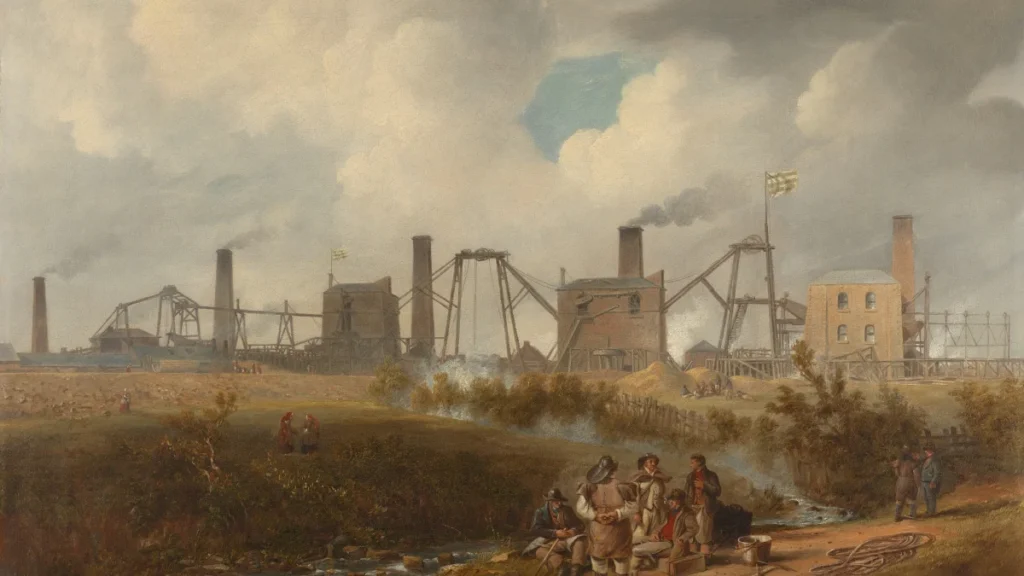
These visceral public reactions are more than mere anecdotes; they serve as a potent modern-day barometer of growing societal anxiety. The comparison of AI’s advent to the Industrial Revolution, while perhaps intended to evoke progress, carries a weighty historical resonance that cannot be ignored. The original Industrial Revolution of the 19th century, particularly in Britain, was indeed a period of immense technological advancement, but it was also scarred by significant, often violent, industrial strife. Movements like the Luddites, who famously destroyed textile machinery they believed threatened their livelihoods, the Chartists advocating for political rights for the working class, and the Merthyr Rising, a major Welsh industrial rebellion, underscore the deep-seated fears and societal upheaval that radical technological shifts can precipitate. While no one anticipates a return to workers marching on offices with hammers, the historical parallels serve as a stark warning: the careless, unfettered rollout of AI, perceived solely as a job-eliminating force, risks igniting a contemporary form of industrial discontent.
The Emerging "AI Hate Wave": Job Displacement and Sabotage
The fears expressed by students are not unfounded. In the United States, the tech sector, ironically at the forefront of AI development, has seen widespread layoffs, with major players such as Oracle, Meta, and Microsoft shedding thousands of jobs in recent months. While these cuts are often attributed to broader economic factors or post-pandemic recalibration, the increasing sophistication of AI tools is undeniably playing a role in the re-evaluation of workforce needs. This has contributed to a growing narrative in the media, with articles proclaiming the arrival of an "AI hate wave." Disturbingly, reports have even surfaced of Gen Z workers, fearful and angered by the prospect of AI displacing their jobs, intentionally sabotaging AI rollouts within their workplaces, indicating a clear and present resistance at the grassroots level.
Across the Atlantic, the situation in the UK mirrors these concerns. Recent research by Morgan Stanley indicates that AI has been a contributing factor to an 8% net loss in jobs in the UK over the past 12 months, with entry-level positions disproportionately affected. This trend is particularly alarming for new graduates and those seeking to enter the workforce, intensifying the sense of uncertainty. Further reinforcing this anxiety, a June survey by Totaljobs revealed that 42% of UK workers are concerned by "FOBO," or the "fear of becoming obsolete," directly attributable to automation and AI. Adding to this apprehension, research from WTW predicts that by 2030, workers expect (or fear) that 39% of their existing skill sets will either be significantly transformed or rendered obsolete. These statistics paint a clear picture: AI is not just a technological marvel; it is a direct challenge to job security and career longevity for a significant portion of the global workforce.
HR at the Crossroads: Navigating the Human Element of AI
The dual nature of AI presents a profound challenge for HR professionals. While the technology promises enhanced efficiency and unprecedented productivity gains, its potential to trigger an industrial relations crisis and inflict reputational damage on employers who mismanage its integration is substantial. If employees come to view AI purely as a threat—something to be feared, resented, or actively resisted—it could indeed become the paramount headache for HR in the coming years.
Isabella Rhodes, policy and campaigns officer covering tech and AI at the Trades Union Congress (TUC), affirms the gravity of the situation: "There is a huge push from government and from businesses to adopt AI and fast. And in all the talk about economic growth and productivity, there hasn’t been enough thought given to the workers who will be practically impacted by the changes brought about by AI." Rhodes highlights that AI is already a source of friction in many workplaces, manifesting in various contexts but frequently overlapping with traditional collective bargaining issues such as job security and working conditions. She specifically points to the use of AI for surveillance and monitoring of workers as a key flashpoint, observing that AI is often "wedged into workplaces by executives, while the people who are expected to use it are excluded from decisions about what’s being implemented and why." This top-down approach, she suggests, breeds resentment and resistance.
Alice Martin, head of research at the Work Foundation at Lancaster University, concurs, stating that "AI is an industrial relations issue already, at least to some extent." She anticipates a significant pushback driven by the fear of job displacement, affecting both young workers entering the workforce and experienced professionals who perceive their roles as under threat. Furthermore, Martin foresees a scenario where workers, potentially through collective bodies like unions, will increasingly demand a greater say in how technologies such as AI are introduced. This could lead to demands for formal agreements outlining protections during transitions, ensuring fair terms, and creating opportunities for workers to benefit, perhaps through increased time off or robust upskilling initiatives.
Talent Management and Organisational Redesign in the AI Era
Gaby Joyner, WTW’s head of employee experience for Europe, underscores that the rapid pace of AI integration inherently fosters employee uncertainty, mistrust, and potential resistance, particularly if AI is perceived as something imposed on them rather than developed with them. "We know AI is going to change jobs; we’re seeing that already. We’re supporting organisations in thinking how they redesign jobs to include AI," Joyner states. However, she acknowledges the inherent unknown in AI’s ultimate reach, emphasizing that organizations must balance ongoing operational demands with fundamental transformation.
Joyner stresses that AI will profoundly impact talent management, making it an undeniable priority for HR. Many organizations are rapidly deploying various AI tools and agents, but "what many organisations aren’t doing however, or only beginning to do, is recognising that, in order to see the return on investment and see the change they want to the way people are working with AI, they need to build it into the way the work is done." Simply layering AI on top of existing processes is insufficient; it must be integrated seamlessly. Moreover, Joyner highlights the necessity of human oversight, as AI outputs are "often aren’t perfect." This creates new roles focused on augmenting AI’s value and ensuring accuracy. A critical question for HR, she adds, will be "how much junior talent do we still continue to bring in, evolve and train in the way we may have done historically? I don’t know that anyone knows what the perfect answer is right now." This uncertainty points to a fundamental shift in traditional talent pipelines and career development.
Building Trust and Preventing Disconnect: A Call for Human-Centric AI
The imperative for a human-centric approach to AI adoption is echoed across various reports and expert opinions. Recent research by The Talent Labs and Uplifting People highlighted that organizations achieving the most significant progress in AI integration are those that prioritize their people, leveraging AI to remove friction and enhance human capabilities rather than simply replacing roles. Andy Doyle, chief people and agent officer at Kantar, articulated HR’s vital stewardship role in the foreword to that report: "Professions are defined by how they respond at moments like this. HR has a powerful opportunity to shape what comes next, and that responsibility should not be taken lightly."
Niki Turner-Harding, senior vice president and country head at Adecco UK and Ireland, points to a "growing disconnect between how AI is being positioned by leaders and how it is being felt by employees in practice." Adecco’s research, surveying over 2,000 C-suite leaders, revealed that a mere 36% are effectively communicating how AI will create opportunities for workers. Turner-Harding advocates for a balanced approach, emphasizing that any change can naturally provoke concern, especially when the impact on roles and work methods is unclear. "If we don’t communicate properly about how AI is going to be used, people lose confidence, feel unsure about their work, and eventually they may choose to leave. It’s a slow loss of trust," she warns, highlighting the cumulative damage of poor communication.
The TUC’s Rhodes reinforces this, advising that "AI adoption needs to be treated as an organisational challenge rather than just a technical one. Frankly, organisations need to do better." She underscores that large-scale transformation necessitates the cooperation and trust of the workforce. Employers perceived as treating workers as an afterthought or acting in bad faith will inevitably erode that trust. Instead, Rhodes advocates for close, early, and ongoing collaboration with workers and their unions. In instances where transformation leads to job changes or redundancies, unions should be involved to ensure fair terms. Collective bargaining, she argues, is essential for giving workers a strong voice on critical issues, including pay, equality, and technology adoption. Martin from the Work Foundation adds that HR must be proactive in consulting workforces, maintaining transparency about AI introduction, and ensuring genuine worker input. She stresses the need for clear principles outlining technology introduction and its impact, crucially ensuring that "there are gains in there for the workforce and it is not solely putting jobs at risk."
The Evolving Nature of Work: Adjusting Roles and Skills
Finally, HR’s role extends to meticulously managing how existing roles adapt and evolve to complement AI. Martin illustrates this with the example of contact center roles: "AI bots are very good at handling the easy questions, but the people who remain are now getting all the really tough ones and possibly angry customers who have not been able to get their problem solved." This shift means that human roles often become more complex, demanding higher-level problem-solving, emotional intelligence, and resilience.
In such scenarios, HR has a critical responsibility to ensure that workers whose jobs become more intense or specialized also receive commensurate benefits. This could manifest in enhanced breaks, advanced training, clear progression pathways, or improved compensation. "I think HR will have a huge role to play in this, in helping this change play out in a way that brings gains for employers and the workforce together, rather than as opposing parties," Martin concludes. The challenge for HR, therefore, is not merely to implement technology but to reshape the fundamental social contract of work in an AI-driven world, transforming potential conflict into shared progress. This demands strategic foresight, empathetic leadership, and an unwavering commitment to human-centric principles, making AI integration HR’s defining challenge and opportunity for the foreseeable future.








