
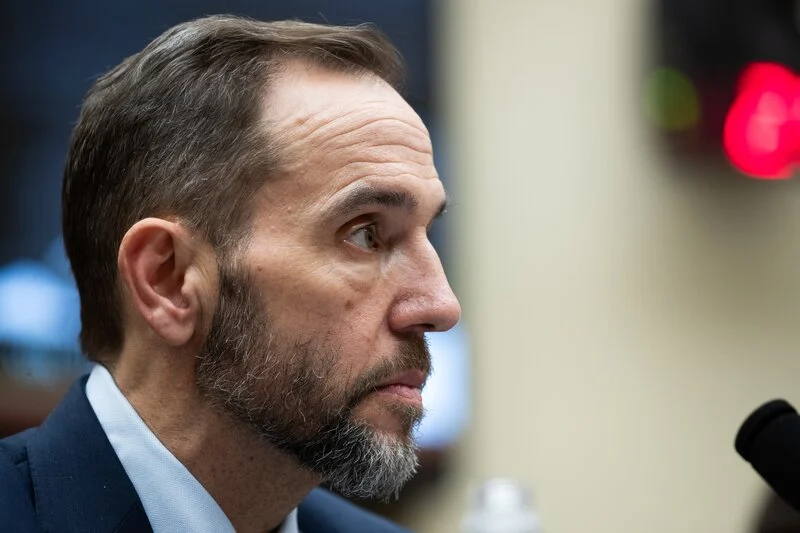
The federal government confirmed to a Florida federal court on Thursday that it inadvertently disclosed a sensitive report authored by former special counsel Jack Smith concerning the criminal prosecution of President Donald Trump to a former federal prosecutor who is currently under investigation for allegedly mishandling confidential information. This administrative error, disclosed in a late-afternoon filing, marks a significant procedural setback in one of the most high-profile legal battles in American history. The report in question details the investigation into the handling of classified documents at the Mar-a-Lago estate and was intended to remain under strict protective orders. However, according to the Department of Justice (DOJ), the document was mistakenly included in a batch of discovery materials sent to a former staffer who is herself accused of emailing sensitive portions of that very same report to a personal account.
The Mechanics of the Inadvertent Disclosure
According to the government’s filing, the breach occurred during a routine transfer of digital discovery files. The Department of Justice explained that a technical oversight led to the inclusion of the unredacted Smith report in a production intended for the legal counsel of a former federal prosecutor. This individual, whose identity has been central to a separate internal investigation, was already facing scrutiny for allegedly unauthorized transfers of classified summaries.
The DOJ’s admission highlights the immense complexity of managing discovery in a case involving thousands of pages of classified material, grand jury testimony, and internal prosecutorial memos. Legal experts suggest that the "inadvertent disclosure" may have been the result of a tagging error within the government’s litigation support database. In high-stakes federal litigation, documents are typically categorized by sensitivity levels; a single misstep in the coding process can result in the "clawback" of privileged information—a process the government is now aggressively pursuing.
Historical Context: The Mar-a-Lago Documents Case
To understand the gravity of this disclosure, one must look back at the origins of the investigation. The case began in early 2022 when the National Archives and Records Administration (NARA) recovered 15 boxes of presidential records from Donald Trump’s Florida residence, Mar-a-Lago. Upon discovering that these boxes contained documents with classification markings, NARA alerted the Department of Justice.
By August 2022, the FBI executed a search warrant at the property, seizing more than 100 additional classified documents, some of which were labeled "Top Secret" and "Sensitive Compartmented Information" (SCI). This led to the appointment of Jack Smith as special counsel in November 2022. Smith’s mandate was to investigate whether the former president had violated the Espionage Act and obstructed justice.
The case has been characterized by years of litigation over the Presidential Records Act, executive privilege, and the Classified Information Procedures Act (CIPA). The report that was recently leaked inadvertently is believed to be a comprehensive internal summary of Smith’s findings, including witness credibility assessments and legal theories that the prosecution intended to use at trial.
Chronology of Key Events Leading to the 2026 Disclosure
The timeline of the classified documents case is a complex web of legal maneuvers and procedural hurdles:
- January 2022: NARA retrieves initial boxes from Mar-a-Lago.
- August 8, 2022: FBI executes a search warrant at Mar-a-Lago.
- June 2023: A federal grand jury in Miami indicts Donald Trump on 37 felony counts related to the mishandling of classified documents.
- 2024–2025: The case experiences multiple delays due to pre-trial motions regarding the appointment of the special counsel and the handling of classified evidence under CIPA Section 4.
- Early 2026: A former federal prosecutor associated with the initial stages of the probe is accused of "self-mailing" confidential documents, leading to an internal DOJ investigation.
- July 2, 2026: The DOJ files a notice with the Florida court admitting that the full Smith report was accidentally sent to the aforementioned prosecutor’s legal team.
The Accused Prosecutor and the "Double Leak" Scenario
The recipient of the inadvertent disclosure is a former assistant U.S. attorney who had previously served on the periphery of the Trump investigation. This individual was already under the microscope of the DOJ’s Office of Professional Responsibility (OPR). The allegations against her involve the unauthorized transmission of sensitive materials to a private email account—a breach of the very protocols the government is accusing the former president of violating.
The fact that the government accidentally sent the entire Smith report to a person already suspected of leaking parts of it creates what legal analysts are calling a "double leak" scenario. This complicates the government’s position, as it suggests a lack of internal control over the very documents it claims are vital to national security.
Supporting Data and Technical Challenges in Federal Discovery
The sheer volume of data in the Trump classified documents case is unprecedented. Data provided in previous court filings indicates the following:
- Total Volume: Over 1.2 million pages of non-classified discovery material.
- Classified Tier: Approximately 5,500 pages of highly sensitive documents subject to CIPA protocols.
- Witness Testimony: Transcripts from over 150 witnesses who appeared before grand juries in Washington D.C. and Miami.
- Digital Footprint: Terabytes of surveillance footage from Mar-a-Lago and internal communication logs from the Trump Organization.
Given this scale, the government employs large teams of "taint attorneys" and discovery specialists. However, the July 2026 filing admits that even with these safeguards, the "human element" of litigation remains a vulnerability. The inadvertent disclosure of the Smith report represents a failure in the "Electronic Discovery Reference Model" (EDRM) protocols used by the DOJ.
Official Responses and Legal Reactions
The reaction to the disclosure was immediate and divided along predictable legal and political lines.
The Department of Justice:
In their filing, federal prosecutors emphasized that the disclosure was "strictly inadvertent" and that they have requested the recipient to delete all copies and certify that the information has not been further disseminated. "The government is taking all necessary steps to mitigate any potential prejudice to the ongoing proceedings," the filing stated. Prosecutors are also seeking a "clawback" order from the presiding judge to legally nullify the disclosure.
The Trump Defense Team:
Attorneys for Donald Trump have seized on the error as evidence of "prosecutorial misconduct" and "gross negligence." In a preliminary response, the defense argued that the government’s inability to secure its own investigative reports undermines its authority to prosecute others for similar alleged failures. There are indications that the defense will move for a dismissal of the charges or, at the very least, a significant delay to investigate the extent of the leak.
Legal Scholars:
Legal analysts suggest that while "inadvertent disclosure" happens in civil litigation frequently, its occurrence in a criminal case involving the Espionage Act is rare and problematic. "This is an embarrassment for the Special Counsel’s office," said one former federal judge. "It creates a narrative of hypocrisy that the defense will exploit to the fullest extent in the court of public opinion and before a jury."
Broader Impact and Implications for the Trial
The implications of this disclosure are manifold, affecting the legal strategy, the timeline of the trial, and the public perception of the Department of Justice.
1. Tainting the Jury Pool
If the contents of the Smith report are leaked to the public by the recipient or through subsequent court filings, it could be argued that the jury pool in the Southern District of Florida has been irrevocably tainted. The report likely contains the government’s strongest evidence and internal doubts, which are not typically public knowledge before a trial.
2. Evidentiary Challenges
Under the Federal Rules of Evidence, an inadvertent disclosure can sometimes lead to a waiver of privilege. If the court finds that the government did not take "reasonable steps" to prevent the disclosure, the defense might argue they should be allowed to use the report as evidence to challenge the government’s witnesses or to demonstrate "selective prosecution."
3. Institutional Credibility
The DOJ is currently navigating a period of intense scrutiny regarding its impartiality. A high-profile error involving the very documents at the heart of the case against a former president provides ammunition to critics who argue the department is ill-equipped or biased. This incident may prompt a broader audit of how the DOJ handles discovery in sensitive national security cases.
4. Impact on the 2026 Legal Calendar
With the trial already delayed by numerous motions, this latest development ensures that the "classified documents case" will remain in the headlines well into the 2026 mid-term cycle. The procedural fallout from the clawback motion alone could take months to resolve, as the court must determine if any "fruit of the poisonous tree" issues arise from the prosecutor having viewed the report.
Conclusion
The inadvertent disclosure of the Jack Smith report is a stark reminder of the logistical and ethical minefields inherent in high-stakes federal prosecutions. As the Florida court weighs the government’s request for a clawback order, the focus remains on the intersection of national security and the right to a fair trial. For the Department of Justice, the task now is damage control; for the defense, it is a strategic opportunity. As the case moves forward, the "human error" admitted on July 2, 2026, will likely be cited as a pivotal moment in the long and contentious history of the United States v. Donald J. Trump.








