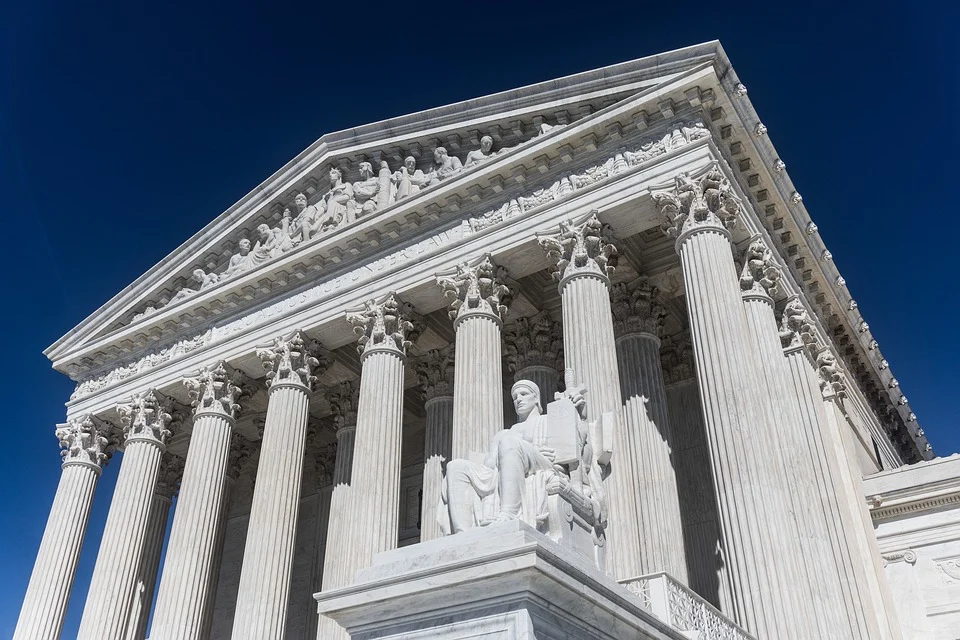
The United States Supreme Court has unexpectedly declined to resolve a pivotal legal question that has long divided lower courts and significantly impacted the landscape of corporate litigation. In a one-sentence per curiam decision issued on June 5, 2025, the Court dismissed the writ of certiorari in Laboratory Corporation of America Holdings v. Davis, No. 24-304, stating the petition had been "improvidently granted." This dismissal effectively vacates the Court’s earlier commitment to decide whether federal courts may certify a class action under Federal Rule of Civil Procedure 23(b)(3) when the proposed class includes members who have not suffered a concrete injury under Article III of the U.S. Constitution. The move leaves employers, retailers, and healthcare providers in a state of legal limbo, particularly those operating within the jurisdiction of the Ninth Circuit Court of Appeals.
The case at the center of this controversy, Laboratory Corporation of America Holdings (Labcorp) v. Davis, originated from a dispute over the accessibility of self-service kiosks at patient service centers. Labcorp, one of the nation’s largest clinical laboratory networks, introduced touchscreen kiosks to streamline the check-in process for patients. While these kiosks were intended to improve efficiency, they were not natively accessible to blind or visually impaired individuals. To accommodate these patients, Labcorp maintained front-desk staff and online check-in options, ensuring that traditional assistance remained available. However, plaintiffs Luke Davis and Julian Vargas, both of whom are legally blind, filed a class-action lawsuit alleging that the presence of inaccessible kiosks violated Title III of the Americans with Disabilities Act (ADA) and the California Unruh Civil Rights Act.
The legal stakes were exceptionally high due to the interplay between federal and state law. While the ADA primarily provides for injunctive relief, the California Unruh Act treats any violation of the ADA as a state law violation, carrying a mandatory minimum of $4,000 in statutory damages per offense. The district court certified a class that could potentially exceed 100,000 members, creating a potential liability for Labcorp approaching $500 million. Labcorp argued that many individuals within this broad class definition had not actually been harmed—some may have preferred using the front desk regardless of the kiosks, while others may not have even attempted to use the technology. This raised the fundamental question: can a class be certified if it is "over-inclusive" of uninjured individuals?
A Chronology of the Labcorp Litigation
The procedural history of the case reflects the complex tactical maneuvering often seen in high-stakes class actions. After the plaintiffs filed their initial complaint, the district court moved toward class certification. Labcorp contested this, arguing that the plaintiffs could not prove that every member of the 100,000-person class had suffered a "concrete and particularized" injury as required by Article III of the Constitution. Despite these objections, the district court certified the class.
Labcorp subsequently sought an interlocutory appeal with the U.S. Court of Appeals for the Ninth Circuit. During the pendency of this appeal, the district court issued a clarifying order regarding the class definition. While this order did not materially change the number of people in the class or the nature of the claims, it provided a technical opening for the plaintiffs to argue that the original order being appealed had been supplanted. The Ninth Circuit eventually affirmed the class certification, adhering to its existing precedent that allows for the certification of classes containing uninjured members, provided that the "standing" of those members is addressed at the damages stage rather than the certification stage.
Labcorp petitioned the Supreme Court for a writ of certiorari in late 2024, which the Court granted. Legal analysts expected a landmark ruling that would harmonize the standards for class certification across the country. However, the June 5 dismissal—known in legal parlance as a "DIG" (Dismissed as Improvidently Granted)—abruptly ended those expectations. The Court’s silence on the reasoning behind the dismissal is standard for a DIG, though it often occurs when the justices discover procedural hurdles or "vehicle problems" that would prevent them from reaching the core legal issue clearly.
Justice Kavanaugh’s Sharp Dissent
While the majority of the Court remained silent, Justice Brett Kavanaugh issued a lone, spirited dissent that highlighted the frustrations of the defense bar and echoed the concerns of the business community. Kavanaugh argued that the case was a "straightforward" application of Rule 23 and the Court’s own precedents, specifically the 2021 decision in TransUnion LLC v. Ramirez. In TransUnion, the Court held that every class member must have Article III standing to recover individual damages in federal court. Kavanaugh contended that if a class member must have standing to recover, it follows logically that a class cannot be certified if it is built upon a foundation of uninjured members.
Justice Kavanaugh dismissed the plaintiffs’ argument that the case was moot due to the district court’s clarifying order, calling the argument "insubstantial." He warned that the Ninth Circuit’s permissive approach to class certification would have "serious and real-world consequences." By allowing classes to be "overinflated with uninjured members," Kavanaugh argued, courts are effectively forcing defendants into "blackmail settlements." Under the threat of massive, aggregated liability—such as the $500 million Labcorp faced—companies often settle even meritless claims to avoid the risk of a catastrophic trial verdict. Kavanaugh noted that these costs are ultimately not borne by the companies alone but are passed on to consumers, workers, and retirees.

Supporting Data: The Rising Tide of ADA and Class Action Filings
The significance of the Labcorp dismissal is underscored by recent trends in federal litigation. According to data tracked by legal analysts and the Seyfarth ADA Title III blog, ADA Title III lawsuits reached record highs in the early 2020s. California remains the primary epicenter for these filings, largely due to the lucrative statutory damages provided by the Unruh Act. In 2023 and 2024, approximately 10,000 class action lawsuits were filed annually across various sectors, with a significant portion centered on digital and physical accessibility.
The "circuit split" that the Supreme Court failed to resolve remains a critical factor for multi-state employers. The Ninth Circuit (covering California, Washington, Arizona, and others) and the Seventh Circuit have generally been more lenient toward certifying classes with uninjured members. In contrast, the Second, Third, and Eleventh Circuits have moved toward stricter requirements, often demanding that plaintiffs prove that uninjured members do not constitute more than a "de minimis" portion of the class. This lack of uniformity creates a "forum shopping" environment where plaintiffs’ attorneys specifically target jurisdictions with the most favorable certification standards.
Official Responses and Industry Reactions
The dismissal of Labcorp v. Davis has drawn varied reactions from the legal community. Counsel for the plaintiffs characterized the dismissal as a victory for civil rights, arguing that requiring proof of injury for every single class member at the certification stage would create an evidentiary burden so high that it would effectively abolish the class action mechanism for disability rights. They maintain that the kiosks themselves constituted a barrier to full and equal enjoyment of public accommodations, regardless of whether a specific blind individual attempted to use them on a given day.
Conversely, corporate defense attorneys expressed disappointment. In statements following the decision, legal experts noted that the Supreme Court "passed on a golden opportunity" to provide much-needed clarity. Groups like the U.S. Chamber of Commerce, which filed an amicus brief in support of Labcorp, argued that the current system allows for "trial by formula," where damages are calculated based on the size of a group rather than the actual harm suffered by individuals.
Broader Impact and Implications for Employers
The immediate implication for employers is that the status quo remains. In the Ninth Circuit and other lenient jurisdictions, defendants must continue to fight class certification by demonstrating that individualized questions of injury "predominate" over common questions. Defense strategies will likely pivot toward aggressive discovery aimed at proving that large swaths of a proposed class never encountered the alleged barrier or suffered no psychological or financial harm from it.
Furthermore, the dismissal suggests that the Supreme Court is waiting for a "cleaner" case—one without the procedural complications of amended district court orders—to address the Rule 23 and Article III conflict. The issue is almost certain to return to the high court, as the tension between the TransUnion "standing" requirement and the procedural mechanics of Rule 23 remains unresolved.
For now, corporations are advised to:
- Audit Accessibility: Proactively ensure that self-service technologies and digital interfaces meet WCAG 2.1 standards to minimize the risk of being targeted by Unruh Act claims.
- Review Class Definitions Early: In the event of litigation, focus on narrowing class definitions during the initial phases of discovery to exclude individuals who cannot demonstrate a concrete interaction with the alleged violation.
- Monitor the Circuit Split: Stay apprised of evolving standards in the Second and Eleventh Circuits, which may provide a blueprint for successful defense arguments in more permissive jurisdictions.
While the Supreme Court has opted not to intervene today, the "massive liability" Justice Kavanaugh warned of continues to loom over the American business landscape. The Labcorp case serves as a stark reminder that until the highest court establishes a uniform standard, the inclusion of uninjured members in class actions will remain one of the most potent—and controversial—tools in the plaintiffs’ bar’s arsenal.