The landscape of employee recognition is undergoing a profound transformation, moving beyond generic perks to embrace tailored, impactful rewards that resonate deeply with individual employees. This shift is not merely a trend but a strategic imperative, underscored by recent findings, including the Achievers Workforce Institute’s "State of Recognition Report," which highlights a significant correlation: employees with access to diverse reward options—ranging from gift cards and travel to meaningful experiences—report feeling 61% more connected and 60% more recognized at work. This data signals a clear evolution in workforce management, where personalized appreciation is becoming a cornerstone of motivation, belonging, and sustained organizational success.
The modern workplace, characterized by hybrid models, remote teams, and a highly competitive talent market, demands a more sophisticated approach to recognition. The "Great Resignation" or "Great Reevaluation" phenomenon, catalyzed by global events, has intensified the focus on employee well-being and satisfaction. Employees are no longer solely motivated by salary; they seek environments where their contributions are genuinely valued, their growth is supported, and their individual needs are acknowledged. In this context, a one-size-fits-all branded mug or a generic holiday bonus often falls short, failing to cultivate the emotional connection and sense of belonging that drive long-term commitment.
The Evolving Dynamics of Employee Value and Recognition
For decades, employee compensation models primarily revolved around fixed salaries, annual bonuses, and standard benefits packages. While these foundational elements remain crucial, their sufficiency in fostering deep engagement has waned. The late 20th and early 21st centuries saw the rise of "perks" – from on-site gyms to free snacks – designed to enhance the work environment. However, many of these perks, while appreciated, often lacked the personal touch required to make employees feel truly seen and valued beyond their output.
The current era marks a pivotal shift towards relational employment, where the psychological contract between employer and employee extends beyond transactional exchanges. In an increasingly distributed workforce, where spontaneous office interactions are less frequent, deliberate and personalized recognition becomes a vital mechanism for bridging geographical divides and reinforcing team cohesion. HR departments and business leaders are now tasked with designing recognition strategies that acknowledge not just achievements, but also the individual journey, preferences, and aspirations of each team member. This move towards individualization is a direct response to the demand for authenticity and respect in the professional sphere, impacting everything from talent acquisition to retention rates.
The Irrefutable Case for Personalized Rewards
Personalized rewards consistently outperform general perks because they connect recognition to the individual, rather than just the outcome. This approach adapts the reward to the person, demonstrating a level of care and understanding that generic gestures cannot replicate.

- Emotional Resonance: When a reward aligns with an employee’s personal values or desires, it triggers a stronger emotional response. This emotional connection anchors motivation and memory, making the recognition far more impactful and memorable than a generic item. It transforms an acknowledgement of participation into a celebration of the individual.
- Reinforcing Belonging and Trust: Personalized recognition signals that employees are valued for who they are, not merely for their productivity metrics. This fosters a profound sense of belonging, a critical factor for psychological safety and overall job satisfaction. Studies consistently show that a strong sense of belonging significantly strengthens an employee’s connection to their organization, team, and the work itself, forming a bedrock for high-performing cultures. Moreover, offering choice and personalization builds trust, as it empowers employees with autonomy over how they are rewarded, further driving engagement.
- Respecting Individual Motivation: Not all individuals are motivated by the same incentives. Some may prioritize professional growth, others work-life balance, and some direct financial benefit. Choice-based and personalized reward systems acknowledge this diversity, allowing employees to select rewards that genuinely matter to them. This respect for individual differences enhances job satisfaction and loyalty.
- Intentionality Over Transactionalism: A personalized reward feels deliberate and thoughtful, contrasting sharply with the often automatic or obligatory nature of a one-size-fits-all perk. It communicates that time and effort were invested in understanding the "how" and "why" behind an employee’s contributions, not just the final result. This intentionality elevates the perceived value of the recognition.
- Scaling Human Connection: In the context of global, hybrid, and distributed teams, maintaining human connection at scale presents a significant challenge. Technology-driven recognition platforms enable organizations to deliver personalized appreciation consistently, ensuring that individuality is not sacrificed for uniformity. This allows for scalable, yet deeply personal, forms of recognition that reinforce a unified, appreciative culture across diverse operational models.
- Shaping Culture and Driving Business Outcomes: Personalized rewards do more than celebrate; they reinforce desired behaviors that are integral to an organization’s culture. When recognition is aligned with what employees value, those positive behaviors are more likely to be repeated, leading to a culture that evolves by design. This directly translates into better business outcomes, including increased productivity, innovation, and customer satisfaction, as engaged employees are more likely to go above and beyond.
Strategic Categories of Impactful Employee Rewards
To maximize impact, organizations should consider a diverse portfolio of rewards, categorized by their primary objective and the type of value they deliver. A mix of flexible, personalized, and meaningful options ensures employees can choose what best suits their current needs, preferences, and life circumstances.
-
Financial & Tangible Rewards: These provide direct, measurable value and flexibility.
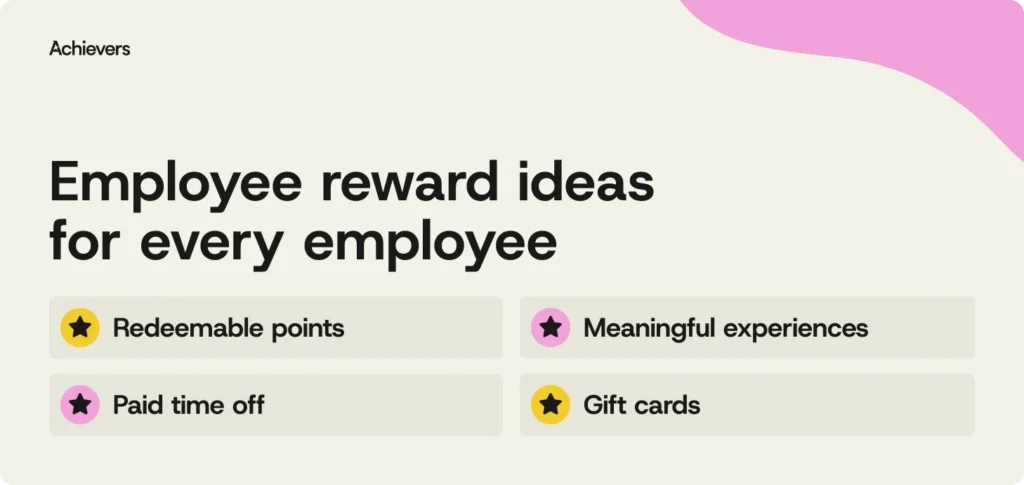
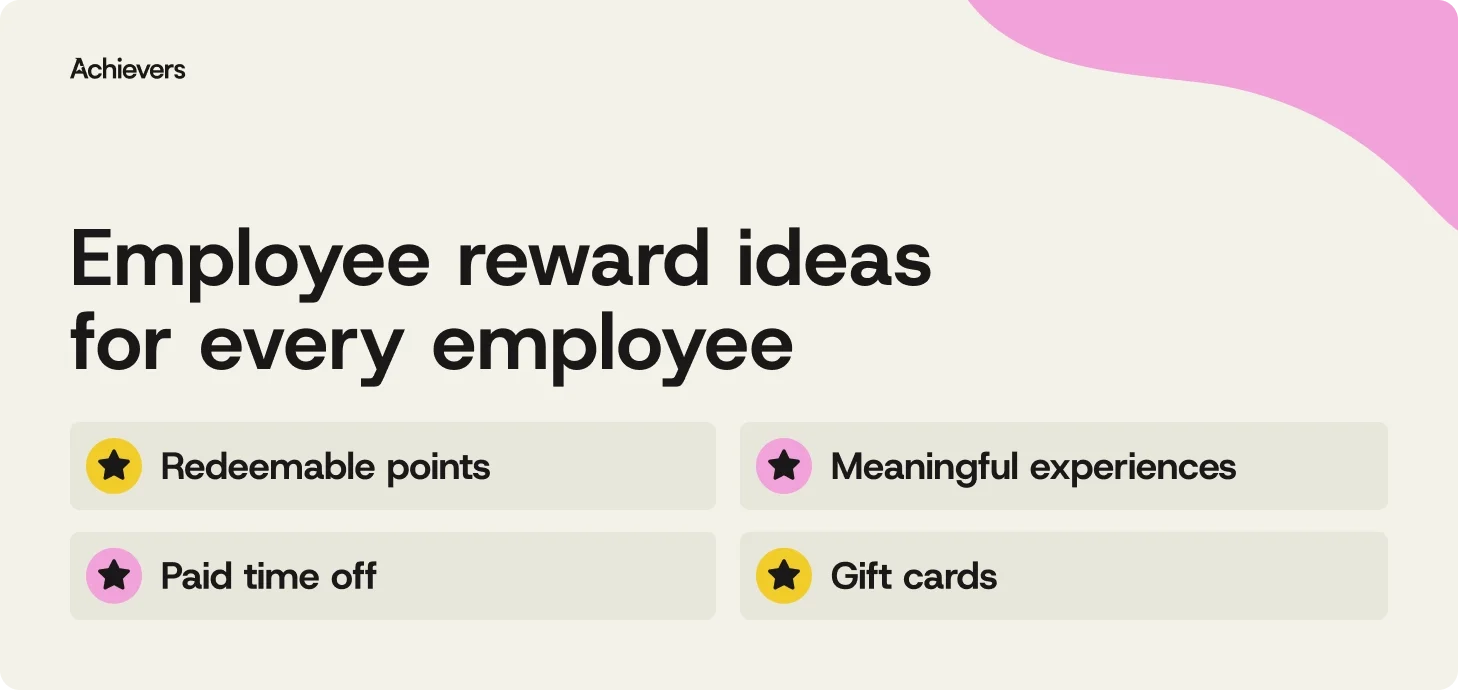
- Redeemable Points: A highly flexible and personal option, points-based systems empower employees to choose from a vast catalog of items, experiences, or even convert to prepaid cards. When tied to meaningful recognition, points accumulate, offering ongoing motivation.
- Cash Bonuses: While not flashy, cash provides universal utility, allowing employees to address financial needs, save, or indulge. Spot bonuses are particularly effective for immediate recognition.
- Gift Cards: Offering a balance between freedom and thoughtfulness, gift cards allow employees to choose from favorite retailers, restaurants, or services, ensuring the reward is genuinely desired.
- Tech Gadgets: High-impact and long-lasting, gadgets like tablets, smartwatches, or noise-canceling headphones enhance daily life, particularly for remote employees who might benefit from home office upgrades.
- Shopping Sprees: Whether through large gift cards or curated online experiences, shopping sprees offer a pure reward experience, allowing employees to treat themselves to something specific they want.
-
Growth & Professional Development Opportunities: Investing in an employee’s future demonstrates long-term commitment.
- Coaching and Mentorship: Providing access to executive coaching, specialized training, or one-on-one time with senior leaders is a strategic reward that fosters skill development and career progression.
- Professional Development Courses/Certifications: Funding for conferences, workshops, or certifications allows employees to expand their expertise and remain competitive in their fields.
- Learning Stipends: Empowering employees with stipends to pursue personal learning interests, from language lessons to creative workshops, fuels curiosity and self-directed growth, building trust and loyalty.
-
Work-Life Balance & Wellness Incentives: These rewards prioritize employee well-being and personal time.
- Paid Time Off (PTO): Extra vacation days or personal days are invaluable, allowing employees to rest, recharge, and address personal needs. Research by Harvard Business Review suggests that even modest increases in vacation time can boost performance.
- Flexible Scheduling: Offering flextime, compressed workweeks, or alternative hours demonstrates trust and empowers employees to better manage their personal and professional lives.
- Wellness Reimbursement/Programs: Subsidies for fitness memberships, meditation apps, activity trackers, or even healthy snacks in the office invest directly in employee health, leading to increased engagement and reduced burnout.
- Surprise Day Off: An unexpected day off, earned through exceptional performance or milestones, feels like a true reward and reinforces the value of rest.
- Work-from-Anywhere Pass: Granting employees the flexibility to work from a different location for a short period can refresh perspective and demonstrate trust in their autonomy.
- Desk Plants: A simple, low-cost gesture that brightens workspaces, improves air quality, and adds a touch of nature, contributing to a healthier and more pleasant environment.
-
Experiential & Social Recognition: These rewards create memorable moments and foster camaraderie.
- Meaningful Experiences: From weekend getaways and cooking classes to concert tickets or spa days, experiences create lasting memories that generic gifts often cannot.
- Team Activities/Outings: Organized events like trivia nights, escape rooms, or outdoor adventures provide opportunities for colleagues to bond outside of work tasks, strengthening team cohesion and trust.
- Catered Meals: Team lunches, surprise snacks, or even delivery stipends for remote teams can boost morale and create shared moments of appreciation.
- Pet Day/Bring-a-Pet-to-Work Day: Inviting furry friends to the office can significantly lift spirits, spark informal connections, and create a more relaxed, human atmosphere.
- Branded Company Swag (High Quality): When thoughtfully chosen (e.g., insulated bottles, quality hoodies, tech accessories), company swag can foster pride and a sense of belonging, reflecting a positive company culture.
-
Purpose-Driven & Public Recognition: These connect individual contributions to broader values and reinforce a culture of appreciation.
- Charitable Donations/Matching: Allowing employees to direct company funds to causes they care about, or matching their personal donations, aligns recognition with personal values and corporate social responsibility.
- Volunteer Opportunities: Rewarding employees with paid time off to volunteer reinforces a sense of purpose and allows them to contribute meaningfully to their communities.
- Peer-to-Peer Recognition: Empowering colleagues to recognize each other’s efforts fosters an authentic and inclusive culture of appreciation. Reports indicate that peer recognition significantly boosts a sense of belonging.
- Handwritten Notes: In an increasingly digital world, a personal, handwritten note conveys genuine intentionality and leaves a lasting, memorable impression.
- Digital Recognition/Social Media Spotlight: Publicly celebrating achievements through internal platforms, company newsletters, or social media boosts pride, reinforces positive behaviors, and builds a shared sense of accomplishment.
-
Unique & High-Impact Rewards: Reserved for significant milestones or exceptional achievements.
- Concierge Rewards: For truly exceptional contributions, a concierge service can help arrange highly personalized, often luxurious, rewards like a dream vacation, a home renovation, or a unique personal item.
- Travel Rewards: Points or vouchers specifically for travel (flights, hotels, car rentals) offer the ultimate escape and opportunity for memorable experiences.
- Prime Parking Spots: A small but highly appreciated daily convenience that signifies recognition and ease, particularly in busy urban environments.
Designing an Impactful Reward Program: Beyond the List
Simply having a list of reward ideas is insufficient; the execution and integration of these rewards into the organizational culture are paramount. To truly drive engagement and retention, a reward program must be strategic, transparent, and continuously refined.
- Timeliness and Frequency: Recognition loses its power if delayed. Rewards should be delivered promptly after an achievement or contribution to reinforce the desired behavior effectively. Regular, smaller acts of appreciation often have a greater cumulative impact than infrequent, large gestures.
- Personalization and Choice: As established, the ability for employees to choose their rewards or receive something tailored to their known preferences is critical. This requires understanding individual needs, which can be gathered through surveys, manager insights, or integrated recognition platforms that track preferences.
- Fairness and Transparency: The criteria for receiving rewards should be clear, equitable, and communicated transparently. Employees need to understand what behaviors and achievements are being recognized to ensure the system is perceived as fair and motivating, rather than arbitrary.
- Alignment with Values and Goals: Rewards should be explicitly linked to the company’s core values, strategic objectives, and desired cultural behaviors. This reinforces what the organization truly prioritizes and helps shape a high-performance culture.
- Integration into Everyday Culture: Recognition should not be an isolated event but an ongoing, embedded practice. This means empowering managers and peers to give recognition regularly and providing accessible tools to do so. It should be a part of daily interactions, team meetings, and performance discussions.
- Measurement and Adaptation: A successful reward program is dynamic. Organizations must track the effectiveness of their recognition initiatives through employee feedback, engagement surveys, and retention metrics. This data allows for continuous improvement and adaptation of the program to evolving employee needs and business objectives.
- Leadership Buy-in and Modeling: For any recognition program to thrive, it requires strong support and active participation from leadership. When leaders consistently recognize employees and champion the culture of appreciation, it sets a powerful example for the entire organization.
The Broader Implications: Beyond Morale to Business Outcomes
The strategic investment in personalized employee rewards extends far beyond merely boosting morale. It has tangible impacts on critical business outcomes. High employee engagement, fueled by effective recognition, is directly linked to higher productivity, reduced absenteeism, lower turnover rates, improved customer satisfaction, and ultimately, increased profitability. Companies with robust recognition cultures often report significantly lower voluntary turnover, saving substantial costs associated with recruitment, onboarding, and lost institutional knowledge.
Furthermore, in today’s competitive talent market, a strong employer brand is indispensable. An organization known for genuinely valuing and recognizing its employees becomes a magnet for top talent. This reputation for a positive and appreciative workplace culture can be a key differentiator, attracting candidates who prioritize purpose and belonging alongside compensation.
Modern recognition platforms play a crucial role in scaling these efforts, enabling organizations to deliver timely, personalized, and impactful recognition across diverse and distributed workforces. These platforms facilitate peer-to-peer recognition, automate milestone celebrations, and provide diverse reward catalogs, ensuring that appreciation becomes a consistent habit rather than a sporadic effort.
In conclusion, the era of generic employee perks is giving way to a more sophisticated, personalized approach to recognition. Organizations that strategically invest in diverse, meaningful, and individualized reward programs are not just fostering happier employees; they are building resilient, high-performing cultures that drive superior business results. By making genuine appreciation an integral part of their everyday culture, companies can cultivate a workforce that feels deeply connected, highly motivated, and committed for the long term.