At its core, employee productivity transcends mere task completion; it is fundamentally about empowering individuals to focus on high-value work, supported by the right resources, and to achieve consistent progress without undue friction. This foundational principle is currently facing significant global challenges, as evidenced by staggering statistics. Only 20% of employees worldwide reported being engaged in 2025, a figure that contributes to an estimated $10 trillion in lost productivity globally, according to Gallup. The root causes of this widespread disengagement are rarely singular dramatic events but rather systemic and structural: a lack of clear priorities, fragmented and disconnected tools, inconsistent or absent recognition, and work that feels busy but ultimately lacks meaning or purpose. This comprehensive examination delves into the evolving understanding of employee productivity, outlines ten practical strategies to enhance it, and explores the critical factors influencing a thriving, efficient workforce, ultimately charting a path toward sustainable organizational success.
Understanding the Modern Productivity Landscape
Traditionally, employee productivity was often narrowly defined by quantitative output—how many widgets were produced, or how many calls were handled within a given timeframe. However, the contemporary understanding has evolved significantly, recognizing that true productivity is about the efficient completion of quality tasks within a reasonable timeframe, without sacrificing employee well-being. It’s a delicate balance where output is maximized, but burnout is meticulously avoided. Overwork, while sometimes perceived as a driver of productivity, is a well-documented precursor to burnout, which invariably diminishes results, increases error rates, and escalates turnover. Gallup’s research further underscores this symbiotic relationship, revealing that engaged employees are consistently 17% more productive than their disengaged counterparts. This shift in perspective champions a balanced approach: driving performance through motivation and support, rather than through unsustainable pressure. A happy, well-supported team is not just a pleasant ideal; it is, unequivocally, a more productive team.
The Evolving Workplace: A Chronology of Productivity Drivers
The discourse surrounding employee productivity has undergone a profound transformation, reflecting broader shifts in economic structures and technological capabilities.
- Early 20th Century: The Era of Scientific Management: Frederick Winslow Taylor’s principles of scientific management, or Taylorism, dominated this period. The focus was on optimizing industrial efficiency through time-and-motion studies, standardization of tasks, and clear hierarchical control. Productivity was primarily a mechanical measure of physical output.
- Mid-20th Century: The Human Relations Movement: The Hawthorne Studies in the 1920s and 30s challenged the purely mechanistic view, revealing that social factors, employee morale, and management attention significantly impacted productivity. This marked the beginning of recognizing the human element in the workplace.
- Late 20th Century: Technological Integration and Quality Management: The rise of personal computers, early enterprise software, and Total Quality Management (TQM) emphasized process optimization and leveraging technology to enhance efficiency. Concepts like lean manufacturing began to gain traction, focusing on waste reduction.
- Early 21st Century: The Knowledge Economy and Digital Transformation: With the advent of the internet and advanced computing, productivity discussions shifted to knowledge workers. Agile methodologies, project management software, and global collaboration became key. The emphasis was on innovation, speed, and intellectual output.
- Post-2020: The Hybrid Era and Holistic Well-being: The COVID-19 pandemic catalyzed an unprecedented shift to remote and hybrid work models. This era brought employee well-being, work-life balance, psychological safety, and flexible work arrangements to the forefront of productivity discussions. Organizations recognized that sustained output in a distributed environment required a deeper investment in employee engagement and support systems.
This chronology illustrates a clear trend: from a narrow focus on physical output to a holistic understanding that integrates human psychology, technological enablement, and organizational culture as pivotal drivers of productivity.
The $10 Trillion Drain: Deeper Insights into Global Disengagement
The $10 trillion in lost productivity globally is not merely an abstract number; it represents a tangible economic drag with far-reaching consequences. This colossal sum stems directly from disengaged employees who are less innovative, less customer-focused, and more prone to absenteeism and turnover. Beyond Gallup’s 2025 projection, other studies reinforce this crisis. A 2023 Microsoft Work Trend Index report indicated that while employees felt productive, leaders often questioned their output in hybrid work settings, highlighting a perception gap that can further erode trust and engagement. The cost of disengagement manifests in several critical areas:

- Reduced Output Quality: Disinterested employees are less likely to invest the cognitive effort required for high-quality work, leading to errors, rework, and customer dissatisfaction.
- Increased Absenteeism and Presenteeism: Disengaged employees are more likely to take sick days or, worse, show up to work but be unproductive (presenteeism), costing companies both in direct wages and lost output.
- Higher Turnover Rates: Unhappy and unfulfilled employees seek opportunities elsewhere, leading to significant recruitment, onboarding, and training costs for their replacements. The cost of replacing an employee can range from half to twice their annual salary, depending on the role.
- Stifled Innovation: Engaged employees are more likely to contribute new ideas, solve complex problems, and adapt to change. Disengagement creates a stagnant environment where innovation struggles to flourish.
- Negative Workplace Culture: Disengagement can be contagious, eroding team morale and creating a toxic environment that further hinders productivity and attracts less talent.
The regional variations in engagement levels also paint a complex picture. While some regions show higher engagement due to cultural factors or specific economic conditions, the overall global trend points to a systemic challenge that transcends geographical boundaries, demanding a universal yet adaptable approach to workplace transformation.
Ten Strategic Pillars for Elevating Employee Output and Well-being
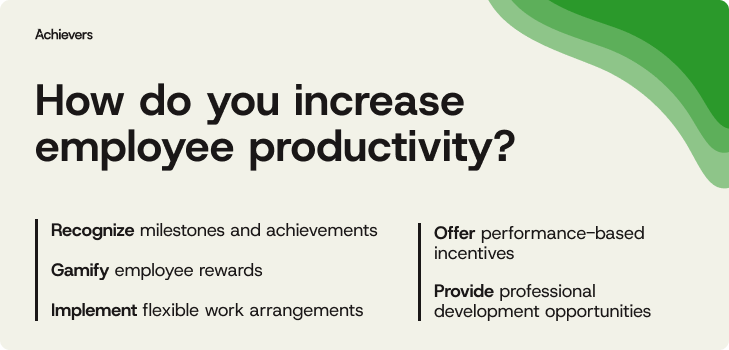
Increasing employee productivity is a continuous organizational objective that necessitates a smart, integrated approach rather than simply demanding more effort. By strategically addressing recognition, clear goal-setting, communication, and work-life balance, organizations can cultivate a more efficient, motivated, and deeply engaged workforce. Here are ten fundamental strategies:
1. Cultivating a Culture of Valued Contribution
Recognition is a powerful amplifier of desired behaviors. When employees consistently feel seen, appreciated, and valued for their contributions, they are significantly more likely to remain engaged and direct their efforts toward meaningful outcomes. Consistent, timely, and specific recognition not only boosts morale but also builds momentum, clearly delineating what constitutes high-performance and encouraging its replication. Data from Achievers’ 2026 Engagement and Retention Report indicates a direct link between effective recognition programs and productivity gains, underscoring its tangible impact.
2. Architecting Clarity: Goals and Expectations
Productivity quickly erodes in the face of ambiguity or constantly shifting priorities. Clearly defined goals provide employees with a shared understanding of what is most important and how success will be measured. Frameworks such as SMART goals (Specific, Measurable, Achievable, Relevant, Time-bound) help teams focus their energy, minimizing rework and confusion. When expectations are transparent, individuals can proceed with confidence, reducing the cognitive load associated with second-guessing.
3. Fostering Seamless Communication and Dynamic Collaboration
Effective work hinges on unobstructed information flow. Robust internal communication channels and strong collaborative practices mitigate delays, prevent duplication of effort, and reduce friction between teams. When employees can effortlessly share updates, pose questions, and align on critical decisions, workflows accelerate, and avoidable obstacles diminish. Modern collaboration tools, when implemented effectively, are crucial enablers.
4. Investing in Continuous Growth: Professional Development
Productivity naturally improves when employees possess the skills necessary to adapt to evolving demands. Strategic training and development initiatives empower individuals to perform more effectively in their current roles while simultaneously preparing them for future challenges. Organizations that support continuous learning foster a more confident, capable, and deeply invested workforce. The ROI on training is often substantial, contributing to higher quality output and greater efficiency.
5. Optimizing the Work Environment: Physical and Digital Spaces
The work environment, whether physical or remote, profoundly influences productivity. Thoughtful design, ergonomic setups, and environments conducive to focus significantly reduce distractions and enable deeper concentration. In a well-optimized environment, employees spend less time compensating for deficiencies and more time generating meaningful results. This includes ensuring reliable technology, comfortable workspaces, and a culture that respects focused work time.
6. Harnessing the Power of Technology and Intelligent Automation
The strategic deployment of appropriate technology can dramatically reduce mundane, repetitive tasks, thereby freeing employees to concentrate on higher-value activities. Automation can handle routine processes, while integrated collaboration and planning tools help teams maintain organization and alignment. When technological systems are integrated and intuitive, productivity gains are realized not through faster individual effort, but through smarter, more streamlined operations. The rise of AI and machine learning further promises to revolutionize how organizations augment human capabilities.
7. Championing Holistic Well-being and Sustainable Work-Life Balance
Sustainable productivity is fueled by sustained energy, not by sheer endurance. Implementing flexible work options, comprehensive wellness support programs (including mental health resources), and maintaining realistic workloads are critical preventative measures against burnout. Employees who have ample opportunities to recharge are better equipped to focus, engage in complex problem-solving, and maintain consistent high performance over the long term.
8. Streamlining Operations and Reclaiming Time from Redundant Meetings
Overly complex processes and an abundance of unproductive meetings are silent but significant drains on organizational productivity. By systematically streamlining workflows and critically assessing the value of every meeting, organizations can reclaim invaluable time for focused, impactful work. Fewer interruptions lead to clearer thinking, swifter execution, and reduced frustration across all teams. Implementing meeting-free days or stricter meeting protocols can yield immediate benefits.
9. Implementing Robust Performance Tracking and Constructive Feedback
Productivity flourishes when feedback is delivered in a timely, specific, and actionable manner. Continuous performance tracking, coupled with regular check-ins and coaching conversations, helps employees understand their current performance, identify areas for improvement, and align their efforts with organizational objectives. Clear feedback loops minimize surprises, foster continuous growth, and ensure consistent progress toward expectations.
10. Building Cohesive Teams and Strong Workplace Connections
Robust working relationships are the bedrock of effective collaboration. When employees trust their colleagues and feel a genuine connection to their teams, communication becomes more fluid, and problems are resolved with greater agility. Productivity gains emerge not just from the enjoyment of working together, but from the systemic reduction of friction that strong interpersonal bonds facilitate. Initiatives fostering psychological safety are paramount here.
Underlying Drivers: Key Factors Shaping Performance
Productivity does not exist in a vacuum; it is intricately shaped by a confluence of factors, ranging from organizational culture to technological infrastructure. Understanding these core drivers is essential for cultivating an environment where employees can genuinely thrive.
- Organizational Culture: The Invisible Hand of Productivity: A positive, supportive, and psychologically safe workplace culture is a powerful catalyst for high performance, fostering trust, encouraging risk-taking, and promoting open communication. Conversely, a toxic or unsupportive culture can rapidly diminish morale and drive talent away, severely impacting productivity.
- Engagement and Motivation: Fueling the Workforce: When employees are intrinsically motivated and deeply engaged with their work, they contribute more meaningfully, go the extra mile, and are more resilient in the face of challenges. Factors like a sense of purpose, autonomy, mastery, and belonging are critical motivators.
- Technological Infrastructure: Tools as Enablers (or Obstacles): Access to modern, efficient, and well-integrated tools and technologies is paramount. Great tools streamline processes and empower employees; outdated, cumbersome, or disconnected systems create frustration, waste time, and act as significant productivity impediments.
- Clarity and Manageable Workloads: Preventing Overwhelm: Clear role definitions, well-defined responsibilities, and equitable workload distribution prevent confusion, reduce stress, and ensure that employees can focus their energy effectively. Ambiguity and chronic overwork lead to burnout and diminished output quality.
- Leadership’s Pivotal Role: Guiding and Empowering: Effective leadership is perhaps the most critical determinant of productivity. Leaders who inspire, communicate clearly, provide constructive feedback, empower their teams, and champion employee well-being create an environment where productivity can flourish. Conversely, poor leadership can stifle initiative and foster disengagement.
The Power of Recognition: A Catalyst for Sustained Productivity
Employee rewards and recognition are not merely feel-good initiatives; they are strategic levers that profoundly boost productivity by reinforcing the specific actions and behaviors that drive organizational results. The Achievers Workforce Institute’s 2026 Engagement and Retention Report, based on insights from 3,500 employees across eight regions, revealed that 34% of those who actively redeem rewards reported direct productivity gains. This powerful correlation arises from several key mechanisms:
- Connecting Effort to Personal Value: Rewards are most effective when they resonate personally with employees. When individuals can select rewards that align with their personal interests or specific needs, the link between their effort and the tangible outcome is significantly strengthened. They perceive a direct, personal return on their investment of time and energy.
- Reinforcing High-Value Behaviors: People naturally tend to repeat actions that lead to clear, meaningful, and positive outcomes. When employees receive and redeem rewards, they directly experience this positive feedback loop. They understand precisely which actions led to the recognition, making them far more likely to repeat those high-value behaviors.
- Driving Follow-Through: Knowing that their diligent effort will result in a personally valued reward significantly increases an employee’s motivation to complete tasks, maintain focus, and persist through challenges. This anticipation acts as a powerful incentive for consistent follow-through and task completion.
- Building Consistency and Improving Performance: Regular and meaningful recognition helps to stabilize and elevate performance levels. When employees consistently observe that their dedication and effort are acknowledged and rewarded with something that genuinely matters to them, they are motivated to sustain that level of performance, fostering a culture of continuous improvement.
Measuring What Matters: Tracking Productivity in the Modern Era
Effective improvement is contingent upon accurate measurement; in the realm of productivity, guesswork is insufficient. Organizations must move beyond superficial metrics to genuinely understand and enhance output. The starting point involves establishing Key Performance Indicators (KPIs) that are directly aligned with strategic organizational goals, such as output per employee, project completion rates, or average turnaround time. The focus must be on measuring actual performance and valuable output, rather than merely tracking "busyness" – for instance, a high volume of rapidly answered emails does not inherently equate to high productivity if those emails are not contributing to core objectives.
However, quantitative metrics alone present an incomplete picture. Integrating qualitative data through employee feedback mechanisms and engagement surveys provides invaluable insights into underlying motivation, perceived support, and potential friction points. Platforms like Achievers specialize in capturing real-time sentiment, allowing organizations to track engagement and productivity more accurately and responsively. A compelling example is Achievers’ partner, Sobeys, a leading Canadian grocery retailer. By implementing a comprehensive recognition and feedback system through the Achievers platform, Sobeys successfully boosted both engagement and productivity across its vast workforce of 131,000 employees. This case study illustrates the power of combining hard data (KPIs) with soft data (employee sentiment) to gain a holistic view of productivity and to identify precise areas for intervention and improvement.
Charting a Course for Future-Ready Productivity
Ultimately, the endeavor to boost employee productivity is not about extracting every last drop of energy from a workforce; it is about strategically cultivating an environment where individuals are intrinsically motivated and genuinely empowered to perform at their best. From fostering a robust culture of recognition and appreciation to meticulously setting clear goals, streamlining operational tools, and providing unwavering support for holistic employee well-being, the most effective and sustainable strategies prioritize people first, with processes serving as essential enablers.
For organizations seeking long-term, impactful results, the era of relying on mere caffeine and optimistic hope must end. The path forward demands deliberate investment: in the right technological tools, in actively listening to and acting upon employee feedback, and in consciously crafting a workplace environment that allows every individual to thrive. Because when employees are empowered, deeply engaged, and operating within a supportive framework, elevated productivity is not an aspiration but an inevitable outcome.
Furthermore, a genuinely productive workforce offers benefits far beyond immediate operational metrics. It is a powerful engine for enhanced talent retention, a fertile ground for innovation, and a fundamental driver of sustained organizational growth for years to come. In essence, prioritizing the well-being and effectiveness of one’s people is not merely a benevolent act; it is demonstrably the most intelligent and strategic business decision an organization can make.