
The United States boasts a robust talent pool of over two million individuals serving in its Armed Forces, with approximately 250,000 transitioning into civilian life annually. This represents a substantial influx of highly skilled, disciplined, and adaptable professionals entering the civilian workforce each year. However, despite the clear value veterans bring—including unparalleled leadership, technical proficiency, and problem-solving capabilities—many companies historically struggled to effectively recruit and integrate this vital demographic. A core impediment has been a fundamental communication gap, specifically the "language barrier" associated with military occupational classifications.
The Enduring Challenge: Decoding Military Expertise for Civilian Roles
For decades, veterans and enlisted military members have described their professional experiences and qualifications using specific military job codes, such as Military Occupational Specialties (MOS) for the Army, Air Force Specialty Codes (AFSC), Navy Enlisted Classifications (NEC), or Marine Corps Occupational Specialties (MOS). These alphanumeric codes, typically ranging from two to six characters, are deeply ingrained in military culture and serve as precise identifiers for roles, responsibilities, and skill sets within the armed services. For instance, an Army veteran with an MOS of "42B" is understood within military circles as a Human Resources Officer, while a "92Y" signifies a Unit Supply Specialist, and a "26B" an Information Systems Engineer. Other examples include "11B" (Infantryman, with transferable skills in leadership, team coordination, and strategic execution), "68W" (Combat Medic, translating to various healthcare support roles), or "25B" (Information Technology Specialist, aligning with IT support, network administration, and cybersecurity).
The challenge arises when these highly skilled individuals enter the civilian job market. A veteran accustomed to searching for "42B jobs" would likely encounter frustration when typical civilian career sites or Applicant Tracking Systems (ATS) fail to recognize or translate this code into relevant "Human Resources Manager" or "Talent Acquisition Specialist" positions. This disconnect often leads to zero search results or, at best, irrelevant suggestions, creating a significant barrier to employment for veterans and preventing employers from accessing a rich talent pipeline. This issue is not merely a linguistic inconvenience; it represents a systemic hurdle that has long contributed to higher unemployment rates among transitioning service members and veterans compared to their civilian counterparts in certain demographics or periods. According to the Bureau of Labor Statistics, while overall veteran unemployment rates have generally declined in recent years, specific groups, such as younger veterans, can still face disproportionate challenges.
Historically, efforts to bridge this gap primarily relied on manual translation guides, specialized veteran job fairs, and recruiters with military backgrounds. While valuable, these methods often lacked scalability and efficiency, particularly for large organizations processing thousands of applications. The sheer volume of transitioning personnel and the diversity of military roles across all branches underscore the need for more sophisticated, tech-driven solutions. Government initiatives, such as the VETS Act (Veterans’ Employment and Training Service) and various hiring preferences for federal contractors, have aimed to provide frameworks, but the practical implementation at the corporate level often lagged due to technical limitations.
The Evolving Landscape of Veteran Recruitment Technology
The recognition of this recruitment gap has spurred innovation in the talent acquisition industry. While many leading, veteran-centric job boards have long incorporated military job code support into their search functionalities – allowing a veteran to search for "42B" and receive a list of relevant HR roles – this capability rarely extended to individual company career sites. Major job boards recognized the competitive advantage and the social responsibility of catering to this specific demographic, investing in database mapping and keyword algorithms. However, most corporate career portals, driven by conventional ATS platforms, were designed with civilian keywords in mind, making them largely inaccessible to veterans relying on their ingrained military terminology. This disparity meant that even companies genuinely committed to veteran hiring often inadvertently created an opaque and frustrating experience for potential candidates on their own digital storefronts. The cost and complexity of custom integrations into legacy ATS systems often deterred companies from developing this specialized search functionality.
However, a significant shift is underway, largely driven by advancements in artificial intelligence (AI) and natural language processing (NLP). These technologies are now being leveraged to directly address the military-to-civilian skill translation challenge, offering a scalable and efficient solution that can bridge this long-standing divide.
Google’s AI Cloud Talent Solutions: A Game Changer
At the forefront of this technological revolution is Google Cloud Talent Solutions. This AI-powered job search technology is designed to understand and semantically interpret complex job descriptions and candidate queries, including the nuanced language of military job codes. By integrating this technology, company career sites can now effectively "speak the language" of veterans, translating military codes into civilian job titles and skill sets with remarkable accuracy. The system uses machine learning algorithms trained on vast datasets of military roles and their civilian equivalents, enabling it to infer connections and provide relevant job matches even without explicit keyword overlap.
The impact of this integration is evident across various industries, transforming how major employers connect with veteran talent:
- FedEx: A search for "42B" (Human Resource Officer) on FedEx’s career site now yields multiple relevant human resources positions, demonstrating the AI’s ability to cross-reference military codes with corporate roles. This translates skills in personnel management, administrative oversight, and policy implementation directly into civilian HR functions.
- BAE Systems: For a "92Y" (Unit Supply Specialist), BAE Systems’ site presents a substantial list of supply chain and logistics-related opportunities. This translation is critical, as a "Unit Supply Specialist" involves not just basic supply, but comprehensive inventory management, procurement, distribution, and logistical coordination—skills highly sought after in the defense and logistics sectors, which are vital to BAE Systems’ operations.
- Johnson & Johnson (J&J): A veteran searching for "66B" (Community Health Nurse) can find specific nursing roles that align with their military medical background, even within a large pool of thousands of jobs, highlighting the precision of the AI in a highly specialized field. This ensures medical professionals transitioning from the military can quickly identify opportunities where their clinical and emergency response skills are valued.
- Westrock: Similar to FedEx, Westrock’s career site leverages the AI to translate "42B" into applicable HR-related positions, supporting their recruitment efforts for a diverse industrial workforce.
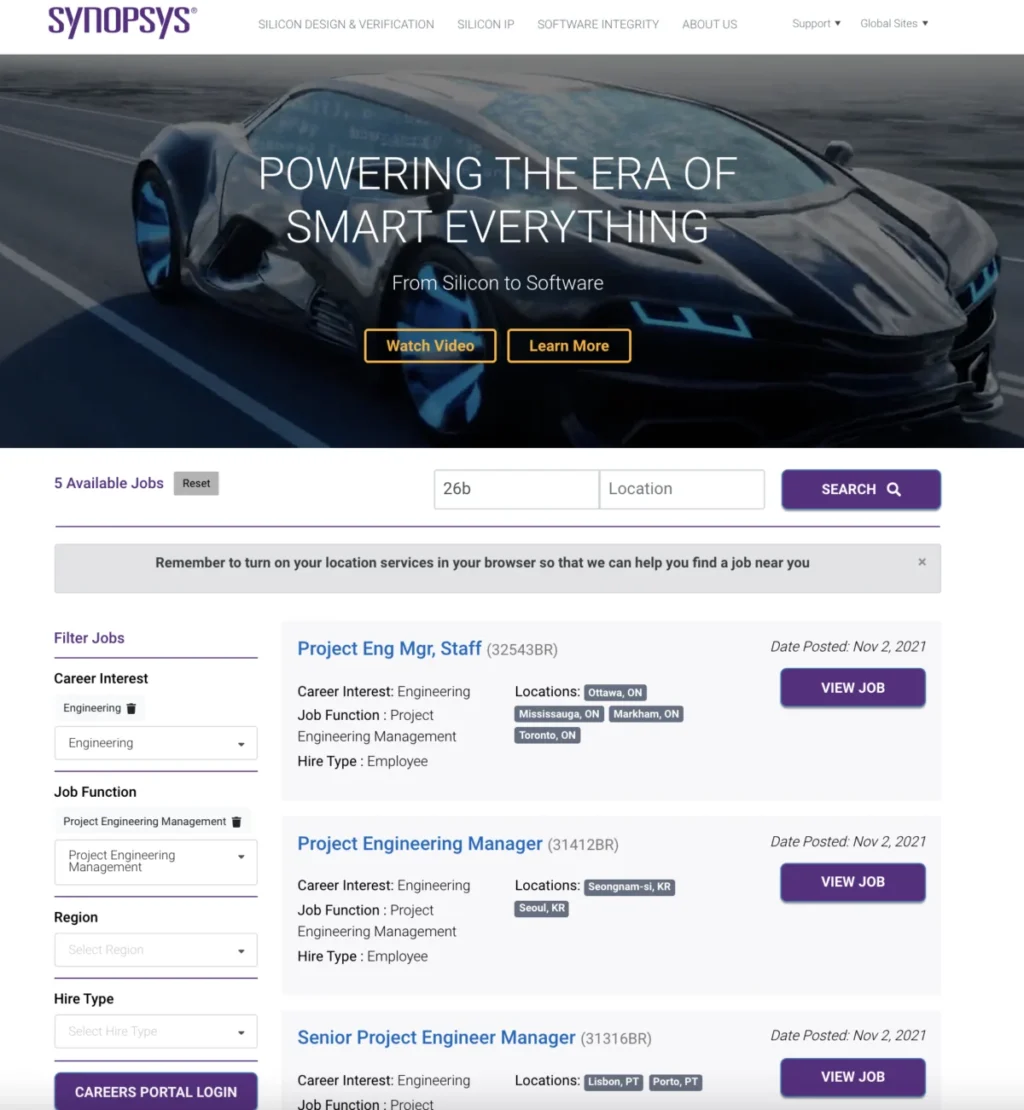
- Synopsys: A technology company like Synopsys can now connect "26B" (Information Systems Engineer) to relevant IT and engineering roles, illustrating the AI’s versatility across different professional domains. Caitlin Perez, Talent Programs Manager at Synopsys, emphasized the significance of this advancement: "We were really excited when we learned that Ongig’s AI job search extends to and supports Veterans. Synopsys is focused and committed to recruiting Veterans and this functionality supports our commitment and is a step in the right direction for us and our job seekers." Her statement underscores the direct business value seen by companies implementing this technology.
- Anixter and Peak6: Both companies have successfully implemented the AI search, allowing veterans searching for "25A" (Signal Officer/Operations) to find roles that align with their operational and communications expertise, showcasing how diverse organizations, from distribution to financial technology, can benefit from accurate skill translation.
These examples underscore a profound shift: company career sites are transitioning from passive job boards to intelligent matching platforms that actively assist veterans in navigating the civilian employment landscape. The AI doesn’t just match keywords; it understands the underlying skills and competencies represented by the military codes, offering a far more accurate and empathetic search experience. This reduces frustration for job seekers and increases the likelihood of qualified candidates finding suitable positions.
Implementing AI-Powered Veteran Job Search: Pathways for Employers
For organizations keen on leveraging this technology, several implementation pathways exist, each with varying levels of customization and resource commitment:
- Custom Development and Direct Google Integration: Companies can hire custom developers to integrate Google Cloud Talent Solutions directly into their existing career site infrastructure. This involves working with Google’s extensive APIs and often requires a subscription fee per query. The development team would also need to ensure seamless integration with the company’s existing ATS and provide ongoing maintenance and optimization for the search functionality. While offering maximum customization and control, this route demands significant internal technical resources and expertise, alongside a potentially higher initial investment.
- Career Site Builder Software Solutions: Google has partnered with various talent acquisition technology providers that offer career site builder software pre-integrated with Google Cloud Talent Solutions. Companies like Ongig (who developed the original article’s insights) and Jibe (now part of iCIMS) provide comprehensive platforms that include AI-powered veteran job search capabilities as part of a broader career site management suite. This approach can range from $10,000 to $150,000 annually, offering a more turnkey solution for companies looking to overhaul or upgrade their entire career site experience with advanced functionalities, including diversity and inclusion features.
- AI Job Search Embed: For organizations not ready for a full career site revamp or significant custom development, an embeddable AI Job Search box, such as Ongig’s AI Job Search Embed, offers a streamlined solution. This involves adding just a few lines of code to an existing career site, allowing the Google AI search functionality to operate independently while still pulling job data from the company’s ATS. When a candidate clicks on a search result, they are directed to the company’s standard job posting page. This option minimizes disruption, works with virtually any ATS, and provides an immediate boost to veteran candidate engagement with nearly zero downtime, making it a cost-effective and efficient entry point for AI-driven veteran recruitment.
Beyond AI: Holistic Strategies to Attract and Retain Veteran Talent
While AI-powered search is a crucial technological advancement, a comprehensive veteran recruitment strategy extends beyond just technical solutions. Employers must adopt a multi-faceted approach that addresses every stage of the candidate journey and fosters an inclusive environment.
-
Craft Veteran-Friendly Job Descriptions: Beyond incorporating military job codes, companies must intentionally tailor job descriptions to resonate with veterans. This involves:
- Translating Jargon: Replacing civilian corporate jargon with terms understandable to military personnel.
- Highlighting Transferable Skills: Explicitly listing how military skills (e.g., leadership, teamwork, adaptability, strategic planning, problem-solving under pressure, technical proficiencies, emergency response, logistical coordination) translate to the civilian role.
- Inclusive Language: Avoiding language that might inadvertently exclude or alienate veterans.
- Example Integration: A "Project Manager" role description could highlight "Experience in leading cross-functional teams in high-pressure environments, similar to military operational deployments" or "Demonstrated ability to manage complex logistics and resources, a skill honed in military supply chain roles." This proactive language helps veterans self-identify with roles.
-
Leverage Specialized Veteran Job Boards and Networks: Integrate job listings directly with popular veteran job boards such as RecruitMilitary, Military.com, FedsHireVets, Hire Heroes USA, and government-sponsored initiatives like the Department of Labor’s Veterans’ Employment and Training Service (VETS). These platforms are specifically designed to connect employers with veteran talent and can significantly expand reach. Participating in their virtual or in-person career fairs can also be highly effective for direct engagement.
-
Develop Veteran-Specific Content and Resources: Create a dedicated section on the company career site or blog with resources tailored for transitioning service members. This could include:
- Guides on translating military resumes to civilian formats.
- Interview preparation tips specifically for veterans, addressing cultural differences.
- FAQs addressing common concerns about civilian employment, benefits, and workplace culture.
- Webinars or articles on company culture and how it aligns with military values of mission, teamwork, and integrity.
- Information about mentorship programs or Employee Resource Groups (ERGs) specifically for veterans, fostering a sense of community.
-
Organize Virtual Career Fairs and Job Events: Host or actively participate in events specifically targeting the veteran community. Virtual fairs offer broad accessibility, allowing candidates from anywhere to connect with recruiters and learn about opportunities, circumventing geographical barriers. These events facilitate real-time engagement, provide networking opportunities, and allow for direct conversations that can clarify roles and company expectations, often with dedicated booths for veteran support.
-
Build Dedicated Veteran Hiring Programs: Implement structured programs designed to ease the transition for ex-military personnel. This can include:
- Apprenticeships and Internships: Offering hands-on training and skill development in a civilian context, allowing veterans to gain industry-specific experience.
- Fellowships: Programs focused on enhancing leadership and specialized skills, often with a clear pathway to full-time employment within the organization.
- Mentorship Programs: Pairing new veteran hires with experienced employees (ideally, other veterans) to provide guidance and support during their onboarding and integration into corporate culture.
- Cultural Assimilation Training: Providing resources to help veterans adapt to corporate culture and for civilian employees to better understand military backgrounds and the unique skills veterans possess. Many government incentives and tax credits exist for companies that hire veterans, further encouraging these programs.
-
Implement Military-to-Civilian Skill Mapping Tools: Beyond a simple search, career sites can offer interactive tools that allow veterans to input their military experience (e.g., specific training, deployments, roles) and receive tailored recommendations for civilian jobs. These tools can highlight how specific military competencies (e.g., strategic planning, risk assessment, large-scale project management, technical maintenance, crisis management) directly align with corporate requirements, bypassing the need for explicit MOS codes entirely. This empowers applicants to confidently identify suitable roles without relying solely on keyword matching.
-
Showcase Veteran-to-Civilian Success Stories: Authentic testimonials and success stories from current employees who are veterans can be incredibly powerful. Candid videos, written profiles, or podcast interviews detailing their transition journey, challenges overcome, and how their military experience contributes to their current role can foster engagement and build trust. This "social proof" demonstrates a genuine commitment to veteran employees and provides relatable narratives for prospective candidates, inspiring others to apply.
Broader Impact and Future Implications
The integration of AI into veteran recruitment signifies more than just a technological upgrade; it represents a paradigm shift in how companies approach talent acquisition. By breaking down the linguistic barriers, AI-powered solutions like Google Cloud Talent Solutions unlock a vast, untapped reservoir of talent.
The implications are far-reaching:
- Enhanced Diversity and Inclusion: Companies gain access to a highly diverse workforce with unique perspectives, experiences, and a strong commitment to mission, enriching corporate culture.
- Improved Efficiency and Reduced Time-to-Hire: Recruiters can more quickly identify qualified veteran candidates, streamlining the hiring process and reducing recruitment costs by minimizing irrelevant applications.
- Stronger Workforce: Veterans bring a distinct set of valuable soft skills—resilience, discipline, adaptability, problem-solving under pressure, and leadership—that are critical for success in any organization, particularly in dynamic and challenging environments.
- Economic Contribution: By facilitating veteran employment, these initiatives contribute significantly to reducing veteran unemployment rates and boosting economic productivity at both individual and national levels.
- Corporate Social Responsibility: Actively recruiting veterans demonstrates a company’s commitment to supporting those who have served, enhancing its brand reputation, attracting patriotic consumers, and fostering a positive public image.
Looking ahead, further advancements in AI and data analytics could lead to even more personalized veteran recruitment experiences, proactive outreach based on transition timelines, and seamless integration with veteran support services for housing, education, and healthcare. The goal is to create an ecosystem where military service is not a barrier but a clear asset, easily recognized and valued by civilian employers. The journey to transform job descriptions and make them universally accessible, especially for groups like veterans, is a crucial mission. Through strategic partnerships, technological innovation, and a holistic approach to talent attraction, companies can truly honor and leverage the invaluable contributions of our nation’s service members, building stronger, more resilient, and more inclusive workforces for the future.






