
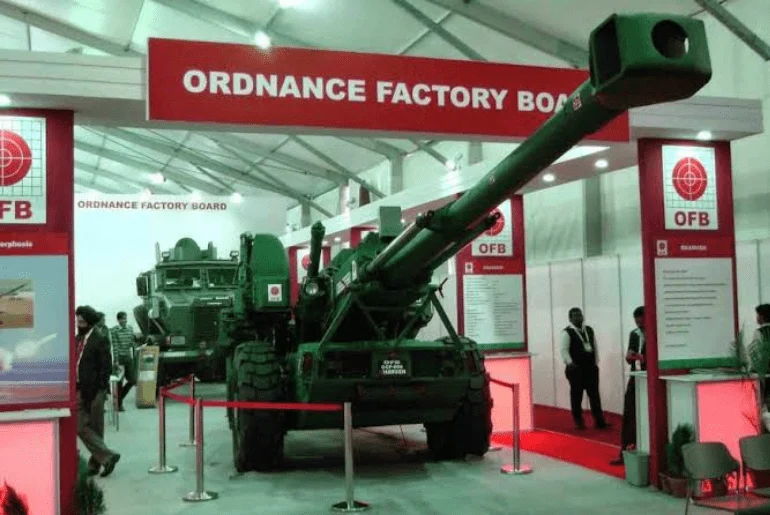
Background to a Monumental Reform: The Corporatisation of OFB
To fully appreciate the significance of this redeployment, it is essential to delve into the historical context and the rationale behind the corporatisation of the Ordnance Factory Board. Established in 1712 with the Gun Carriage Agency at Cossipore, Kolkata, the OFB was one of the oldest and largest government-run production organisations in the world, directly under the Department of Defence Production, Ministry of Defence. It functioned as a departmental organisation, responsible for research, development, production, testing, marketing, and logistics of a comprehensive product range for the Indian Armed Forces, paramilitary forces, and even some exports. With 41 factories spread across India, a vast workforce, and an annual turnover running into thousands of crores, OFB was the backbone of India’s indigenous defence manufacturing capabilities for centuries.
However, over the years, the OFB faced increasing scrutiny regarding its efficiency, accountability, quality standards, and ability to adapt to modern manufacturing practices and technological advancements. Critics often pointed to its monolithic structure, bureaucratic hurdles, lack of commercial competitiveness, and inability to meet the dynamic requirements of the armed forces in a timely manner. The departmental status meant it operated without the flexibility and autonomy typically associated with corporate entities, often leading to delays in procurement, cost overruns, and limited innovation.
The concept of corporatisation for the OFB had been debated for decades, with various expert committees, including the T.K. Nair Committee (2000) and the V.K. Misra Committee (2005), recommending a shift towards a corporate structure to enhance efficiency, productivity, and profitability. The primary objectives of the government’s decision to corporatise, announced in May 2020 as part of the Atmanirbhar Bharat (Self-Reliant India) initiative, were multifaceted:
- Enhance Autonomy and Accountability: To transform OFB into a commercially viable entity with greater operational and financial autonomy.
- Improve Efficiency and Competitiveness: To streamline operations, introduce modern management practices, and foster a competitive environment.
- Boost Exports: To leverage India’s manufacturing prowess for global markets, aligning with the ‘Make in India’ and ‘Make for the World’ vision.
- Modernisation: To facilitate technological upgrades and attract private sector partnerships for innovation.
- Specialisation: To allow factories to specialise in core competencies, leading to better quality products and services.
A Timeline of Transformation:
The journey to corporatisation involved several key milestones:
- May 2020: Finance Minister Nirmala Sitharaman announces the corporatisation of OFB as part of the Atmanirbhar Bharat package, signaling the government’s intent to improve its autonomy, accountability, and efficiency.
- July 2020: The Union Cabinet approves the corporatisation plan. A high-powered Empowered Group of Ministers (EGoM) was constituted under the chairmanship of Defence Minister Rajnath Singh to oversee the process.
- September 2021: The government officially dissolves the Ordnance Factory Board and transfers the management, control, operation, and assets of 41 production units to seven new Public Sector Undertakings (PSUs). These new entities are:
- Munitions India Limited (MIL)
- Armoured Vehicles Nigam Limited (AVNL)
- Advanced Weapons and Equipment India Limited (AWEIL)
- Troop Comforts Limited (TCL)
- Yantra India Limited (YIL)
- India Optel Limited (IOL)
- Gliders India Limited (GIL)
- October 2021: The seven new Defence Public Sector Undertakings (DPSUs) officially commence operations, marking a new chapter in India’s defence manufacturing landscape.
Throughout this process, employee unions, including the Bharatiya Mazdoor Sangh and its affiliates, expressed deep-seated concerns regarding job security, pension benefits, and the continuity of service for the approximately 76,000 employees of the OFB. They feared that corporatisation might lead to layoffs, dilution of service conditions, and a shift away from the protective umbrella of government employment. Strikes and protests were organised, highlighting the apprehension among the workforce.
The Redeployment Initiative: A Government Assurance
It is against this backdrop of significant reform and considerable employee anxiety that the Central government’s decision to redeploy nearly 65,000 former Ordnance Factory employees takes on paramount importance. This move directly addresses the core concern of job security, ensuring that these individuals transition from their previous roles within the departmental OFB structure to regular government service. The official statement underscores that this guarantees "long-term employment security," a crucial assurance that aims to alleviate the fears of a workforce that dedicated decades to national defence production.
Dr. Jitendra Singh, during his interaction with the delegation from the Bharatiya Mazdoor Sangh (BMS), reiterated the government’s commitment to employee welfare even amidst ambitious reforms. The fact that the figure of 65,000 represents a substantial majority of the erstwhile OFB workforce (which was around 76,000 at the time of corporatisation) signifies a comprehensive approach to securing their future. While the remaining employees would be absorbed into the newly formed PSUs, this redeployment ensures that a large cohort retains the benefits and stability associated with direct government employment. This decision is perceived as a critical step in managing the human resource aspects of such a large-scale organisational restructuring, mitigating potential industrial unrest and ensuring a smooth transition.
Union Perspectives and Additional Demands
The Bharatiya Mazdoor Sangh (BMS) and its affiliated organisations, including the Bharatiya Pratiraksha Mazdoor Sangh (BPMS), Government Employees National Confederation (GENC), Public Sector Employees National Confederation, SHAR Employees Trade Union, and the Space Employees Association, played a pivotal role in advocating for the rights and concerns of the OFB workforce. Their initial stance against corporatisation was primarily driven by fears of job losses and changes in service conditions. The delegation’s reported welcome of the government’s redeployment decision underscores a significant shift, indicating that this particular concern has been largely addressed to their satisfaction. This gesture of appreciation from the unions highlights the efficacy of dialogue and negotiation in navigating complex policy changes.
However, the meeting also served as a platform for employee representatives to raise a multitude of other pending service-related issues, demonstrating that while a major hurdle has been cleared, several critical matters still require attention. These issues included:
- Extension of Old Pension Scheme (OPS) Benefits: A key demand was to extend the benefits of the Old Pension Scheme to employees appointed on compassionate grounds. The OPS, which guarantees a defined pension benefit based on the last drawn salary, was replaced by the National Pension System (NPS) for new recruits from January 1, 2004. Employees appointed on compassionate grounds often come from families of deceased or medically invalidated government servants, and the demand reflects a desire for greater financial security for these vulnerable individuals, aligning their pension benefits with those who joined under the earlier scheme.
- Career Progression and Cadre-Related Matters: The delegation also sought clarity and reforms related to career progression avenues and various cadre-related issues. This typically involves aspects like promotion policies, stagnation in certain cadres, inter-cadre transfers, and ensuring equitable opportunities for advancement. Such issues are crucial for maintaining employee morale and ensuring a motivated workforce.
- Wider Stakeholder Consultations on Personnel Reforms: The unions advocated for broader and more meaningful stakeholder consultations on future personnel reforms. This demand reflects a desire for participatory decision-making, where employee representatives are actively involved in shaping policies that directly affect their livelihoods and careers, rather than being mere recipients of government directives.
- Simplification of Administrative Procedures: A persistent concern among employees is the complexity of administrative procedures, which often leads to delays in grievance redressal and increases the likelihood of litigation. The delegation called for simplification of these procedures to expedite the resolution of employee grievances, improve efficiency, and foster a more transparent and employee-friendly administrative environment.
These demands collectively underscore the unions’ commitment not just to job security, but also to improving the overall service conditions, fairness, and administrative efficiency within government employment.
Government’s Commitment and Future Engagement
In response to the concerns and suggestions put forth by the delegation, Dr. Jitendra Singh reiterated the Central government’s unwavering commitment to addressing issues concerning government employees and pensioners. He emphasized the importance of continuous consultation with stakeholders as a cornerstone of good governance. This commitment signals a recognition of the vital role played by employee unions in representing the workforce and contributing to policy formulation.
Dr. Singh assured the delegation that all suggestions aimed at improving governance, simplifying administrative procedures, and enhancing overall administrative efficiency would receive due consideration. This proactive stance from the government indicates a willingness to engage constructively with employee representatives and incorporate their feedback into ongoing reforms. The Minister’s statement aligns with the broader government agenda of ‘Minimum Government, Maximum Governance,’ which includes a focus on reducing red tape, improving public service delivery, and enhancing transparency.
The delegation, in turn, expressed its confidence that the government would continue to engage proactively and transparently with recognised employee organisations. This mutual understanding and commitment to dialogue are crucial for fostering healthy industrial relations and ensuring that reforms related to service conditions, pensions, and personnel management are implemented smoothly and equitably. The continued engagement mechanism provides a vital channel for feedback, grievance redressal, and collaborative problem-solving, preventing potential conflicts and building trust between the government and its vast workforce.
Broader Impact and Implications
The redeployment of 65,000 former OFB employees into regular government service carries significant broader implications across various dimensions:
For the Employees and Their Families: This move provides an invaluable safety net for tens of thousands of individuals and their families. It ensures continuity of income, stability of service conditions, and the preservation of pension benefits, significantly reducing the economic uncertainty that often accompanies large-scale organisational restructurings. This enhanced job security can boost morale, reduce anxiety, and allow employees to focus on their new roles with renewed confidence.
For the Defence Sector and PSUs: While 65,000 employees are redeployed into regular government service, the remaining workforce (approximately 11,000) transitions to the newly formed Defence Public Sector Undertakings (DPSUs). This arrangement allows the new PSUs to operate with a leaner, more focused workforce, potentially fostering greater efficiency and agility. The PSUs can now concentrate on their core manufacturing objectives, leveraging their newfound corporate structure to compete more effectively, modernise their operations, and contribute significantly to India’s defence self-reliance goals under the ‘Make in India’ initiative. The government’s decision also mitigates the risk of a mass exodus of experienced personnel from the defence manufacturing ecosystem, ensuring that critical skills and institutional knowledge are retained within the broader defence industrial base.
For Government Policy and Industrial Relations: This redeployment sets a significant precedent for managing large-scale public sector reforms. It demonstrates the government’s commitment to balancing the imperative of economic and administrative reforms with the welfare and security of its employees. By addressing a major union concern proactively, the government has fostered a more cooperative industrial relations environment, which is vital for the smooth implementation of future policy changes. It reinforces the idea that structural reforms can be pursued without necessarily compromising employee interests, paving the way for similar transformations in other sectors.
Economic and Social Implications: The stability provided to 65,000 families has positive ripple effects on the economy. Stable employment translates to consistent consumer spending, savings, and investment, contributing to overall economic resilience. Socially, it prevents potential distress and ensures social harmony within communities heavily reliant on OFB employment.
Administrative Reforms and Governance: The discussions during the meeting also touched upon broader administrative reforms. The call for simplification of administrative procedures and wider stakeholder consultations aligns with the government’s push for improved governance. Quicker grievance redressal and transparent processes can lead to higher employee satisfaction, reduced litigation, and more efficient public administration, ultimately benefiting citizens.
In conclusion, the redeployment of 65,000 former Ordnance Factory employees represents a critical outcome of India’s ambitious defence sector reforms. It is a testament to the government’s commitment to employee welfare and its ability to engage constructively with union representatives. While the corporatisation of OFB aimed at enhancing efficiency and competitiveness, this redeployment ensures that the human element, a crucial aspect of any large-scale transformation, is addressed with sensitivity and foresight, paving the way for a more robust, modern, and self-reliant defence industrial base for India. The continued dialogue between the government and employee unions on pending issues further underscores a collaborative approach to governance, ensuring that the path of reform is navigated with equity and mutual understanding.








