
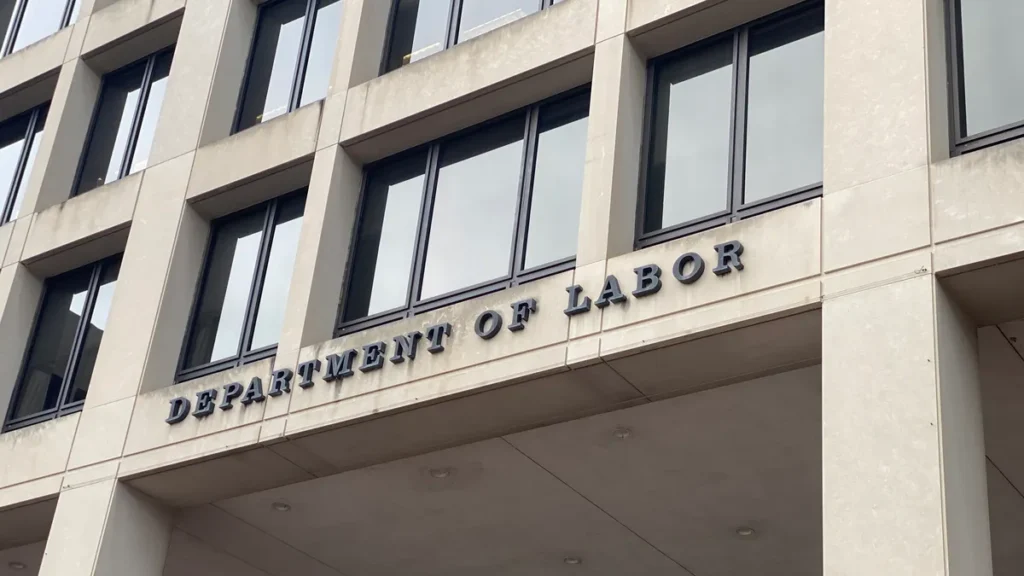
The U.S. Department of Labor (DOL) has announced a significant shift in its enforcement of antidiscrimination regulations, finalizing a rule to eliminate the theory of disparate impact liability from certain provisions. This move, announced on July 6, 2026, aligns the DOL’s approach with similar efforts undertaken by the Trump administration and is explicitly aimed at conforming with what the department describes as the "original public meaning" of Title VI of the 1964 Civil Rights Act. The decision marks a pivotal moment in the ongoing debate over the interpretation and application of civil rights law, particularly concerning how federal agencies address practices that, while seemingly neutral, disproportionately affect protected groups.
Understanding Disparate Impact Theory
To fully grasp the magnitude of the DOL’s decision, it is essential to understand the concept of disparate impact liability. Unlike disparate treatment, which involves intentional discrimination, disparate impact refers to practices or policies that are neutral on their face but have a disproportionately adverse effect on individuals belonging to a protected class (such as race, color, national origin, religion, sex, etc.) and cannot be justified as job-related and consistent with business necessity. The seminal Supreme Court case, Griggs v. Duke Power Co. (1971), established this theory under Title VII of the Civil Rights Act, recognizing that "Congress directed the thrust of the Act to the consequences of employment practices, not simply the motivation." The Court ruled that if an employment practice has a discriminatory effect, it is illegal unless the employer can prove that the practice is a business necessity.
Over the decades, the disparate impact theory has been applied across various anti-discrimination statutes, including Title VI, which prohibits discrimination on the basis of race, color, and national origin in programs and activities receiving federal financial assistance. This theory has been a critical tool for civil rights enforcement, allowing agencies and private litigants to challenge systemic barriers and subtle forms of discrimination that might not stem from overt prejudice but nevertheless perpetuate inequality. Examples of practices challenged under disparate impact include standardized testing that disproportionately screens out minority applicants, height and weight requirements not essential for a job, or certain zoning laws that limit housing options for particular demographic groups. Critics of the theory often argue that it can lead to quotas or preferential treatment based on protected characteristics, even without discriminatory intent.
The Regulatory Shift: DOL’s Rationale
The Department of Labor’s final rule specifically targets its regulations implementing Title VI, asserting that the change is necessary to bring these regulations in line with the "original public meaning" of the 1964 Civil Rights Act. This legal philosophy, often associated with originalism or textualism, posits that statutes should be interpreted according to the ordinary meaning of their words at the time they were enacted, or how a reasonable, informed public would have understood them. Proponents of this view argue that it limits judicial and administrative overreach, ensuring that laws are applied as written by the legislature rather than evolving interpretations.
For the DOL, this interpretation suggests that Title VI, when originally passed, was intended to prohibit only intentional discrimination, not practices that merely have a disparate effect without discriminatory motive. The department’s official statement emphasized that this revision seeks to restore fidelity to the statutory text, suggesting that prior interpretations extending to disparate impact liability were an unwarranted expansion of congressional intent. This move reflects a broader administrative push to curtail regulatory frameworks that are perceived as exceeding statutory mandates or imposing undue burdens on entities without clear congressional authorization. The specific regulations impacted by this DOL rule govern various programs receiving federal funds, including those related to workforce development, job training, and certain aspects of education and social services.
A Broader Administrative Effort: Parallels with DOJ
The DOL’s action does not occur in isolation but is part of a wider administrative initiative that gained momentum under the Trump administration. This initiative has consistently targeted disparate impact liability across several employment law fronts, portraying it as a "pernicious movement" that endangers the "bedrock principle… that all citizens are treated equally under the law." This perspective holds that focusing on statistical disparities, rather than individual acts of discrimination or malicious intent, undermines the principle of equal opportunity and may inadvertently pressure organizations into race-conscious decision-making to avoid legal liability.
Just weeks prior to the DOL’s announcement, the U.S. Department of Justice (DOJ) issued its own opinion, similarly deeming disparate impact guidelines under Title VII of the Civil Rights Act to be unconstitutional. These guidelines, which have long been maintained by the U.S. Equal Employment Opportunity Commission (EEOC), were deemed problematic by the DOJ primarily because they fail to account for an employer’s intent. The DOJ argued that such liability could compel organizations to adopt race-based decision-making processes, or risk facing costly litigation or the threat of it, even in the absence of any discriminatory animus. This parallel action by the DOJ underscored a coordinated effort across federal agencies to redefine the scope of anti-discrimination law, shifting the focus decisively back to intentional discrimination.
Historical Context of Title VI and Disparate Impact
The Civil Rights Act of 1964 was a landmark piece of legislation aimed at outlawing discrimination based on race, color, religion, sex, or national origin. Title VI specifically addresses discrimination in programs and activities receiving federal financial assistance. Its passage was a direct response to widespread segregation and discriminatory practices in areas like education, healthcare, and public services, which were often sustained through federal funding.
While the text of Title VI itself does not explicitly mention disparate impact, the Supreme Court, in Lau v. Nichols (1974), affirmed that Title VI could encompass practices that have a disparate effect, particularly in the context of language barriers in education. Subsequent interpretations and agency regulations, including those from the Department of Education and the Department of Health and Human Services, consistently incorporated disparate impact theory into Title VI enforcement. This approach was largely solidified by various Supreme Court rulings over the years, which, while sometimes narrowing the scope, generally acknowledged the validity of disparate impact claims under agency regulations implementing Title VI. The argument for including disparate impact under Title VI has historically been that without it, the goal of equal access to federally funded programs would be severely undermined, as many forms of systemic discrimination do not involve overt, provable intent.

However, the legal landscape surrounding Title VI and disparate impact is complex. The Supreme Court, in Alexander v. Sandoval (2001), ruled that while federal agencies could promulgate regulations prohibiting disparate impact under Title VI, private individuals do not have a private right of action to sue for disparate impact discrimination under the statute itself. This means individuals cannot directly sue under Title VI for disparate impact; rather, they must rely on agency enforcement. This distinction is crucial, as the DOL’s recent rule primarily affects how the agency itself will enforce Title VI, rather than directly altering the already limited private right of action for disparate impact claims under the statute. As an Ogletree Deakins attorney noted in a December 2025 analysis, individuals already lacked a private right of action to sue for disparate impact discrimination under Title VI, which somewhat differentiates the impact of this DOL rule from similar efforts regarding Title VII.
Reactions from Critics and Legal Experts
The Trump administration’s broadside against disparate impact theory has consistently faced strong opposition from civil rights advocates, former federal officials, and legal scholars who contend that these actions weaken critical protections against discrimination. Shortly after the initial executive orders signaling this shift, a former EEOC administrative judge vehemently criticized the administration’s stance, telling HR Dive that the executive order violated federal law and that disparate impact theory was fundamental, appearing in the majority of employment discrimination cases pursued by the EEOC. These critics argue that eliminating disparate impact liability ignores the reality of systemic discrimination, where seemingly neutral policies can perpetuate historical disadvantages and create barriers for protected groups, even without explicit malice.
Former Democratic officials at both the EEOC and DOL echoed these criticisms, going further to warn employers not to follow the Trump administration’s executive orders or subsequent agency rulings regarding disparate impact. They cautioned that ignoring disparate impact could expose employers to significant legal risks, as private plaintiffs’ bar members, state and local governments, and other parties could still bring disparate impact claims against employers under various other federal, state, and local anti-discrimination laws. This highlights a potential chasm between federal agency guidance and the broader legal obligations employers might face. Civil rights organizations have also voiced strong disapproval, characterizing the moves as a rollback of hard-won protections and a fundamental misunderstanding of how discrimination operates in modern society. They emphasize that statistical disparities often signal underlying discriminatory practices, even if intent is difficult to prove.
Legal experts remain divided, reflecting long-standing ideological debates in constitutional and administrative law. Proponents of the "original public meaning" interpretation laud the DOL’s decision as a return to foundational principles, arguing that it prevents federal agencies from legislating through regulation and ensures a clearer separation of powers. They contend that if Congress wishes to include disparate impact liability in Title VI, it should do so explicitly through legislation. Conversely, critics from the legal community argue that originalism, when applied rigidly, fails to account for the evolving understanding of discrimination and the practical realities of achieving genuine equality, potentially rendering anti-discrimination statutes less effective in addressing modern forms of bias.
Legal Landscape and Implications
The DOL’s final rule primarily affects how the Department itself will investigate and pursue violations of Title VI. Entities receiving federal financial assistance from the DOL will no longer face potential liability from the Department based solely on policies or practices that have a disparate impact without evidence of discriminatory intent. This could lead to a shift in how these entities design and implement programs, potentially reducing the incentive to scrutinize policies for their statistical effects on protected groups.

However, the implications are nuanced. As previously noted, the Supreme Court’s Alexander v. Sandoval decision already limited private individuals’ ability to sue for disparate impact under Title VI itself. Therefore, this DOL rule primarily impacts agency enforcement. While federal agencies may now be less likely to initiate investigations or take enforcement actions based on disparate impact under Title VI, covered entities must still navigate a complex web of other anti-discrimination laws. Many state and local laws, as well as other federal statutes (like Title VII for employment, which has a well-established disparate impact framework), continue to recognize and enforce disparate impact liability. This means that a federally funded program, while potentially shielded from DOL enforcement based on disparate impact under Title VI, could still face legal challenges under Title VII (if it’s an employer) or state-level anti-discrimination statutes.
For employers, particularly those receiving federal funds and thus subject to both Title VI and Title VII, the situation remains complex. While the DOJ’s opinion challenged the EEOC’s Title VII disparate impact guidelines, the EEOC itself has not officially rescinded them, and courts generally continue to uphold disparate impact claims under Title VII. Therefore, employers must still be vigilant in ensuring their employment practices do not create unwarranted disparate impacts. The DOL’s rule is specific to Title VI and its own enforcement, but it signals a broader federal administrative philosophy that could influence future legal interpretations and policy debates.
Future Outlook and Potential Challenges
The elimination of disparate impact liability from DOL’s Title VI enforcement represents a significant ideological victory for those advocating for a narrower interpretation of civil rights laws. However, it is unlikely to be the final word on the matter. Such policy changes often face legal challenges, and future administrations could reverse these rules. The legal community anticipates that civil rights organizations may mount legal challenges against the DOL’s final rule, arguing that it is an arbitrary and capricious change to established policy, or that it undermines the fundamental purpose of Title VI.
Moreover, the long-term impact on diversity, equity, and inclusion (DEI) initiatives within federally funded programs could be substantial. Without the threat of disparate impact liability from the DOL, some entities might feel less compelled to proactively assess and adjust policies that inadvertently create barriers for underrepresented groups. Critics fear this could lead to a stagnation or even regression in efforts to promote equitable access and outcomes in areas like education, job training, and public services. Conversely, proponents argue that it encourages merit-based systems and reduces the focus on demographic proportionality, fostering true equality of opportunity.
The ongoing debate underscores the fundamental tension between different philosophies of anti-discrimination law: one that focuses on eliminating intentional malice and ensuring equal treatment, and another that seeks to address systemic barriers and ensure equal outcomes, even in the absence of explicit discriminatory intent. The DOL’s decision to remove disparate impact liability from its Title VI regulations on July 6, 2026, marks a clear leaning towards the former, setting the stage for continued legal and political contention over the future direction of civil rights enforcement in the United States.






