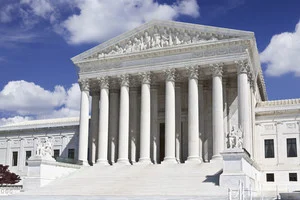
The United States Supreme Court issued a transformative ruling on June 29 in the case of Trump v. Slaughter, a decision that fundamentally alters the constitutional landscape of the American administrative state. By a decisive margin, the Court’s conservative majority effectively dismantled a century of legal precedent that shielded the leaders of independent federal agencies from at-will presidential removal. The ruling specifically overrules the 1935 landmark decision in Humphrey’s Executor v. United States, which for nearly 90 years served as the legal bedrock for the independence of agencies such as the Federal Trade Commission (FTC), the National Labor Relations Board (NLRB), and the Securities and Exchange Commission (SEC). Under the new standard established by the Court, the President now possesses the broad authority to terminate principal officers of these agencies without needing to demonstrate "for cause" justifications, such as inefficiency, neglect of duty, or malfeasance in office.
The legal challenge originated from President Donald Trump’s January 2025 removal of FTC Commissioner Rebecca Slaughter, a move that was initially contested on the grounds that her statutory protections prevented such a dismissal. However, the Supreme Court utilized the Slaughter dispute as a vehicle to address a broader, simmering constitutional question regarding the "Unitary Executive" theory—the doctrine that the President must have absolute control over all officials exercising executive power. Writing for the majority, the Court held that the Constitution’s grant of executive power to a single President necessitates the ability to remove subordinates who exercise significant discretionary authority. This decision marks the culmination of a decade-long judicial trend toward limiting the power of the "fourth branch" of government and centralizing administrative control within the Oval Office.
Historical Context: The Rise and Fall of Humphrey’s Executor
To understand the magnitude of Trump v. Slaughter, one must look back to the Great Depression era. In 1935, the Supreme Court decided Humphrey’s Executor v. United States after President Franklin D. Roosevelt attempted to fire William Humphrey, a member of the FTC, because Humphrey’s policy views did not align with the New Deal. At the time, the Court ruled against Roosevelt, concluding that Congress had the power to create "independent" agencies whose members were not purely executive but performed "quasi-legislative" and "quasi-judicial" functions. This created a protected class of federal officials who could only be removed for specific, documented failures.
For decades, this precedent allowed agencies to operate with a degree of insulation from the shifting political winds of successive presidential administrations. It was believed that technical expertise in labor relations, trade, and finance required a level of continuity that would be impossible if every new President could fire the entire leadership of the federal bureaucracy on day one. However, in recent years, the Supreme Court has signaled a growing skepticism of this "administrative insulation." Recent cases such as Seila Law LLC v. CFPB (2020) and Collins v. Yellen (2021) began chipping away at these protections, ruling that single-headed agencies like the Consumer Financial Protection Bureau could not have for-cause removal protections. Trump v. Slaughter represents the final step in this evolution, extending that logic to multi-member boards and commissions.
Chronology of the Dispute and the NLRB Crisis
While the Slaughter case focused on the FTC, its most immediate and chaotic impact was felt at the National Labor Relations Board (NLRB). The timeline of events leading up to this Supreme Court decision illustrates the high stakes of the constitutional conflict:
- January 2025: Shortly after his inauguration, President Trump moved to reshape the federal labor landscape by removing NLRB Member Gwynne Wilcox, a Democratic appointee known for her pro-labor stances.
- February 2025: Wilcox challenged the removal in federal court, arguing that the National Labor Relations Act (NLRA) specifically protected Board members from removal except for cause.
- Spring 2025: A federal district court ruled in favor of Wilcox, ordering her reinstatement and temporarily stalling the administration’s efforts to install a more management-friendly majority.
- May 2025: The Supreme Court issued an emergency stay of the lower court’s order, removing Wilcox from her seat once again and signaling that the Court was prepared to revisit the constitutionality of the NLRA’s removal protections.
- June 2025: Following the stay, the White House moved rapidly to nominate new members to the NLRB, eventually regaining a quorum and paving the way for a reversal of several Biden-era labor regulations.
- June 29, 2025: The Supreme Court releases its opinion in Trump v. Slaughter, providing the final legal justification for the removal of Wilcox and Slaughter, and setting a new precedent for all independent agencies.
The legal foundation that supported Wilcox’s initial reinstatement—the idea that Congress could limit the President’s removal power to ensure agency neutrality—has now been invalidated. The Supreme Court is expected to formally dispose of the Wilcox litigation in the coming weeks, but the outcome is now a foregone conclusion.
Analyzing the Unitary Executive Doctrine
The core of the Court’s reasoning in Trump v. Slaughter rests on a strict interpretation of Article II of the Constitution. The majority argued that because the President is ultimately responsible for the execution of federal law, any official who wields "significant executive power" must be accountable to the President. The Court dismissed the "quasi-legislative" and "quasi-judicial" distinctions made in 1935 as outdated and legally incoherent in the modern era.
Legal scholars note that this ruling effectively treats the heads of the FTC, NLRB, SEC, and the Merit Systems Protection Board (MSPB) similarly to Cabinet secretaries. Just as a President can fire a Secretary of State or a Secretary of Defense for a simple policy disagreement, they can now do the same with the commissioners who regulate the nation’s stock markets and labor unions. This shift is expected to increase the "politicization" of these agencies, as leadership will now be expected to adhere strictly to the policy preferences of the sitting President or face immediate dismissal.
Implications for Employers and Labor Relations
For the business community and labor organizations, the implications of Trump v. Slaughter are profound. The NLRB, in particular, has long been a pendulum of federal policy, with its rules on union organizing, collective bargaining, and employee rights shifting whenever the White House changes hands. However, the Humphrey’s Executor framework provided a "braking mechanism" because Board members serve staggered five-year terms. Historically, a new President might have to wait years to gain a majority on the Board.

With the Slaughter decision, that waiting period effectively vanishes. An incoming administration can now demand the resignations of all sitting Board members on Inauguration Day. For employers, this means:
- Accelerated Rulemaking: Changes in enforcement priorities and the rescinding of previous administrations’ rules will happen much faster.
- Increased Volatility: Legal precedents that businesses rely on for long-term planning may be overturned more frequently as the Board’s composition shifts abruptly with every election.
- Direct Accountability: The "independence" of the Board is largely a thing of the past; its actions will now be seen as a direct extension of the President’s policy agenda.
In the case of the NLRB, the current administration has already used its newly confirmed quorum to begin dismantling several "joint-employer" and "ambush election" rules established during the previous term. Under the Slaughter precedent, these shifts will become the standard operating procedure for federal labor law.
Broader Regulatory and Economic Impact
The decision’s reach extends far beyond labor law. Agencies like the Federal Trade Commission, which oversees antitrust enforcement and consumer protection, will now be under the direct thumb of the executive branch. This could lead to a more aggressive—or more hands-off—approach to big-tech mergers and acquisitions, depending on the President’s platform.
Supporting data from the Congressional Research Service indicates that there are over 50 "independent" agencies and commissions in the federal government. While not all of them exercise the type of "principal" executive power discussed in Slaughter, the vast majority of significant regulators—including the Federal Communications Commission (FCC) and the Federal Energy Regulatory Commission (FERC)—likely fall under this new removal standard.
The Merit Systems Protection Board (MSPB), which adjudicates disputes for federal employees, also faces a new reality. If MSPB members can be removed at will, federal employees may fear that the "shield" against politically motivated personnel actions has been weakened. This could lead to a significant restructuring of the federal civil service, moving it closer to a "spoils system" where loyalty to the administration is a prerequisite for job security.
Reactions from Legal and Political Stakeholders
The ruling has drawn sharp reactions across the political spectrum. Proponents of the Unitary Executive theory, including many conservative legal advocacy groups, hailed the decision as a victory for democratic accountability. "The American people elect a President to run the executive branch," said one prominent legal analyst. "It is fundamentally undemocratic for unelected bureaucrats to wield the power of the state while being insulated from the person the voters actually chose."
Conversely, labor advocates and proponents of agency independence expressed deep concern. In a joint statement, several major labor federations argued that the decision "strips away the last vestiges of neutrality in federal labor relations" and "subjects the rights of working people to the whims of whoever happens to occupy the White House." They warned that the loss of for-cause protections would lead to a "hollowed-out" expert class within the government, replaced by political loyalists.
Within the dissenting opinion of the Court, the minority justices argued that the majority had "overthrown a century of stability" and ignored the practical necessity of independent expertise in complex areas of the economy. They suggested that the decision creates a "monarchical" executive that can bypass the deliberative processes Congress intended when it created these agencies.
Conclusion: A New Era of Governance
The decision in Trump v. Slaughter marks the beginning of a new era in American governance. The "independent agency" as it was conceived in the early 20th century—a body of experts operating outside the direct control of the President—is effectively no more. While these agencies will continue to exist, their leadership will now be directly accountable to the President, ensuring that federal regulation is more responsive to the results of national elections.
For employers, legal counsel, and stakeholders across the regulated industries, the message is clear: the pace of federal policy change is about to accelerate. The legal battles surrounding individuals like Gwynne Wilcox and Rebecca Slaughter have provided the Supreme Court with the opportunity to reshape the very structure of the U.S. government, and the ripples of this decision will be felt for decades to come. As the remaining litigation in the lower courts is resolved in light of this precedent, the focus will shift from constitutional challenges to the rapid-fire implementation of new executive-led regulatory agendas.