This week, Cornerstone, a titan in the corporate learning technology sector with annual revenues approaching $1 billion and a market presence roughly four times that of competitor Docebo, unveiled its ambitious pivot into the realm of artificial intelligence. The move signals a profound reinvention for the 27-year-old company, aiming to solidify its leadership position amidst a rapidly evolving digital learning environment. This strategic shift comes as the broader human resources technology market grapples with the disruptive potential of AI, a transformation that is also a key focus of the upcoming HR 2030 initiative.
Cornerstone’s Established Dominance and Emerging Challenges
Founded in 1999, Cornerstone OnDemand has long been a pioneer in the "talent-driven learning platform" market. The company boasts an impressive client roster of over 7,000 enterprise customers, including many of the world’s largest and most recognizable brands, collectively serving approximately 140 million users. Its core revenue streams are derived from its robust Learning Management System (LMS) and Learning Experience Platform (LXP) software, complemented by a significant contribution from its talent management suite.
Cornerstone’s historical success is marked by its ability to outpace or acquire nearly every standalone LMS company that emerged over the past quarter-century. The total addressable market for corporate learning and talent management is estimated to be around $30 billion, a segment also heavily populated by major human capital management players like Workday, Oracle, and SAP. Within this landscape, Cornerstone has generally been recognized for its superior functionality.

The company’s strategic trajectory shifted in 2021 when it was acquired and taken private for $5.5 billion, a valuation representing approximately five times its then-current revenues. Since then, Cornerstone has strategically expanded its portfolio through acquisitions, including EdCast (LXP), Skyhive (skills and labor market data), and Tailspin (virtual reality learning solutions), alongside smaller content providers. While the company has maintained strong profitability, its market valuation has seen less significant growth, a situation attributed in part to perceived shifts and challenges within the traditional e-learning market.
Cornerstone has proactively addressed these market dynamics by enhancing its sales channels, promoting integrated solutions, and expanding its feature set. However, the company acknowledges that its brand, while established, may be perceived as somewhat dated by some, leading to customer churn during renewal periods. This phenomenon is not unique to Cornerstone; many established technology providers face the challenge of maintaining market relevance as newer, more innovative solutions emerge. The current pace of technological change, particularly with the advent of advanced AI, necessitates a more radical transformation than incremental updates.
The AI Disruption: A Paradigm Shift in Learning Content Creation and Delivery
The landscape of corporate learning underwent a seismic shift with the public release of ChatGPT in the fall of 2022. This event marked the beginning of the end for the traditional "e-learning" or "published training content" market, a sector valued at over $400 billion, which is now being rapidly reinvented by artificial intelligence.
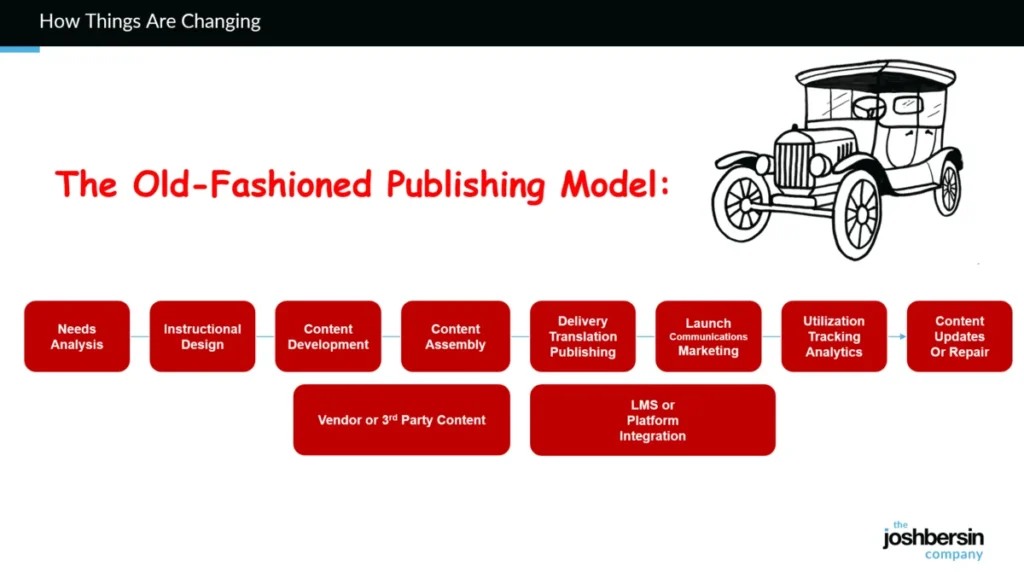
For three decades, the creation of corporate training content has been a labor-intensive process. Companies have painstakingly authored, published, and licensed content, including courses, videos, assessments, and simulations. This involved significant investment in instructional designers, graphic artists, and subject matter experts. Each domain of knowledge, from IT and sales to leadership development, featured numerous content providers offering solutions. The development of a single course was akin to writing and producing a book, requiring extensive design, content sourcing, audience targeting, and months of development. Post-production involved translation, testing, and integration into Learning Management Systems (LMS) using standards like SCORM, which primarily tracked learner progress and completion rates.
This established methodology, which engaged millions of learning professionals, is now becoming increasingly obsolete. The process is inherently slow, inflexible for updates, and costly. For instance, a single course developed by major content providers could cost upwards of $50,000 to create. This constraint often left internal Learning and Development (L&D) teams and external publishers struggling with time and budget limitations, frequently facing scrutiny over the return on investment for lengthy development cycles.
The reliance on SCORM-based content, while functional for tracking, failed to capture the dynamic and interactive nature of modern learning. While platforms like YouTube offer a wealth of information, their lack of integration with corporate tracking systems and proprietary content restrictions limited their utility in a formal learning context. The substantial market of existing content, estimated at over $50 billion, is now ripe for disruption by AI.
AI’s Transformative Impact on Learning Experiences
The argument that AI-generated courses might be rudimentary, akin to early AI-generated essays, overlooks the rapid advancements in AI capabilities. AI-authored courses are not only becoming exceptionally good but are also being developed and refined in a matter of days or hours, a stark contrast to the months required for traditional course creation. Even if an AI-generated course is initially 70% accurate, the significant time savings allow for rapid iteration and improvement.
However, AI’s impact extends far beyond content generation. AI-powered learning platforms enable users to engage with material through conversational interfaces, asking questions directly rather than navigating through static chapters. This transforms the learning experience into an interactive dialogue with a virtual expert. Crucially, AI facilitates the creation of highly personalized learning experiences, with each employee receiving a customized version of the required knowledge – a feat that traditional SCORM-published materials could never achieve.
Furthermore, AI-powered courses can be interconnected, allowing learners to seamlessly access related information across the entire learning ecosystem. For example, an employee learning about refinery safety and needing immediate information on sulfur dioxide hazards would not have to search for a dedicated "sulfur dioxide safety" course. Instead, they could simply ask the AI system, which would provide a direct answer, drawing from all relevant knowledge within the platform.
This shift redefines "corporate learning" from a passive acquisition of knowledge to an active "enablement" process. While employees may engage in deeper learning when time permits, the majority of their workday requires immediate access to information, tips, advice, or knowledge to perform tasks effectively. This AI-native learning experience represents a fundamental departure from simply using AI to build SCORM-compliant courses.
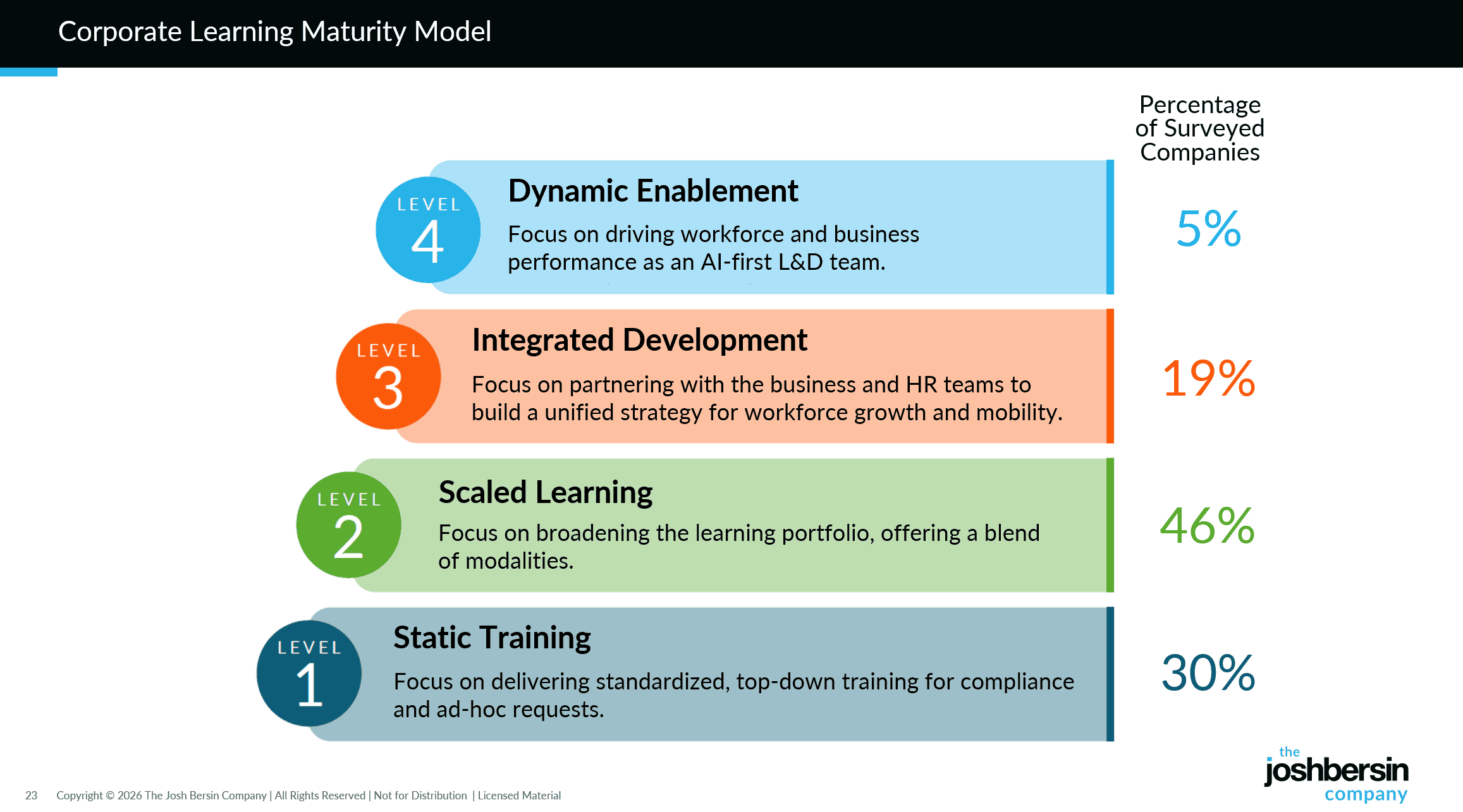
This evolution represents a "Revolution in L&D," but more profoundly, a "Revolution in Business." L&D functions are poised for significant streamlining, with many roles transforming into business enablement functions that extend beyond traditional HR departments, with the exception of compliance-related training. Research, such as the author’s own learning maturity model based on surveys from over 700 companies, indicates that organizations operating at higher levels of maturity (Level 4) demonstrate a 74% greater capacity for innovative and timely skill development. These organizations are highly valued by the business for their agility in generating relevant content as new challenges arise.
Implications for Cornerstone and the Competitive Landscape
The emergence of AI-native learning platforms from companies like Sana, Docebo, Absorb, Uplimit, Arist, and others presents a direct challenge to established players. Even major technology providers like OpenAI are integrating content from platforms like Coursera, while companies like Anthropic are actively assisting enterprises in leveraging AI for learning.
The future of corporate learning points towards a scenario where every employee has access to a personalized AI agent. This agent, informed by an individual’s work activities, communications, meetings, and digital footprint, can maintain a comprehensive understanding of their skills, experiences, strengths, and weaknesses. When combined with peer feedback and performance data, this "People Graph," as Cornerstone refers to it, becomes a powerful tool for personalized guidance, onboarding, and skill development.
This fundamental shift in how learning is delivered and consumed has significant implications for L&D budgets, seniority, and the overall role of training professionals. L&D leaders who fail to embrace AI-native solutions risk seeing their budgets reduced and their influence diminished, as organizations question the value of traditional, underutilized training programs.
Cornerstone Workforce AI: A Strategic Response
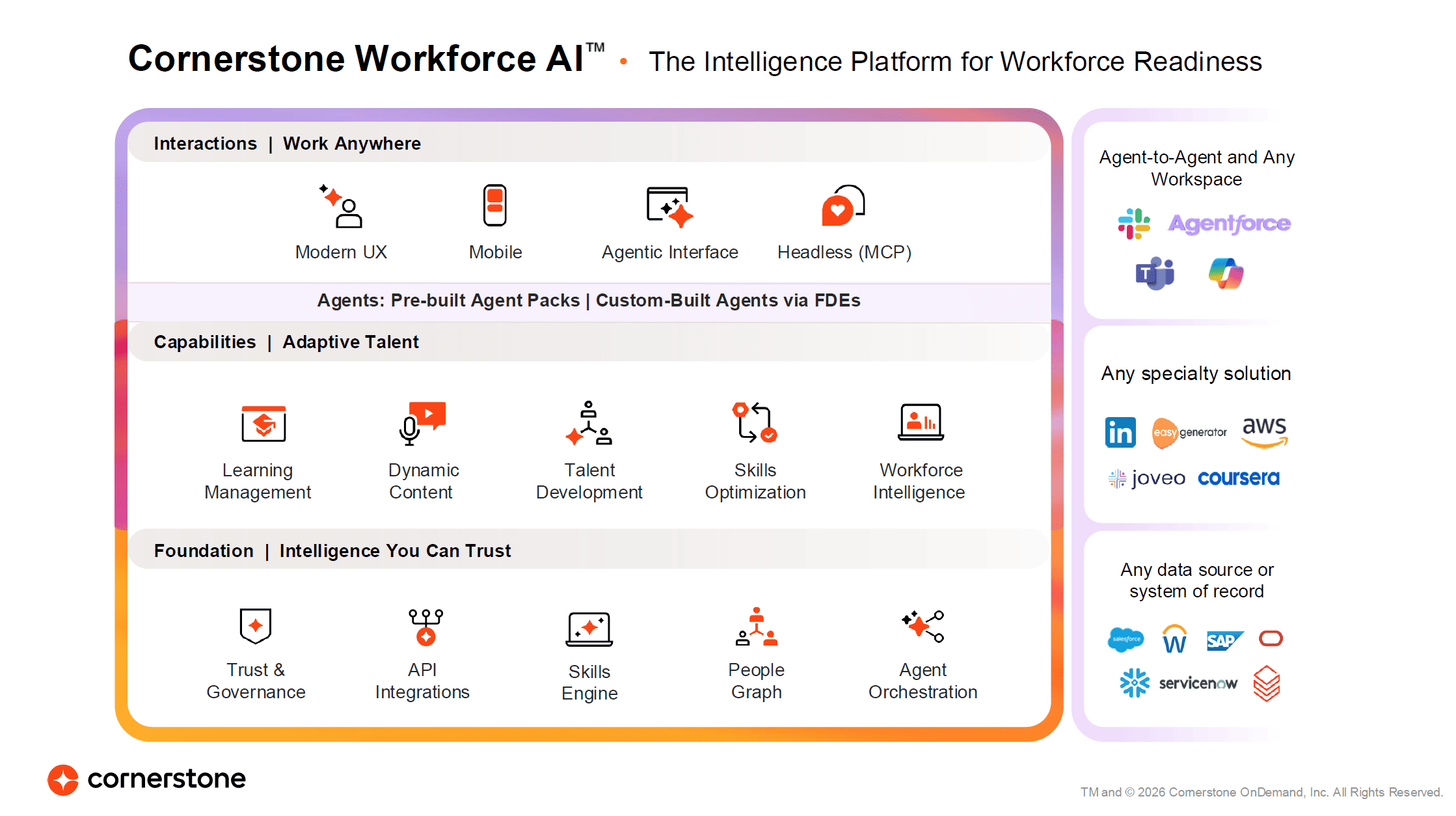
In response to these market imperatives, Cornerstone has launched "Cornerstone Workforce AI," a comprehensive platform designed to reinvent its offerings. This initiative, spearheaded by Guna Jayaraman’s AI team, represents a significant undertaking to integrate advanced AI capabilities into the company’s ecosystem.
The new platform aims to consolidate skills and capability inference, an open "People Graph" capable of ingesting data from diverse sources (HRIS, LMS, project management tools, engagement surveys, etc.), and a suite of data services including labor market intelligence from Skyhive. A key component of this launch includes "Readiness Agents" designed to address immediate business challenges.
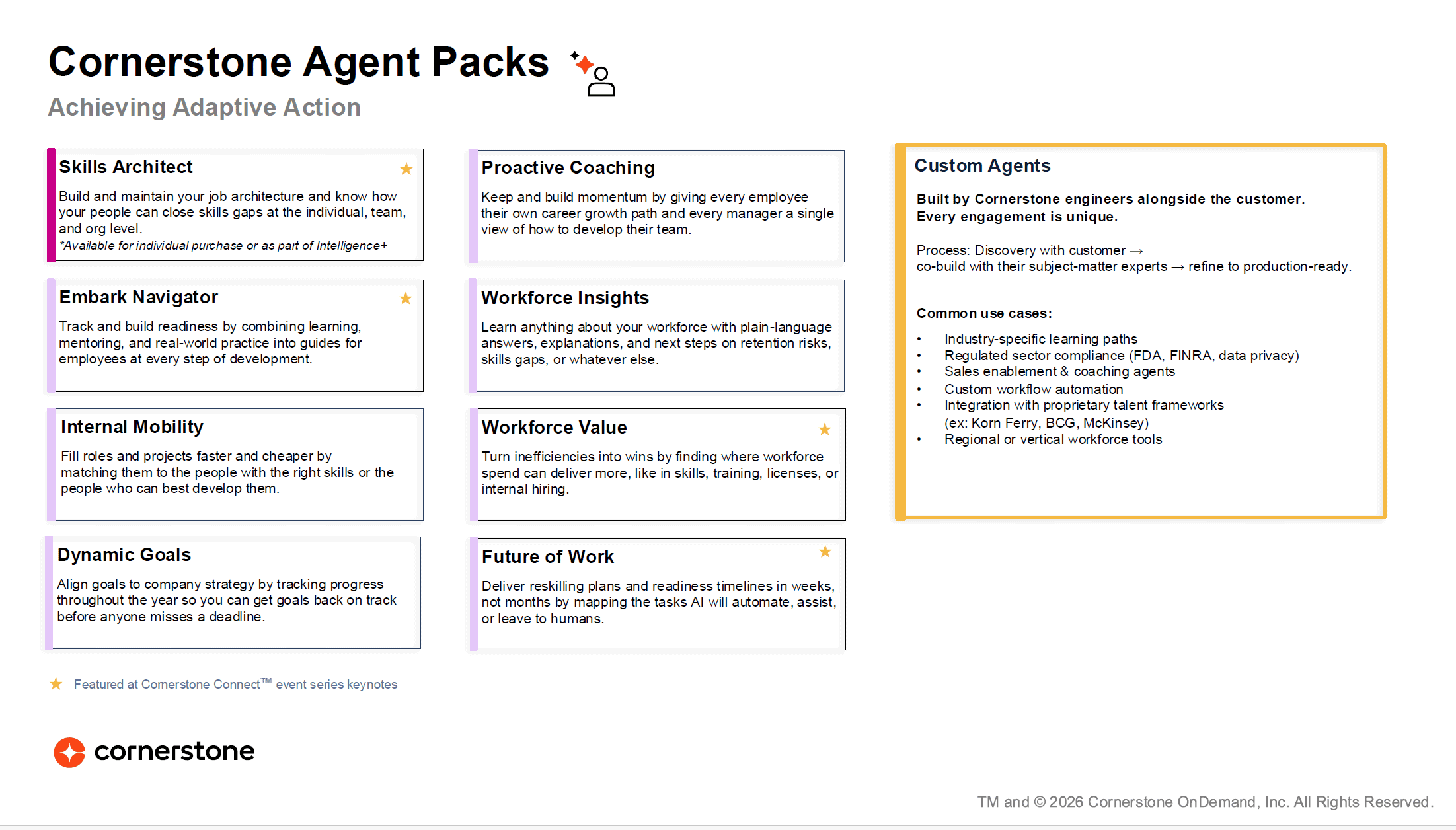
While some functionalities will continue to leverage Cornerstone Galaxy, the company’s existing learning platform, the new capabilities can be accessed either as a standalone offering or through upgrades to existing licenses. Early customer feedback from a wealth management firm and a large media company, as well as discussions with Cisco, indicate a strong demand for solutions that integrate company-specific information to enhance skills, mobility, and risk mitigation strategies.
Although Cornerstone Workforce AI may not yet be a fully "AI-Native" platform on par with some newer competitors like Sana, it represents a significant leap forward. Cornerstone has already introduced an AI content development tool and agents for LMS administration and analysis, signaling a commitment to embedding AI-native content features across both its legacy and new environments. The initial set of packaged Agents, while not yet fully customizable by users, effectively leverage the comprehensive data and intelligence within the Workforce AI platform.
The Road Ahead: Opportunity and Adaptation
Cornerstone’s strategic pivot to AI-native learning represents a monumental undertaking. The management team’s focus on supporting existing customers while embracing this new direction is crucial for shaping the future of the market. As investments in traditional training solutions are expected to decline, substantial AI budgets are becoming available. While emerging vendors have established an early lead, Cornerstone possesses a significant opportunity to capture market share.
For organizations and L&D professionals prepared to embrace this revolution, Cornerstone Workforce AI offers a powerful platform for ambitious initiatives. The platform’s core AI capabilities empower a new vision for enabling every employee to succeed in their unique roles. The success of this ambitious venture will depend on Cornerstone’s ability to articulate its vision and capabilities clearly within the dynamic and rapidly evolving AI market. The company’s ability to adapt and innovate will be paramount in navigating this transformative period in corporate learning.