
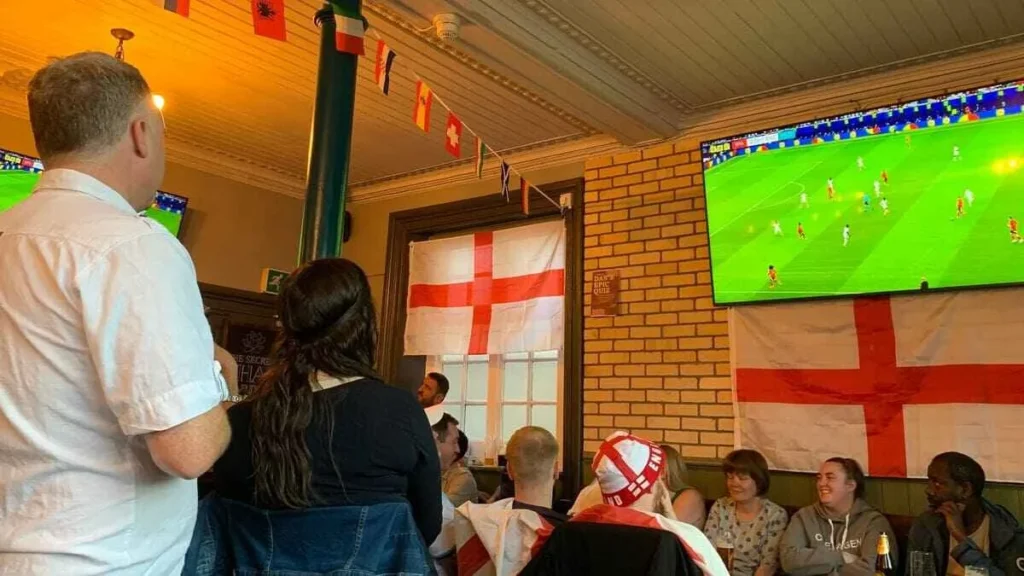
A significant shift in workplace behaviour has been observed during the ongoing World Cup, with employees proactively booking annual leave to watch or recover from England’s matches rather than resorting to unplanned sick leave. This trend suggests a growing success in flexible working policies adopted by employers, effectively mitigating potential disruption to business operations across the United Kingdom. The data indicates that a pragmatic approach to time off during major national events can foster better employee relations and maintain productivity.
According to comprehensive new research compiled by HR and employment law provider Citation, and corroborated by independent findings from IRIS Software Group, the anticipated surge in sickness absence around England’s pivotal World Cup fixtures has largely failed to materialise. Instead, both analyses point to a marked increase in pre-approved annual leave. Citation’s findings are particularly illuminating, revealing a substantial 21% rise in annual leave requests on England matchdays and the immediate days following these highly anticipated fixtures. This contrasts sharply with historical patterns where major sporting events often correlated with spikes in ‘sickies’.
The World Cup, a quadrennial international football tournament, captivates a global audience, and in the United Kingdom, it frequently brings the nation to a standstill. For England and Scotland, participation in the tournament elicits profound national interest, with match timings often conflicting with standard working hours or extending late into the night. This year’s tournament, widely assumed to be held in 2026 given comparisons to 2025 data, has presented unique challenges, particularly with evening and early morning kick-offs designed to accommodate global viewership. These timings create a direct dilemma for employees balancing work commitments with a desire to follow their national team’s journey, especially during the crucial knockout stages.
Detailed Analysis of Absence Data
The granular data collected by IRIS Software Group provides a compelling narrative. Their analysis shows that sickness absence rates have consistently remained below the normal baseline average of 0.85% throughout the World Cup period. A striking example emerged after England’s dramatic late-night victory over Mexico, a match that kicked off at 2:00 AM UK time and concluded at 4:48 AM on Monday, July 6th. Despite the extreme timing, which might historically have led to widespread absenteeism, the sickness rate recorded on that day was 0.80%, still comfortably below the typical average. This resilience suggests that employees either managed their sleep patterns effectively, or, more likely, had pre-emptively taken the day off.
Citation’s research further supports this pattern. Following England’s opening win against Croatia on June 18th, sickness absence stood at 0.78%. This figure then slightly decreased to 0.75% the day after England’s draw against Ghana. These numbers consistently demonstrate that employees are choosing planned absences over unscheduled ones, reflecting a more responsible and communicative approach to managing their work-life balance during a period of national excitement.
While sickness absence remained stable, overall workplace absences, which combine both annual leave and sickness, did show an increase. Following England’s two weeknight group-stage fixtures against Croatia and Ghana, total absences rose by 8% to 16%. This surge, however, is predominantly attributed to the planned increase in annual leave rather than unexpected sick days. The sectors most affected by these increases were construction, manufacturing, and engineering. These industries, often characterised by fixed shifts and manual labour, might face greater logistical challenges in accommodating flexible working arrangements, making planned leave even more critical for maintaining operational continuity. The higher increase in these sectors could also reflect a workforce demographic with a particularly strong engagement in sporting events.
Broader Context and Political Reactions
The national fervour surrounding the World Cup has not gone unnoticed by political leaders. Prime Minister Keir Starmer recently hinted at the possibility of an additional bank holiday should England emerge victorious in the tournament. Such a move would not only celebrate a historic sporting achievement but also acknowledge the profound cultural impact of football on the nation, potentially boosting morale and consumer spending. This political endorsement further underscores the widespread national engagement with the event and the need for workplaces to adapt.
England’s upcoming fixtures, including a Saturday night match against Norway at 10:00 PM, pose less immediate threat to Monday morning attendance. However, a potential semi-final on Wednesday, July 15th, at 8:00 PM, against either Argentina or Switzerland, could again challenge workplace attendance on Thursday morning. The data collected so far suggests that employers and employees are well-prepared to navigate these challenges through mutual understanding and flexibility.
Contrasting Trends and The Efficacy of Planned Leave
The findings from this World Cup period stand in stark contrast to wider absence trends observed over the past year. Across the same seven-week period preceding the World Cup, annual leave had actually fallen by 5.3% compared to 2025 figures, and sickness absence was down by 14% year-on-year. This contextual data strongly indicates that the World Cup has not led to a general increase in unplanned absence but has specifically generated a distinct spike in planned leave. This distinction is crucial for employers, as planned absences allow for better resource allocation, workload management, and continuity of service, minimising the disruptive impact of staff shortages.
Citation’s analysis explicitly states that the data points to employees planning ahead to watch matches or to recover from late-night kick-offs. This proactive behaviour is a testament to improved communication and a more mature approach to managing personal commitments alongside professional responsibilities. Crucially, it also highlights that employers are adopting a more pragmatic and understanding approach, granting greater flexibility over annual leave requests during the tournament. This willingness to adapt to significant cultural events fosters a more positive and trusting working environment.

Expert Commentary and HR Implications
Gill McAteer, Employment Law Director at Citation, underscored the positive signs emanating from the data. "There are signs in this data that employers and employees are working together to find a way for everyone to enjoy the World Cup without causing disruption to businesses or conflict among teams," McAteer commented. She further emphasised that while employers are not legally bound to deviate from established leave policies during such events, a degree of understanding and flexibility can yield significant benefits. "Our advice to HR teams and businesses is that a little understanding and flexibility goes a long way," she added, advocating for policies that support both business continuity and employee well-being.
However, it is important to note that Citation’s initial figures did not include the data from England’s 2:00 AM match against Mexico on July 6th. This particular fixture, with its extremely late finish, represented a significant test case for employee commitment and employer flexibility. The subsequent data from IRIS Software Group, which did include this match, provides further reassurance that even under extreme circumstances, the pattern of planned leave prevailed.
The trend was not exclusive to England. In Scotland, where World Cup fever also runs high, IRIS Software found a similar pattern. Against a baseline average sickness rate of 0.95%, the rate stood at 0.55% following Scotland’s June 14th fixture and 0.92% after their June 25th match. These figures, while showing a slight fluctuation around the baseline, reinforce the overall observation that widespread unplanned absence was avoided.
Stephanie Coward, Managing Director of People at IRIS, articulated the sentiment shared by many HR professionals. "World Cup fever can quickly lead to fears that businesses will be left playing with a few people down, especially when England are heading into the latter stages of a tournament," Coward acknowledged. "But the data suggests those fears have been overblown so far. Across the key England and Scotland matchdays we looked at, sickness rates have remained below or broadly in line with normal levels."
Coward concluded with a reassuring message for employers, particularly as England progresses deeper into the tournament. "That should give employers some reassurance if England get past Norway and attention turns to a midweek semi-final. Big national moments can create plenty of noise, but they do not automatically translate into a workplace absence problem." This perspective highlights the evolving landscape of workplace management, where trust and flexibility can be more effective than rigid adherence to traditional attendance policies.
Economic and Social Implications of Flexible Absence Management
The economic implications of this shift from unplanned sick leave to planned annual leave are substantial. Unplanned absences, often termed "presenteeism" or "absenteeism," can cost the UK economy billions annually due to lost productivity, the need for temporary cover, and the disruption to team dynamics. By encouraging planned leave, businesses can mitigate these costs. Employees who feel trusted and respected are also likely to be more engaged, productive, and loyal, leading to lower staff turnover and improved morale.
This trend also speaks to a broader cultural shift in the workplace towards greater employee autonomy and work-life integration. The rise of flexible working models, accelerated by recent global events, has demonstrated that output and performance are not solely tied to physical presence during fixed hours. Employers who embrace this flexibility are likely to attract and retain top talent, particularly younger generations who prioritise work-life balance. The World Cup has inadvertently provided a large-scale case study for the benefits of such an approach, proving that national celebrations and business continuity are not mutually exclusive.
Furthermore, the data underscores the importance of clear communication channels between employers and employees. When expectations are set, and policies are flexible, employees are more inclined to follow official channels for time off, rather than resorting to less transparent and potentially damaging methods like false sick leave. This transparency builds a foundation of trust that can extend beyond specific events, influencing daily operations and long-term HR strategies.
Looking Ahead: Lessons for Future Events
The experiences gleaned from this World Cup offer valuable lessons for businesses and HR departments in managing future national or international events that could impact employee attendance. Whether it’s another major sporting tournament, a significant cultural festival, or even a royal occasion, proactive planning and flexible policies appear to be the most effective strategies.
Key takeaways for HR professionals include:
- Proactive Communication: Clearly communicate expectations and available leave options well in advance of the event.
- Flexible Leave Policies: Consider allowing greater flexibility for annual leave requests, potentially offering staggered start/finish times or even temporary remote working options where feasible.
- Encourage Planning: Actively encourage employees to plan their leave in advance, explaining the benefits for both the individual and the business.
- Monitor Trends: Continuously monitor absence data to identify patterns and adjust strategies as needed.
- Maintain Trust: Foster an environment of trust where employees feel comfortable discussing their needs without fear of reprisal.
This World Cup has highlighted a positive evolution in employer-employee relations in the UK. Rather than succumbing to the traditional pitfalls of mass absenteeism during national events, businesses and their staff have largely collaborated to navigate the challenges presented by late-night matches and national excitement. The evidence suggests that a flexible, understanding, and proactive approach to managing time off not only maintains business continuity but also strengthens workplace morale and fosters a more resilient and adaptable workforce for the future.








