Workday, a long-standing leader in enterprise applications for finance and human resources, has launched a significant strategic pivot to address the rapidly evolving landscape of artificial intelligence. The company’s recent unveiling of a robust AI strategy signals a determined effort to redefine its role in the burgeoning world of AI agents, integrating nearly $3 billion in strategic acquisitions and a revitalized management team. This move aims to transform Workday’s foundational "system of record" into a dynamic "platform for agents," a move that industry analysts suggest could revitalize the company’s market position.
A Return to Innovation: Aneel Bhusri’s Strategic Reset
The genesis of Workday’s current strategic direction can be traced back to its pioneering days in 2008. At a time when enterprise software was largely dominated by on-premise client/server systems, Workday introduced a groundbreaking cloud-native platform. Its innovative architecture, built around an object-oriented database, an integrated security and business rules engine, and a novel user interface, offered a significant leap forward in scalability, flexibility, and ease of integration. This "Power of One" message, emphasizing a unified system for HR and finance, resonated powerfully with businesses, propelling Workday to capture a substantial market share, including over 30% of the Fortune Global 2000. Today, the company boasts more than 11,500 customers and serves over 75 million end-users.
However, in recent years, Workday, like many established tech giants, faced the challenge of adapting to the rapid advancements in AI. Aneel Bhusri, the co-founder and former CEO until early 2024, observed a perceived dilution of the company’s innovative startup culture and a lack of a clear AI strategy. This realization prompted his return to the CEO role, initiating a comprehensive reinvention of the company. This strategic reset involves rebuilding the executive team and clearly articulating Workday’s future role in an AI-driven world.

Transforming the System of Record into a Platform for Agents
The central question Workday sought to address is its relevance in an era where readily available AI agents can perform numerous tasks. The company’s high-level answer is a paradigm shift: transforming its established "system of record" into a robust "platform for agents." The core idea is that by unlocking the inherent data, security protocols, and business rules embedded within Workday, organizations can build and deploy AI agents with unprecedented scale, security, and speed. Workday asserts that its existing infrastructure, with its ingrained company rules, policies, security models, and compliance frameworks, provides the essential "rails" for these agents to operate effectively and at scale. Recreating this complex infrastructure outside of Workday, the company argues, would be prohibitively expensive, time-consuming, and fraught with risk.
The Five Pillars of Workday’s Reinvention Strategy
Workday’s strategic pivot is underpinned by five key pillars:
1. AI Complements, Not Replaces, Enterprise Software
Workday posits that AI, while powerful in reasoning, cannot independently manage complex enterprise functions. Tasks such as payroll processing, financial closing, employee onboarding, and segregation of duties enforcement require deterministic rules, established approval chains, and deeply integrated data models developed over years of operational experience. Workday’s approach integrates probabilistic AI reasoning with deterministic execution, ensuring that AI applications operate within the defined parameters of enterprise software. This contrasts with standalone agent platforms that rely on extracted data, which Workday contends are structurally incomplete. This argument draws parallels to the necessity of infrastructure like roads and traffic signals for autonomous vehicles to function safely and effectively.
2. Workday’s "Rails" as the Core of Enterprise AI
The intricate configuration and business process frameworks within Workday encapsulate a company’s unique policies, approval workflows, compliance mandates, and organizational structures. These deeply embedded rules are, in essence, the operational DNA of a business. Workday’s strategy emphasizes that agents operating outside this framework may produce superficially reasonable outputs that, in reality, violate critical compliance regulations. By routing agent actions through Workday’s existing configuration, the company ensures that these agents operate "lawful by default." This is akin to acknowledging that building a complex system of agents from scratch necessitates the development of coordination and rule-enforcement agents, making it more efficient to leverage existing, proven infrastructure.
3. Productizing Governance and Agent Management
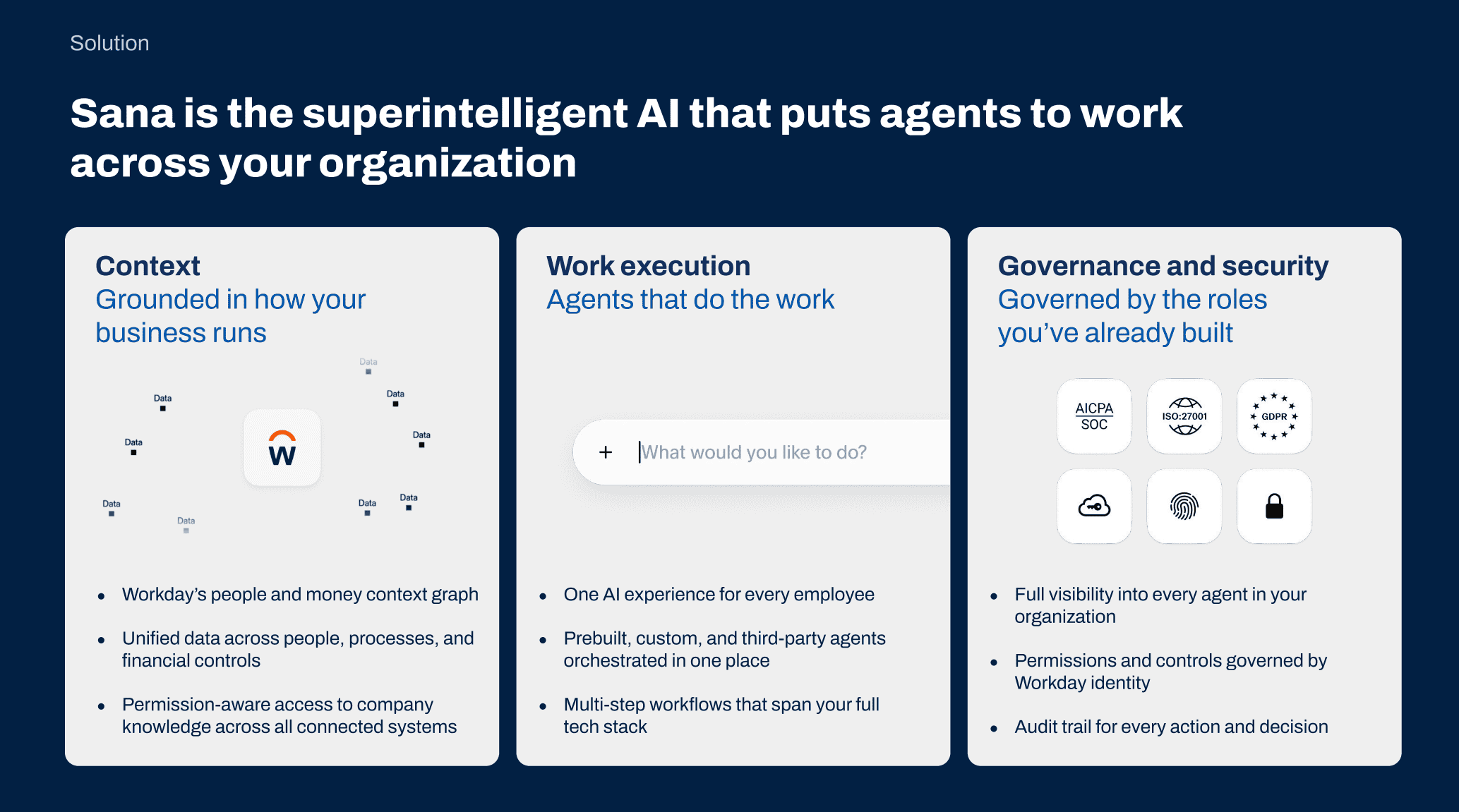
Workday views the management of AI agents as a critical component of its future infrastructure. The company is developing tools to treat agents as first-class citizens, complete with unique identities, defined skill sets, scoped authorizations, and auditable trails. Key initiatives include the "Agent System of Record," which is already being adopted by over twelve hundred customers to monitor and manage agents, a new standards-based access and privilege management system, and a unified entry point for both internal and external agents. These offerings are positioned as enterprise-grade trust infrastructure designed to mitigate the potential sprawl and chaos of widespread agent deployment. While this space is competitive, with players like ServiceNow and Microsoft offering similar tools, Workday’s integrated approach aims to provide a cohesive solution for its customer base.
4. The Unified Experience Powered by Sana
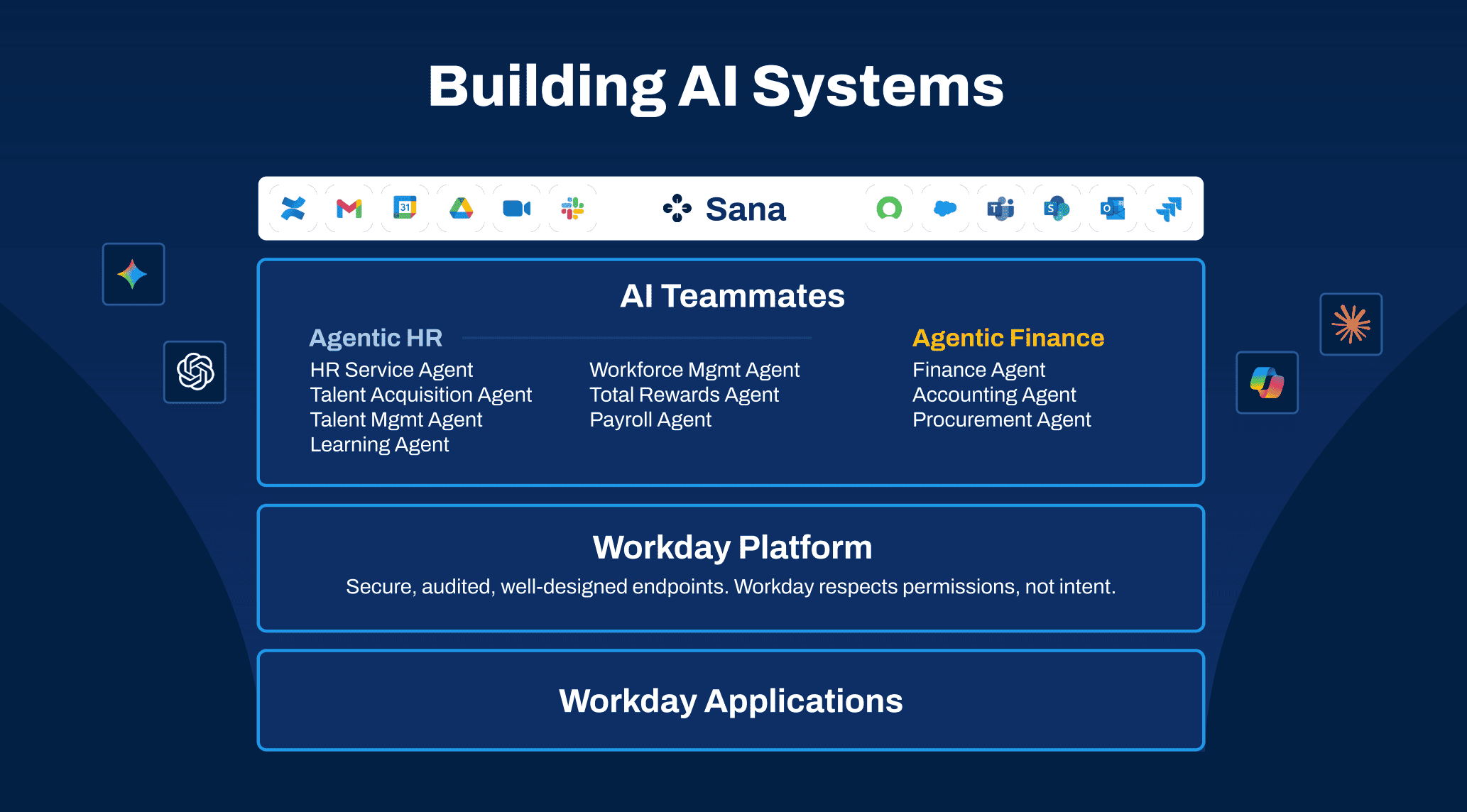
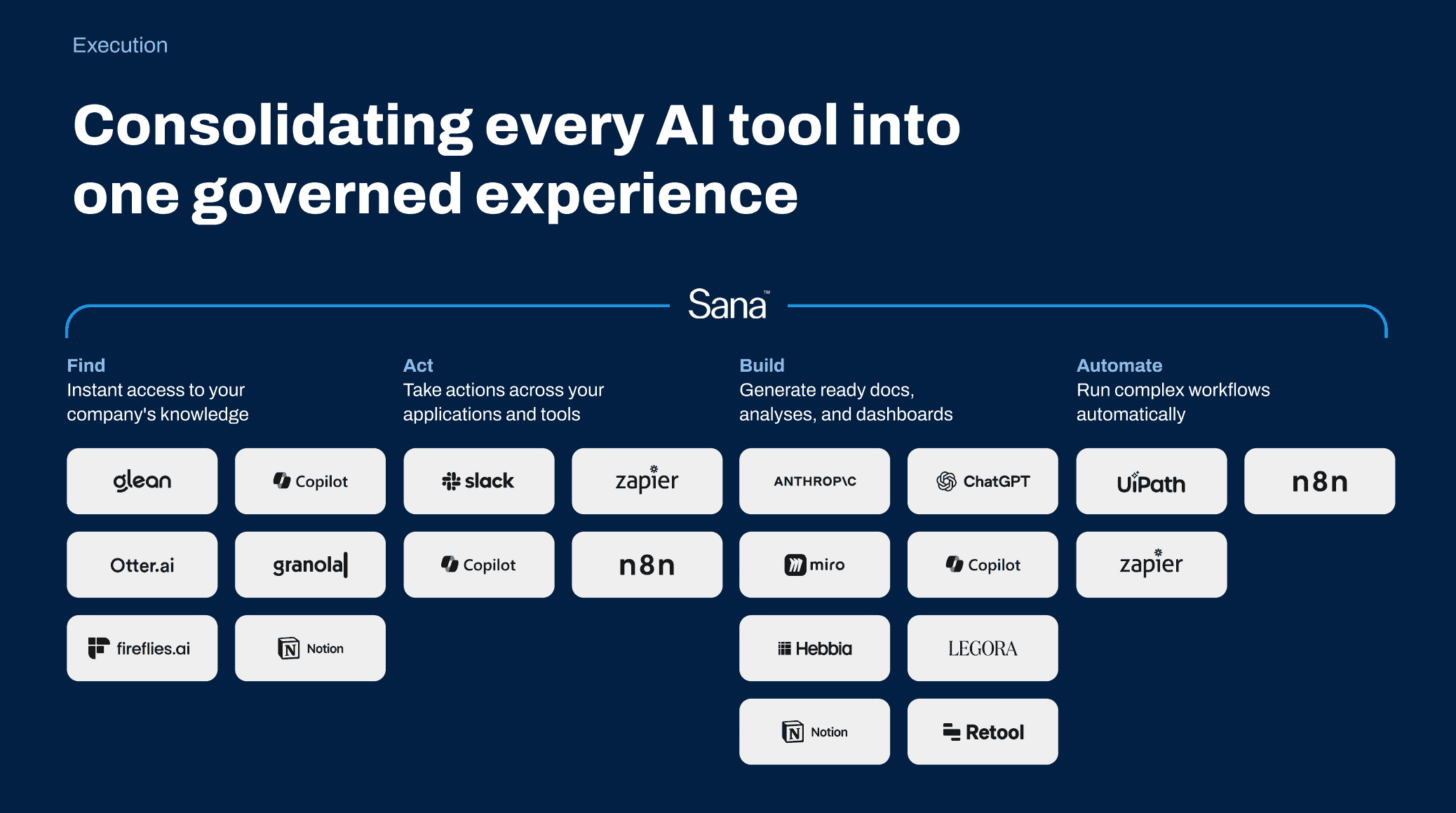
A significant element of Workday’s reinvention is the integration of Sana, a dynamic learning platform acquired by Workday. Sana is being positioned as the new default front door for Workday, bundled for all customers and upgradable to extend functionality beyond Workday to platforms like Salesforce, Slack, Microsoft Teams, and SharePoint. This strategic move places Sana in direct competition with established front-door agents like Microsoft Copilot. Workday’s vision is that Sana will become the ultimate enterprise application interface, a "DaVinci of Software" that also serves as an agent development studio and a learning surface. The implications of Sana extend to employee enablement and reskilling, potentially driving significant productivity gains.
5. Outcome-Based Commercial Models
Workday is transitioning from a traditional seat-based licensing model to a hybrid approach that incorporates consumption-based pricing through "Flex Credits." This shift aims to align Workday’s revenue more closely with customer outcomes, such as business growth and productivity improvements. APIs that external platforms interact with will also be metered per call, capturing revenue that Workday believes has been previously uncollected. This "Agentic Business Platform" model means customers pay for the actions and value generated by the system, rather than solely based on employee headcount.
Challenging the "Build from Scratch" Mentality
In an era where tools like Claude Code and Cursor make it seem feasible to rebuild complex systems from the ground up, Workday is actively countering the notion that customers should create their own HR or finance agents independently. The company argues that extracting Workday data into a separate data lake and connecting it to large language models would result in a costly, fragile "shadow ERP." Such an approach, Workday contends, would miss the unified object graph, the intricate configuration system, and the critical compliance machinery that Workday provides. The agents developed through such methods, it warns, would be inherently "lawless," prioritizing task completion over adherence to established rules, thereby introducing significant risk.
Navigating a Multi-Agent Future
Workday acknowledges that organizations will inevitably utilize multiple AI surfaces, including those from Microsoft, Anthropic, Google, and Salesforce, alongside custom-built agents. The company’s strategy accommodates this reality by positioning its "Agent Gateway" as a conduit for external agents. Using open standards, these external agents can either delegate tasks to Workday agents, inheriting Workday’s robust compliance "rails," or directly call Workday APIs. The core principle is that when an agent needs to interact with sensitive areas like personnel, finances, or regulated workflows, the reasoning and execution hand off to Workday for definitive control. The development of an easier-to-use Workday Extend platform, particularly with the integration of Sana, is expected to encourage broader adoption by third-party developers.
Enhancing Agility: Dynamic Reconfiguration
A common critique of cloud-based enterprise software has been the perceived slowness of product release cycles. Workday, which traditionally updates its system twice annually, is addressing this by introducing greater dynamism. The integration of Sana and the new UX allows for easier extension and agent registration, eliminating the need to wait for lengthy update cycles. Furthermore, the introduction of the "Deployment Agent" represents a significant advancement. This system enables dynamic testing, configuration, and consultative deployment, allowing customers to implement changes and updates much more rapidly – potentially within weeks, rather than months or years. This not only reduces implementation costs but also diminishes reliance on expensive systems integrators, paving the way for more continuous product releases and updates from Workday.
Analysis: A Turning Point for Workday
The recent announcements and strategic reorientation at Workday signal a pivotal moment for the company. Several key observations emerge from this significant shift:
1. The Founder’s Return and Renewed Energy
The return of Aneel Bhusri to the CEO role has injected a palpable sense of renewed energy and strategic clarity into Workday. Drawing parallels to leadership turnarounds at iconic companies, Bhusri’s deep understanding of both the technology and the Workday market appears to be driving a focused approach to the company’s next chapter. The implementation of a "General Manager" model for key product areas, such as the Agent Factory and AI APIs, along with a cross-functional AI task force, demonstrates a commitment to accountability and accelerated innovation. This centralized approach to AI strategy, reminiscent of recent moves by Microsoft, aims to recapture the company’s startup agility.
2. Leadership in Agentic HR and Finance
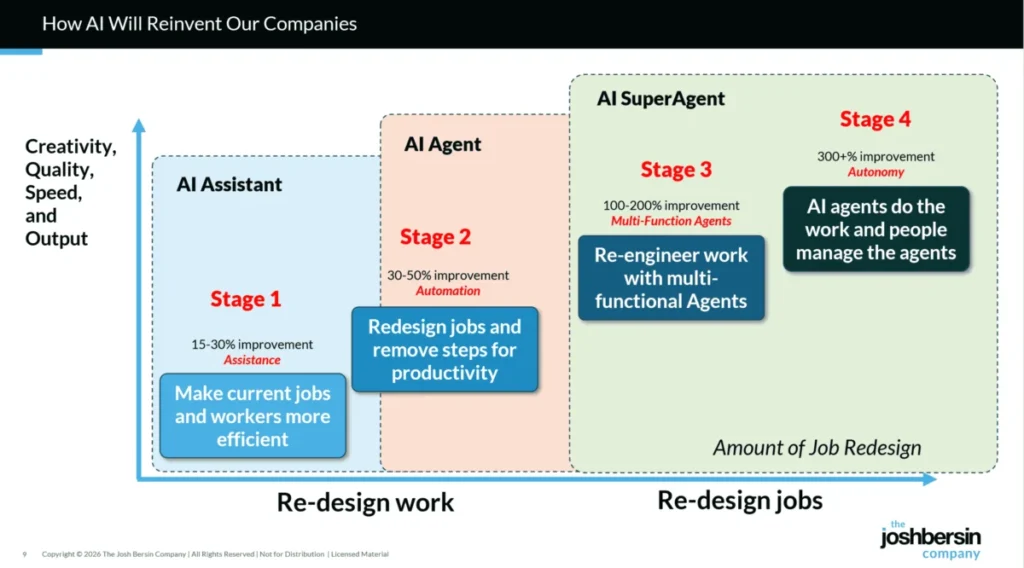
Workday’s acquisitions of Paradox and Sana, leaders in AI for recruiting, agents, and learning, position the company to lead in the "agentic" transformation of HR and finance functions. These acquisitions bring seasoned management teams with deep expertise in AI-driven applications. By demonstrating how AI can redefine core business processes while leveraging existing infrastructure, Workday has the potential to proactively guide its customers toward the future of work. The focus on "stage 3 agents"—those that automate entire workflows and deliver substantial ROI—underscores this forward-looking strategy.
3. Strategic Leadership from Sana and Paradox
The integration of Paradox and Sana brings new leadership to critical areas within Workday. Adam Godson, CEO of Paradox, now leads Workday’s entire talent acquisition platform, integrating acquired capabilities from HiredScore. Joel Hellermark, CEO of Sana, now oversees Workday’s learning platform and AI layer. Operating as General Managers, these leaders are responsible for product strategy, revenue, and customer support, fostering a high degree of accountability and driving product velocity. Given that talent acquisition and corporate learning are areas where AI is currently most advanced in HR, innovations from these acquired companies are expected to catalyze agentic redesigns across other Workday modules. The market valuations of comparable companies, such as SAP’s acquisition of SmartRecruiters for $1.8 billion and Glean’s $7.2 billion valuation, highlight the significant potential of these integrated capabilities.
4. Defining Enterprise AI Infrastructure
Workday has a unique opportunity to define the architecture of enterprise AI. The current landscape is characterized by complexity, with questions surrounding agent hierarchy, roles (action vs. observation), inter-agent permissions, and data segmentation. Workday’s approach, building upon its established "system of record" and integrating layers for LLMs, semantics, agent code, and runtime trust, offers a potential blueprint for managing AI’s evolution. While competition from major tech players is intense, Workday’s position within the ERP and HCM ecosystem allows it to take a leading role in shaping how enterprise AI infrastructure is developed and deployed.
5. Understanding the Context and Semantic Layer
A critical insight from Joel Hellermark, CEO of Sana, emphasizes the importance of "bad context" being overlooked in AI development. Workday’s acknowledgement of this challenge, particularly its investment in knowledge graphs and context engineering, signifies a mature understanding of AI value creation. The evolution of Workday’s Data Cloud to encompass not just raw data but also business semantics—such as skills models, cost centers, and career paths—demonstrates that Workday is thinking like a true AI company, moving beyond transactional processing. This focus on semantic richness is crucial for enabling trusted and effective AI agents.
Conclusion: A New Era for Workday
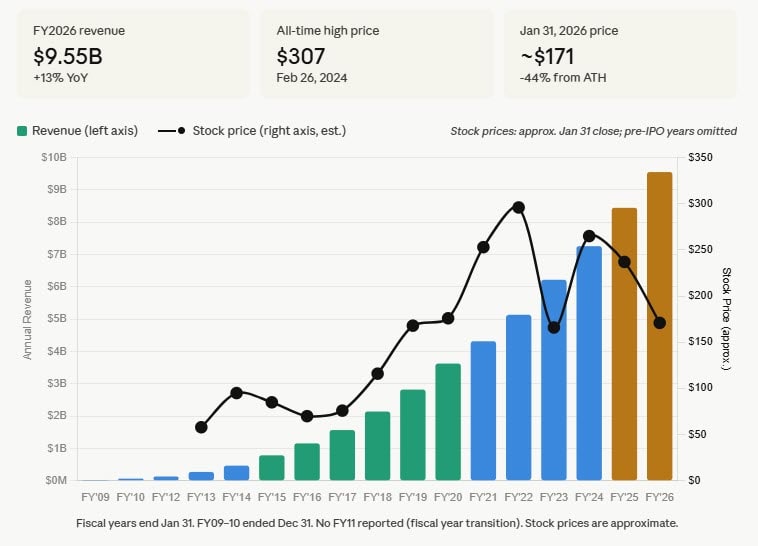
The recent strategic announcements and leadership changes at Workday mark a significant turning point, signaling the company’s readiness for reinvention. By embracing a comprehensive AI strategy, leveraging strategic acquisitions, and fostering a more dynamic operational model, Workday is poised to pioneer new solutions and empower its customers and partners in the burgeoning business agent revolution. The introduction of leaders like Adam Godson and Joel Hellermark, coupled with advancements in agent management and dynamic reconfiguration, suggests a revitalized Workday that is not only adapting to the AI era but is actively shaping its future. For financial observers, the immediate impact of Sana, Paradox, and the new AI management tools is expected to drive notable revenue growth, building on the demonstrated value these capabilities have already delivered to Workday customers. The company’s proactive approach to the complexities of AI and its commitment to enabling agentic transformation positions it strongly for the years ahead.