
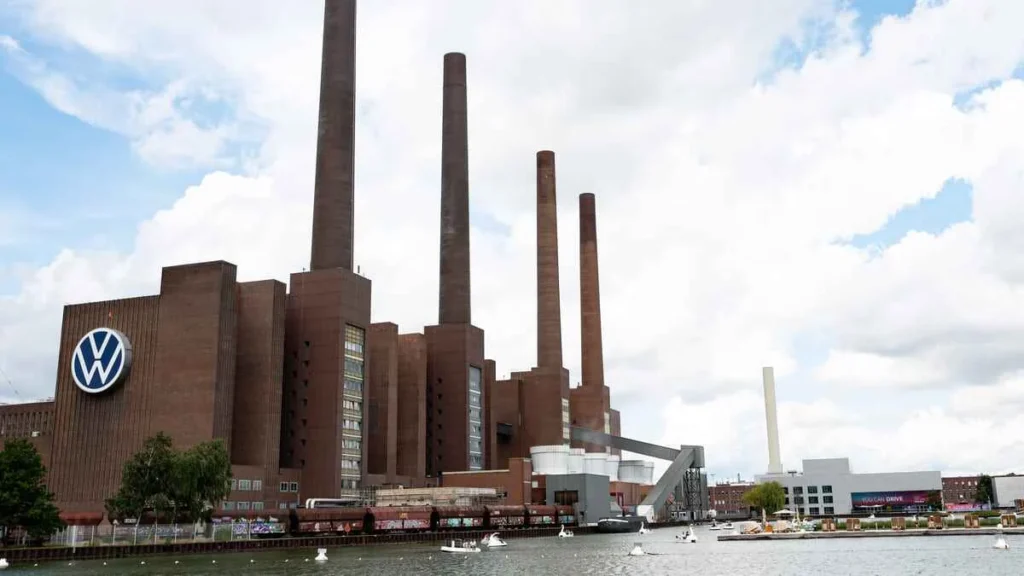
Volkswagen, the second-largest vehicle manufacturer globally, has announced a far-reaching restructuring strategy that proposes the elimination of tens of thousands of jobs, a substantial reduction in production capacity, and a severe cut in model complexity. This aggressive pivot signals that previous efficiency measures, including agreements reached with powerful labor unions last year, are now deemed insufficient to secure the carmaker’s long-term viability in an increasingly volatile global market. The announcement has immediately triggered strong condemnation from union representatives, who have warned of a "major conflict," asserting that employees should not bear the brunt of strategic missteps by the company’s leadership.
The Scope of the Overhaul: Job Cuts and Plant Closures
Reports circulating within the industry and labor circles suggest that Volkswagen is contemplating a staggering reduction of up to 100,000 jobs worldwide, which represents more than 15% of its total global workforce. This potential scale of job losses would be one of the largest in the company’s recent history, significantly surpassing earlier targets. Alongside these drastic personnel cuts, the plan reportedly includes the potential closure of several key German production facilities. Among those specifically mentioned are Volkswagen’s plants in Hanover, Emden, and Zwickau, as well as Audi’s Neckarsulm factory. These facilities are integral parts of Germany’s industrial landscape and their potential closure would send shockwaves through local economies and the national automotive sector.
Following a critical meeting of the group’s supervisory board, Europe’s largest carmaker confirmed that its strategic roadmap extending to 2030 aims to halve the number of vehicle models it currently offers. Furthermore, it intends to reduce the number of vehicle variants by up to 75%. This radical simplification of its product portfolio is designed to streamline operations, reduce development and manufacturing costs, and allow the company to focus resources on its most profitable and strategically important vehicles, particularly in the electric vehicle (EV) segment. While Volkswagen Group Chief Executive Oliver Blume stopped short of explicitly confirming the specific figure of 100,000 job cuts or the definitive closure of the four German plants, he unequivocally stated that further, more stringent restructuring measures would be necessary. The company currently employs approximately 657,000 people globally, making any significant reduction a matter of profound socio-economic concern.
Financial Pressures and Global Market Realities
The impetus for this drastic shift in strategy stems from a deteriorating global economic and geopolitical landscape, as articulated by CEO Oliver Blume. He cited a confluence of adverse factors over the past 12 months, including escalating geopolitical tensions, the proliferation of tariffs impacting international trade, rising input costs, increasingly stringent regulatory requirements, and intensifying competition, particularly within the crucial Chinese market. China, once a seemingly boundless growth engine for German automakers, has become a hotbed of fierce competition from agile domestic EV manufacturers, eroding Volkswagen’s market share and profitability.
Blume emphasized the urgent need for Volkswagen to "get rid of excess capacity" to adapt to these new realities. He also highlighted the pivotal role of technological advancements, stating that digitalization, artificial intelligence (AI), and shared services would be instrumental in enhancing productivity and accelerating operational speeds across the vast enterprise. Chief Financial Officer Arno Antlitz reinforced this sentiment, stating that previously agreed-upon cost reduction targets were "not sufficient in the current economic and geopolitical environment." Antlitz outlined further strategic pillars, including improving vehicle cost structures, significantly reducing overheads, increasing plant efficiency, and accelerating technology development and decision-making processes.
The financial performance of the group in the first quarter of 2026 provided a stark illustration of the pressures driving this radical overhaul. Volkswagen reported a significant 28% decline in net profit, falling to €1.56 billion, while revenue simultaneously decreased by 2% to €75.7 billion. These figures underscored the urgency of the situation, signaling that the company’s traditional business model was struggling to adapt to the rapid pace of change in the automotive sector. Blume encapsulated the existential nature of the challenge, asserting, "The next few years will decide who will play a decisive role in the automotive industry in the future."
Union Backlash and Industrial Relations Tensions
The announcement of these more stringent measures provoked an immediate and forceful backlash from labor unions, particularly IG Metall, Germany’s largest industrial union. As the supervisory board convened at the company’s iconic Wolfsburg headquarters, IG Metall orchestrated coordinated protests at approximately 20 sites across Germany, encompassing various Volkswagen Group brands including Audi, Porsche, MAN, and Cariad (the group’s software development arm). This widespread demonstration underscored the depth of anger and concern among the workforce.
The latest restructuring proposal marks a significant departure from an agreement reached with IG Metall in late 2024. That earlier accord had specifically ruled out compulsory redundancies and plant closures in Germany, instead outlining a plan for over 35,000 job reductions by 2030 through voluntary departures, early retirement schemes, and other non-compulsory measures. Indeed, earlier this year, Volkswagen had confirmed that around 20,000 employees had already voluntarily agreed to leave the business by the end of the decade, suggesting that the initial restructuring program was progressing as planned.

However, the current strategy implies a fundamental shift in management’s assessment, indicating a belief that those initial measures are no longer adequate to restore competitiveness. This sets the stage for potentially contentious renewed negotiations with unions over the future structure and size of the business. Union representatives have consistently argued that workers should not be penalized for what they perceive as strategic misjudgments by management, particularly in areas like the slow pace of transitioning to electric vehicles or miscalculations in market strategy. The specter of compulsory redundancies, explicitly excluded in previous agreements, now looms large, threatening to ignite significant industrial action.
Historical Context and Broader Industry Trends
Volkswagen’s current predicament is not entirely unprecedented, nor is it isolated within the global automotive industry. The company has faced significant challenges in recent years, most notably the "Dieselgate" emissions scandal of 2015. That crisis led to billions in fines, a severe blow to its reputation, and a subsequent internal push for greater efficiency and a shift towards electrification. While "Dieselgate" triggered a period of introspection and initial restructuring, the current pressures are fundamentally different, driven by technological disruption and geopolitical shifts rather than corporate malfeasance.
The entire automotive sector is undergoing a profound transformation. The rapid acceleration towards electric vehicles (EVs), the emergence of software-defined cars, and the pursuit of autonomous driving technologies demand immense capital investment and a fundamentally different organizational structure. Legacy automakers like Volkswagen are grappling with the challenge of simultaneously managing the decline of internal combustion engine (ICE) vehicle production while scaling up EV manufacturing and developing complex software ecosystems. This transition requires not just new factories and technologies, but also a significant re-skilling of the workforce and, in many cases, a reduction in the overall number of employees as production processes become more automated and efficient.
Competitors globally are also undergoing similar, often painful, transformations. Companies like Stellantis, Ford, and Mercedes-Benz have all announced significant job cuts and efficiency drives in recent years, recognizing that the era of simply building more cars is over. The competitive landscape is also being reshaped by agile new entrants like Tesla and, more recently, a wave of highly innovative and cost-effective Chinese EV manufacturers such as BYD, Nio, and XPeng, which are rapidly expanding their global reach and challenging established players on price and technology. Volkswagen, despite its vast scale, finds itself caught between these pressures, necessitating radical action to maintain its competitive edge.
Potential Economic and Social Implications
The implications of Volkswagen’s proposed restructuring extend far beyond the company itself. For Germany, a nation whose economic identity is deeply intertwined with its automotive industry, the potential loss of 100,000 jobs and the closure of multiple plants would represent a significant blow. It would impact not only the direct employees but also a vast network of suppliers, service providers, and local businesses that rely on the automotive ecosystem. The social fabric of communities heavily dependent on Volkswagen’s operations would be severely strained.
From a broader economic perspective, analysts suggest that while such drastic measures are painful, they may be a necessary evil for European legacy automakers to remain competitive in the long term. The imperative to cut costs, streamline operations, and accelerate the transition to electric mobility is undeniable. However, the manner in which these changes are implemented, particularly regarding labor relations, will be critical. A prolonged period of industrial unrest could further destabilize the company and undermine its ability to execute its ambitious transformation plans.
The German government is likely to monitor the situation closely, given the significant employment implications and the strategic importance of Volkswagen to the national economy. While direct intervention in corporate strategy is rare, the government often plays a role in mediating labor disputes and supporting retraining programs for affected workers.
Outlook and Next Steps
The coming months are poised to be a period of intense negotiation and potential confrontation between Volkswagen’s management and its powerful labor unions. The company’s assertion that previous agreements are no longer sufficient sets a confrontational tone, and the unions have made it clear they will vigorously defend their members’ interests. The outcome of these discussions will shape not only the future of Volkswagen but also serve as a barometer for the broader challenges facing Europe’s industrial giants in adapting to a rapidly changing global economy.
Volkswagen’s ambition to become leaner, more competitive, and technologically advanced by 2030 is clear. However, achieving this vision will require navigating a complex path that balances economic necessity with social responsibility, all while facing relentless competition and an uncertain global environment. The stakes, as Oliver Blume himself noted, could not be higher for the future trajectory of one of the world’s most iconic automotive brands.








