The Equal Employment Opportunity Commission (EEOC) concluded its 2025 fiscal year on September 30, revealing a litigation landscape that stands in stark contrast to the aggressive enforcement posture predicted at the year’s outset. Despite entering the year with a robust budget and a significant backlog of charges, the Commission filed only 93 merit lawsuits in FY 2025. This figure represents a ten-year low in litigation activity and ranks among the lowest filing totals recorded by the agency in the last three decades. The year was defined by unprecedented leadership changes within the executive branch, a dramatic shift in enforcement priorities, and a loss of the Commission’s quorum, all of which contributed to a notable deceleration in the agency’s legal output.
A Turbulent Year of Transition and Leadership Purges
The trajectory of the EEOC in FY 2025 was fundamentally altered by the transition to the second Trump administration. While the agency began the fiscal year under Democratic leadership, the change in the White House in January 2025 brought about immediate and historic structural shifts. In late January, President Trump elevated Andrea Lucas to the position of Acting Chair of the EEOC. Simultaneously, the administration terminated General Counsel Karla Gilbride, an appointee of the previous administration.
In a move described by legal analysts as unprecedented, the administration also fired Commissioners Charlotte Burrows and Jocelyn Samuels, despite both having several years remaining on their appointed terms. These dismissals effectively stripped the EEOC of its quorum, leaving only Acting Chair Lucas and Commissioner Kalpana Kotagal on the board. The lack of a quorum has profound legal implications for the agency’s litigation capacity. Under existing delegations of authority, the General Counsel can only file "routine" cases when the Commission cannot meet. They are generally barred from initiating systemic litigation, pattern-or-practice suits, or cases involving unsettled areas of law that might generate significant public controversy. This administrative bottleneck is a primary driver behind the record-low filing numbers seen this year.
Chronology of FY 2025: From Pre-Election Push to Post-Inauguration Pivot
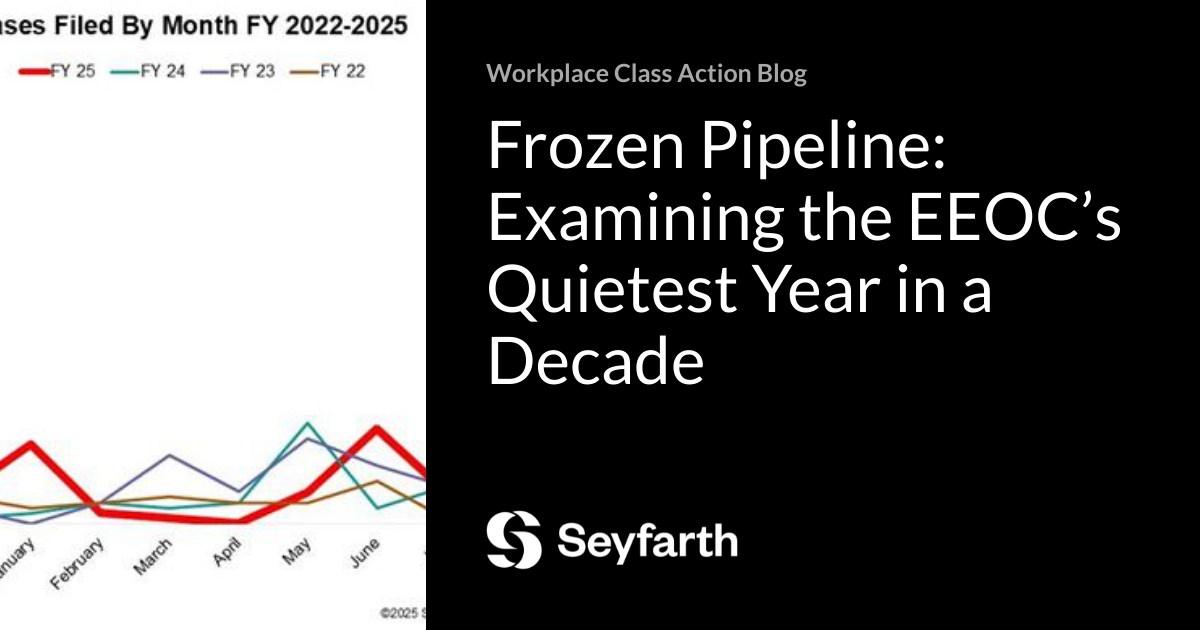
The timing of EEOC filings throughout FY 2025 reflects the political volatility of the year. The fiscal year began with a burst of activity as enforcement personnel sought to move cases through the pipeline ahead of the November election. Between October 2024 and January 2025, the Commission filed 24 lawsuits, including 15 in January alone. This early-year surge suggested an attempt by the outgoing administration’s leadership to cement certain enforcement actions before a potential change in policy.
Following the inauguration and the subsequent leadership purge, litigation activity shifted. While June 2025 saw a five-year high for that specific month with 18 filings, the traditional "September surge"—where the EEOC typically files a massive volume of cases to meet end-of-year targets—was significantly more muted than in previous years. In September 2025, the Commission filed 35 lawsuits. While this was the busiest month of the year, it paled in comparison to the 56 filings in September 2024 and the staggering 71 filings in September 2023.
Geographic Variance in Enforcement Activity
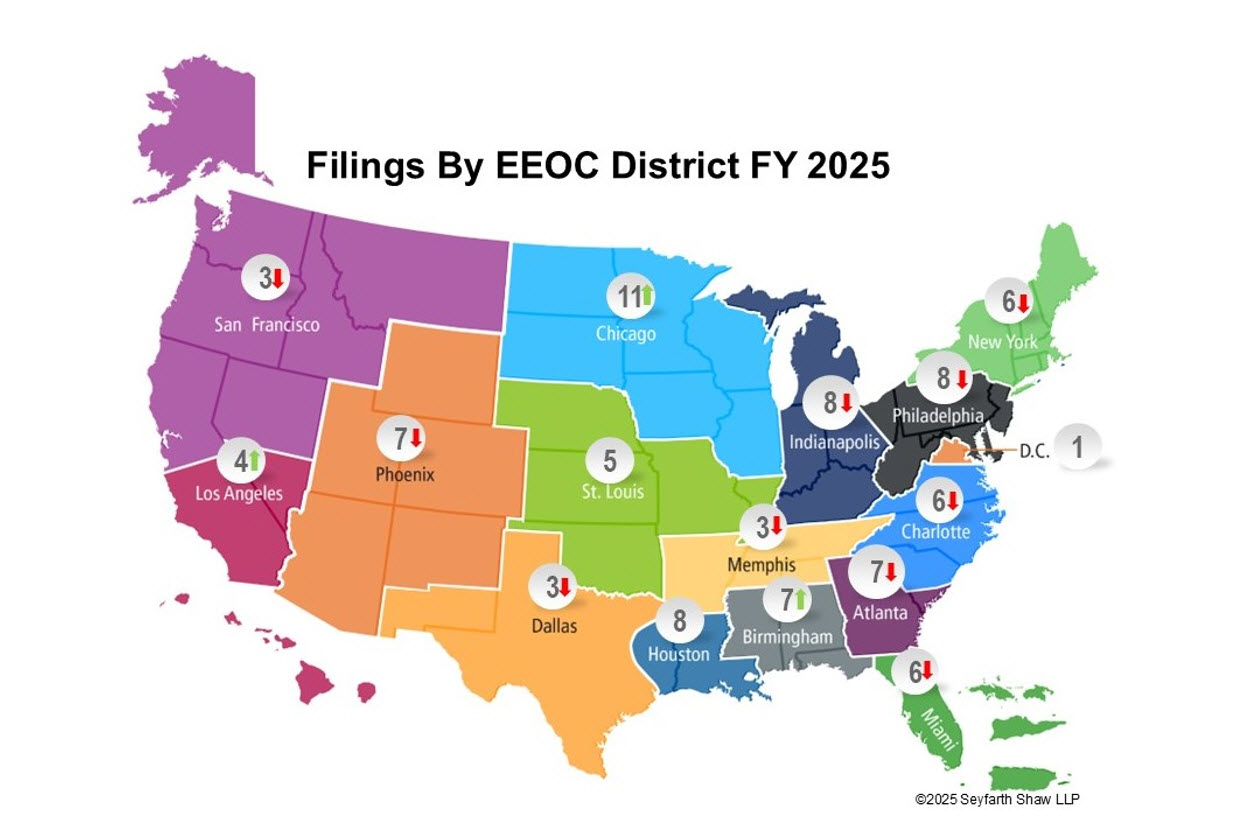
The distribution of lawsuits across the EEOC’s 15 District Offices highlights a shift in where the agency is focusing its limited resources. The Chicago District Office emerged as the most active, leading the nation with 11 merit lawsuit filings. Other busy districts included Philadelphia, Indianapolis, and Houston, each recording eight filings. These offices have consistently maintained higher activity levels, even as the national average declined.
In contrast, historically litigious districts on the West Coast and in the Northeast remained uncharacteristically quiet. The Los Angeles, New York, and San Francisco offices filed only four, six, and three lawsuits, respectively. This continues a downward trend for these regions that began several years ago, representing a sharp departure from the Obama-era EEOC, when West Coast offices frequently filed dozens of cases annually. The inactivity in these major metropolitan hubs suggests a more centralized or cautious approach to litigation under the current acting leadership.

Analysis of Statutory Claims: The Rise of Religion and Pregnancy Protections
An analysis of the types of claims filed in FY 2025 provides insight into the strategic priorities of Acting Chair Andrea Lucas. While Title VII and the Americans with Disabilities Act (ADA) remain the primary vehicles for EEOC litigation, the specific focus within those statutes has evolved.
The ADA and Mental Health
Disability discrimination remains a top priority, with 34 lawsuits filed under the ADA in FY 2025. Interestingly, this exceeds the number of ADA filings in FY 2022, despite the total number of lawsuits being much lower this year. The Commission has moved toward "invisible" disabilities, increasingly suing on behalf of individuals with hearing and vision impairments, as well as mental health conditions such as PTSD, anxiety, and depression. This suggests the EEOC is pushing employers to be more diligent in the interactive process for accommodations that are not immediately obvious.
Pregnancy and the PWFA
The EEOC filed 10 lawsuits specifically related to pregnancy discrimination, utilizing both the Pregnancy Discrimination Act and the newly enacted Pregnant Workers’ Fairness Act (PWFA). Combined with general sex discrimination claims, the Commission brought 37 cases in this category. This aligns with public statements from Acting Chair Lucas emphasizing the protection of women in the workplace and the enforcement of biological sex-based protections.
Religious Freedom and the "Woke" Policy Pivot
One of the most significant shifts in FY 2025 was the increase in religious discrimination lawsuits. Following a 600% spike in religious charges during the COVID-19 pandemic—largely related to vaccine mandates—the EEOC filed 11 religion-based lawsuits this year. This represents a substantial increase in litigation for this category. In August 2025, the Commission issued a statement touting its efforts to protect religious freedom, with Acting Chair Lucas stating that religious protections had previously taken a "backseat to woke policies." The current administration is clearly positioning itself as a defender of workers who refuse to choose between their faith and their employment.

The Retreat from LGBTQ+ Litigation and Race-Based "Reverse Discrimination"
The most dramatic policy reversal in FY 2025 occurred regarding gender identity and sexual orientation. Early in the fiscal year, during the tail end of the Biden-era influence, the EEOC filed two lawsuits concerning transgender workers. However, following President Trump’s January 2025 Executive Order regarding "biological truth," the EEOC moved to dismiss its own actions in these cases. Acting Chair Lucas signaled this shift in a January 28 statement, asserting that "biological sex is real" and that using pronouns consistent with biological reality does not constitute harassment.
Furthermore, race and national origin discrimination filings hit a decade low, with only three lawsuits filed in FY 2025. Of these, two were based on theories of reverse discrimination. One case in Guam alleged discrimination against non-Japanese workers, while another in Mississippi alleged that an employer favored non-Black, non-American workers over Black American citizens. This supports the administration’s stated goal of protecting American workers from "anti-American bias."
Industry Impact and the Role of the Private Bar
The healthcare industry remained a primary target for the EEOC in FY 2025, accounting for nearly 20% of all merit filings. Hospitals, nursing homes, and outpatient clinics faced the brunt of the Commission’s litigation, particularly regarding ADA accommodations and religious exemptions.
For employers, the decrease in EEOC filings does not necessarily mean a decrease in total legal risk. Historically, the private plaintiffs’ bar closely monitors EEOC trends. When the EEOC highlights a specific area—such as the Pregnant Workers’ Fairness Act or religious accommodations—private attorneys often follow suit, filing class actions or individual claims in the wake of the Commission’s public focus. Consequently, the "sluggish" year at the EEOC may actually be providing a roadmap for private litigants to target corporate vulnerabilities.
Implications for Corporate Compliance and Future Outlook
The record-low litigation activity of FY 2025 is a reflection of a Commission in transition, hampered by a lack of quorum and a fundamental shift in executive philosophy. However, the 93 cases that did reach the docket serve as a warning for specific sectors. Smaller regional businesses and local government entities have increasingly found themselves in the EEOC’s crosshairs, proving that size does not grant immunity from federal oversight.
As the EEOC moves into FY 2026, the potential confirmation of new Trump-appointed Commissioners could restore a quorum and potentially re-authorize the General Counsel to pursue more aggressive, albeit differently focused, systemic litigation. For now, employers are advised to focus on compliance regarding religious accommodations, pregnancy-related adjustments, and mental health-related ADA requests, as these remain the active "hot zones" for federal enforcement. The "quiet" year at the Commission should be viewed not as a permanent retreat, but as a recalibration of the federal government’s role in the American workplace.