
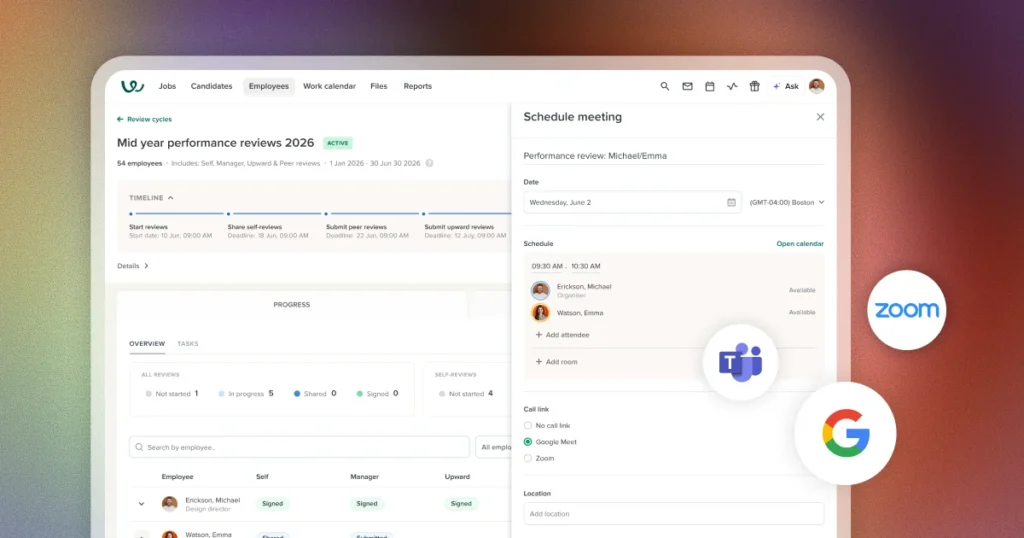
In a significant stride towards redefining contemporary human resources management, Workable, a prominent global HR technology provider, has announced a substantial enhancement to its Performance Reviews module. The update introduces built-in performance review meetings directly within the review cycle, aiming to transform what were often static, document-centric processes into dynamic, structured, and trackable conversations. This strategic integration addresses long-standing challenges in performance management, emphasizing the critical role of direct communication in fostering employee growth and organizational accountability. The innovation underscores Workable’s commitment to providing comprehensive, intuitive tools that cater to the evolving demands of a diverse and increasingly remote workforce.
The core of this enhancement lies in ensuring that every written performance review is systematically followed by a dedicated, structured discussion. Historically, one of the primary disconnects in performance management has been the gap between the completion of a written assessment and the actual verbal feedback exchange. Often, these meetings were scheduled ad-hoc, outside the HR system, leading to inconsistencies in documentation, follow-up, and overall effectiveness. Workable’s new feature seamlessly embeds these crucial conversations directly into the platform’s workflow, eliminating the need for HR managers and employees to navigate multiple tools or manual tracking systems. This integrated approach not only streamlines administrative tasks but also elevates the quality and impact of performance dialogues across an organization.
The Evolution of Performance Management: A Historical Context
Performance reviews, as a formal process, have a rich and often contentious history within the corporate landscape. Originating in the early 20th century as simple merit ratings, they evolved significantly in the mid-20th century with the rise of management theories focusing on employee development and objective setting. For decades, the annual performance review reigned supreme, characterized by a yearly evaluation meeting where managers would deliver feedback, often based on subjective criteria and recent performance bias. While intended to align employee efforts with organizational goals and identify development areas, these traditional reviews frequently fell short. They were often perceived as bureaucratic, demotivating, and ineffective in fostering continuous improvement.
Challenges associated with the traditional annual review model are well-documented. Research by Gallup, for instance, has consistently highlighted low employee engagement rates, often linked to inadequate or infrequent feedback. A 2017 study revealed that only 2 out of 10 employees strongly agree that their performance is managed in a way that motivates them to do outstanding work. Furthermore, the administrative burden on HR teams and managers, coupled with the difficulty of providing timely, actionable feedback for events that occurred months ago, contributed to a widespread sense of dissatisfaction with the status quo. Many organizations struggled with ensuring managers actually held these critical feedback meetings, let alone documented them effectively.
Over the past decade, a paradigm shift has been underway. Influenced by agile methodologies and a greater emphasis on employee experience, companies began moving away from rigid annual cycles towards more continuous performance management approaches. This shift prioritizes regular check-ins, real-time feedback, ongoing goal setting, and development-focused conversations. Companies like Adobe, General Electric, and Accenture notably reformed their systems, opting for more frequent, informal dialogues over cumbersome annual reviews. This trend underscored the growing recognition that effective performance management is less about a single event and more about an ongoing process of coaching, feedback, and development. Workable’s latest enhancement is a direct response to this industry-wide evolution, providing the technological infrastructure to support modern performance management philosophies.
Key Enhancements and Operational Mechanics
Workable’s new performance review meeting functionality is designed to be intuitive and deeply integrated into the existing review workflow. The company has focused on making the process as seamless as possible for all stakeholders: managers, employees, and HR administrators.
-
Configurable Cycle Setup: When initiating a new review cycle, HR administrators now have the option to enable the performance review meeting step. This feature is set to "on" by default, reflecting its importance, but offers flexibility. Organizations can choose to make these meetings either optional or mandatory, depending on their internal policies and cultural nuances. Crucially, a meeting completion deadline can be defined, providing a clear timeframe for discussions and ensuring timely feedback delivery. This configurability allows Workable to cater to a diverse range of organizational needs, from startups to large enterprises with varying levels of formality in their review processes.
-
Mandatory Meeting Before Signing: A significant improvement for accountability is the implementation of a gatekeeping mechanism. After a manager has completed and shared a written review with an employee, the system now prompts them to book the performance review meeting. If the meeting has been configured as mandatory, the signing step—where both manager and employee formally acknowledge the review—is blocked until the meeting is officially completed. This ensures that the crucial verbal discussion takes place before any formal sign-off, preventing situations where reviews are finalized without the necessary human interaction and clarification. This structured enforcement dramatically increases the likelihood of meaningful feedback exchanges.
-
Seamless Calendar Integration: Recognizing the importance of efficiency, Workable has integrated with popular calendar services. If calendar integration is enabled within an organization’s Workable account, managers can directly check employee availability from within the platform. Furthermore, the system allows for the addition of video conferencing links, specifically for Microsoft Teams or Google Meet, directly into the meeting invitation. Any changes or updates to the meeting schedule are automatically synced with the connected calendars, reducing manual effort and potential scheduling conflicts. This integration is particularly valuable for distributed or hybrid teams, where in-person meetings may not always be feasible, making virtual discussions the norm.
-
Structured Documentation and Transparency: During and after the meeting, both the manager and the employee are provided with dedicated sections within Workable to add notes. These notes are shared between participants, promoting transparency and a shared understanding of the discussion outcomes. Critically, these notes are also visible to HR administrators, creating a comprehensive and auditable record tied directly to the specific review cycle. This centralized documentation eliminates the fragmentation of feedback and discussion points, which often occur when meetings are held outside a structured system. It ensures that all relevant information, from written evaluations to verbal discussions and agreed-upon action items, resides in one accessible location, supporting future development planning and legal compliance.
-
HR Oversight and Accountability: Behind the scenes, HR administrators gain unprecedented visibility into the status of all performance review meetings across the organization. A centralized dashboard allows them to monitor which meetings have been booked, which are overdue, and which have been completed. This level of oversight is invaluable for ensuring accountability, identifying bottlenecks, and proactively addressing any issues that might hinder the completion of performance cycles. It empowers HR to move from reactive problem-solving to proactive management, fostering a culture where feedback is consistently delivered and documented.
Supporting Data and Industry Context
The need for integrated performance management tools, especially those emphasizing structured conversations, is supported by extensive research. A study by PwC found that 60% of employees want feedback daily or weekly, a sentiment that traditional annual reviews cannot satisfy. Furthermore, companies that implement regular feedback and development discussions report significantly higher employee retention rates and improved overall performance. Data from the Society for Human Resource Management (SHRM) indicates that effective performance management systems can lead to a 10-20% increase in productivity.
The HR technology market itself is experiencing robust growth, driven by the demand for solutions that simplify complex HR processes and enhance the employee experience. According to a report by Grand View Research, the global human resource management market size was valued at USD 21.29 billion in 2022 and is expected to grow at a compound annual growth rate (CAGR) of 11.7% from 2023 to 2030. This growth is largely fueled by the increasing adoption of cloud-based HR solutions, artificial intelligence, and integrated platforms that offer end-to-end functionality, from recruitment to performance and payroll. Workable’s move to deeply integrate meeting capabilities aligns perfectly with this market trajectory, positioning it as a comprehensive solution for modern HR needs.
The shift to remote and hybrid work models, accelerated by recent global events, has further amplified the necessity for digital tools that facilitate structured communication. While virtual work offers flexibility, it can also lead to communication breakdowns and a sense of isolation if not managed effectively. Integrated meeting functionalities within HR platforms become crucial for maintaining regular contact, providing constructive feedback, and ensuring employees feel connected and supported, regardless of their physical location.
Statements and Reactions
While Workable has not yet released specific direct quotes regarding this new feature, one can logically infer the anticipated sentiments from its leadership and the broader HR community.
A hypothetical statement from Workable’s CEO, Spyros Magiatis, might emphasize the human element: "At Workable, we believe that technology should empower human connection, not replace it. Our latest enhancement to Performance Reviews reflects this philosophy by ensuring that every written evaluation is complemented by a meaningful, structured conversation. We’re transforming performance reviews from a static document into a dynamic dialogue, fostering clearer communication, greater accountability, and ultimately, a more engaged and productive workforce. This is a critical step in our mission to provide the most intuitive and comprehensive HR solutions for businesses worldwide."
An HR industry analyst, such as Dr. Eleanor Vance, a leading expert in organizational psychology and HR technology trends, might comment: "Workable’s integration of review meetings directly into their performance management module is a smart and necessary move. For too long, HR software has excelled at the administrative aspects of reviews but often fell short in facilitating the critical human interaction. By making these meetings mandatory and trackable within the system, Workable is addressing a core pain point for HR professionals and employees alike. This pushes the industry further towards truly integrated talent management systems that prioritize continuous feedback and development over mere compliance."
Furthermore, a representative HR manager from a Workable client company, perhaps Maria Rodriguez, HR Director at InnovateTech Solutions, could offer a testimonial: "We’ve always struggled with ensuring consistent follow-through on performance review meetings. Managers are busy, and scheduling these outside the system often led to delays or missed discussions. Workable’s new feature is a game-changer. The ability to mandate meetings and block signing until completion provides the accountability we need, and the integrated calendar and note-taking functionality save us countless hours. It’s not just about compliance; it’s about fostering a culture where feedback is timely, transparent, and genuinely impactful."
Broader Impact and Implications
The integration of performance review meetings within Workable’s platform carries significant implications for various stakeholders and the future of performance management.
-
For HR Professionals: This enhancement drastically reduces administrative overhead. HR teams will spend less time chasing managers for meeting completions and manually tracking conversations. The centralized visibility dashboard allows for proactive management of the review cycle, improving efficiency and compliance. Furthermore, having a complete record of both written reviews and discussion notes provides invaluable data for talent analytics, identifying training needs, and supporting legal defensibility in performance-related decisions. This allows HR to transition from a purely administrative role to a more strategic one, focusing on talent development and organizational effectiveness.
-
For Managers: The structured workflow simplifies what can often be a daunting task. The system guides managers through the process, from sharing the review to booking and conducting the meeting, and finally documenting the discussion. Calendar integration saves time, and the mandatory meeting step ensures that important conversations are not overlooked. This helps managers become more effective coaches and leaders, equipped with the tools to deliver constructive feedback consistently.
-
For Employees: The most significant benefit for employees is the assurance of a structured, dedicated conversation about their performance. This fosters a sense of fairness and transparency, as employees have a formal opportunity to discuss their review, ask questions, and contribute to the feedback process. Timely and consistent feedback, followed by clear documentation, supports their professional development, clarifies expectations, and enhances their engagement and satisfaction within the organization. It moves the review from a judgment session to a development opportunity.
-
For Organizations: Companies utilizing Workable will likely see an improvement in overall employee performance, retention rates, and organizational culture. Consistent feedback and development discussions are directly linked to higher engagement and productivity. The enhanced accountability and transparency can lead to a more positive and performance-driven culture. Moreover, the robust documentation supports better decision-making regarding promotions, compensation, and succession planning, building a stronger talent pipeline. In a competitive talent market, offering a clear, fair, and development-focused performance management process can be a significant differentiator for attracting and retaining top talent.
-
Competitive Landscape: This feature positions Workable strongly within the crowded HR technology market. While many HR platforms offer performance review modules, the deep integration of meeting functionality with mandatory completion steps and comprehensive documentation sets Workable apart. It demonstrates a holistic understanding of the performance management lifecycle, moving beyond mere digital document storage to facilitating the critical human interactions that drive employee growth. This innovation will likely prompt competitors to accelerate their own development in similar areas, pushing the entire industry towards more integrated and communication-centric HR solutions.
In conclusion, Workable’s introduction of built-in performance review meetings is more than just a new feature; it represents a significant step forward in the ongoing evolution of how organizations manage and develop their talent. By seamlessly integrating the human element of feedback into a robust digital framework, Workable is empowering businesses to cultivate a culture of continuous growth, transparency, and accountability, laying a stronger foundation for success in the modern world of work. This enhancement reinforces the understanding that while technology can automate processes, it is the quality of human interaction that truly drives performance and engagement.






