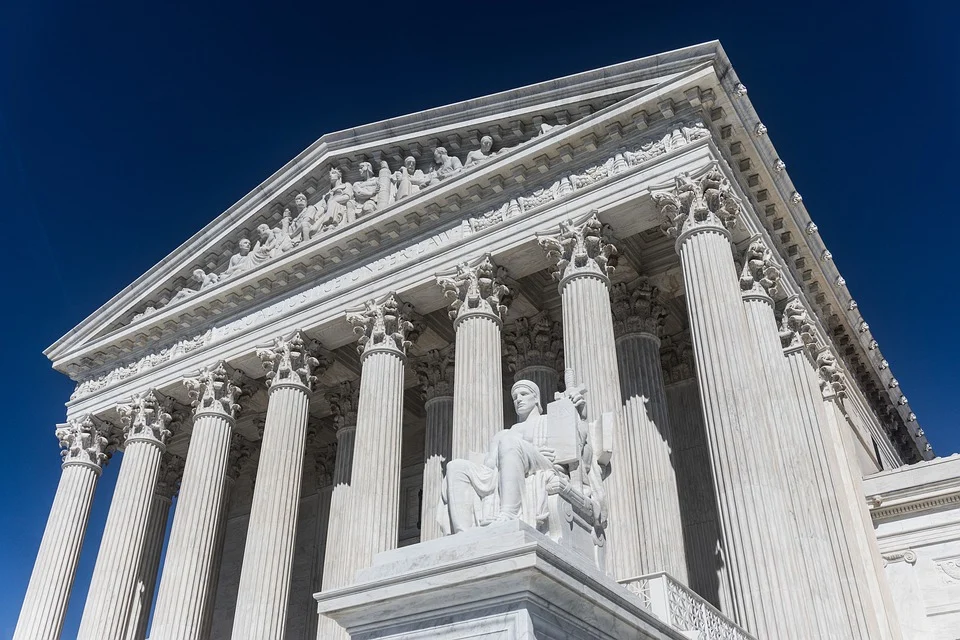
The United States Supreme Court has unexpectedly declined to rule on a high-stakes legal question regarding the composition of class-action lawsuits, dismissing a case that many legal experts believed would clarify the limits of federal class certification. On June 5, 2025, the Court issued a per curiam order dismissing the writ of certiorari in Laboratory Corporation of America Holdings v. Davis as "improvidently granted." The decision effectively reinstates a lower court ruling and leaves a significant circuit split intact, creating ongoing uncertainty for corporations facing massive class-action liabilities in federal courts across the country.
At the heart of the dispute was whether a federal court may certify a damages class under Federal Rule of Civil Procedure 23(b)(3) when a significant portion of the proposed class members have not suffered a concrete injury. The case, which originated in California, involved Laboratory Corporation of America (Labcorp) and its use of touchscreen kiosks at patient service centers. While the Supreme Court’s dismissal avoids a definitive ruling for now, the lone dissent from Justice Brett Kavanaugh suggests that the issue remains a volatile flashpoint for future litigation.
Background and Origins of the Litigation
The legal battle began when Luke Davis and Julian Vargas, both of whom are legally blind, filed a class-action lawsuit against Labcorp. The plaintiffs alleged that the company’s on-site, self-service check-in kiosks were not accessible to blind patients, violating Title III of the Americans with Disabilities Act (ADA) and California’s Unruh Civil Rights Act.
Labcorp had implemented the kiosks to streamline the check-in process, allowing patients to confirm appointments and provide insurance information via a touchscreen interface. However, the kiosks lacked tactile buttons or screen-reading software. Labcorp contended that it provided an accessible alternative by ensuring that staff members at the front desk were available to assist any patient who could not use the kiosks.
The plaintiffs argued that the mere presence of an inaccessible kiosk constituted a barrier to full and equal enjoyment of the facility. Under the Unruh Act, a violation of the ADA is automatically considered a violation of state law, which carries a mandatory minimum statutory damage of $4,000 per offense. Given the volume of patients Labcorp serves, the potential liability was staggering.
Class Certification and the "Uninjured" Member Controversy
The U.S. District Court for the Northern District of California certified a class that included potentially more than 100,000 blind individuals. Based on the $4,000 per-occurrence penalty under the Unruh Act, Labcorp faced a potential damages award exceeding $500 million per year.
During the discovery phase, evidence emerged suggesting that many members of the certified class had not actually attempted to use the kiosks or had not been deterred from visiting the facilities. Some patients preferred checking in at the front desk or using Labcorp’s online pre-check-in system. Labcorp argued that these individuals were "uninjured" because they did not personally experience a barrier to access.
Despite these arguments, the district court maintained the class certification, a decision that was later upheld by the U.S. Court of Appeals for the Ninth Circuit. Labcorp appealed to the Supreme Court, arguing that Rule 23 requires that common questions of law or fact must "predominate" over individual issues. If a court must conduct thousands of mini-trials to determine which class members were actually injured and which were not, Labcorp argued, the class should never have been certified.
The Supreme Court’s Procedural Pivot
The Supreme Court initially agreed to hear the case to resolve a long-standing tension between Rule 23 and Article III of the Constitution. Article III requires that every plaintiff have "standing," meaning they must have suffered a concrete, particularized injury. In the 2021 case TransUnion LLC v. Ramirez, the Supreme Court ruled that "every class member must have Article III standing in order to recover individual damages." However, TransUnion did not explicitly state whether a class could be certified if it contained uninjured members, only that they could not collect money at the end of the day.
The dismissal of the Labcorp case as "improvidently granted" (often referred to as a "DIG") usually occurs when the Justices discover a procedural flaw that makes the case a poor vehicle for deciding the intended legal question. In this instance, a dispute arose regarding whether a subsequent order by the district court, which clarified the class definition, had rendered the original appeal moot.

Justice Kavanaugh, the sole dissenter, expressed frustration with the dismissal. He argued that the mootness concern was "insubstantial" and that the Court was passing up a "straightforward" opportunity to apply its own precedents. Kavanaugh asserted that a class overinflated with uninjured members cannot meet the predominance requirement of Rule 23 because "if there are members of a class that aren’t even injured, they can’t share the same injury with the other class members."
Statistical Context and the Rise of ADA Litigation
The dismissal comes at a time when ADA Title III litigation is reaching historic highs, particularly in jurisdictions with supplemental state laws like California’s Unruh Act. According to data from legal analysts at Seyfarth Shaw, federal ADA Title III filings have consistently hovered near 10,000 cases annually over the past several years.
California remains the epicenter of this litigation. In 2023, nearly 50% of all federal ADA Title III lawsuits were filed in California. The attraction for plaintiffs’ attorneys is the Unruh Act’s statutory damages. While the federal ADA only provides for injunctive relief (ordering a company to fix the barrier) and attorney’s fees, the Unruh Act allows for the $4,000-per-violation damages that turned the Labcorp case into a half-billion-dollar threat.
The Labcorp case is emblematic of a broader trend where "tester" plaintiffs visit numerous locations or websites to identify technical non-compliance, often seeking to represent classes of thousands of individuals who may not even be aware of the alleged violation.
Reactions and Industry Implications
The legal community has reacted with a mix of relief and disappointment. Plaintiffs’ advocates argue that the dismissal prevents the Supreme Court from further eroding the class-action mechanism, which they view as an essential tool for holding large corporations accountable for systemic civil rights violations. They maintain that the threat of large damages is necessary to incentivize companies to prioritize accessibility.
Conversely, defense attorneys and business advocacy groups warn that the Court’s failure to act will embolden "predatory" class-action litigation. Justice Kavanaugh echoed these concerns in his dissent, noting that "overinflated" classes can force companies into "costly settlements" under the threat of "massive liability." He argued that these costs are ultimately passed down to consumers, workers, and retirement fund holders.
For employers and retailers, the dismissal means that the "9th Circuit rule"—which is generally more permissive regarding class certification—remains the law of the land in Western states. Companies operating in California, Arizona, and Washington must continue to brace for broad class certifications that include individuals who may not have suffered actual harm.
Chronology of the Dispute
- 2022: Luke Davis and Julian Vargas file a class-action lawsuit against Labcorp in California.
- Late 2022: The District Court certifies a class of all blind individuals who visited or would visit Labcorp facilities in California.
- 2023: Labcorp appeals the certification to the Ninth Circuit, arguing that uninjured members dominate the class.
- Early 2024: The Ninth Circuit affirms the class certification, reinforcing the standard that a class can be certified even if some members lack standing at the outset.
- Late 2024: The Supreme Court grants certiorari to resolve the question of uninjured class members.
- June 5, 2025: The Supreme Court dismisses the case as "improvidently granted," leaving the Ninth Circuit’s decision in place.
Future Outlook
While Labcorp escaped a Supreme Court ruling, the issue is far from settled. The circuit split remains: the Second and Ninth Circuits have historically been more lenient toward certifying classes with uninjured members, while the Fifth and Eighth Circuits have applied stricter standards.
Legal analysts expect another "test case" to reach the Supreme Court within the next two terms. Justice Kavanaugh’s dissent serves as a roadmap for future defendants, signaling that there are likely at least four other Justices—those who joined him in the TransUnion majority—who are skeptical of "overinflated" classes.
In the interim, corporations are advised to meticulously document the accessibility of their facilities and digital interfaces. For those facing litigation, the focus will likely shift to the "predominance" inquiry. By presenting evidence that determines injury on an individual basis, defendants can argue that the complexities of identifying truly "injured" members make a class action unmanageable and legally unsound. For now, however, the doors to broad class-action lawsuits remain open in many federal courts.