
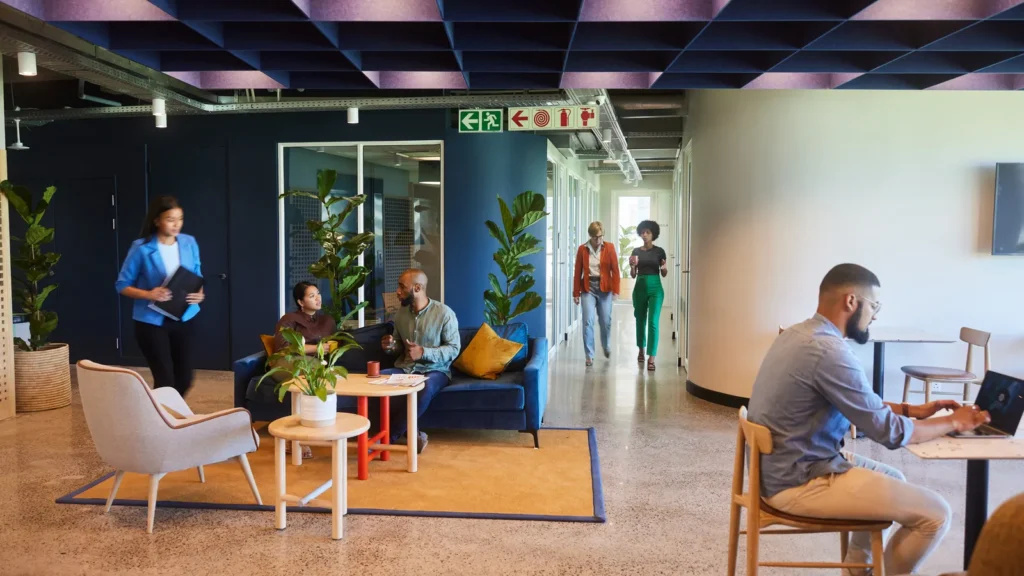
Office utilization rates are experiencing a significant resurgence, fueled by more stringent attendance policies and a strategic redesign of workspaces to better align with employee preferences for collaborative environments, according to a comprehensive report published by CBRE on July 21, 2026. This upward trend is anticipated to continue through 2027, as organizations increasingly recognize the strategic advantages of in-person connection and refine their approaches to hybrid work models. The findings highlight a fundamental shift in the purpose and design of the modern office, moving away from individual, task-focused setups towards dynamic, team-centric hubs that foster interaction and culture.
The period spanning from 2020 to 2022 marked an unprecedented era for commercial real estate, as the global COVID-19 pandemic abruptly emptied office buildings worldwide. Companies rapidly adopted remote work policies, leading to a dramatic decline in office occupancy and sparking widespread debate about the future of work. For nearly two years, many businesses operated with fully remote or highly flexible hybrid models, prompting initial speculation about the permanent obsolescence of traditional office spaces. However, as global health concerns abated and economic stability became a priority, a gradual but firm push to bring employees back to the office began to take shape from late 2022 through 2024. This push was not without its challenges, as employers grappled with employee expectations for continued flexibility and the need to justify the commute and the physical presence in an office environment. The current CBRE report indicates that these efforts, particularly the implementation of clearer attendance mandates and significant investment in office redesigns, are now yielding tangible results in terms of increased physical presence.
A cornerstone of this resurgence is the evolving philosophy behind what constitutes a productive office environment. CBRE’s research underscores a significant pivot: the modern office is increasingly organized around team collaboration and relationship building, rather than the traditional focus on individual tasks. This paradigm shift is vividly reflected in office design and space allocation. From 2021 to 2025, the Americas region witnessed a substantial 35% increase in shared support spaces, such as meeting rooms, project rooms, and informal gathering areas. This expansion directly correlates with an equal reduction in individual workstations traditionally designed for heads-down, task-focused work. This data suggests that companies are not simply demanding a return to the office, but are actively transforming the physical space to make the return more appealing and productive for team-based activities.
Beyond functional collaborative spaces, the most dramatic growth has been observed in amenity areas designed for social connection, shared experience, and informal interaction. These spaces have surged by an impressive 120% since 2021, signifying a profound organizational conviction that workplace culture is an active creation, not an inherent given. Such amenities often include enhanced cafeterias, comfortable lounges, wellness rooms, game areas, and even outdoor workspaces, all designed to facilitate serendipitous interactions and strengthen collegial bonds. "If utilization data indicates that people are returning to the office, then space allocation data indicates what they expect when they get there," the CBRE report states, emphasizing that employees are seeking value in their office visit beyond just a desk and a computer. This strategic investment in social infrastructure is crucial for cultivating a vibrant company culture that remote work models often struggle to replicate.
The changing dynamics are also evident in global occupancy rates, which CBRE reports are now at 111%, indicating that more people are actively sharing spaces. The traditional 1:1 employee-to-desk ratio, once a universal standard, has largely become the exception. Most organizations are now moving towards more efficient ratios, typically ranging between 1.01 and 1.49 employees per seat, while a significant third of organizations are pushing beyond 1.5 employees per seat. This shift is not arbitrary; an overwhelming majority, 83% of organizations, are factoring in specific job functions when determining these sharing ratios, acknowledging that certain roles require more dedicated individual space than others. Furthermore, over three-quarters of companies are calibrating these ratios using real-time space utilization data, leveraging technology to understand how and when spaces are being used to optimize their footprint. This data-driven approach allows for dynamic allocation, reducing wasted space while ensuring adequate resources for those who need them.

The journey to this current state has been multifaceted, beginning with the initial shock of the pandemic. In early 2020, as lockdowns became widespread, companies rapidly deployed technological solutions to enable remote work, from video conferencing platforms to cloud-based collaboration tools. This initial phase was characterized by a focus on business continuity and employee safety. By late 2021 and early 2022, as vaccines became widely available, the conversation shifted towards "return to office" strategies. Many companies experimented with voluntary hybrid models, but these often struggled with inconsistent attendance and a perceived lack of clear purpose for office visits. The turning point began in late 2023 and intensified through 2024, as major corporations and public sector entities started implementing more structured return-to-office mandates, typically requiring employees to be in the office for two or three set days a week. This period also saw a significant increase in investments in office renovations and redesigns, moving beyond simple cosmetic changes to fundamental shifts in layout and functionality. The CBRE report, published in July 2026, reflects the culmination of these sustained efforts, indicating that these strategies are now firmly entrenched and demonstrably effective.
Industry experts and real estate analysts have largely corroborated these trends, emphasizing the strategic importance of a well-designed office. "The office is no longer just a place to perform tasks; it’s a destination for connection, innovation, and culture," remarked Sarah Jenkins, a leading commercial real estate consultant, in a recent interview. "Companies that understand this and invest in creating compelling environments are the ones seeing the highest utilization and, crucially, the best talent retention." HR professionals also weigh in, noting that while flexibility remains highly valued by employees, many also acknowledge the benefits of in-person collaboration for mentorship, team cohesion, and spontaneous problem-solving. "It’s about finding that delicate balance," explained David Chen, Head of People Operations at a multinational tech firm. "Our policies aim to bring people together for intentional collaboration, and our redesigned spaces are critical to making those in-office days truly impactful and worthwhile."
Looking ahead, CBRE projects that office utilization will continue its upward trajectory through 2027. This sustained growth will be propelled by a reinforcing combination of factors: continued policy enforcement, a stronger cultural alignment within organizations, and an increasing recognition that in-person connection offers a significant strategic advantage. Companies are becoming more adept at defining the ‘why’ behind office presence, articulating clear benefits related to team cohesion, innovation, and knowledge transfer. The report stresses that organizations which have proactively invested in collaborative and social spaces are particularly well-positioned to capitalize on this trend. These companies are creating environments where employees genuinely perceive the value of their commute, making the office a magnet rather than a mandate. This strategic foresight allows leaders to leverage the office as a tool to drive performance, foster innovation, and cultivate a robust company culture.

The broader impact of these evolving office dynamics extends significantly into the commercial real estate market and urban economies. The initial post-pandemic slump in office demand led to high vacancy rates in many major cities, prompting concerns about the future of urban cores. However, the current trend of rising utilization, coupled with the shift towards smaller, more collaborative footprints, suggests a recalibration rather than a demise. Landlords and developers are responding by redeveloping existing properties to meet the demand for amenity-rich, flexible spaces, and in some cases, converting underutilized office buildings into residential units or mixed-use developments. This adaptive reuse is revitalizing urban areas, creating vibrant ecosystems that integrate work, living, and leisure. The increased office presence also indirectly benefits local businesses, from restaurants and cafes to public transportation systems, which saw significant declines during the remote work boom. Cities are actively partnering with businesses to encourage office returns, understanding the critical role a thriving downtown plays in overall economic health.
Technological advancements are also playing a crucial role in enabling this new office paradigm. Smart building technologies, including occupancy sensors, space booking systems, and environmental controls, provide facility managers with real-time data to optimize space utilization, manage energy consumption, and ensure a comfortable environment. These tools are indispensable for managing dynamic occupancy rates and flexible desk sharing models, allowing organizations to adapt quickly to changing needs. Furthermore, integrated AV systems in meeting rooms and advanced connectivity solutions ensure that hybrid meetings are seamless, bridging the gap between in-person and remote participants effectively. The investment in such infrastructure is not merely a cost but a strategic enabler of the modern hybrid work model.
In conclusion, the post-pandemic era has ushered in a profound redefinition of the office, marked by a decisive shift towards collaboration, community, and strategic intent. The latest CBRE report confirms that rigorous attendance policies, combined with a thoughtful and significant investment in redesigned, amenity-rich workspaces, are successfully driving up office utilization rates. This trend is not a simple reversion to pre-pandemic norms but rather an evolution towards a more purposeful and integrated work environment. As companies continue to refine their hybrid strategies, the office is reclaiming its critical role as a hub for culture, innovation, and performance, signaling a future where physical presence is valued not just for productivity, but for its unique capacity to forge connections and cultivate organizational identity. The ongoing success of this transformation will hinge on a continuous dialogue between employers and employees, ensuring that the office remains a compelling destination that genuinely enhances the employee experience and delivers on its promise of collective achievement.






