Employee incentive programs are structured initiatives designed to motivate and recognize employees for their meaningful contributions. When strategically implemented, these programs go beyond sporadic perks, instead focusing on reinforcing behaviors that are critical to an organization’s culture and business performance. By linking tangible rewards with clear recognition, companies can foster an environment where employees understand the direct impact of their efforts, leading to enhanced engagement, improved productivity, and increased retention. The core principle is simple: by rewarding desired actions, organizations encourage their recurrence.
The significance of well-designed employee incentive programs cannot be overstated. They serve as a systematic mechanism to acknowledge and reward exemplary work through a variety of means, including bonuses, points systems, public recognition, professional development opportunities, wellness benefits, and lifestyle perks. However, the most impactful programs transcend mere distribution of rewards; they actively shape employee behavior.
A critical distinction exists between incentive programs that yield consistent results and those that fall short. Data from the Achievers Workforce Institute’s (AWI) 2026 Engagement and Retention Report, which surveyed 3,000 employees globally, highlights a compelling correlation: employees who feel appreciated are significantly more likely to be engaged and committed to their organizations. This sentiment is directly linked to tangible outcomes. The efficacy of incentive programs stems from their ability to tap into fundamental human psychology. Frequent positive reinforcement, linking specific tasks to achievable goals, acts as a powerful motivator, driving employees to meet and exceed targets. Companies that strategically embrace these programs often witness a marked improvement in their ability to achieve overarching business objectives.
Moving beyond traditional, infrequent recognition like annual service awards, integrating incentives as a daily component of company culture can revolutionize performance. When employees consistently feel recognized for their contributions, their performance tends to improve, and their likelihood of remaining with the company increases. Furthermore, organizations that implement tangible sales incentives frequently observe impressive revenue growth, and professionals who are satisfied with their benefits packages are generally happier in their roles.
The most profound impact of employee incentive programs is felt by individuals who may be seeking greater opportunities for recognition, skill development, deeper connection to their work, or a clearer vision of their future within the organization. These programs are particularly effective for employees who may lack consistent positive feedback, clear pathways for career advancement, or a strong sense of belonging. Recognition-based incentives clarify which contributions are valued, while growth-focused incentives empower employees to acquire new skills and progress in their careers. Initiatives that foster connection, such as social recognition platforms and employee resource groups, strengthen interpersonal relationships and contribute to a more positive workplace culture.
The ripple effect of employee incentive programs is most potent across several key areas: employee performance, career development, overall well-being, and retention. Organizations leverage these programs to reinforce behaviors that directly contribute to achieving performance goals and to encourage continuous investment in employee growth and internal mobility. Moreover, they cultivate a culture of inclusivity that, in turn, motivates employees to refer qualified candidates and build long-term careers within the company.
The success or failure of employee incentive programs often hinges on their design and execution. Programs that succeed are those that reinforce behaviors within an employee’s control and are consistently supported by frequent, manager-led recognition. Conversely, programs falter when they are inconsistent, impersonal, or treated as a one-off event rather than an ongoing strategy. Initiatives that champion collaboration, innovation, exceptional customer service, personal growth, or core company values are more likely to foster sustained engagement. Conversely, programs where employees perceive rewards as automatic, inequitable, or disconnected from their actual efforts are less effective.
In practice, employee incentive programs function by clearly linking specific actions or outcomes to rewards. This could include achieving performance targets, embodying company values, actively participating in recognition initiatives, successfully referring new talent, completing training modules, or reaching significant career milestones. Upon the completion of these defined actions, employees receive recognition, rewards, development opportunities, time off, bonuses, or other benefits. This creates a transparent connection between contribution and appreciation, reinforcing those valued behaviors and actions at both managerial and organizational levels.
A Spectrum of Strategies: 25 Employee Incentive Programs to Elevate Engagement
To illustrate the diverse approaches to incentivizing employees, a range of programs can be implemented, each targeting different aspects of employee motivation and contribution:

-
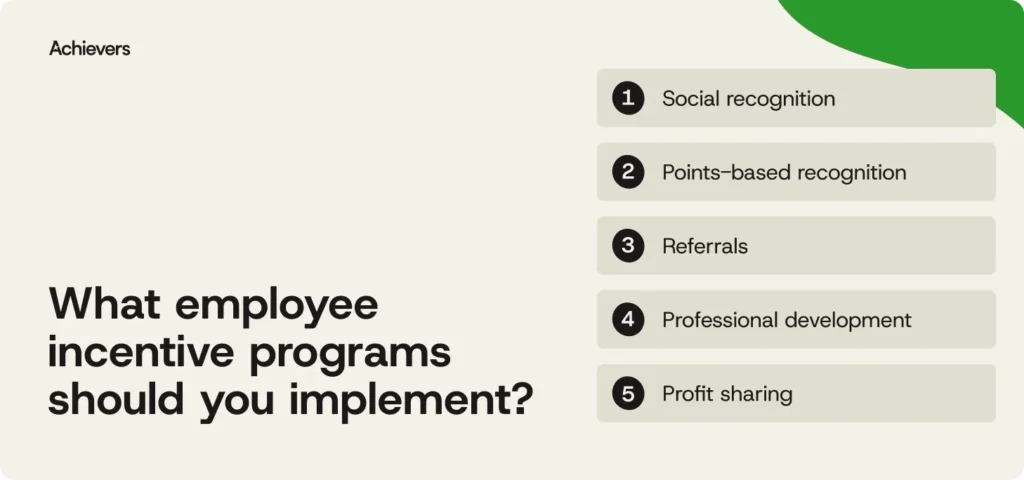
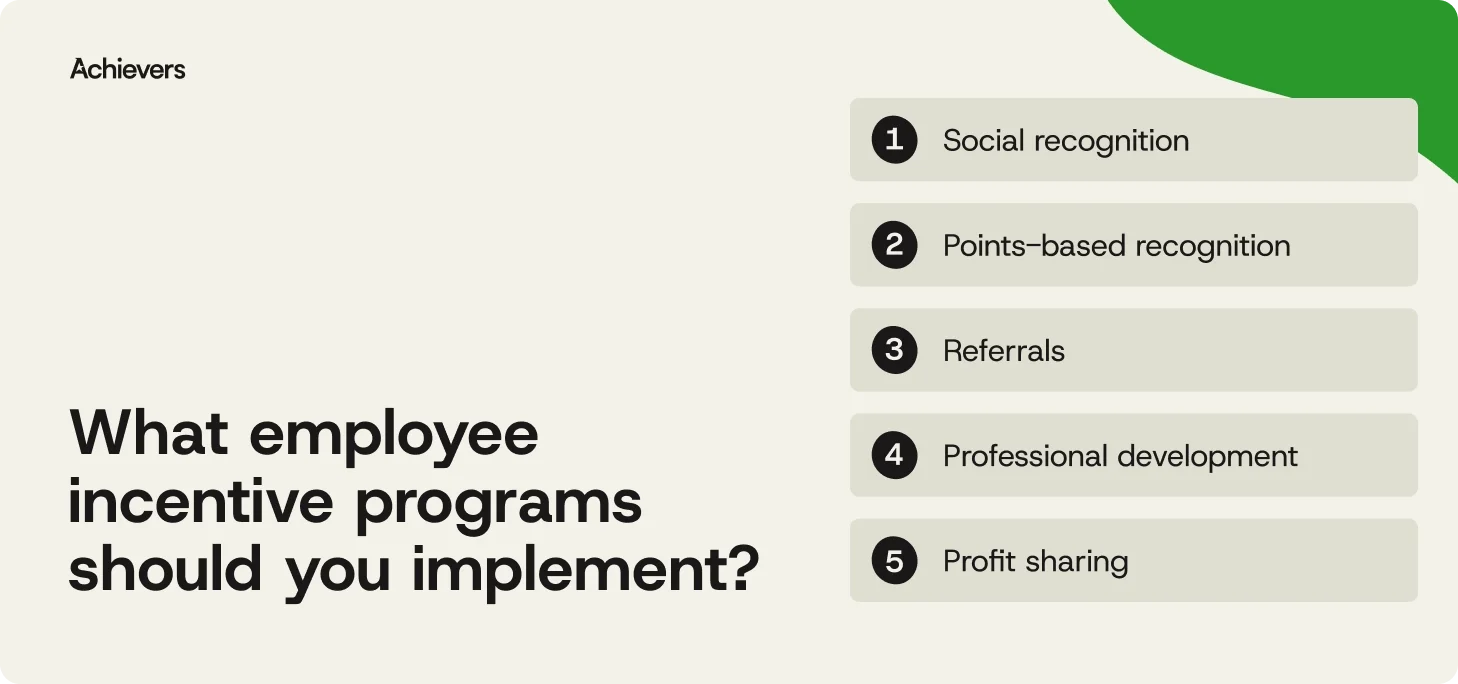
Social Recognition Programs: These programs highlight everyday achievements, fostering visibility and connection. Employees who feel appreciated through social recognition are demonstrably more likely to feel connected to their managers and supported in their well-being, significantly reducing their likelihood of seeking new employment.
-
Points-Based Recognition Programs: Offering choice and meaning, these programs allow employees to earn points based on performance, which can then be redeemed from a diverse reward marketplace. This approach effectively boosts morale and sustains high performance. Data indicates that a vast majority of employees are likely to repeat an action when recognized for it, underscoring the power of points-based systems as behavior-shaping tools.
-
Referral Programs: Leveraging the power of employee networks, these programs incentivize staff to recruit top talent. Employees with strong peer connections are more likely to envision a long-term career with their company. Tiered rewards and integration with broader recognition programs can simultaneously bolster the talent pipeline and keep the existing team motivated.
-
Professional Development Programs: Rewarding employees with opportunities to acquire new skills, advance their careers, and prepare for future roles directly correlates with increased productivity and loyalty. Companies that invest in training for engaged employees often see significant gains in productivity and profitability. This also serves as a robust retention strategy, as employees with access to growth opportunities report higher job satisfaction and a greater likelihood of career longevity.
-
Profit-Sharing Programs: This initiative signals to employees that their contributions directly impact the company’s success, fostering greater engagement and loyalty. Alternatively, robust 401(k) matching programs can achieve similar outcomes, keeping employees motivated and invested in the company’s future.
-
Health and Wellness Programs: Essential for preventing burnout and promoting employee well-being, these programs demonstrate organizational care. Employees who feel supported in their health and wellness are more likely to feel appreciated and less inclined to explore external opportunities.
-
Tuition Reimbursement Programs: Investing in employees’ educational futures not only enhances retention but also ensures they feel more adequately prepared for their roles. A significant majority of employees report feeling more confident in their positions after receiving educational support, making this a high-return benefit.
-
Bonuses and Raises: These are direct and clear expressions of appreciation. A substantial percentage of workers report feeling more valued when they receive an annual bonus. When linked to clear and attainable goals, these incentives motivate employees to strive for excellence without fostering unhealthy competition.
-
Fun Gifts: Thoughtful gifts, whether tangible items or unique experiences, show employees they are valued. Personalizing these gifts or allowing employees to choose from a selection caters to individual preferences and can significantly impact morale.
-
Additional Time Off: Offering extra paid time off as a reward for achieving specific goals not only enhances job satisfaction but also serves as a crucial measure against burnout.
-
Choice of Projects: Empowering employees to select projects that align with their passions and strengths can significantly boost motivation and engagement. This fosters a greater sense of ownership and encourages continued skill development.
-
Comprehensive Employee Benefits Programs: A robust benefits package, encompassing health insurance, paid time off, and other essential provisions, demonstrates an organization’s commitment to employee welfare. This builds loyalty, enhances security, and attracts top talent.
-
Human Resources Development Initiatives: Focusing on long-term employee growth through skill enhancement programs yields substantial increases in engagement and satisfaction. Investing in talent development signals to the workforce that their professional journey is valued, a powerful motivator for high performers.
-
Performance Management Programs: Modern performance management should bridge the gap between an employee’s work and their growth and impact. When employees lack the necessary tools, growth opportunities, or regular feedback from managers, engagement and retention suffer. Performance management must evolve beyond annual reviews to become a continuous, recognition-led experience that supports employee development.
-
Travel Incentives: Rewarding achievements with fully paid trips transforms success into memorable experiences. Extensive travel options allow employees to choose destinations that appeal to them, making these incentives a highly sought-after motivator for performance and loyalty.
-
Commission Programs: Directly linking effort to reward, commission structures are highly effective for motivating sales teams and aligning their success with company growth. This model underpins a significant portion of annual sales compensation expenditures in many economies.
-
Flextime Programs: Offering flexibility in work schedules is a powerful retention tool. Employees who have the autonomy to set their own hours often report greater job satisfaction and a stronger commitment to their employers, fostering a healthy work-life balance and boosting morale.
-
Employee Resource Groups (ERGs): ERGs cultivate a sense of belonging and connection, which are paramount for retention. Employees who feel a strong sense of belonging are significantly more likely to envision a long-term career with their company and are less likely to be actively seeking new employment. These groups create safe spaces for employees to feel heard, supported, and connected.
-
Customized Learning Stipends: Providing funds for employees to pursue courses or conferences demonstrates a commitment to their personal and professional development. This empowers employees to invest in their own growth, fostering a culture of continuous learning that benefits both the individual and the organization.
-
Sabbatical Leave Rewards: Offering sabbatical leave allows employees to recharge and return with renewed energy and perspective. This is an excellent way to reward loyalty, prevent burnout, and retain top talent, ensuring they can bring their best selves to work.
-
Green Commuting Incentives: Encouraging sustainable commuting options like biking or public transit not only benefits the environment but also demonstrates an organization’s commitment to employee well-being and corporate social responsibility.
-
Wellness Challenges with Rewards: Gamifying healthy habits through wellness challenges, coupled with tangible rewards, makes well-being initiatives engaging and fun. These challenges foster team spirit while encouraging employees to prioritize their health.
-
Family-Oriented Perks: Benefits such as educational assistance for children or allowances for family outings signal that the organization values employees’ personal lives. Supporting family well-being can lead to increased job satisfaction and performance.
-
Recognition Through Peer Awards: Empowering employees to recognize each other fosters a collaborative and appreciative work environment. This widespread recognition at all levels boosts morale and motivates employees to exceed expectations.
-
Innovation Incentives: Rewarding creative ideas that lead to business improvements encourages a culture of innovation and continuous improvement. This empowers employees to drive change and contribute to the company’s evolution.
Best Practices for Effective Employee Incentive Programs
To maximize the effectiveness and consistency of employee incentive programs across an organization, several best practices should be adopted:
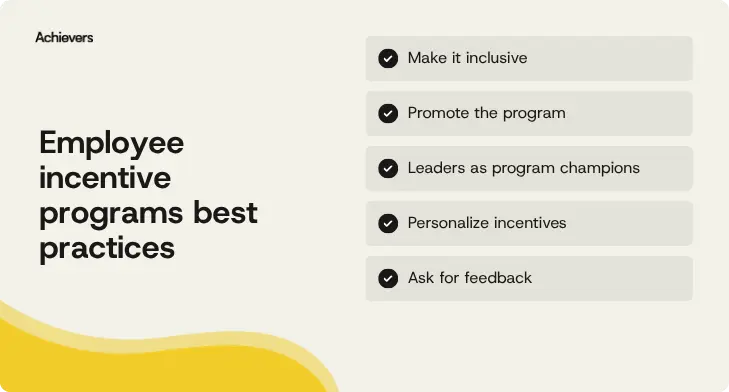
- Inclusivity: Ensure programs are accessible to all employees, regardless of role, location, or work arrangement. Digital tools and clear participation pathways are crucial for frontline, hybrid, and remote teams.
- Promotion: Consistent communication is vital. Employees must understand what behaviors are recognized, how to participate, and where recognition occurs. Regular reinforcement through real-world examples solidifies understanding.
- Leadership Training: Managers are pivotal to the success of incentive programs. Training should equip them to recognize specific actions tied to goals, deliver timely recognition, and use incentives to reinforce sustained performance.
- Personalization: Generic incentives lose impact. Understanding the diverse needs and preferences of employees across different roles and career stages is key to offering rewards that truly resonate.
- Feedback Mechanisms: Actively solicit employee feedback through surveys, participation data, and direct input. This allows for continuous program refinement to ensure alignment with employee motivations and organizational goals.
Implementing a Successful Incentive Program
A strategic approach to implementing an incentive program involves several key steps:
- Define Success Metrics: Clearly articulate the desired outcomes and specific behaviors the program aims to influence, linking them directly to business priorities.
- Prioritize Recognition: Design the program with recognition as the foundational element, with incentives serving as an additional layer of reinforcement. Recognition explains the "why" behind a behavior, making it visible and meaningful.
- Establish Clear Rules: Outline transparent participation guidelines, detailing what actions earn recognition and how incentives are awarded. This minimizes ambiguity and ensures consistency.
- Measure and Adjust: Continuously track program participation, the behaviors being reinforced, and areas of low engagement. Use this data to adapt and refine the program, ensuring it remains relevant to current work realities.
The Multifaceted Benefits of Employee Rewards Programs
Employee rewards programs are instrumental in reinforcing performance-driving behaviors, thereby strengthening engagement and fostering a sense of connection throughout the workforce. The key benefits include:
- Increased Employee Engagement: When employees feel their contributions are noticed and valued, their engagement levels rise significantly.
- Improved Performance: Clearly defined goals and associated rewards motivate employees to strive for excellence, leading to better individual and team performance.
- Enhanced Retention: Feeling appreciated and recognizing opportunities for growth are crucial factors in employee retention, reducing turnover rates.
- Stronger Company Culture: Programs that promote collaboration, innovation, and positive behaviors contribute to a more vibrant and supportive workplace culture.
- Higher Productivity: Motivated and engaged employees are generally more productive, contributing to the organization’s overall success.
When integrated with frequent, social recognition, rewards programs become a powerful catalyst for shaping workplace culture and driving measurable organizational impact.
Elevating Employee Engagement Through Rewards
To effectively enhance employee engagement through rewards, organizations should focus on three core actions: ensuring rewards are tied to meaningful behaviors, consistently recognizing employee contributions, and making recognition a frequent occurrence. Appreciation is a potent driver of engagement, transforming how employees perceive their work and their future with the company. Rewards serve as tangible vehicles for making this appreciation visible and memorable.
Consistency is as critical as the reward itself. Employees who receive frequent, meaningful recognition are more likely to be engaged, motivated, and committed to their roles. Rewards that consistently support this recognition reinforce what constitutes good work, its significance, and the actions worth repeating, thereby strengthening engagement over time.
Seamless Integration of Incentive Programs
Selecting an employee incentive program that integrates seamlessly with existing software is crucial for efficient adoption and management. Organizations should look for platforms offering:
- Plug-and-Play Integrations: Platforms that readily connect with essential tools like HRIS, collaboration software, and productivity suites streamline setup and enhance user adoption.
- Scalability: The chosen program should be able to grow with the organization, accommodating increasing employee numbers and evolving business needs.
- User-Friendly Interface: An intuitive interface ensures ease of use for both administrators and employees, promoting consistent participation.
- Reporting and Analytics: Robust reporting capabilities provide insights into program effectiveness, participation rates, and impact on key business metrics.
The Performance Enhancement Mechanism of Incentive Programs
Employee incentive programs directly improve performance by establishing a clear link between effort, recognition, and reward. When employees witness their contributions being acknowledged and valued, they are more inclined to repeat high-impact behaviors. Programs that thoughtfully combine recognition, feedback, and meaningful rewards empower employees to understand success benchmarks, maintain motivation, and pursue continuous growth, ultimately leading to stronger individual and collective performance. This is achieved through:
- Clear Goal Alignment: Incentives help employees understand how their work contributes to organizational objectives.
- Behavioral Reinforcement: Rewarding desired actions encourages their repetition.
- Increased Motivation: Tangible rewards and recognition foster a drive to perform at higher levels.
- Skill Development: Programs often encourage employees to acquire new skills to meet performance targets.
- Improved Retention: Employees who feel valued and see opportunities for advancement are more likely to stay with the company.
Key Performance Indicators for Incentive Program Success
To accurately gauge the impact of an employee incentive program, it is essential to monitor Key Performance Indicators (KPIs) that connect recognition to engagement, retention, and performance. These metrics provide insights into program effectiveness, areas for improvement, and how recognition contributes to broader business outcomes. Critical KPIs include:
- Participation Rates: Tracking the percentage of employees actively involved indicates program inclusivity and accessibility.
- Recognition Frequency: The rate at which recognition occurs reflects whether appreciation is embedded in daily work or remains sporadic.
- Employee Engagement Scores: Monitoring trends in engagement surveys reveals shifts in morale and motivation, often correlating with program effectiveness.
- Retention and Voluntary Turnover: A successful incentive program should contribute to higher retention rates and lower voluntary employee departures.
- Performance Metrics: Observing business outcomes such as goal attainment, sales growth, and customer satisfaction demonstrates the tangible impact of reinforced behaviors.
- Employee Feedback: Qualitative feedback provides essential context, revealing how employees experience the program and its alignment with their motivations.
- Reward Redemption Rates: High redemption rates suggest that offered rewards are perceived as valuable and desirable.
By layering these metrics with insights into productivity gains, reduced absenteeism, and internal mobility, organizations can develop a comprehensive understanding of their incentive program’s long-term impact. Regular reporting and benchmarking ensure that these programs evolve and continue to deliver results.
Achievers: Unifying Incentives and Recognition
Achievers offers a unified platform that integrates incentive programs into a cohesive and consistent system. This platform connects recognition, rewards, feedback, and performance data, enabling every action to be recognized, tied to organizational goals or values, and reinforced with an incentive, all within a single software solution. This unified approach provides HR and people leaders with clear visibility into participation, recognized actions, and program reach across teams, facilitating easier management and scaling of incentive initiatives.