The modern human resources department often boasts a sophisticated technology stack, meticulously curated to cover essential functions: engagement surveys, performance reviews, recognition programs, development plans, and a core HRIS to unify it all. On paper, every box appears checked, every operational need seemingly addressed. However, beneath this veneer of comprehensive HR technology lies a pervasive and costly problem: the fragmentation of people data. This disconnect between disparate systems, while individually functional, creates significant blind spots, leading to substantial financial losses and hindering strategic decision-making.
The trouble, as highlighted by experts in HR technology, begins not with the tools themselves, but with the information they fail to share. A subtle dip in employee engagement, for instance, might never trigger a timely conversation during a manager’s one-on-one meeting. A consistently high performer’s contributions may go without adequate recognition, failing to connect that quiet positive trend with a building, yet unseen, retention risk. The signals that indicate the pulse of an organization are present, but they remain isolated, never converging in a way that allows for holistic understanding and proactive intervention.
This "disconnected data problem" extends far beyond an IT headache. It directly impacts an HR leader’s confidence in answering critical questions from the CHRO, their ability to preemptively identify potential employee flight risks, and the significant portion of their week consumed by manually piecing together reports instead of acting upon actionable insights. The good news, according to industry analysis, is that the solution doesn’t lie in acquiring more data or overhauling existing systems, but rather in enabling these tools to communicate and share information seamlessly. Understanding the silent costs of this data fragmentation and the transformative benefits of its integration is crucial for organizations seeking to optimize their human capital.
Defining Disconnected People Data
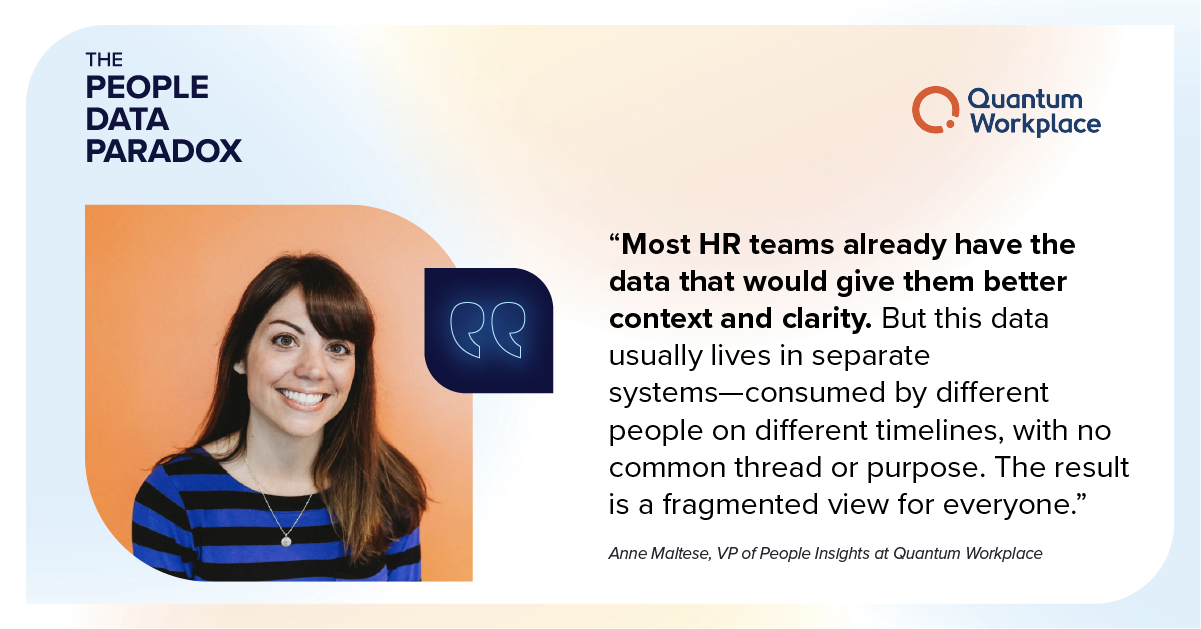
Disconnected people data refers to the scenario where critical HR functions, such as engagement surveys, performance reviews, recognition activities, development plans, and HRIS records, reside in separate, siloed systems that were not designed for interoperability. Each system captures a vital piece of the employee experience puzzle, but no single platform offers a comprehensive view of how teams are truly performing and feeling. Consequently, instead of a clear, unified picture, HR professionals are left with scattered snapshots, requiring considerable effort to stitch together into a cohesive narrative that can inform strategic action.
This lack of integration is not a minor inconvenience; it represents a fundamental challenge in leveraging people data for competitive advantage. A 2023 study by Gartner found that HR leaders typically utilize between two and four HR solutions from different vendors, yet a mere 39% reported that these systems were usefully integrated. This persistent data fragmentation results in a continuous accumulation of information without a corresponding increase in clarity or actionable intelligence.
The Escalating Cost of Fragmented People Data
The financial implications of disconnected people data are substantial, leading to millions of dollars lost annually through diminished productivity, avoidable employee turnover, and overlooked talent. For a mid-sized company with approximately 2,500 employees, the cumulative cost can approach $4 million each year, primarily stemming from under-equipped managers and the failure to retain top performers.

Many HR professionals can attest to the frustrating experience of pulling reports from multiple systems to answer a single executive query. The required data is present, but accessing it cleanly, quickly, and with the necessary confidence for decision-making becomes a significant hurdle. This disconnect is not indicative of individual shortcomings or technological failures but rather a systemic issue arising from the architecture of HR technology ecosystems.
The impact of fragmented data manifests in several critical areas:
The Cost of Underequipped Managers
Managers serve as the primary conduit for employee engagement and performance. When managers are empowered and effective, their teams tend to thrive. Conversely, their struggles can cascade throughout their direct reports. Often, managers are not lacking in inherent talent but in the necessary tools and support to excel. The average manager now shoulders approximately 51% more responsibility than is realistically manageable, with a staggering 39% having never received formal leadership training.
The business repercussions are tangible. Research indicates that managers in the top decile of leadership effectiveness generate twice the net revenue of their counterparts. The disparity between high-performing and struggling managers represents not just a development gap but a significant performance deficit actively impacting an organization’s bottom line. Without integrated data, identifying these managerial performance gaps and providing targeted support becomes an arduous, if not impossible, task.
The Cost of Overlooking High-Potential Talent
High performers are not merely valuable; they are disproportionately so, contributing between 400% and 800% more than an average employee. Despite this immense value, only 57% of organizations have a formal process for identifying these critical individuals. In the absence of connected data, talent identification often relies on subjective factors like visibility and advocacy, leading to situations where those generating the most significant impact are not always recognized or promoted. Each quarter of unrecognized outsized contribution represents a lost opportunity for the organization to fully leverage its most valuable assets.
The Cost of Missing Retention Risk
The decision for a high performer to resign is rarely sudden. It is typically preceded by months of subtle warning signs: a decline in survey sentiment, a cessation of development discussions, or a reduction in recognition. Individually, these signals may not raise immediate alarms. However, when viewed collectively, they paint a clear picture of escalating disengagement and potential departure.
The cost of replacing an employee can range from 50% to 200% of their annual salary. Industry data suggests that one in three departing employees believe their exit could have been prevented. The precursors to such departures are often present within an organization’s existing data, but their scattered nature across disconnected systems obscures their collective meaning.
The Cumulative Impact of Data Fragmentation
To illustrate the financial drain, consider an organization with 2,500 employees and 250 managers. If 50 of those managers are inadequately equipped, and this leads to a 10% disengagement rate among their direct reports, the organization could incur approximately $1.7 million in lost productivity annually.
Adding the dimension of retention risk, if 10 high performers leave due to a lack of recognition, and their replacement costs twice their salary, this adds another $2 million to the annual deficit. This totals nearly $4 million directly attributable to disconnected data, and this figure does not even account for the broader inefficiencies arising from misaligned efforts, slow skill development, and unrecognized potential.
The Transformation When Data Connects
Historically, the effort and resources required to connect signals across fragmented systems were often prohibitive for HR teams. However, advancements in technology, particularly artificial intelligence, are now enabling continuous analysis across engagement, performance, development, and recognition data. This integration allows for the identification of patterns that were previously invisible, transforming raw data into actionable intelligence.
The fundamental shift is not about collecting more data, but about finally understanding the messages that existing data has been trying to convey. When these signals are connected, organizations can begin to answer critical questions that have long plagued HR and executive leadership:
- Are our managers equipped to lead effectively? Integrated data can highlight correlations between manager development, team engagement, and performance metrics, providing a clear view of leadership effectiveness.
- Who are our high performers, and are we nurturing their potential? By cross-referencing performance reviews, recognition, and development progress, organizations can identify and support their top talent more effectively.
- What are the early indicators of flight risk, and how can we intervene proactively? Tracking changes in engagement, recognition, and feedback sentiment can provide early warnings, allowing HR to implement retention strategies before it’s too late.
- How is employee sentiment evolving, and what are the drivers of satisfaction and dissatisfaction? Connecting engagement survey data with other people metrics offers a nuanced understanding of the employee experience.
From Fragmented Data to Connected Talent Insights
The true value of connected data lies not just in its visibility but in its ability to drive meaningful action. Quantum Workplace, a leader in HR technology, focuses on integrating engagement, performance, development, and recognition signals into a unified view. This approach empowers leaders to move beyond piecing together fragmented information and gain a clear understanding of their teams’ realities. AI-driven insights reveal hidden patterns within disparate systems, and each finding is coupled with clear, prioritized next steps, aligned with organizational goals and benchmarks, and delivered directly to leaders in their workflow.
This connected approach enables HR teams to:
- Proactively address employee concerns: Identify potential issues before they escalate into significant problems.
- Optimize talent development: Ensure that development plans are aligned with performance needs and career aspirations.
- Enhance employee recognition: Implement recognition strategies that are meaningful and impactful, reinforcing desired behaviors.
- Improve manager effectiveness: Provide managers with the insights and tools they need to lead their teams successfully.
- Reduce employee turnover: By understanding and addressing the root causes of disengagement and flight risk.
In essence, the era of siloed HR technology is giving way to a more integrated, intelligent approach. By breaking down data barriers and fostering interoperability between HR systems, organizations can unlock a wealth of insights, mitigate significant financial losses, and cultivate a more engaged, productive, and high-performing workforce. The silent costs of disconnected people data are too high to ignore; the benefits of a connected talent intelligence strategy are too substantial to overlook.