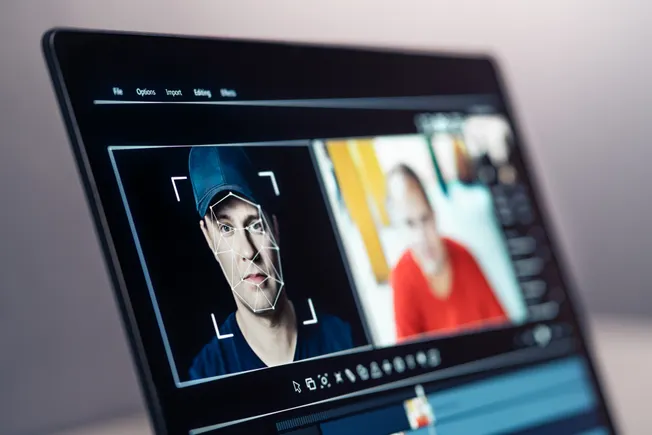
The modern workplace, increasingly digitized and interconnected, now confronts a novel and profoundly complex challenge: the proliferation of artificial intelligence (AI) deepfakes. Tracey Diamond, a distinguished partner at Troutman Pepper Locke specializing in employment law, highlights this emerging crisis, posing a scenario that underscores the gravity of the situation: an employee presents digital evidence of harassment – a sexually explicit voicemail and a nude photo sent via text, purportedly from a co-worker. While such evidence would historically be taken as prima facie proof, the advent of sophisticated AI technology forces employers to ask a critical question: what if it was all fabricated? This scenario is no longer confined to speculative fiction but represents a tangible and growing threat to the integrity of workplace investigations, placing immense pressure on employers to discern fact from increasingly indistinguishable fiction.
The Evolving Landscape of Workplace Harassment and Employer Responsibility
To fully grasp the magnitude of the deepfake dilemma, it is essential to revisit the foundational legal frameworks governing workplace harassment. Title VII of the Civil Rights Act of 1964 stands as a cornerstone of American employment law, explicitly prohibiting discrimination and harassment based on protected characteristics, including sex. This landmark legislation established a federal mandate for employers to maintain workplaces free from such unlawful conduct. Decades later, in 1998, the U.S. Supreme Court further refined employer responsibilities through its pivotal decisions in Faragher v. City of Boca Raton and Burlington Industries, Inc. v. Ellerth. These cases collectively established the Faragher-Ellerth affirmative defense, a critical legal tool for employers facing harassment claims.
To successfully invoke this defense, an employer must demonstrate two key elements: first, that it exercised reasonable care to prevent and promptly correct any sexually harassing behavior; and second, that the complaining employee unreasonably failed to take advantage of any preventive or corrective opportunities provided by the employer. The first prong of this defense places a non-negotiable duty on employers to conduct prompt, thorough, and impartial investigations into all harassment complaints and to implement effective corrective actions when improper conduct is reasonably believed to have occurred. For decades, this framework guided HR departments and legal counsel, establishing clear protocols for gathering evidence, interviewing parties, assessing credibility, and reaching conclusions. However, the rapid ascent of AI-generated deepfakes has introduced an unprecedented layer of complexity, fundamentally challenging the very notion of "evidence" and making the traditional investigative process fraught with new perils.
The Rise of Deepfake Technology: A New Frontier of Deception
The term "deepfake" typically refers to media—images, audio, or video—that has been manipulated or generated using artificial intelligence and machine learning algorithms to depict individuals doing or saying things they never did. This technology leverages deep learning models, often Generative Adversarial Networks (GANs), to create highly realistic synthetic media that can be virtually indistinguishable from authentic content to the untrained eye. While the technology has applications in entertainment and creative fields, its darker side has manifested in widespread misuse, particularly in the creation of non-consensual intimate imagery (NCII) and disinformation campaigns.
The proliferation of deepfakes has been exponential. Reports from cybersecurity firms indicate a significant increase in deepfake incidents year over year, with some estimates suggesting a doubling of detected deepfake content annually. While many of these instances occur in political contexts or celebrity impersonations, their entry into the workplace was inevitable. The tools required to create convincing deepfakes have become increasingly accessible, moving from specialized labs to readily available software and online platforms, often requiring minimal technical expertise. This ease of creation dramatically lowers the barrier for individuals seeking to frame, humiliate, or retaliate against co-workers, making the potential for internal malicious use a pressing concern for every organization. The implications extend beyond mere harassment; deepfakes can be weaponized for corporate espionage, defamation, and even to manipulate financial markets.
Legal Frameworks and Emerging Protections Against Deepfakes
Recognizing the escalating threat posed by deepfakes, legislative bodies have begun to respond, albeit with the law often struggling to keep pace with technological advancement. A significant federal initiative is the Take It Down Act, enacted in May 2025. This legislation criminalizes the knowing publication of an "intimate visual depiction of an identifiable individual created through the use of software, machine learning, artificial intelligence, or any other computer-generated or technological means… that, when viewed as a whole by a reasonable person, is indistinguishable from an authentic visual depiction of the individual." This act provides a crucial legal avenue for victims to seek recourse against the creators and distributors of such harmful content.
Further legislative efforts are underway, such as the pending Defiance Act, which aims to provide victims with a direct right to sue individuals responsible for creating pornographic deepfake images of them. While these statutes primarily target the perpetrators of deepfake creation and distribution, they raise complex questions regarding employer vicarious liability. It remains to be definitively determined whether an employer could be held vicariously liable under these new laws for an employee’s wrongful act of creating deepfake images during or in connection with their employment. However, the implications for Title VII liability are more immediate and clearer. An employer that fails to adequately investigate a complaint from an employee alleging harassment by a co-worker who distributed sexual AI-generated images risks significant liability under Title VII. This creates a challenging dual responsibility: addressing the deepfake’s existence while also navigating the broader harassment claim.
Real-World Precedents: Deepfakes in Litigation
The theoretical concerns surrounding deepfakes in the workplace are rapidly translating into tangible legal disputes. Several high-profile cases have already emerged, illustrating the profound impact of this technology on employment law. One notable complaint involved a television meteorologist in Tennessee who sued her employer. She alleged that management failed to adequately investigate claims that deepfake sexual images created using her likeness were circulating, leading to a hostile work environment and reputational damage. This case underscores the duty of employers to not only have policies in place but to actively and effectively enforce them when such egregious acts occur.
In another instance, a Washington state trooper filed a lawsuit after an AI-generated video of him purportedly kissing another trooper was circulated among co-workers. This incident highlights the insidious nature of deepfakes, which can be used to sow discord, damage reputations, and create a deeply uncomfortable and discriminatory work environment. These cases serve as stark warnings to employers: ignoring or inadequately addressing deepfake-related harassment claims carries substantial legal and reputational risks. The U.S. Equal Employment Opportunity Commission (EEOC), the federal agency responsible for enforcing anti-discrimination laws, has also acknowledged the severity of this issue. Its guidance explicitly lists the sharing of sexually demeaning AI-generated and deepfake videos and images of people as a form of harassing conduct that violates federal law, reinforcing the employer’s obligation to act.
The Employer’s Quandary: Fact vs. Fabrication
This brings us back to Tracey Diamond’s hypothetical scenario: an employee presents digital evidence of harassment – a voicemail and a text containing a nude photo. In the pre-deepfake era, the visual and auditory nature of such evidence would strongly lean towards its authenticity, compelling a swift and decisive employer response. However, with the advent of AI deepfake technology, an employer faces a treacherous dilemma. If the evidence is genuine, the company has a clear legal and ethical duty to take prompt and effective corrective action against the harassing employee, which, given the egregious nature of pornographic content, would almost certainly entail termination. Failure to do so would expose the company to significant Title VII liability and undermine its entire anti-harassment framework.
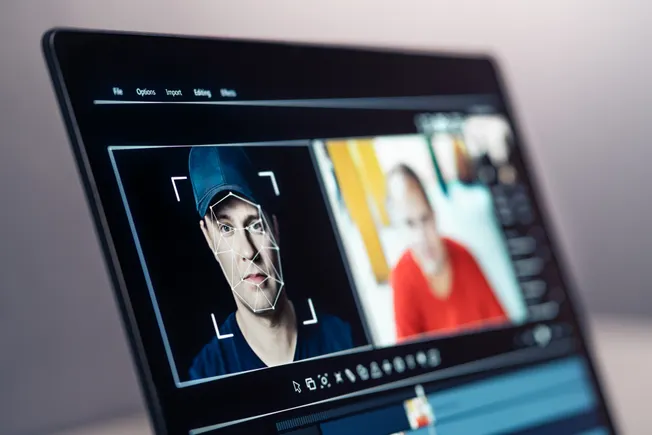
Conversely, if the evidence is fabricated – a sophisticated deepfake designed to falsely accuse a co-worker – the employer’s responsibility shifts dramatically. In such a scenario, the company must take action against the complaining employee for making a false accusation, potentially including disciplinary action up to and including termination. Failure to do so could expose the company to a harassment complaint from the falsely accused co-worker, who would then be the victim of a malicious and reputation-damaging act. This "damned if you do, damned if you don’t" predicament places an unprecedented burden on HR and legal departments, demanding a level of investigative scrutiny and technical expertise previously unimaginable. The margin for error is razor-thin, and the consequences of misjudgment are severe for all parties involved, including the employer’s bottom line and public image.
Strategic Imperatives for Employers in the AI Era
Given the complexities introduced by deepfakes, employers must proactively adapt their policies, investigative protocols, and training programs. Tracey Diamond emphasizes several critical steps:
1. Update Harassment Policies: This is an immediate and non-negotiable requirement. Existing harassment policies, often drafted before the widespread availability of AI deepfake technology, must be revised to explicitly address the creation, distribution, and possession of AI-generated images, audio, or video of co-workers. Policies should clearly state that such conduct is strictly prohibited and will result in severe disciplinary action, including potential termination. Consistent enforcement of these updated policies is paramount to communicate to the workforce that AI misuse for harassment or defamation will not be tolerated.
2. Clarify Consequences for False Claims: To mitigate the risk of fabricated deepfake complaints, harassment policies should also explicitly state that while employees are protected against retaliation for making good-faith harassment complaints, those who knowingly bring false claims of harassment may be subjected to corrective action, up to and including termination. This provision aims to deter malicious deepfake accusations while preserving the integrity of the reporting system for genuine victims.
3. Move Beyond Face Value: When an employee presents digital evidence in support of a discrimination or harassment complaint, employers can no longer simply accept it at face value. A healthy degree of skepticism and a commitment to rigorous verification are now essential. While examining the alleged harasser’s cell phone for text messages or voicemails might be a logical first step, the absence of such evidence is not dispositive, as digital content can easily be deleted. This necessitates a deeper dive into the technical characteristics of the evidence itself.
4. Invest in Forensic Analysis: This is arguably the most crucial adaptation for employers. Determining the authenticity of digital evidence now requires forensic analysis. While AI technology is rapidly advancing, deepfakes often still exhibit telltale signs of manipulation. These indicators can include:
- Unnatural Blinking: Deepfake subjects may blink less frequently or in an unnatural pattern.
- Mismatched Lighting and Shadows: The lighting on the subject’s face or body may not be consistent with the surrounding environment or light sources.
- Glitches Around the Face or Mouth: Imperfections, distortions, or pixelation may be visible around facial features, especially during speech.
- Robotic or Unnatural Audio: Deepfake audio might have a monotonous tone, unusual pauses, or a lack of emotional inflection.
- Inconsistent Skin Tone or Texture: Minor inconsistencies in skin coloration or texture can sometimes be detected.
- Unusual Background Distortions: The background of a deepfake video or image might show subtle warping or inconsistencies.
- Metadata Analysis: Examining the file’s metadata (creation date, software used, editing history) can sometimes reveal manipulation, though sophisticated deepfakers can also falsify this.
A comprehensive forensic analysis should be an essential component of any harassment investigation involving digital evidence. This may require engaging external experts specializing in digital forensics. Furthermore, employers should investigate whether their own company’s AI tools or resources were illicitly used to create the deepfake image, which could indicate a severe breach of internal policy and security.
5. Enhance Training and Education: HR professionals, managers, and legal teams need specialized training on identifying potential deepfakes, understanding their legal implications, and conducting investigations in the AI era. This training should cover technological indicators, legal responsibilities, and best practices for interviewing and credibility assessment when digital evidence is in question.
Broader Implications and Future Outlook
The deepfake phenomenon extends beyond individual harassment cases, carrying broader implications for corporate culture, legal compliance, and organizational resilience. The erosion of trust, both among employees and between employees and management, is a significant risk if deepfake incidents are not handled with utmost care and integrity. A perception that the company cannot distinguish truth from falsehood, or that it might unjustly punish either a victim or an innocent party, can severely damage morale, productivity, and the employer’s reputation.
From a legal standpoint, the landscape is continuously evolving. As AI technology advances, so too will the methods for detecting deepfakes, but the race between creation and detection will likely persist. Employers must remain agile, regularly reviewing and updating their policies and investigative procedures to keep pace with technological changes and emerging legal interpretations. The financial implications of mishandling deepfake-related harassment claims are substantial, encompassing potential litigation costs, settlement payouts, and the intangible costs of reputational damage and employee turnover.
In conclusion, while AI deepfakes introduce an unprecedented layer of complexity to workplace investigations, the fundamental obligations of employers under Title VII and the Faragher-Ellerth defense remain steadfast. When an employee raises a harassment complaint, the employer’s duty to take it seriously, investigate the alleged misconduct thoroughly, weigh all evidence, assess credibility, and reach a conclusion based on a reasonable belief as to whether the conduct occurred, is undiminished. The challenge now lies in navigating a reality where "seeing is believing" is no longer a reliable maxim. Employers must equip themselves with enhanced policies, specialized forensic capabilities, and continuous training to uphold their legal duties and maintain a fair, safe, and trustworthy workplace in the age of artificial intelligence.