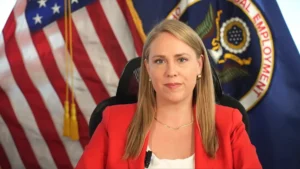
A federal jury has delivered a decisive verdict against Northwest Medical Center-Bentonville (NMC-Bentonville), ordering the hospital to pay $105,000 to a male obstetric technician who was unlawfully prevented from performing his duties due to his sex. The U.S. Equal Employment Opportunity Commission (EEOC) successfully argued that the hospital violated Title VII of the Civil Rights Act of 1964, a landmark ruling that underscores the agency’s commitment to protecting all workers from gender-based discrimination, regardless of their sex. The verdict, reached in the Fayetteville division of the U.S. District Court for the Western District of Arkansas, highlights a growing national conversation around gender-based employment discrimination, including claims brought by men.
The Case Against NMC-Bentonville: A Detailed Account
The core of the lawsuit, initiated by the EEOC, centered on allegations that two female obstetricians at NMC-Bentonville refused to allow a male technician to perform his job duties solely because of his gender. The technician, whose identity has not been publicly released, was reportedly hired into a role that involved assisting in obstetric procedures. However, soon after his employment began, resistance from certain medical staff emerged.
According to the EEOC’s complaint, the issues began when one of the female obstetricians voiced her discomfort and objection to working with a male technician to the director of women’s services. This initial complaint, rather than being addressed as a potential bias issue, allegedly led to the technician being barred from his responsibilities. The director of women’s services, upon receiving the complaint, reportedly recognized that the doctors’ refusal to work with the technician based on his sex could constitute unlawful discrimination. Despite this internal recognition, and despite complaints escalating all the way to the CEO of the hospital system, the discriminatory treatment of the male technician persisted.
The EEOC’s investigation revealed that the hospital failed to intervene effectively to ensure a discrimination-free workplace. Instead of upholding its obligations under federal law, NMC-Bentonville allegedly allowed the discriminatory practices of the two obstetricians to dictate the terms of the male technician’s employment, effectively denying him the opportunity to perform his job. This inaction, the EEOC contended, created a hostile work environment and directly violated Title VII.
The jury’s verdict explicitly found that NMC-Bentonville violated Title VII, which prohibits discrimination "against any individual with respect to his compensation, terms, conditions, or privileges of employment, because of such individual’s race, color, religion, sex, or national origin." Crucially, the jury’s verdict form indicated that the hospital could not prove it would have subjected the technician to the same treatment regardless of his sex, a key element in proving discriminatory intent or effect. The $105,000 award is intended to compensate the technician for the damages he suffered as a result of the discrimination, which could include lost wages, emotional distress, and other related harms.

A Chronology of Events
The events leading to this significant verdict span several years, reflecting the often-protracted nature of employment discrimination litigation:
- 2022: The male obstetric technician is hired by Northwest Medical Center-Bentonville. Shortly after, two female obstetricians reportedly begin to bar him from performing his duties due to his sex. Internal complaints are raised, reaching the director of women’s services, who reportedly identifies the potential for sex discrimination.
- Late 2022 – Early 2023: Despite internal awareness, including escalation of complaints to the hospital’s CEO, the discriminatory treatment of the male technician allegedly continues without effective intervention from hospital management.
- Undetermined Date (Post-2022): The male technician files a charge of discrimination with the U.S. Equal Employment Opportunity Commission, prompting an investigation into NMC-Bentonville’s practices.
- Undetermined Date (Prior to Lawsuit): The EEOC attempts conciliation, a voluntary process to resolve discrimination charges, but these efforts are unsuccessful, leading the agency to pursue litigation.
- Undetermined Date (Prior to Verdict): The EEOC files a lawsuit against NMC-Bentonville in the U.S. District Court for the Western District of Arkansas, alleging violations of Title VII of the Civil Rights Act of 1964.
- July 2026: A jury trial is held in Fayetteville, Arkansas. After hearing evidence and testimony, the jury finds in favor of the EEOC and the male hospital worker, awarding $105,000 in damages.
- July 28, 2026: The news of the jury verdict is published, bringing the case to public attention and highlighting the EEOC’s successful enforcement action.
At the time the EEOC’s allegations against the Arkansas hospital system took place in 2022, NMC-Bentonville was owned by Community Health Systems, Inc., a healthcare giant based in Franklin, Tennessee. More recently, in June, Freeman Health System completed its acquisition of Northwest Medical Center-Bentonville. Freeman Health System did not respond to requests for comment by press time regarding the verdict, a common stance for organizations facing ongoing legal processes or those that have recently acquired an entity involved in litigation from a previous ownership period.
Understanding Title VII and the EEOC’s Mandate
Title VII of the Civil Rights Act of 1964 is a cornerstone of American employment law, designed to prevent discrimination in the workplace. It prohibits employers from discriminating against employees on the basis of sex, race, color, national origin, and religion. This law applies to all aspects of employment, including hiring, firing, promotions, training, wages, and other terms and conditions of employment. The protection against "sex" discrimination has evolved over time to encompass a broad range of gender-based issues, including harassment, pregnancy discrimination, and discrimination based on gender identity and sexual orientation.
The U.S. Equal Employment Opportunity Commission (EEOC) is the federal agency responsible for enforcing Title VII and other federal anti-discrimination laws. Its mandate includes investigating charges of discrimination, attempting to resolve disputes through mediation and conciliation, and, when necessary, filing lawsuits against employers who violate these laws. The EEOC plays a crucial role in ensuring that all individuals have an equal opportunity to work and advance in their careers free from unlawful discrimination. The agency’s pursuit of this case against NMC-Bentonville underscores its commitment to enforcing these protections for all workers, regardless of gender.
Rising Tide of "Reverse Discrimination" Claims

The verdict against NMC-Bentonville comes amid a broader trend of increasing "reverse discrimination" claims and heightened attention to sex discrimination against men in the legal sphere. While the term "reverse discrimination" is often debated, legally, discrimination is simply discrimination, regardless of the protected characteristic or the demographic group of the claimant. The essence is that an individual is treated unfavorably because of a protected trait.
Faye Williams, regional attorney for EEOC’s Memphis district, emphasized this point in a statement, asserting, "Federal law affords all workers, male and female, the right to work in a discrimination-free environment." This sentiment reflects a widening scope of enforcement by the EEOC.
Indeed, recent years have seen several high-profile cases involving discrimination against men. In February, the EEOC secured a substantial $1.1 million settlement from the Southern restaurant group that owns Kickback Jack’s. This settlement addressed allegations that the company systematically refused to hire male servers, a clear instance of sex discrimination. This case, like the NMC-Bentonville suit, arose from a lawsuit initiated during the Biden administration, signaling a proactive stance from the current EEOC leadership.
Further underscoring this strategic shift, EEOC Chair Andrea Lucas made headlines last December by specifically soliciting claims from White men who believed they had faced discrimination. This appeal garnered significant attention from both management-side attorneys, who noted the potential for a new wave of discrimination plaintiffs, and members of Congress, some of whom questioned the focus. Chair Lucas defended her initiative in May at the Fortune Workplace Summit, arguing that the agency is "widening the aperture" on civil rights claims. She pointed out that no settlement over the preceding 10 years had specifically addressed discrimination faced by White men, suggesting a historical imbalance in enforcement focus that she aims to correct.
This proactive approach quickly translated into action. Earlier that same month, the EEOC filed a lawsuit against The New York Times, alleging that the prominent media organization refused to promote a White male journalist based on his race and sex. The New York Times, however, has vigorously pushed back against these allegations, filing a counterclaim accusing the EEOC of retaliation in response to the publication’s critical coverage of the Trump administration. This ongoing legal battle further illustrates the complex and often politically charged landscape of modern discrimination claims.
Implications for Healthcare and Workplace Culture
The NMC-Bentonville verdict carries significant implications, particularly for the healthcare industry and broader workplace culture.

Challenging Gender Stereotypes in Healthcare: The case directly confronts long-standing gender stereotypes within certain medical specialties. While obstetrics is often associated with female practitioners and patients, roles like obstetric technician should be open to qualified individuals regardless of gender. The refusal of two female obstetricians to work with a male technician highlights how ingrained biases can manifest even in professional, diverse environments. This verdict sends a clear message that such biases cannot legally impede a person’s ability to perform their job.
Employer Responsibility and Accountability: A critical aspect of this case is the alleged failure of NMC-Bentonville’s leadership to address the discrimination, even after it was brought to the attention of the director of women’s services and escalated to the CEO. This indicates a breakdown in the hospital’s internal processes for handling discrimination complaints and upholding its legal obligations. The verdict serves as a potent reminder to all employers that they are legally responsible for preventing and promptly correcting discriminatory conduct in their workplaces. Ignoring complaints or failing to take decisive action, even when faced with resistance from senior staff, can lead to significant legal and financial consequences. It emphasizes the importance of robust anti-discrimination policies, thorough training, and consistent enforcement.
Impact on Future Discrimination Claims: While a jury verdict in a single district court does not establish binding precedent nationwide, it contributes to the growing body of case law and reinforces the EEOC’s commitment to pursuing all forms of discrimination. This outcome may embolden other male employees who believe they have faced sex discrimination to come forward, confident that the EEOC and the courts are willing to hear and act on their claims. It also signals to employers that claims of discrimination against men are being taken seriously and can result in costly judgments.
Reaffirming DEI Principles: True Diversity, Equity, and Inclusion (DEI) initiatives must encompass protection for all individuals from discrimination. The NMC-Bentonville case reinforces that DEI is not solely about addressing historical disadvantages but about ensuring fair treatment and equal opportunity for everyone in the workplace, irrespective of their gender, race, or other protected characteristics. When any group experiences discrimination, the principles of DEI are undermined. This verdict can serve as a catalyst for organizations to review their DEI strategies to ensure they are comprehensively addressing all forms of bias and promoting an inclusive environment for every employee.
The $105,000 jury award to the male obstetric technician is more than just a financial penalty; it is a powerful affirmation of federal civil rights law and a clear message to employers across all sectors: sex discrimination has no place in the modern workplace, and all employees, regardless of their gender, are entitled to a discrimination-free environment where their ability to perform their job is judged on merit, not on outdated biases. The EEOC’s persistent efforts in cases like this continue to shape the landscape of employment law, pushing for workplaces that truly reflect the principles of equality and fairness for all.