The United States Equal Employment Opportunity Commission (EEOC) concluded its 2025 fiscal year on September 30 by recording its lowest level of litigation activity in a decade, marking a dramatic shift in federal workplace enforcement. According to a year-end analysis of the agency’s docket, the Commission filed only 93 merit lawsuits throughout the fiscal year. This figure represents a significant retreat from the Biden administration’s peak of 144 filings in 2023 and stands as one of the lowest annual totals in the agency’s 60-year history. The downturn in litigation follows a turbulent period defined by unprecedented leadership changes, the loss of a board quorum, and a fundamental realignment of the agency’s enforcement priorities under the second Trump administration.
For employers and legal observers, the 2025 fiscal year was characterized by a "roller-coaster" of administrative actions. While the year began with a sizable budget and a robust pipeline of charges inherited from the previous administration, the transition of power in January 2025 triggered an immediate pivot in how the EEOC identifies and pursues workplace discrimination. The resulting data suggests that while the agency remains active, its focus has narrowed toward specific protected classes, such as religious and pregnant workers, while de-emphasizing systemic race-based litigation and gender identity protections.
A Comparative History of EEOC Enforcement
To understand the significance of the 93 filings in FY 2025, it is necessary to look at the agency’s historical output. Under previous Democratic administrations, the EEOC’s litigation arm has historically been aggressive, sometimes filing as many as 300 merit lawsuits in a single year. This activity saw a sharp decline during the first Trump administration, bottoming out at 94 merit filings in FY 2020, partly due to the disruptions caused by the COVID-19 pandemic.
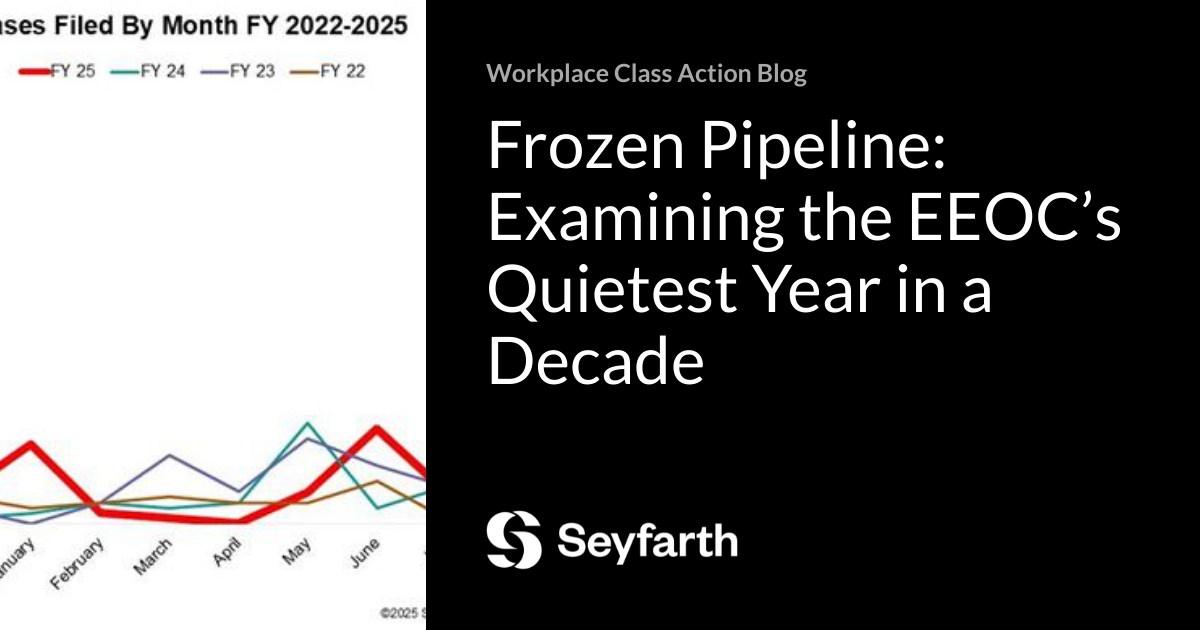
As the Biden administration took office, enforcement surged. By FY 2023, with the installation of Commissioner Kalpana Kotagal and General Counsel Karla Gilbride, the EEOC appeared to be in "overdrive," filing 144 lawsuits. However, that momentum proved short-lived. FY 2024 saw a surprising dip to 96 filings, and the further decline to 93 in FY 2025 suggests a deliberate move toward a more restrained litigation posture. This trend is particularly striking when contrasted with the surge of administrative charges filed by the public, which have remained at historically high levels over the last three years.
Chronology of Leadership Upheaval and the Quorum Crisis
The trajectory of FY 2025 was fundamentally altered by a series of swift executive actions following the presidential inauguration in January 2025. President Trump took the anticipated step of elevating Andrea Lucas to Acting Chair of the EEOC, but he also took the unprecedented step of terminating EEOC General Counsel Karla Gilbride. In a move that challenged traditional interpretations of independent agency protections, the President also fired EEOC Commissioners Charlotte Burrows and Jocelyn Samuels, despite both having years remaining on their appointed terms.
These dismissals left the Commission with only two members: Acting Chair Lucas and Commissioner Kalpana Kotagal. Because the EEOC requires three members for a quorum, the agency entered a state of partial paralysis regarding major policy decisions. Under a standing delegation of authority, the General Counsel—or those acting in that capacity—retains the power to file "routine" cases. However, this authority does not extend to "systemic" discrimination cases, pattern-or-practice lawsuits, or matters involving significant expenditures of agency resources or unsettled areas of law.
The lack of a quorum has served as a natural brake on the agency’s ability to launch large-scale class actions. Legal experts note that any systemic or high-profile cases filed during this period may face immediate procedural challenges from defense counsel, who can argue that the agency exceeded its delegated authority in the absence of a full Commission vote.

Analyzing the 2025 Filing Timeline
The timing of the EEOC’s filings in FY 2025 offers insight into the internal pressures facing the agency during a transition year. Traditionally, the EEOC sees a massive "September surge" as field offices rush to meet annual quotas before the fiscal year ends. While September 2025 was the busiest month with 35 filings, it paled in comparison to previous years, such as FY 2023, where 71 lawsuits were filed in September alone.
Interestingly, the agency hit the ground running in the first quarter of the fiscal year (October through December 2024), filing 24 lawsuits. January 2025 saw a spike of 15 filings, a move interpreted by analysts as an attempt by outgoing Biden-era personnel to secure enforcement actions before the change in administration. Following the transition, activity slowed significantly before a brief resurgence in June 2025, which saw 18 new lawsuits—a five-year high for that specific month.
Geographic Disparities in Enforcement
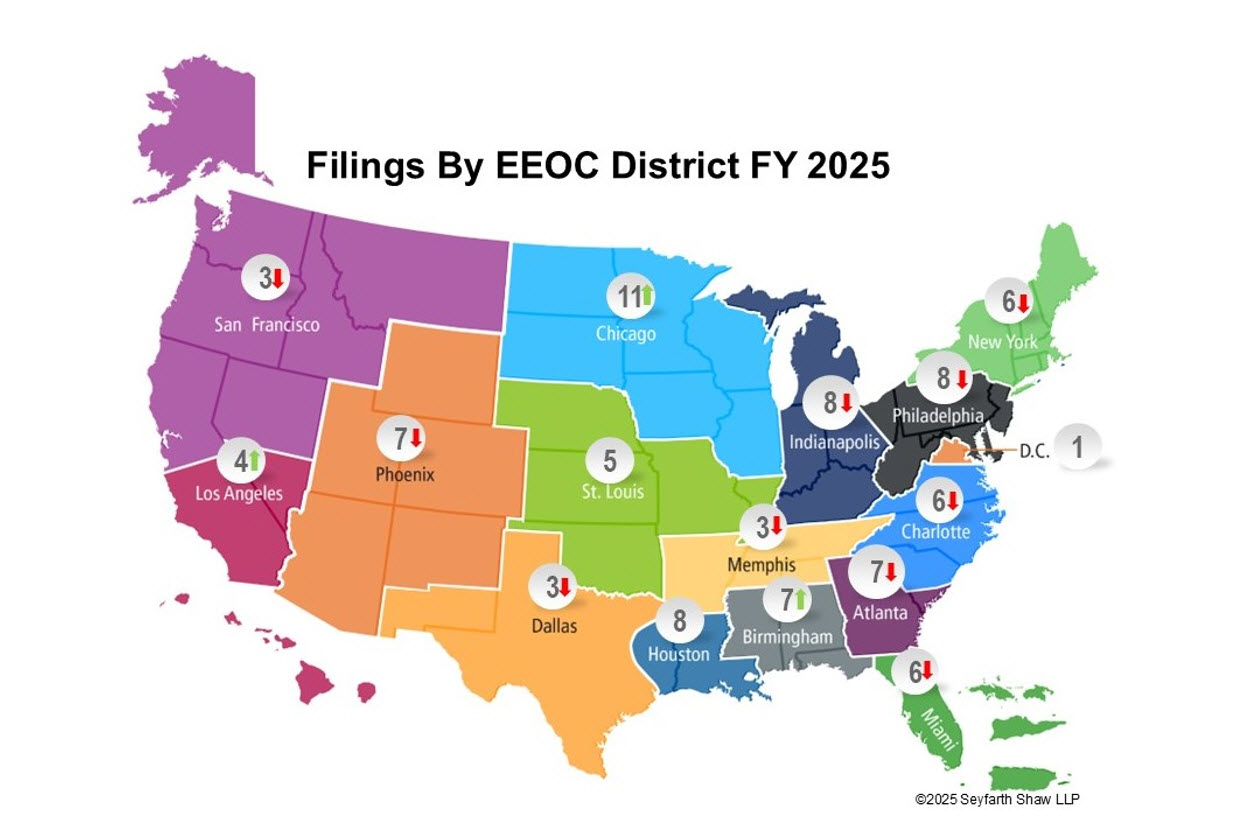
The 2025 data reveals a stark divide in how the EEOC’s 15 District Offices are operating. The Chicago District Office led the nation with 11 merit lawsuits, reclaiming its status as one of the most litigious regions. Other active hubs included Philadelphia, Indianapolis, and Houston, each recording eight filings.
Conversely, the agency’s West Coast presence has effectively gone quiet. The Los Angeles, New York, and San Francisco offices—districts that historically filed dozens of lawsuits annually during the Obama administration—filed only four, six, and three lawsuits, respectively, in FY 2025. This geographical shift suggests that the "center of gravity" for federal employment litigation has moved from the coastal metropolitan centers to the Midwest and the South.

Shifting Statutory Priorities: The Rise of Religion and Pregnancy
While the total number of lawsuits decreased, the composition of those suits reveals the current administration’s ideological priorities. Title VII of the Civil Rights Act and the Americans with Disabilities Act (ADA) remain the most cited statutes, but internal sub-categories have shifted:
- Pregnancy and the PWFA: The EEOC filed 10 lawsuits under the Pregnancy Discrimination Act and the newly enacted Pregnant Workers’ Fairness Act (PWFA). When combined with other sex-based claims, these accounted for 37 cases, representing nearly 40% of the year’s total docket. Acting Chair Lucas has publicly identified the protection of pregnant workers as a core pillar of her leadership.
- Religious Freedom: In a notable pivot, the EEOC filed 11 lawsuits asserting religious discrimination or failure to accommodate religious beliefs. This follows a 600% increase in religious discrimination charges during the pandemic era. Acting Chair Lucas stated that the agency is moving away from "woke policies" to ensure that workers are not forced to "choose between their paycheck and their faith."
- The ADA and Mental Health: The ADA remained a primary focus with 34 filings. However, the agency is increasingly targeting "invisible" disabilities. Recent filings have focused on vision and hearing impairments, as well as mental health conditions including PTSD, anxiety, and depression.
- The Decline of Race-Based Litigation: Perhaps the most significant change is the near-total disappearance of race and national origin lawsuits. The EEOC filed only three such cases in FY 2025, compared to 27 in FY 2023. Notably, two of the three cases filed this year were grounded in theories of "reverse discrimination" or "anti-American bias," targeting employers who allegedly favored foreign-born workers over American citizens.
The Reversal on LGBTQ+ and Gender Identity Issues
The 2025 fiscal year marked an abrupt end to the EEOC’s pursuit of gender identity-related litigation. Following a January 2025 executive order regarding "biological truth," the EEOC moved to dismiss several high-profile cases involving transgender workers, such as EEOC v. Starboard Group and EEOC v. Brik Enterprises. Acting Chair Lucas has asserted that "biological sex is real" and that misgendering or the use of traditional pronouns does not constitute unlawful harassment under the current administration’s interpretation of Title VII. This represents a total decoupling from the Bostock v. Clayton County interpretations favored by the previous administration.
Broader Implications for the Private Sector
The "sluggish" year at the EEOC does not necessarily mean a reprieve for employers. Historically, the private plaintiffs’ bar closely monitors EEOC filing trends. When the federal government retreats from certain areas—such as race discrimination or LGBTQ+ rights—private class-action attorneys often step in to fill the void. Employers should view the EEOC’s current focus on religious accommodation and pregnancy as a roadmap for where the next wave of private litigation is likely to emerge.
Furthermore, the healthcare industry remains a primary target. Nearly 20% of the EEOC’s FY 2025 merit suits were filed against healthcare providers, reflecting the agency’s ongoing interest in how hospitals and clinics handle accommodation requests and staffing mandates.
As the EEOC enters FY 2026, the primary question remains whether the Senate will confirm new commissioners to restore a quorum. Until then, the agency is expected to continue its current trajectory: fewer lawsuits, a focus on "traditional" protected classes, and a localized enforcement strategy that favors the Midwest over the West Coast. For the business community, the 2025 data serves as a reminder that even in a "quiet" year, the EEOC’s shifting priorities can create new and unexpected areas of legal vulnerability.