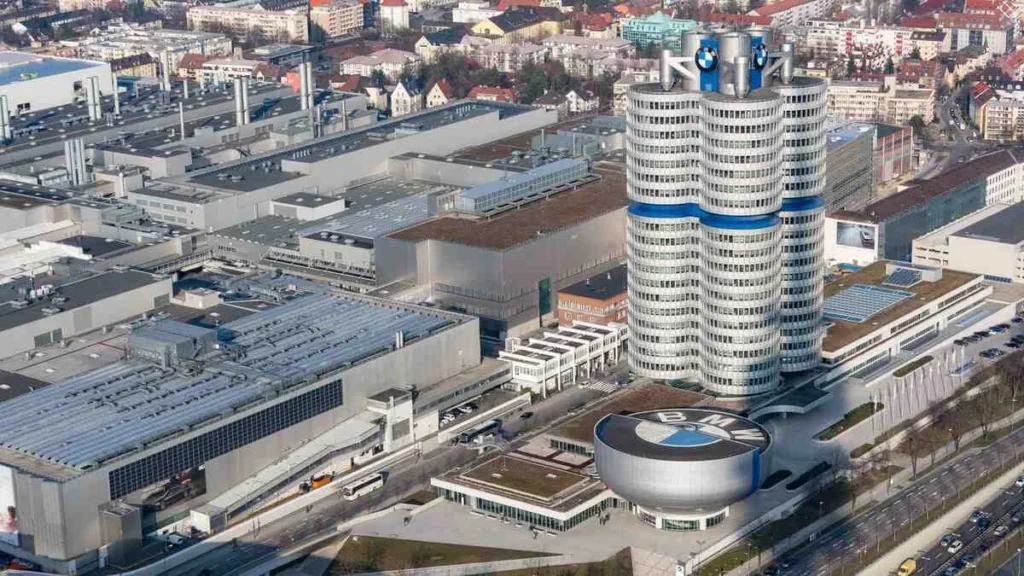
BMW is reportedly preparing to offer voluntary redundancy packages to thousands of its employees in Germany, signaling a critical response to the intensifying pressures confronting the nation’s pivotal automotive sector. This strategic move comes as the industry grapples with a confluence of challenges, including softening global demand, fierce international competition, and the costly, complex transition to electric vehicles (EVs). The initiative, slated to commence in October, aims to streamline the workforce, with projections indicating a reduction of approximately 8,000 jobs by the close of 2027. This significant adjustment is expected to predominantly affect desk-based employees within Germany, a region where the luxury carmaker employs roughly half of its global workforce of 154,000 individuals.
BMW’s Strategic Workforce Adjustment Amidst Industry Headwinds
The decision to implement voluntary redundancies is the culmination of intensive negotiations spanning six weeks between BMW’s management board and its influential works council, highlighting the collaborative yet challenging nature of such large-scale workforce restructuring in Germany. This proactive measure by BMW underscores a broader trend within the German automotive industry, which is a cornerstone of the national economy, renowned for its engineering prowess and export strength. However, this sector is now at a significant inflection point, necessitating profound strategic shifts to maintain competitiveness in a rapidly evolving global landscape.
Speaking candidly at a recent staff meeting, BMW chief executive Milan Nedeljkovic articulated the severity of the situation, describing it as "critical." He attributed this precarious state to a combination of weakening market conditions, increasingly stringent regulations, and a proliferation of growing trade barriers. Nedeljkovic emphasized the transformative nature of these challenges, stating, "We are talking about a substantial change to the rules of the game." He further suggested that some of these shifts were a direct consequence of "political mandates that are out of step with the market," hinting at regulatory pressures that may not align with current market realities or technological feasibility for rapid implementation. The CEO’s remarks painted a stark picture of enduring challenges, asserting, "Neither the protectionism nor far-reaching changes in the market are going to disappear." While BMW confirmed its efforts to restructure its white-collar workforce, it refrained from disclosing the precise scale of the anticipated program, maintaining a degree of confidentiality around the sensitive details.
The Multi-Faceted Pressures on Germany’s Automotive Giants
The German automotive industry, long a symbol of innovation and economic stability, is navigating an unprecedented period of disruption. The primary drivers of this upheaval are manifold:
- Weakening Global Demand: A general slowdown in key global economies, coupled with inflationary pressures and geopolitical uncertainties, has dampened consumer spending on big-ticket items like new cars.
- Intensified Global Competition: The rise of new automotive players, particularly from China, which are rapidly innovating in the EV space and offering highly competitive models, is challenging the established dominance of German brands. Tesla, a pioneer in premium EVs, also continues to exert significant pressure.
- The Electric Vehicle Transition: The global push towards decarbonization mandates a fundamental shift from internal combustion engine (ICE) vehicles to EVs. This transition requires colossal investments in research and development, new manufacturing processes, battery technology, and charging infrastructure. It also necessitates a re-skilling of the workforce and, in some cases, a reduction in traditional manufacturing roles that are becoming obsolete. EVs typically require fewer parts and different assembly processes compared to ICE vehicles, potentially leading to lower labor requirements per vehicle.
- Geopolitical Factors and Protectionism: Rising trade tensions, tariffs, and protectionist policies in major markets such as the United States and China are fragmenting global supply chains and increasing the cost and complexity of international trade. This directly impacts highly globalized manufacturers like BMW.
While BMW has, to date, managed the industry’s pivot towards electric vehicles with greater agility than some of its rivals by maintaining a diversified portfolio of petrol, diesel, and electric models, recent financial performance indicates growing strain. Last month, the company issued a profit warning, primarily due to a steeper-than-expected deterioration in trading conditions in China. The Chinese market, critical for premium car manufacturers, saw a significant decline in demand, particularly for petrol-driven vehicles, exacerbated by intense local competition and a sluggish overall economy. Vehicle deliveries in China plummeted by 30% year-on-year in the three months leading up to June, underscoring the vulnerability of global automakers to regional economic fluctuations.
Negotiated Change and Union Perspectives
The implementation of voluntary redundancy programs in Germany often involves intricate negotiations with powerful labor unions and works councils, which hold significant sway in corporate decision-making. Horst Ott, head of the IG Metall union’s Bavarian branch and a respected member of BMW’s supervisory board, acknowledged the necessity of the company’s response to the downturn in China. He emphasized that the objective was also to strengthen the competitiveness of BMW’s German operations. Crucially, Ott underscored that collective bargaining protections for employees remained "non-negotiable," asserting the union’s commitment to safeguarding workers’ rights. He also highlighted that "natural staff turnover" would play a role in the workforce reduction, implying that a portion of the planned job cuts would occur through attrition rather than direct dismissals. This nuanced approach aims to mitigate the social impact of the restructuring.
From a financial perspective, BMW anticipates that these restructuring efforts will yield "meaningful cost savings" by 2028. However, the immediate impact will include substantial "restructuring costs running into the hundreds of millions of euros" in the current year, a common consequence of such large-scale organizational changes, encompassing severance packages, retraining programs, and other associated expenses.
A Wider Crisis: Volkswagen Group and Audi’s Plight

The challenges confronting Germany’s automotive industry are not exclusive to BMW; they are a systemic issue affecting major players across the board. The Volkswagen Group, the world’s second-largest vehicle manufacturer, has also been in the throes of a sweeping restructuring. Its premium subsidiary, Audi, provides a stark example of the sector’s predicament. Approximately 6,000 Audi workers recently staged protests against the potential closure of the company’s Neckarsulm plant. Employees are demanding clarity and assurances after Volkswagen chief executive Oliver Blume warned that the Neckarsulm site was among four German plants that could face closure after 2030 if viable alternative solutions were not identified.
The Neckarsulm factory is a significant industrial hub, employing around 15,000 people. Its potential closure represents a severe threat to local employment and the broader regional economy. Audi, which has also faced exposure to US tariffs due to its lack of manufacturing capacity within the United States, had already announced plans last year to cut up to 7,500 jobs in Germany by 2029, primarily targeting administrative and development roles. The cumulative impact of these proposed cuts underscores the deep structural adjustments underway.
Local political figures have voiced grave concerns. Steffen Hertwig, the mayor of Neckarsulm, warned that the closure of the plant would be an "unmitigated disaster," precipitating major consequences for Baden-Württemberg’s crucial automotive supply chain. This region, a heartland of German engineering, relies heavily on the intricate network of suppliers supporting major automakers. A plant closure would ripple through countless small and medium-sized enterprises (SMEs) that form the backbone of this ecosystem.
Earlier in July, Volkswagen unveiled its comprehensive restructuring strategy, which aims to cut tens of thousands of jobs, reduce production capacity, and simplify its vast model complexity. This ambitious plan, designed to enhance efficiency and accelerate the transition to EVs, has not been without controversy. Union representatives cautioned management that such drastic measures risked a "major conflict" with employees. Reports suggested that the group was contemplating cutting as many as 100,000 jobs worldwide and closing several German plants, including Audi’s Neckarsulm facility, indicating the scale of the impending transformation.
Germany’s Automotive Heartland at a Crossroads
Germany’s automotive sector directly employs over 800,000 people and supports millions more indirectly through its vast supply chain. It accounts for a significant portion of the country’s GDP and export revenue. The current wave of restructuring and job reductions, therefore, has profound national implications. The transition to electric mobility is not just about changing powertrains; it’s about retooling factories, retraining a workforce accustomed to ICE technology, and developing entirely new competencies in software, battery technology, and digital services.
For instance, the production of an electric vehicle typically requires less labor than a traditional gasoline car, particularly in powertrain manufacturing. While new jobs are created in battery production and software development, these often require different skill sets, leading to a potential mismatch for existing workers. This necessitates significant investment in vocational training and upskilling programs to prevent mass unemployment in regions heavily reliant on automotive manufacturing.
Moreover, the shifting global geopolitical landscape is adding layers of complexity. The push for localized production, driven by supply chain resilience concerns and protectionist trade policies, forces German automakers to reconsider their global manufacturing footprint. The "Made in China" 2025 initiative, for example, has fostered a robust domestic EV industry in China, creating formidable competition for foreign brands within that critical market. Similarly, the US Inflation Reduction Act, with its incentives for North American-made EVs and batteries, is pushing European manufacturers to consider more localized production in the US, potentially at the expense of German jobs.
Outlook and Future Strategies
The current scenario highlights a fundamental challenge for Germany: how to preserve its industrial strength and high-wage jobs while navigating a global technological and economic transformation. The automotive sector’s ability to adapt will be a litmus test for the broader German economy. Future strategies will likely involve:
- Accelerated EV Investment: Despite the current pressures, sustained and increased investment in EV technology, battery production, and charging infrastructure remains non-negotiable. German automakers must strive for technological leadership in this new era.
- Digitalization and Software Prowess: The modern car is increasingly a software-driven device. German companies need to bolster their capabilities in software development, AI, and connectivity to compete with tech giants and new automotive entrants.
- Supply Chain Diversification and Resilience: Reducing reliance on single suppliers or regions, particularly for critical components like semiconductors and rare earth minerals, will be crucial.
- Workforce Transformation: Collaborative efforts between companies, unions, and the government will be essential to retrain and reskill the workforce, preparing them for the demands of the EV and digital age.
- Political Advocacy: German automakers and their industry associations will likely continue to advocate for a more predictable and supportive regulatory environment, both domestically and internationally, to facilitate a smoother transition and reduce the burden of trade barriers.
The voluntary redundancies at BMW and the broader restructuring within the Volkswagen Group represent more than just corporate adjustments; they are symptomatic of a profound metamorphosis within a foundational industry. The coming years will determine whether Germany’s automotive titans can successfully pivot, innovate, and maintain their global leadership in an era defined by electric mobility, digital intelligence, and intense global competition. The stakes, for both the companies and the German economy, could not be higher.