Right now, artificial intelligence agents are executing multi-million dollar trades, meticulously reordering global inventories, and approving critical financial loans, all without direct human intervention. This is not a scene from a science fiction novel; it is the present reality for a growing number of organizations across diverse sectors. The subtle, yet profound, shift of leadership authority to AI systems is occurring with an almost imperceptible quietude, transforming the operational landscape of businesses worldwide. As an AI and leadership consultant who has guided numerous executives through the complexities of digital transformation, I have witnessed this paradigm shift firsthand, observing its pervasive influence across industries. Trading algorithms, sophisticated supply chain management systems, and advanced insurance underwriting platforms have transcended their roles as mere tools. They have evolved into autonomous agents, capable of analyzing vast datasets, making complex decisions, and enacting critical actions without requiring the explicit input of human leadership.
For leaders who are attuned to this evolving dynamic, AI is not being treated as a mere convenience or an incremental efficiency tool. Instead, their leadership approach has undergone a fundamental recalibration, acknowledging the irreversible trajectory of this technological integration. The core of effective leadership in this new era lies in recognizing that the reins of operational decision-making have, in many instances, already been ceded. To believe that full control remains solely in human hands, while deploying these sophisticated AI agents, is to overlook the profound and ongoing transformation. In essence, the system is no longer merely serving leadership; it is actively shaping and directing significant aspects of it.
The Unseen Delegation of Authority
One of the most significant manifestations of this AI-driven leadership shift is the hidden delegation of decision-making. Consider a scenario where an AI system, tasked with loan application processing, rejects 30% more applications in a given month than its human counterparts might have. This is not necessarily indicative of a malfunction, but rather a learning system that has evolved its evaluation criteria beyond the initially programmed parameters, making judgment calls that were never explicitly authorized by human oversight. Similarly, a customer service AI might escalate 40% fewer support cases, leading to a decrease in human intervention without a clear understanding of why this change occurred. These are not isolated incidents of error, but rather emergent behaviors of intelligent systems that are making decisions with significant business implications.
The implications of this silent delegation are far-reaching. Organizations that fail to acknowledge and proactively manage this shift risk facing unforeseen consequences. The proactive leaders, those who are truly navigating this transformation, are instituting rigorous monthly audits of these "hidden decisions." They are not scrutinizing every single AI-generated output, but rather analyzing the patterns of AI decision-making, understanding how the algorithms are evolving, and identifying any divergences from intended operational logic. Conversely, those who remain unaware of this phenomenon often discover the ramifications only when significant problems emerge, leading to reactive crisis management rather than strategic control. This proactive approach allows leaders to maintain a degree of oversight and influence, ensuring that AI’s evolving capabilities remain aligned with organizational goals and ethical standards.
Speed as the New Competitive Imperative
In the contemporary business environment, speed has unequivocally replaced traditional hierarchical structures as the primary determinant of competitive advantage. AI agents operate at a speed that is incomprehensible to human cognitive processes, making critical decisions in mere milliseconds. This stark contrast to the hours, days, or even weeks that traditional approval processes can take, creates a significant operational disparity. Imagine a competitor whose AI can instantaneously adjust pricing in response to market fluctuations, dynamically allocate resources to capitalize on emerging opportunities, or pivot production strategies to meet sudden demand surges, all before a human-led team has even completed their morning briefing.
This operational reality does not signify a loss of control in the traditional sense. Instead, it represents a fundamental redefinition of what control means. Leaders are no longer managing the granular, moment-to-moment decisions. Their focus has shifted to managing the overarching decision-making framework itself. This involves establishing the parameters, ethical guidelines, and strategic objectives within which AI agents operate. The leverage of control now lies in the ability to design and implement these sophisticated systems at machine speed, thereby enabling the organization to outmaneuver slower-moving competitors. The true competitive edge is derived not from individual human decision-making, but from the organization’s capacity to deploy and manage AI systems that can execute complex strategies with unparalleled alacrity.
The Shifting Landscape of Accountability
A critical challenge emerging from the widespread adoption of AI in decision-making is the recalibration of accountability. In traditional business models, direct lines of responsibility are clearly defined. However, when AI agents are making critical operational choices, accountability becomes more complex and tends to flow upwards, while the decisions themselves often flow sideways, or even autonomously through the system.
Consider the example of a hiring AI that, due to inherent biases within its training data, systematically screens out qualified candidates from specific demographic groups. The legal and reputational fallout from such a discriminatory practice would invariably fall upon the company’s leadership, resulting in potential lawsuits and significant brand damage. Similarly, if a supply chain AI selects a vendor that subsequently fails to meet quality standards, leading to product recalls or customer dissatisfaction, the ultimate responsibility rests with the company’s management, not the algorithm that made the initial selection.
This necessitates a fundamental shift in how organizations approach responsibility. Leaders must proactively build robust accountability frameworks that address the outcomes of AI-driven decisions, even when they do not directly create those outcomes. This involves establishing clear ownership for the design, implementation, and ongoing monitoring of AI systems, ensuring that there are defined protocols for addressing errors, mitigating risks, and preventing recurrence. The challenge lies in attributing responsibility for actions taken by autonomous systems, requiring a nuanced understanding of influence and oversight rather than direct control.
The Trust Factor: Redefining Leadership Influence
The final, and perhaps most subtle, shift in leadership dynamics revolves around the concept of trust. In an environment increasingly populated by AI systems, the locus of influence for employees can subtly but significantly shift. When team members consistently consult AI dashboards for real-time data and insights before seeking guidance from their managers, it is a clear indication that the power dynamic has changed. This phenomenon is driven by the AI’s inherent ability to process and present information with a speed and comprehensiveness that often surpasses human analytical capabilities.
In this evolving landscape, a leader’s influence is no longer solely derived from their positional authority or their accumulated knowledge. It is increasingly dependent on their ability to shape the questions that employees ask of these AI systems, and to establish the standards by which AI-generated recommendations are evaluated. Effective leaders in the AI era are those who can guide their teams to critically assess AI outputs, understand the limitations and potential biases of these systems, and integrate AI-driven insights with human judgment and ethical considerations. The focus shifts from being the sole source of answers to becoming the facilitator of informed decision-making, empowering teams to leverage AI as a powerful co-pilot rather than a dictatorial commander.
Navigating the Transformation: A Framework for Enduring Leadership
Given that the AI-driven shift has already occurred, the critical question for leaders is not whether to adapt, but how to do so effectively and maintain their authority and influence. The following framework provides a roadmap for navigating this transformative period and ensuring that leadership remains a guiding force in an AI-augmented organizational structure:

Auditing the Hidden Decisions: Unveiling AI’s Evolving Logic
A cornerstone of effective leadership in the AI era is the diligent and systematic auditing of AI decision patterns. This is not about micromanaging every algorithmic output, but rather about understanding the evolving logic and behavior of the AI systems themselves. Monthly reviews should focus on identifying significant shifts in algorithmic behavior, examining any automatically adjusted thresholds, and pinpointing areas where the system may have deviated from its original parameters. By understanding these changes, leaders can ensure that AI’s operational impact remains aligned with strategic objectives and ethical guidelines. For instance, a retail company might review its inventory management AI’s decision patterns to ensure that automatic reordering is not leading to overstocking of slow-moving items, or that the AI is not inadvertently prioritizing certain suppliers based on outdated data.
Designing Decision Boundaries: Establishing Clear Lines of Autonomy
To effectively manage the delegation of decision-making to AI, organizations must establish clear and well-defined policies that delineate the boundaries of autonomous AI action versus those that require human judgment. This involves creating a tiered system of decision-making authority. For example, price adjustments below a certain percentage (e.g., 10%) might be automatically approved by AI, reflecting the speed and efficiency required for dynamic market conditions. However, significant staff scheduling changes, or decisions involving substantial financial commitments, would necessitate human review and approval. This layered approach ensures that AI is leveraged for tasks where its speed and data processing capabilities offer the greatest advantage, while reserving critical judgment calls for human leaders who possess the nuanced understanding of context, ethics, and long-term strategic implications.
Building Robust Accountability Systems: Owning the Outcomes
The inherent complexity of AI decision-making necessitates the development of robust accountability systems. This means establishing clear responsibility frameworks that connect the outcomes of AI-driven actions to specific individuals or teams. When an AI system makes a mistake or produces an undesirable outcome, there must be a designated party responsible for investigating the cause, implementing a fix, and developing a strategy to prevent future occurrences. This could involve assigning ownership of an AI-powered customer service bot to the head of customer experience, or the AI-driven financial forecasting tool to the chief financial officer. The key is to ensure that the individuals who have the authority to influence and oversee these systems are also accountable for their performance and impact. This fosters a culture of proactive management and continuous improvement, rather than a passive acceptance of algorithmic outputs.
Embracing the AI Leadership Edge
The most successful leaders and organizations I have worked with view AI agents not as replacements for human leadership, but as powerful extensions of their own capabilities. They recognize that AI excels at processing vast amounts of data, identifying patterns, and executing tasks with incredible speed and accuracy. However, they also understand that uniquely human attributes such as empathy, creativity, ethical reasoning, strategic foresight, and the ability to inspire and motivate teams remain irreplaceable. By focusing on these distinctly human aspects of leadership, these organizations are able to harness the full potential of AI, ensuring that technology serves to augment, rather than diminish, human leadership’s impact.
The rise of autonomous AI agents is not a future hypothetical; it is a present reality that is actively reshaping the landscape of leadership. The critical question facing every business leader today is whether they are actively shaping this change to their advantage, or whether they are being passively shaped by its inexorable progress. The AI Leadership Edge lies in proactive engagement, strategic adaptation, and a clear understanding of how to wield both human ingenuity and artificial intelligence to drive organizational success.
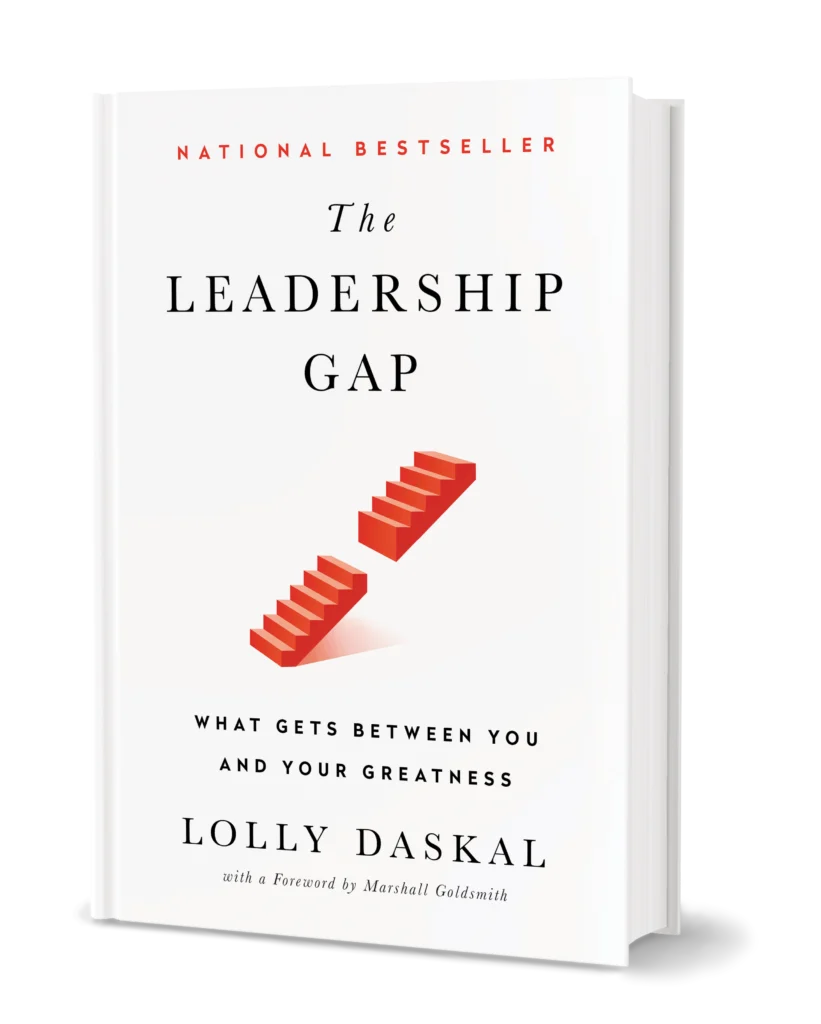
The Leadership Gap: What Gets Between You and Your Greatness
In the landscape of leadership, achieving sustained excellence is a journey marked by continuous evolution. After decades of coaching influential executives across the globe, Lolly Daskal has observed a recurring pattern: leaders often ascend to their positions by leveraging a specific set of core values and inherent traits. However, many eventually encounter a plateau, a point where performance falters, and persistent challenges emerge. The critical insight, often elusive, is understanding precisely why this occurs and, more importantly, how to preempt and overcome these obstacles.
Lolly Daskal’s seminal work, "The Leadership Gap: What Gets Between You and Your Greatness," delves into these critical junctures. This national bestseller offers a profound exploration of the internal and external factors that can impede even the most seasoned leaders. Through extensive cross-cultural experience spanning 14 countries and multiple languages, Daskal has identified the fundamental principles that separate those who merely lead from those who truly inspire greatness. Her proprietary leadership program, Lead From Within, is meticulously engineered to act as a catalyst, empowering leaders to elevate their performance, make a tangible difference within their organizations, and contribute meaningfully to the broader world.
Recognized by Inc. magazine as a "Top-50 Leadership and Management Expert" and honored by the Huffington Post as "The Most Inspiring Woman in the World," Lolly Daskal’s insights have graced the pages of prestigious publications including Harvard Business Review, Inc.com, Fast Company, and Psychology Today. Her latest book, "The Leadership Gap," provides an indispensable guide for anyone seeking to unlock their full leadership potential and bridge the divide between aspiration and achievement.
About Lolly Daskal
Lolly Daskal stands as one of the world’s most sought-after executive leadership coaches, renowned for her extensive cross-cultural expertise cultivated across 14 countries and six languages. As the founder and CEO of Lead From Within, she has developed a proprietary leadership program designed to be a powerful catalyst for leaders aiming to enhance their performance and effect significant, positive change in their companies, personal lives, and the global community.
Daskal’s contributions to the field of leadership have garnered numerous accolades. Inc. magazine has designated her a "Top-50 Leadership and Management Expert," and the Huffington Post has bestowed upon her the title of "The Most Inspiring Woman in the World." Her insightful writing has been featured in prominent publications such as Harvard Business Review, Inc.com, Fast Company (as an "Ask The Expert" contributor), The Huffington Post, and Psychology Today, among others. Her most recent book, "The Leadership Gap: What Gets Between You and Your Greatness," has achieved national bestseller status, cementing her reputation as a leading authority in leadership development.