September 21, 2026, marks World Gratitude Day, an annual occasion that offers a timely and vital reminder of a principle often overlooked in the fast-paced professional world: employee well-being and performance are intrinsically linked to feeling valued. This year’s observance arrives at a critical juncture, with the 2026 Engagement and Retention Report revealing a concerning statistic: only 25% of employees globally report feeling engaged in their work. This widespread disengagement has significant implications for productivity, innovation, and overall organizational success. Gratitude, when fostered intentionally, has the power to reverse this trend, fostering a more connected, committed, and energized workforce. However, cultivating a culture of gratitude requires more than a single day of recognition; it demands consistent effort, strategic planning, and dedicated leadership commitment.
Understanding World Gratitude Day
World Gratitude Day serves as a global invitation to pause and reflect on the individuals and contributions that enrich our lives and enhance our professional environments. The day encourages a deliberate act of acknowledgment, prompting individuals, teams, and entire organizations to identify and express appreciation for what and who they are thankful for. It’s a universal call to recognize the positive forces at play in our personal and professional spheres.
The Significance of September 21st
Observed annually on September 21st, World Gratitude Day falls on a Monday in 2026. Unlike many holidays that have variable dates, this fixed observance ensures a consistent global moment for reflection and appreciation. This unchanging date allows for predictable planning and consistent reinforcement of the day’s message, embedding it more firmly into organizational calendars and individual routines.
The Underlying Philosophy of World Gratitude Day
While World Gratitude Day doesn’t adhere to a single, prescribed theme, its overarching philosophy centers on recognizing what is functioning well and who is instrumental in driving positive outcomes. By highlighting successes and acknowledging the people behind them, organizations can build resilience, strengthen interpersonal connections, and foster a more human-centric workplace. It’s about shifting the focus from mere transactional work to a more empathetic and appreciative operational mindset.
A Historical Perspective on Gratitude’s Global Recognition
The origins of World Gratitude Day can be traced back to 1965. During a Thanksgiving dinner held at the United Nations building in Hawaii, Sri Chinmoy and the Peace Meditations at the United Nations proposed the establishment of a global day dedicated to expressing gratitude. This concept resonated widely, leading to the first official celebration on September 21, 1966. Since then, the day has evolved into an internationally recognized occasion for fostering appreciation and positive sentiment.
The Paramount Importance of Gratitude in the Workplace
In the contemporary professional landscape, World Gratitude Day holds significant importance. It provides organizations with a clear and actionable opportunity to address a critical employee need: genuine appreciation. Furthermore, it offers a strategic moment to identify and bridge gaps that directly impact employee engagement and retention. The ramifications of neglecting employee appreciation are substantial, often leading to higher turnover rates, decreased morale, and diminished productivity.

The 2026 Engagement and Retention Report, which surveyed 2,500 employees across various industries and geographies, underscores the urgency of this matter. The report highlights that a mere 25% of employees are actively engaged in their roles. This statistic suggests a vast untapped potential within the global workforce. Conversely, employees who feel genuinely recognized demonstrate higher levels of connection to their work, increased commitment to their organizations, and a significantly greater likelihood of contributing their best efforts daily. This data point to the tangible return on investment that a culture of appreciation can yield.
Strategies for Cultivating Gratitude on World Gratitude Day and Beyond
To effectively leverage World Gratitude Day, organizations can implement a variety of initiatives designed to embed appreciation into their daily operations. These strategies extend beyond a single day, aiming to foster sustainable practices:
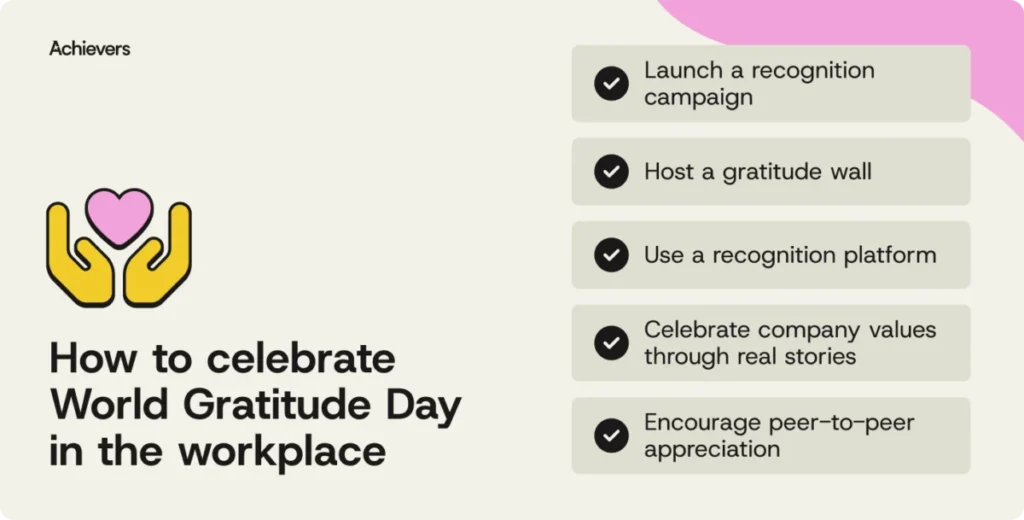
1. Launching Targeted Recognition Campaigns
Initiating a straightforward, highly visible recognition campaign can effectively engage employees. This campaign can encourage peer-to-peer recognition, prompting individuals to highlight colleagues who exemplify company values. The strategic use of automated prompts or readily available templates can maintain momentum and streamline the recognition process, making it more accessible and therefore more likely to be utilized. When recognition is easy, it becomes a more frequent practice.
2. Establishing Digital or Physical Gratitude Walls
Creating a shared platform, whether digital or physical, for employee appreciation can foster cross-team camaraderie. A social-media-style feed or a mobile-friendly posting option ensures inclusivity for all employees, regardless of their work arrangements – whether they are in-office, hybrid, or remote. This shared space allows for spontaneous and public acknowledgment of colleagues’ contributions.
3. Celebrating Company Values Through Authentic Stories
Showcasing real-life examples of exemplary work and adherence to company values can have a profound impact. These stories make employees feel seen and validated, while also subtly reinforcing the behaviors that drive positive cultural shifts and performance improvements. Authenticity in these narratives is key to their resonance and effectiveness.
4. Equipping Managers with Gratitude Toolkits
Providing managers with structured guidance, including prompts, templates, and regular reminders, can significantly enhance their ability to offer consistent recognition. Research from AWI’s State of Recognition Report indicates that employees who receive recognition from their managers are substantially more likely to trust them and recommend their company. Equipping managers with practical tools and real-time insights can help them develop lasting recognition habits.
5. Promoting Peer-to-Peer Appreciation
Recognition should not be solely a top-down initiative. Creating avenues for colleagues to appreciate each other for collaboration, support, and small victories is crucial. Non-monetary forms of appreciation, when delivered promptly, personally, and publicly, can be highly impactful. This fosters a collaborative environment where contributions at all levels are acknowledged.
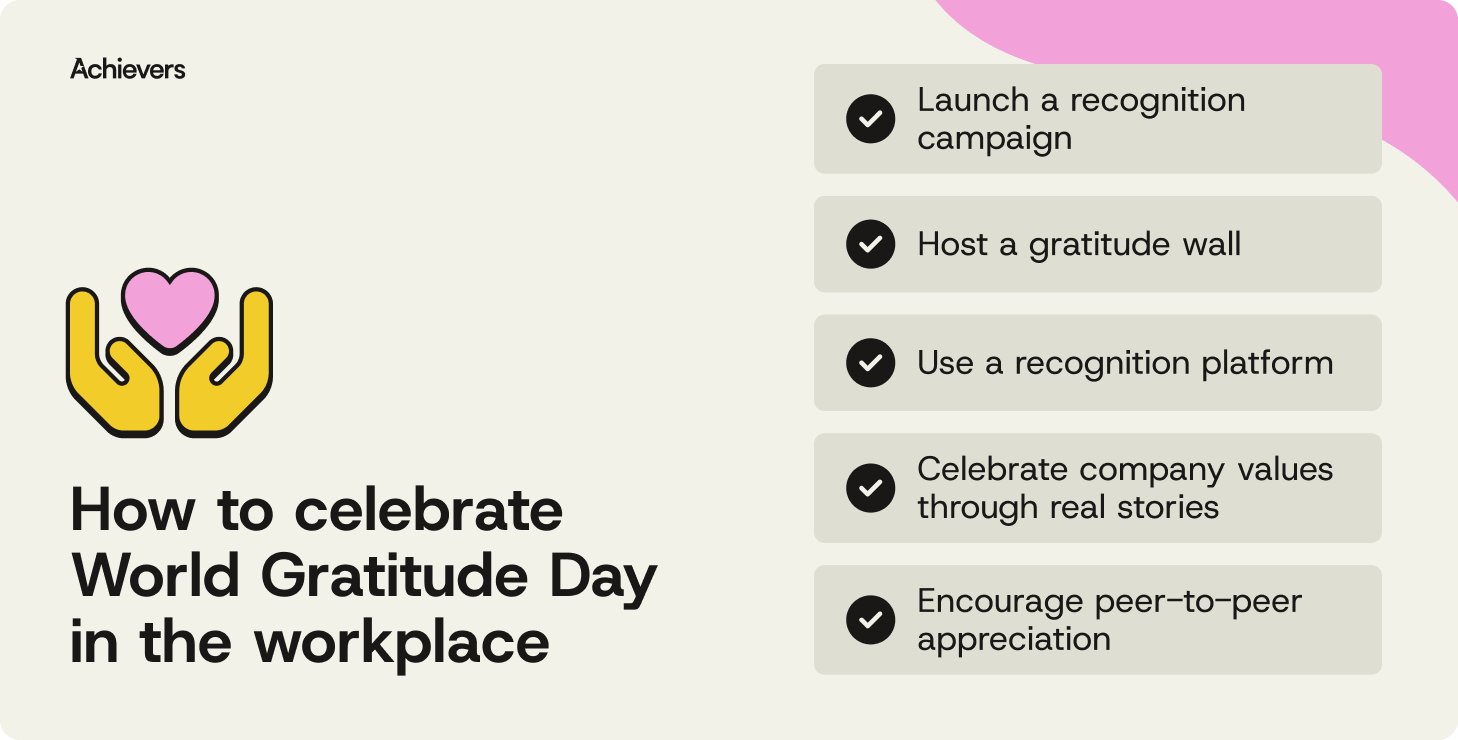
6. Utilizing Recognition Platforms to Amplify Impact
Leveraging dedicated recognition platforms can significantly enhance the reach and effectiveness of appreciation efforts. These tools facilitate immediate recognition, accessible across multiple devices, and provide visibility across teams. By making appreciation simple, consistent, and universally accessible, World Gratitude Day can serve as a powerful catalyst for establishing year-round recognition habits.
Best Practices for Maximizing Gratitude Day’s Impact
To ensure that World Gratitude Day translates into lasting change, organizations should consider the following best practices:
- Leadership Buy-in: Visible and active participation from senior leadership is paramount. When leaders champion gratitude, it signals its importance throughout the organization.
- Clarity and Simplicity: Recognition initiatives should be easy to understand and participate in. Overly complex processes can deter engagement.
- Timeliness: Appreciation is most effective when delivered in close proximity to the recognized action or behavior.
- Specificity: Vague praise is less impactful than specific acknowledgments that detail the behavior and its positive outcome.
- Inclusivity: Ensure that all employees, regardless of role, department, or location, have opportunities to both give and receive recognition.
- Follow-Through: The impact of World Gratitude Day is amplified when it serves as a springboard for ongoing recognition practices, rather than a standalone event.
The Transformative Power of Gratitude on Performance
The cultivation of gratitude within the workplace has demonstrable effects on employee performance. When individuals feel appreciated, their engagement levels rise, leading to increased motivation and a stronger desire to contribute positively. This, in turn, translates into tangible improvements in productivity, quality of work, and overall team effectiveness. Furthermore, a culture of gratitude can significantly reduce stress and burnout, fostering a more positive and supportive work environment. Employees who feel valued are less likely to seek opportunities elsewhere, directly impacting retention rates and reducing the costs associated with employee turnover.
Looking Beyond World Gratitude Day: Sustaining a Culture of Appreciation
While World Gratitude Day provides a valuable moment for reflection and focused appreciation, its true impact is realized in the sustained efforts that follow. The real transformation occurs when the principles of gratitude are integrated into the daily fabric of the workplace. Leaders, HR professionals, and managers have a pivotal role to play in this ongoing process. They can champion the habit of noticing and acknowledging great work, explicitly naming positive behaviors, and consistently reinforcing the actions that contribute to individual and organizational success.
At Achievers, extensive experience has demonstrated that consistent and meaningful recognition is a powerful driver of cultural transformation. When employees feel genuinely seen and appreciated for their contributions, the entire organization benefits. This leads to a more engaged workforce, improved collaboration, enhanced innovation, and ultimately, a more successful and sustainable business. World Gratitude Day 2026 is more than just a date on the calendar; it is an opportunity to recommit to building workplaces where appreciation is not an exception, but the norm.