Human Resources leaders are currently navigating a complex and often paradoxical landscape, where the urgent demands of business performance frequently appear to be at odds with the fundamental needs of employees. This pervasive tension, characterized by a structural pull that pits organizational objectives against individual employee experience, is leaving many organizations feeling stagnant, despite significant effort and well-intentioned strategies. The core challenge, as identified by industry analysis, is not a lack of dedication but an inability to fundamentally reframe the problem: instead of attempting to resolve these inherent tensions, the focus must shift to creating an environment where both business success and employee thriving can coexist.
The current business environment necessitates speed and agility. Companies are pressured to innovate rapidly, adapt to market shifts, and achieve aggressive growth targets. This often translates into a demand for immediate results, streamlined processes, and a workforce capable of consistently high output. However, employees at all levels are increasingly seeking clarity in their roles, a clear understanding of how their contributions align with the broader organizational mission, and opportunities for meaningful growth. They desire development that not only enhances their skills but also provides a sense of purpose and progression in their careers. Furthermore, the drive for sustained performance from the business must be met with employees who feel their contributions are recognized and valued. When these needs are perceived as mutually exclusive, HR departments often find themselves in a reactive position, attempting to optimize for one at the expense of the other, leading to stalled initiatives and a disconnect between strategic goals and operational reality.
This dichotomy creates a fundamental challenge for HR leaders. The business requires future-ready talent, demanding adaptability and upskilling to meet evolving industry demands. Simultaneously, employees are seeking growth that resonates with their personal aspirations and provides a tangible sense of advancement. The pressure for sustained organizational performance clashes with the employee’s desire to feel that their individual efforts are impactful and acknowledged. The traditional approach of prioritizing one over the other often leads to strategies that fail to gain traction, leaving organizations struggling to achieve both their strategic objectives and cultivate a motivated, engaged workforce.

A paradigm shift is needed, moving beyond the reactive resolution of tensions to a proactive creation of conditions where both organizational success and employee well-being are not only possible but mutually reinforcing. This requires a re-evaluation of the very definition of a thriving team.
The Pillars of a Thriving Team: Performance and Connection
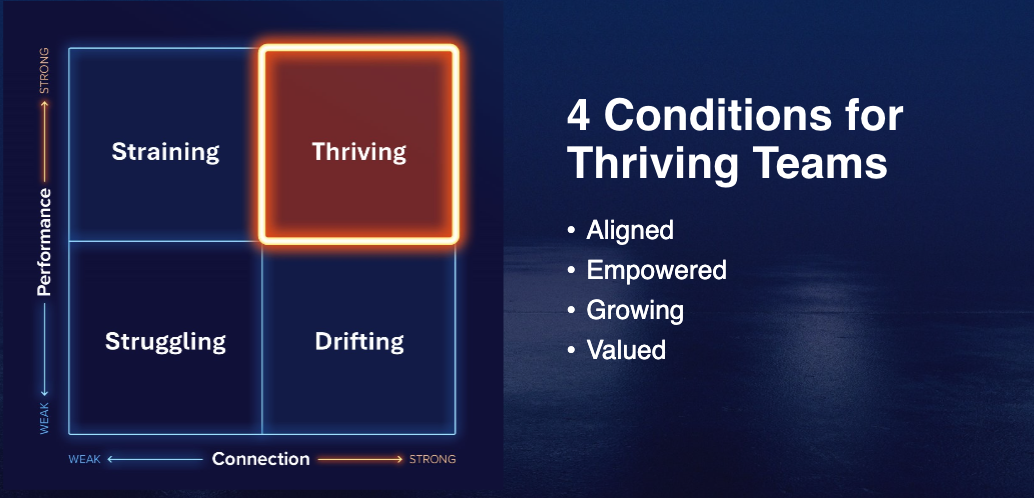
At its core, a thriving team is characterized by a dual foundation of strong performance and deep connection. Organizations that achieve high performance without fostering genuine connection risk employee burnout and disengagement, leading to unsustainable operational tempo. Conversely, teams that prioritize connection without a clear focus on performance may drift, lacking the drive and direction necessary to achieve organizational goals. Neither scenario represents a sustainable model for long-term success.
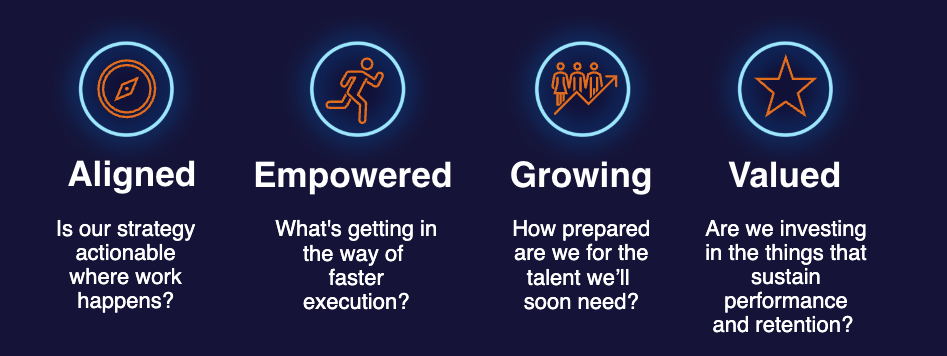
Quantum Workplace, a leading provider of employee engagement solutions, identifies four critical conditions that contribute to a thriving team environment: Aligned, Empowered, Growing, and Valued. Each of these conditions directly addresses a common tension that HR leaders are currently grappling with. By asking and honestly answering specific diagnostic questions within each of these areas, organizations can move from reactive problem-solving to strategic, condition-building approaches.
The Four Critical Questions for HR Leadership
The current economic climate, marked by rapid technological advancements and evolving workforce expectations, places unprecedented pressure on HR departments. The following four diagnostic questions, derived from an analysis of organizational dynamics by Quantum Workplace, offer a framework for HR leaders to assess and enhance their organizational health.
1. Aligned: Is Our Strategy Actionable Where Work Happens?
The Tension: Organizations require speed and agility, while employees need clarity and understanding.
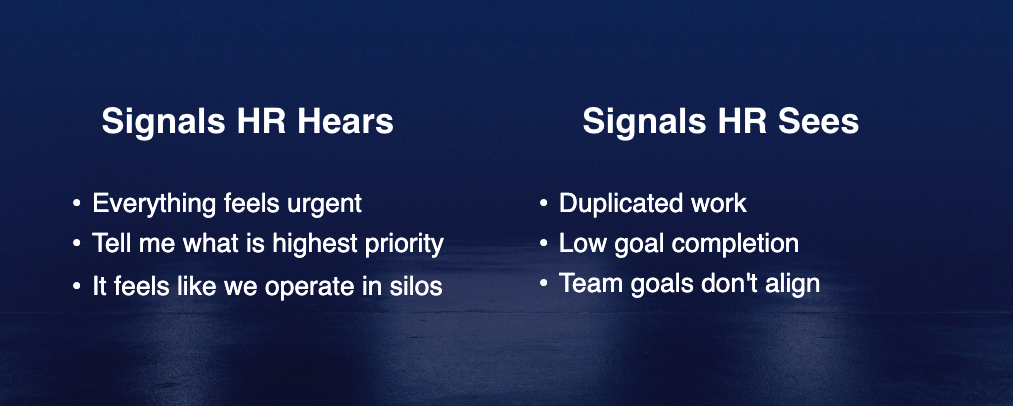
In today’s fast-paced business environment, the demand for rapid execution is paramount. However, this drive for speed can often be hampered by a lack of clarity at the ground level. HR leaders frequently report common issues such as a feeling of constant urgency, operational silos that impede collaboration, and a perpetual question of "what is the highest priority?" Data analysis often reveals duplicated efforts, low goal completion rates, and team objectives that fail to meaningfully connect to the overarching organizational strategy.
The critical diagnostic question is not simply whether employees are aware of the company’s strategy, but rather if the clarity of that strategy varies significantly across different performance levels. When solid performers lack a clear understanding of strategic direction, it presents a coaching opportunity for managers to bridge that gap. However, when even top performers are unclear about strategic priorities, it signals a systemic, organization-wide problem that cannot be solved through individual manager interventions alone.
A deeper layer of inquiry involves assessing whether employees feel genuine accountability for the strategy or perceive it as a top-down mandate. Survey responses can be analyzed to differentiate between authentic alignment and a passive disconnection. Crucially, these same responses can be segmented to correlate with other key outcomes, such as engagement scores and turnover risk, providing HR with a quantifiable understanding of the cost of misalignment. For instance, a recent study by Deloitte found that organizations with highly engaged employees are 21% more profitable. This highlights the direct financial implication of strategic alignment and employee engagement.
What Action Looks Like:
- Cascading Clarity: Implementing mechanisms to ensure strategic objectives are clearly communicated and understood at every level of the organization. This involves translating high-level goals into actionable tasks and measurable outcomes for individual teams and employees.
- Cross-Functional Collaboration: Breaking down silos by fostering communication and collaboration between departments to ensure a unified approach to strategic execution. This can involve cross-functional project teams and shared objective setting.
- Empowering Decision-Making: Equipping employees with the information and autonomy to make decisions that align with strategic priorities, thereby increasing both speed and ownership.
2. Empowered: What’s Getting in the Way of Faster Execution?
The Tension: Organizations need faster execution, while employees need fewer barriers.
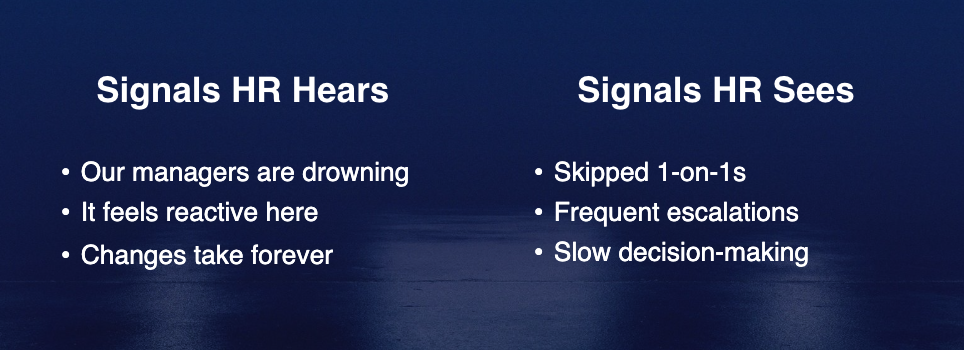
The signals of hindered execution are often consistent and pervasive: managers are overwhelmed, operations feel reactive, and critical decisions languish for extended periods. This manifests in missed one-on-one meetings, frequent escalations to higher management, and a glacial pace for decisions that should be made swiftly. The consequence is a drag on productivity and an inability to respond effectively to market opportunities or challenges.
Connecting business key performance indicators (KPIs) with employee feedback can reveal surprising barriers to execution. For example, in one organization, the primary differentiator for on-time delivery was not the availability of materials or equipment, but the rate of AI adoption. This illustrates how specific, counterintuitive insights can emerge when data from different systems is integrated.
A significant overlooked factor in this equation is the "manager experience gap." Data from various organizations reveals a stark disparity in how managers and non-managers perceive their own empowerment and engagement. For instance, in a recent survey of a large tech firm, non-managers reported higher levels of recognition for contributions (87%) compared to managers (57%), a 30% gap. Similarly, managers reported significantly lower clarity on performance measurement (57% vs. 83%), future organizational plans (50% vs. 73%), and opportunities for skill development (57% vs. 80%). This data underscores a critical structural problem: managers cannot effectively empower their teams if they themselves do not feel empowered, recognized, or clear about their own roles and development pathways. This isn’t a matter of individual capability but a systemic issue within the organizational structure. The cost of this disempowerment is substantial; Gallup research indicates that companies with highly engaged workforces outperform their peers by 147% in earnings per share.
What Action Looks Like:
- Streamlining Processes: Identifying and eliminating bureaucratic hurdles and inefficiencies that slow down decision-making and execution. This might involve process mapping and re-engineering.
- Manager Development: Investing in leadership development programs that equip managers with the skills and support needed to empower their teams effectively. This includes training on delegation, feedback, and resource allocation.
- Resource Optimization: Ensuring employees have the necessary tools, technology, and information to perform their jobs efficiently and effectively. This includes a critical look at technology adoption rates and their impact on productivity.
3. Growing: How Prepared Are We for the Talent We’ll Soon Need?
The Tension: Organizations need future-ready talent, while employees want meaningful growth.
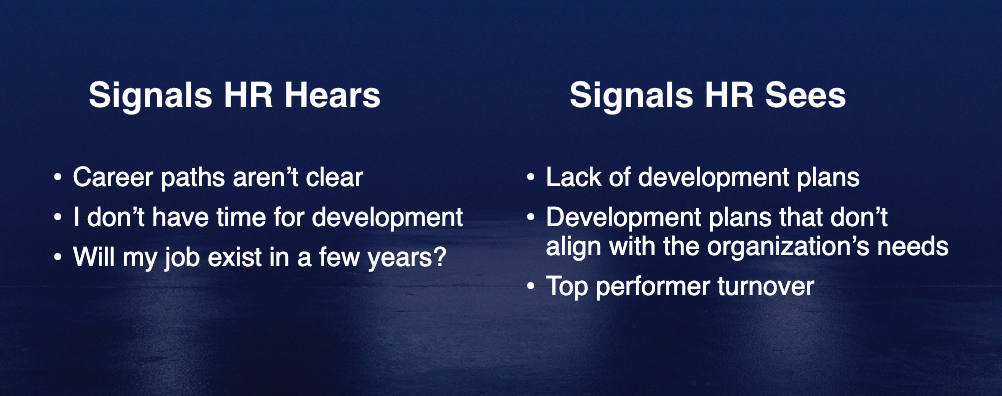
The rapid pace of technological change and evolving industry demands means that organizations must constantly assess their talent pipeline. Clear career paths are often absent, development opportunities are scarce, and employees increasingly voice concerns about the long-term viability of their roles. The question, "Will my job even exist in a few years?" is becoming a common refrain, signaling a fundamental disconnect between organizational planning and employee career aspirations.
The most effective diagnostic question in this area moves beyond simply asking if development plans exist. The key is to determine if these plans are active, dynamic, and directly integrated into an employee’s day-to-day experience. A documented growth plan that is rarely referenced or acted upon offers little benefit. In contrast, assigning stretch projects that build skills critical for the organization’s future, and that align with an employee’s development goals, represents a powerful form of embedded growth.
Leveraging succession planning data can provide further insights. By cross-referencing candidate status with employee feedback, organizations can ascertain whether they are proactively developing the talent most critical for future success or simply assuming it will occur. Furthermore, feedback from a candidate’s team can offer a realistic assessment of their current leadership effectiveness. The principle here is to shift growth from a periodic, formal process to an ongoing, integrated experience, utilizing projects, challenges, and real work priorities as the primary vehicles for development. According to the Association for Talent Development, organizations that offer comprehensive training and development programs experience 24% higher profit margins.
What Action Looks Like:
- Integrated Development: Embedding learning and development into the daily workflow through challenging assignments, cross-functional rotations, and mentorship programs.
- Future Skills Forecasting: Proactively identifying the skills and competencies that will be critical for the organization’s future success and aligning development initiatives accordingly.
- Transparent Career Pathways: Creating clear and accessible career progression frameworks that outline opportunities for advancement and skill development within the organization.
4. Valued: Are We Reinforcing What Matters Most?
The Tension: Organizations need sustained performance, while employees want to feel valued.
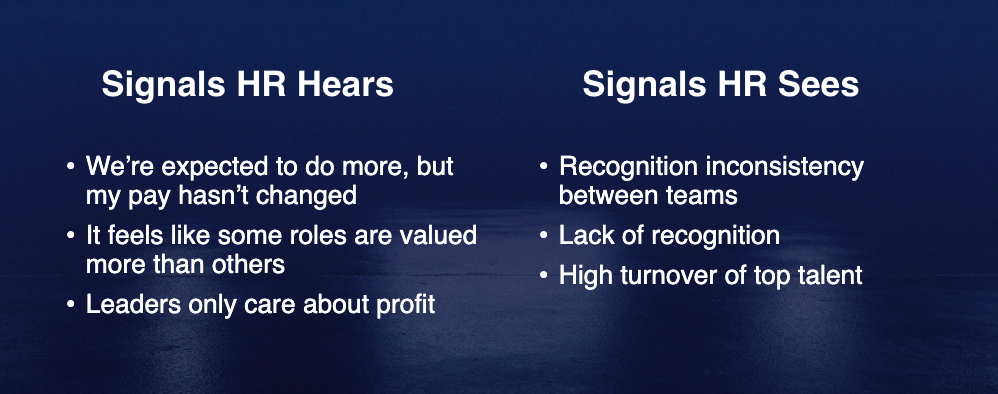
A common sentiment expressed by employees is the feeling of being expected to take on increasing workloads without commensurate changes in compensation or recognition. There can also be a perception that certain roles are inherently more valued than others, or that leadership’s primary focus is solely on profit. These sentiments, when reflected in data, often correlate with high turnover, particularly among high-performing individuals.
Reframing the conversation around value from a cultural to a financial perspective is crucial. When employee turnover is driven by a lack of feeling valued, recognition becomes a strategic investment with a clear return on investment (ROI). By directly linking retention risk to recognition data, organizations can quantify the financial impact of failing to make employees feel valued.
It is also important to recognize that feeling valued extends beyond top performers. Solid contributors, who often constitute the largest segment of the workforce, also need to feel that their impact is significant. Recognition programs that are exclusively designed for star performers will invariably miss a substantial portion of the employee base. By integrating talent reviews and performance ratings with employee feedback, organizations can gain a clearer understanding of who feels valued and why, and identify areas for improvement. A recent study by the Harvard Business Review found that companies with strong recognition cultures report 31% lower voluntary turnover.
What Action Looks Like:
- Meaningful Recognition Programs: Implementing diverse and consistent recognition programs that acknowledge contributions across all levels and performance tiers, focusing on both monetary and non-monetary forms of appreciation.
- Performance-Value Alignment: Ensuring that performance expectations, compensation, and recognition are clearly aligned, and that employees understand how their contributions drive organizational success.
- Leadership Accountability: Holding leaders accountable for fostering a culture of appreciation and ensuring that employees feel genuinely valued for their work and dedication.
HR’s Evolving Role: Building Conditions for Mutual Success
The four tensions – Aligned, Empowered, Growing, and Valued – while distinct on the surface, share a common underlying structure: a perceived conflict between what the business needs and what employees desire. The traditional HR instinct is to choose a side, to prioritize one demand over the other. However, a more effective and sustainable approach is to proactively build the conditions where both business success and employee thriving can flourish concurrently.
Organizations that achieve alignment, empowerment, growth, and a sense of being valued are not operating on compromise; they are embodying the very essence of sustainable business performance. HR’s role, therefore, is not to personally resolve every individual tension, but to guide the organization in asking and answering more intelligent questions that foster an environment where these conditions can naturally emerge.
The right talent platform can be instrumental in this transformation. By integrating insights across engagement, performance, development, and recognition into a unified, connected view, such platforms empower all leaders, from HR professionals to frontline managers, with the clarity and confidence needed to act on what truly matters. This approach ensures that the focus is not solely on HR initiatives but on cultivating a culture of empowerment and value throughout the entire organization. The data to answer these critical questions already exists within most organizations; the challenge lies in connecting it effectively to drive meaningful change.