
The modern B2B purchasing journey has undergone a fundamental transformation, shifting from a linear sales process to a complex, multi-channel investigation conducted long before a vendor is ever contacted. Industry data suggests that nearly 70% to 80% of B2B buyers now prefer to conduct their own research online before engaging with a sales representative. In this environment, a company’s digital footprint—spanning search results, peer reviews, social media discussions, and AI-generated summaries—has become the primary driver of trust and, ultimately, revenue. Online reputation monitoring (ORM) has consequently evolved from a secondary PR function into a critical strategic pillar for B2B enterprises seeking to protect their market share and accelerate sales cycles.
The Shift from Visibility to Perception
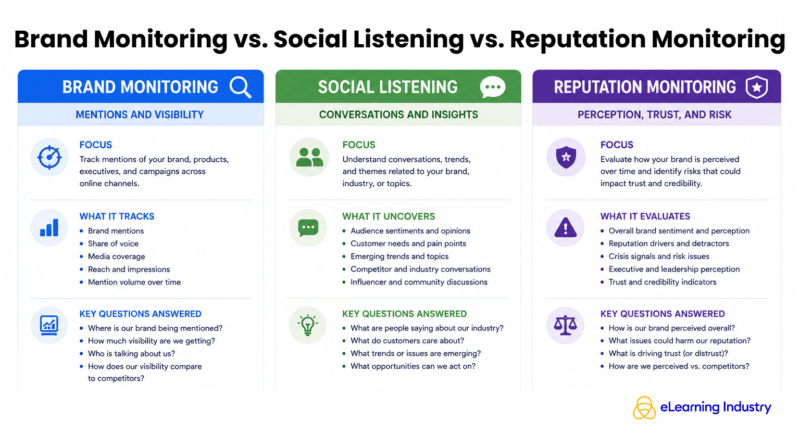
Historically, B2B companies focused on brand monitoring, a practice centered on tracking where a brand was mentioned to measure reach and awareness. However, as the digital ecosystem has matured, the focus has shifted toward reputation monitoring, which prioritizes the interpretation of these mentions. While brand monitoring asks, "Where is our brand being seen?" reputation monitoring asks, "What do these signals say about our credibility and risk?"
This distinction is vital in a B2B context where the stakes of a purchase are significantly higher than in consumer markets. Contract values often reach six or seven figures, and the implementation of a new software or service can impact an entire organization’s operations for years. Consequently, B2B buyers are not just looking for features; they are looking for evidence of stability, security, and long-term support. A single detailed negative review on a platform like G2 or Capterra, or a series of critical comments on a specialized Reddit thread, can create enough perceived risk to stall a deal in the procurement phase.

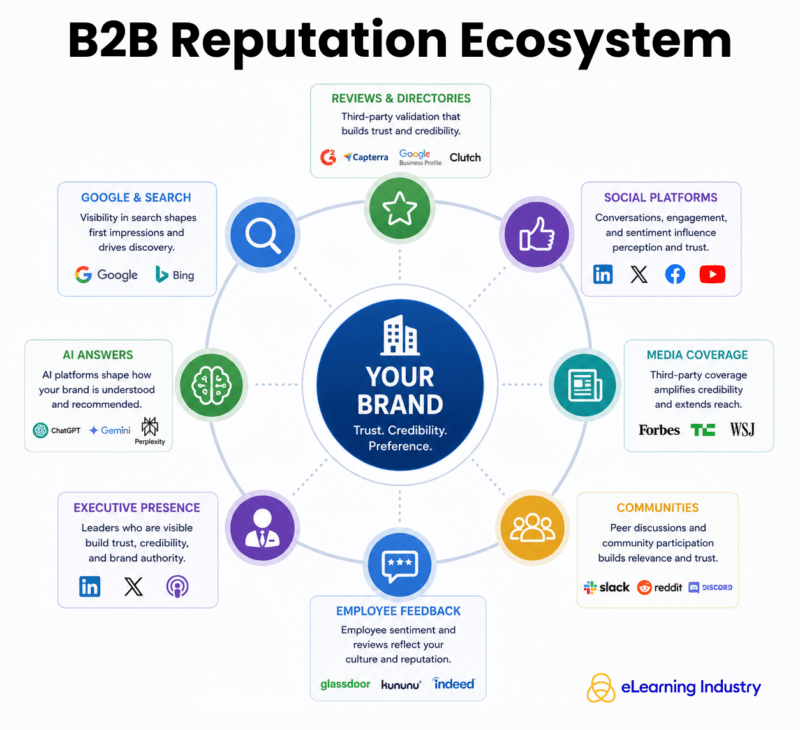
The Evolution of the B2B Reputation Ecosystem
The landscape of B2B reputation has expanded through several distinct eras. In the early 2000s, reputation was largely managed through direct relationships and trade publications. By the 2010s, the rise of independent review sites and LinkedIn introduced a level of transparency that forced brands to engage with public feedback. Today, we have entered the era of AI-driven discovery, where Large Language Models (LLMs) like ChatGPT, Claude, and Gemini act as the primary filters for information.
In this current phase, reputation is no longer just a collection of human-readable reviews. It is a data set processed by algorithms. When a potential buyer asks an AI platform to "compare the top three LMS providers for enterprise security," the AI synthesizes years of media coverage, customer reviews, and social mentions into a single, authoritative-sounding paragraph. If a brand’s online reputation is marred by outdated criticism or a lack of authoritative third-party mentions, it may be excluded from these AI-generated shortlists entirely.
Strategic Framework: The SIGNAL Method for Evaluation
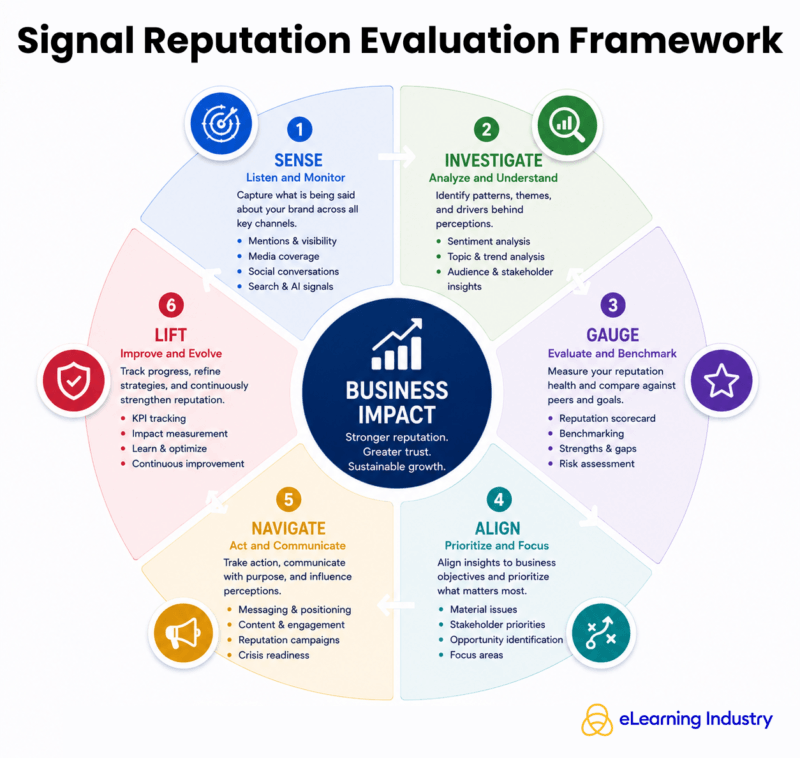
To manage this complex environment, leading B2B organizations are adopting structured frameworks to evaluate digital signals. One such approach is the SIGNAL framework, which allows teams to categorize and prioritize online mentions based on their potential impact:
- Source: How authoritative is the platform? A mention in a top-tier industry publication like The Wall Street Journal or a niche authority site carries more weight than an anonymous social media post.
- Impact: Does the mention address a core business concern, such as security or pricing, or is it a minor usability grievance?
- Gravity: What is the sentiment and intensity of the signal? Is it a constructive critique or a reputation-damaging allegation?
- Novelty: Is this a new, emerging issue that requires immediate intervention, or a repetition of an old narrative that has already been addressed?
- Audience: Who is likely to see this? A discussion in a private, high-level LinkedIn group for CTOs is more impactful than a general public tweet.
- Likelihood: How likely is this signal to influence a buyer’s decision or be picked up by an AI discovery engine?
The Critical Role of Generative Engine Optimization (GEO)
As AI platforms become the "new search," B2B brands are pivoting toward Generative Engine Optimization (GEO). Unlike traditional SEO, which focuses on ranking for specific keywords in search engines, GEO focuses on ensuring that AI models have access to accurate, positive, and authoritative information about a brand.
The implications are profound. If a company has resolved a major technical issue from three years ago, but the internet is still saturated with old articles and reviews discussing that failure, an AI will likely continue to cite it as a current "weakness." Reputation monitoring now requires brands to actively audit what AI systems are saying about them and work to "flood" the digital ecosystem with updated, credible evidence—such as new case studies, white papers, and expert interviews—to shift the machine-generated narrative.
Internal Ownership and Cross-Functional Response
A common failure in B2B reputation management is the lack of clear internal ownership. Because reputation touches PR, Sales, Product, and Customer Success, alerts often go unaddressed as departments wait for one another to act. Modern organizations are solving this by creating cross-functional "Reputation Task Forces."
- Customer Success owns the response to service-related complaints and works to turn "detractors" into "promoters."
- Product Teams analyze recurring technical feedback to prioritize the product roadmap.
- Sales Enablement uses reputation data to build "battlecards" that help sales reps address common objections or competitor comparisons mentioned online.
- Legal and Security teams are brought in for high-risk signals involving compliance or data breaches.
This collaborative approach ensures that monitoring leads to action. For example, if multiple reviews mention a difficult onboarding process, the response isn’t just a polite reply from a social media manager; it is a structural change to the onboarding workflow, followed by a content campaign highlighting the improvements.
Data-Driven Metrics for Reputation Success
To prove the ROI of reputation monitoring, B2B firms are moving away from vanity metrics like "total mentions" and toward business-impact metrics. These include:
- Share of Voice (SoV) in AI Recommendations: The frequency with which a brand is mentioned in response to category-level prompts in LLMs.
- Sentiment by Theme: Tracking whether sentiment is improving specifically around high-value topics like "reliability" or "ease of integration."
- Review Freshness and Velocity: The rate at which new, high-quality reviews are being generated, which signals a healthy, active customer base.
- Sales Cycle Correlation: Analyzing whether a strengthened online reputation correlates with a decrease in the time spent in the "consideration" phase of the sales funnel.
Supporting data highlights the necessity of this focus. According to a recent survey of B2B decision-makers, 92% of buyers are more likely to purchase a product after reading a trusted review. Conversely, a vendor with a rating below 3.5 stars is often automatically excluded from enterprise procurement shortlists, regardless of the quality of their software.
Competitive Intelligence and Market Positioning
Reputation monitoring also serves as a powerful tool for competitive intelligence. By tracking the digital signals of competitors, a brand can identify "trust gaps" in the market. If a top competitor is frequently criticized for poor customer support or hidden fees, a brand can pivot its own messaging to emphasize "transparent pricing" and "24/7 human support."
This proactive use of ORM allows brands to position themselves as the "safe choice" in a risky market. In B2B, being the "safe choice" is often more valuable than being the "innovative choice." By systematically monitoring and addressing reputation signals, companies can ensure they are perceived as reliable partners capable of supporting long-term enterprise goals.
The Future: Predictive Reputation Management
The next frontier of ORM is predictive analytics. By using AI to analyze patterns in social discussions and news cycles, companies will soon be able to predict a reputation crisis before it breaks. For instance, an uptick in discussions about a specific software vulnerability across developer forums could alert a company to a looming PR issue days before it hits mainstream tech media.
Furthermore, as "dark social"—private communities like Slack channels, Discord servers, and WhatsApp groups—becomes more influential, brands will need to find ethical ways to monitor the "vibe" of these closed-door conversations. While direct monitoring is often impossible, tracking the "downstream" effects of these conversations on public platforms will become a key skill for reputation specialists.
Conclusion
Online reputation monitoring is no longer a luxury or a reactive crisis management tool; it is a fundamental requirement for doing business in the digital-first B2B economy. The transition from human-centric search to AI-driven discovery has raised the stakes, making the accuracy and sentiment of a brand’s digital footprint more influential than its own website.
By establishing a baseline, mapping priority sources, and implementing a cross-functional response system, B2B enterprises can transform "noise" into actionable intelligence. In a market where trust is the most valuable currency, those who master the art and science of reputation monitoring will not only protect their revenue but will also gain a formidable competitive advantage in the race for buyer confidence. The goal is clear: to ensure that when a buyer—or an AI—looks for evidence of a company’s worth, the digital record confirms that they are the most credible, reliable, and low-risk partner available.