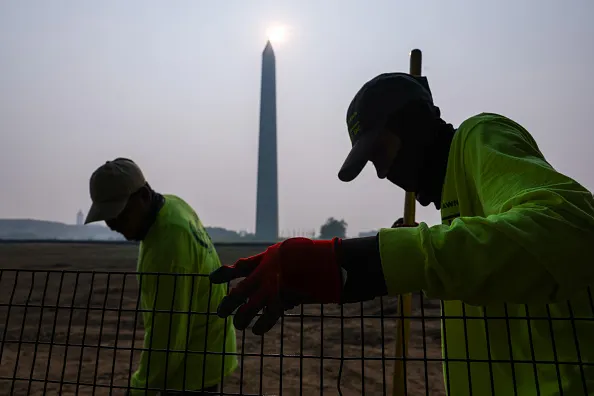
In mid-July 2026, a pervasive wave of poor air quality enveloped much of the midwestern and eastern United States, triggering widespread air quality alerts from public health authorities and casting a pall over daily life and economic activity. This expansive haze, a direct consequence of intense wildfires raging across both the U.S. and Canada, served as a stark, tangible illustration of the increasingly frequent and severe extreme weather events exacerbated by ongoing climate change, as highlighted by climate scientists and environmental experts. The incident underscored a growing challenge for employers: how to navigate employee health and safety, and particularly Family and Medical Leave Act (FMLA) obligations, in an era defined by unpredictable environmental shifts.
The 2026 Air Quality Crisis: A Landmark Event
The mid-2020s saw a dramatic increase in the frequency and intensity of wildfires across North America, a trend directly linked to prolonged droughts, rising temperatures, and changes in precipitation patterns attributed to climate change. The summer of 2026 was no exception, with vast tracts of forestland burning in western U.S. states and Canadian provinces. The resultant smoke plumes, carried by prevailing winds, traveled thousands of miles, blanketing major population centers in a thick, acrid smog. Fine particulate matter (PM2.5) in the air soared to hazardous levels, prompting advisories for vulnerable populations to stay indoors and limiting outdoor activities for everyone. Public health officials warned of significant risks, including respiratory distress, cardiovascular strain, and exacerbated chronic conditions.
The direct impact on the American workforce was immediate and tangible. In one notable instance, a Ford Motor Co. assembly plant in Michigan reported workers being hospitalized due to the perilous combination of extreme heat and the dense wildfire smoke, as documented by the Detroit Free Press. Such incidents illustrated the vulnerability of industrial settings where employees often perform strenuous physical labor. Elsewhere, in cities like Albany, New York, outdoor workers, whose livelihoods depend on being outside, were compelled to adopt rigorous precautions. Employers and employees alike scrambled to implement mitigation strategies, including setting up emergency water stations, deploying large industrial cooling fans, and providing N95 masks, all in an effort to safeguard health amidst unprecedented environmental conditions.
Climate Change and Worker Health: A Growing Concern
The escalating frequency and severity of such climate-related events are increasingly placing employee health at significant risk, which in turn triggers a complex web of employer obligations under the Family and Medical Leave Act and various similar state or local statutes. Legal experts like Ellen Donovan McCann, of counsel at Littler Mendelson, emphasize that while a discernible upward trend in leave directly attributed to climate extremes has yet to be statistically isolated, the issue is rapidly gaining prominence within human resources and legal circles.
The focus is particularly sharp concerning chronic health conditions. Conditions such as cardiovascular disease, asthma, chronic obstructive pulmonary disease (COPD), and severe allergies can be acutely triggered or significantly worsened by moments of extreme heat, severe air pollution, or other sudden environmental phenomena. As McCann noted, "We certainly have talked about the potential impact," highlighting the proactive discussions among legal professionals anticipating these challenges.
Pierce Blue, of counsel at Morgan Lewis, echoed this sentiment, advising employers to remain acutely mindful that climate change is projected to lead to a broader increase in the prevalence and severity of chronic health conditions across the population. A 2023 study published by the Journal of Occupational and Environmental Hygiene underscored that outdoor workers are disproportionately affected by climate-related hazards. The study’s authors, while calling for more extensive research, presented compelling evidence suggesting an increase in morbidity and mortality among workers directly linked to climate change impacts. "It would make perfect sense if that were to lead to an increase in claims or time off," Blue remarked, adding, "Any increase would be concerning on [the employer’s] part," signaling the potential operational and financial strains on businesses.
The Expanding Scope of FMLA Obligations
The implications of climate change on FMLA claims extend beyond direct employee illness. McCann pointed out that employers could encounter FMLA triggers more indirectly, such as when an employee requests leave to care for a family member adversely affected by severe weather. This scenario introduces additional layers of complexity, as it can already be challenging for employers to accurately identify FMLA-qualifying events involving family members.
McCann provided a practical illustration: an employee requesting time off to relocate an elderly parent to a new long-term care facility. The FMLA’s eligibility criteria are designed to encompass a broad spectrum of conditions and circumstances, and such care, particularly if necessitated by a health condition exacerbated by an environmental threat, could readily qualify. By extension, if an employee is caring for a family member with a pre-existing health condition made vulnerable by flooding, hazardous air pollution, or another form of weather emergency, this situation may also fall under FMLA protections. "Employers might not be making the right connections or at least asking the right questions to know whether it’s FMLA," McCann cautioned, underscoring a critical gap in current employer understanding and training.
Moreover, the mental health implications of climate change are increasingly being recognized as potential FMLA triggers. Matt Brown, a partner at Thompson Coburn, emphasized that should an employee report anxiety, depression, or other mental health conditions directly caused or exacerbated by extreme weather events – such as fear of impending natural disasters, grief over climate-related losses, or chronic stress from environmental instability – this could constitute a qualifying reason for FMLA leave. The growing awareness and destigmatization of mental health issues, coupled with the tangible psychological toll of climate anxiety, suggest that such claims may become more common.
Navigating Legal Complexities and Employer Responsibilities
For employers, navigating these evolving responsibilities demands heightened awareness and proactive strategies. McCann stressed that vigilance is paramount. Employers must diligently monitor local weather reports and public safety alerts to anticipate periods of poor air quality, extreme heat, severe storms, or other hazardous conditions. On such days, employers should reasonably expect an uptick in FMLA or alternative leave requests. Crucially, employers must invest in comprehensive training for their managerial and HR staff to ensure they are equipped to listen attentively to the entirety of an employee’s situation, ask pertinent questions, and accurately determine the appropriate next steps.
A core principle of FMLA compliance is that employees are not required to use "magic words" to invoke their rights. "Any time an employee needs to be absent from work, make sure you have enough facts to know if there is an obligation that’s been required," McCann advised. "Employees don’t need to use magic words — they don’t have to say, ‘I need FMLA.’" This means that a casual mention of a family member’s illness during a heatwave, or a request for time off due to personal distress caused by wildfire smoke, could potentially trigger an employer’s FMLA inquiry obligation, even if the employee does not explicitly reference the act.
Proactive Strategies for Workplace Resilience
Beyond reactive measures, employers are encouraged to adopt proactive strategies to build workplace resilience in the face of climate change. Where the nature of the work permits, considering remote or hybrid work arrangements for employees who may be particularly affected by extreme weather events can be a highly effective measure. Brown highlighted the practical benefits: "That helps staffing plans because a lot of time these things come out of the blue," he said. Furthermore, extreme weather events frequently lead to the disruption or complete shutdown of local transit networks and commuter pathways, making remote work an essential contingency for maintaining operational continuity and employee safety.
Maintaining robust medical certifications on file for employees with pre-existing or relevant health conditions is another vital step, according to Blue. This practice can streamline recordkeeping and facilitate smoother processing of leave requests, ensuring that both employer and employee are prepared when climate-related health events occur. However, Blue underscored that the single most critical task for employers is comprehensive training for managers to recognize potential FMLA scenarios. Despite widespread training initiatives, surveys consistently indicate that many managers still struggle to fully grasp FMLA nuances, making a lack of proper recognition the biggest risk factor for compliance violations.
"I don’t think the training needs to be super intense or that managers need to have a clinical knowledge of the FMLA," Blue clarified. "It’s more important that, if somebody says they need time off for a medical reason or to care for their children […] know that that could be FMLA and that you should be looping in HR or legal." This emphasis on early identification and escalation to specialized HR or legal personnel is crucial for mitigating risks and ensuring proper adherence to the law.
The Regulatory Landscape and Future Outlook
While employers bear a general duty under Section 5(a)(1) of the Occupational Safety and Health Act (OSHA) to protect employees from recognized hazards, there are currently no specific OSHA standards explicitly addressing climate extremes or similar weather events at the federal level, Blue explained. This regulatory gap means employers are not "flying blind," however, as state and local authorities are increasingly stepping in to provide guidance and, in some cases, establish legal standards.
For instance, at least seven states have implemented specific occupational heat safety standards, as reported by the Natural Resources Defense Council. These regulations often mandate access to water, shade, and rest breaks during periods of high heat, providing a clear framework for employers in those jurisdictions. New York City, demonstrating proactive leadership, saw Mayor Zohran Mamdani sign an executive order in June 2026, compelling local agencies to develop comprehensive heat safety plans for all city employees and contractors. Even when such regulations are not directly applicable to private businesses, Brown suggested that employers can leverage these public sector policies as valuable blueprints for formulating their own best practices, demonstrating due diligence and a commitment to employee welfare.
Looking ahead, the integration of data analytics into HR operations will become increasingly critical. Employers should consider tracking leave trends, either internally or in collaboration with third-party leave administrators. This granular data, when cross-referenced with historical extreme weather events or public health alerts, can reveal correlations between climate phenomena and leave patterns. Such insights can then inform adjustments to protocols, staffing plans, and emergency response strategies, allowing businesses to adapt proactively to the evolving climate landscape.
The intersection of climate change and workplace law represents a new frontier for employers. The 2026 air quality crisis served as a powerful reminder that environmental shifts are no longer distant threats but immediate realities with profound implications for employee health, operational continuity, and legal compliance. As climate events continue to intensify, employers who prioritize awareness, invest in robust training, and proactively adapt their policies will be best positioned to safeguard their workforce and navigate the complex challenges of a changing world. The ability to recognize, respond to, and plan for climate-related FMLA triggers will undoubtedly become a cornerstone of responsible and resilient human resource management in the coming decades.