Strategic human resource management (SHRM) represents a fundamental shift in how organizations approach their workforce, moving beyond traditional administrative functions to become a proactive driver of business objectives. This evolution recognizes that a company’s success is intrinsically linked to the engagement, development, and well-being of its employees. In an increasingly competitive and dynamic global landscape, embracing a strategic approach to HR is no longer a luxury but a necessity for sustained growth and innovation.
The core of SHRM lies in its deliberate alignment of people strategies with overarching business goals. Unlike conventional HR, which often focuses on compliance, policy enforcement, and transactional tasks such as payroll and benefits administration, strategic HR is forward-looking. It aims to anticipate future workforce needs, cultivate a thriving organizational culture, and build resilient teams capable of navigating complex challenges and capitalizing on emerging opportunities. This proactive stance is supported by compelling research. A report by the Society for Human Resource Management (SHRM) indicates that nearly half of HR professionals identify improving the employee experience as a primary objective for the current year. This emphasis is rooted in the understanding that a positive employee experience is a critical catalyst for enhanced engagement, higher retention rates, and improved overall performance. When employees feel valued, supported, and connected to their work, the entire organization benefits.
The transition from traditional HR to SHRM is characterized by a move from a reactive problem-solving mode to a proactive strategy-setting role. The emphasis shifts from simply filling positions to strategically building a workforce that can significantly impact the company’s bottom line. This involves treating employees not as mere headcount but as integral assets whose contributions are vital to business success. Consequently, SHRM champions programs designed to empower employees and foster their growth, including comprehensive talent development initiatives, meticulous workforce planning, and robust recognition programs.
Four Pillars of Strategic Human Resource Management
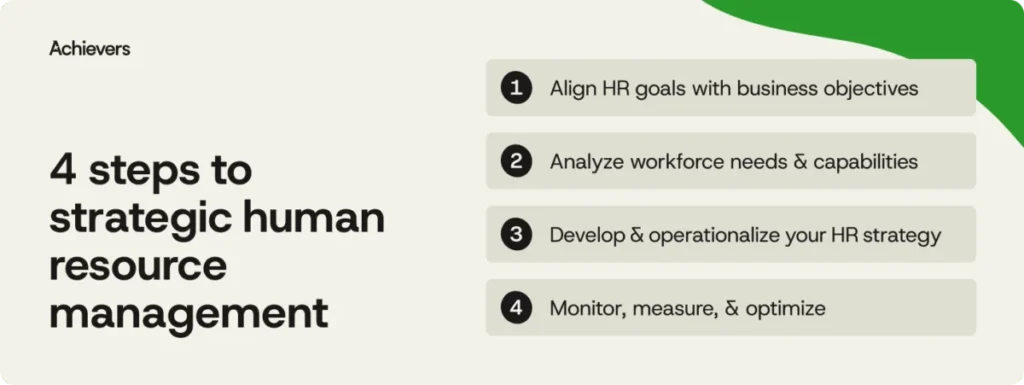
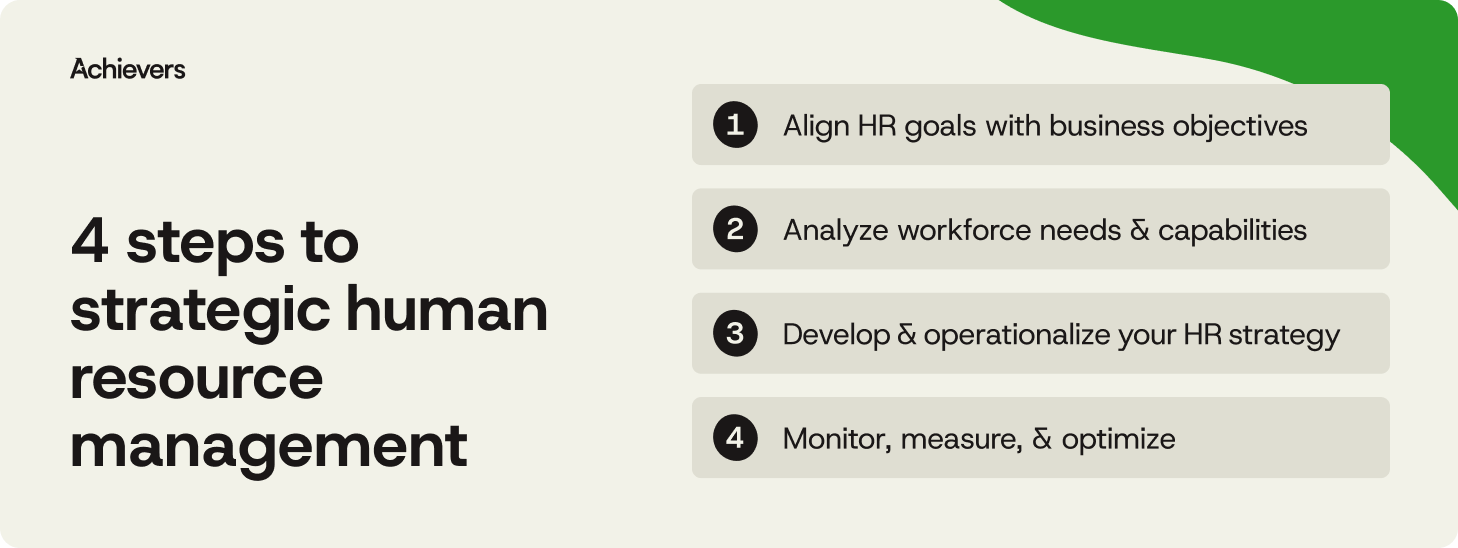
Implementing a strategic approach to HR requires a deliberate and structured methodology. While the concept can seem complex, breaking it down into actionable steps can make it more manageable for organizations of all sizes. The following four steps provide a roadmap for embedding strategic thinking into HR practices:
Step 1: Align HR Goals with Business Objectives
The foundational element of SHRM is ensuring that all HR initiatives are directly linked to the organization’s strategic business goals. If HR programs are not contributing to what the business aims to achieve, a fundamental reassessment is necessary. This alignment ensures that every action taken by the HR department serves a larger purpose, reinforcing the company’s overall vision and mission. This involves a deep understanding of the business’s strategic priorities, market position, and competitive landscape. HR leaders must then translate these business objectives into tangible people-related goals, such as improving leadership capabilities, enhancing innovation, or increasing customer satisfaction through employee performance.
Step 2: Analyze Workforce Needs and Capabilities
Effective strategy development hinges on a clear understanding of the current talent pool and any existing or potential gaps. This analytical phase involves a thorough assessment of the organization’s existing workforce, including skills, competencies, demographics, and performance levels. It also requires forecasting future workforce requirements based on evolving business strategies, technological advancements, and market trends. Identifying these gaps is crucial for informing talent acquisition, development, and retention strategies. For example, if a company plans to expand into a new market that requires specific technical expertise, the HR department must identify if the current workforce possesses those skills or if new talent needs to be recruited or existing employees upskilled.

Step 3: Develop and Operationalize Your HR Strategy
Once business objectives are aligned and workforce needs are understood, the next step is to translate these insights into concrete, actionable HR programs and initiatives. This is where the strategic vision begins to manifest in the daily operations of the organization. It involves designing and implementing programs that address identified needs and support strategic goals. Examples include creating leadership development pathways, implementing performance management systems that drive accountability and growth, designing robust employee engagement programs, and establishing effective succession planning processes. The operationalization phase requires clear communication, resource allocation, and the engagement of relevant stakeholders across the organization.
Step 4: Monitor, Measure, and Optimize
The dynamic nature of business environments necessitates that HR strategies are not static but are continuously evaluated and adapted. The final step involves establishing robust mechanisms for monitoring the effectiveness of HR programs, measuring their impact against defined metrics, and making necessary adjustments. This iterative process ensures that HR strategies remain relevant and continue to drive business results. Key performance indicators (KPIs) should be established to track progress in areas such as employee retention, engagement scores, productivity levels, time-to-fill for critical roles, and the return on investment for HR initiatives. Data analytics plays a crucial role here, enabling HR leaders to identify trends, pinpoint areas for improvement, and make data-driven decisions.
Core Pillars of Strategic Human Resource Management
A robust SHRM framework is built upon several core pillars that translate high-level strategies into tangible impacts on the organization’s culture and employee experience. These pillars are essential for shaping employee behavior, fostering a positive work environment, and equipping the workforce with the tools and support needed to thrive alongside the company’s growth.
- Talent Management: This encompasses all aspects of acquiring, developing, engaging, and retaining employees. Strategic talent management focuses on building a pipeline of skilled and motivated individuals who are aligned with the organization’s future needs.
- Organizational Culture: SHRM actively shapes and nurtures a desired organizational culture that supports business objectives. This involves defining and reinforcing core values, promoting ethical behavior, and fostering an environment of collaboration, innovation, and continuous improvement.
- Employee Engagement and Experience: Creating a positive and supportive employee experience is paramount. This involves understanding employee needs, providing opportunities for growth and development, fostering a sense of belonging, and ensuring fair and equitable treatment.
- Performance Management: Strategic performance management systems go beyond traditional appraisals to focus on continuous feedback, goal setting, and development. They are designed to align individual performance with organizational goals and drive high levels of productivity and achievement.
- Workforce Planning and Analytics: This pillar involves proactively analyzing current and future workforce needs, identifying skills gaps, and developing strategies to address them. Leveraging data analytics provides critical insights into workforce trends, enabling informed decision-making.
The Crucial Role of Recognition in SHRM
Within the strategic HR landscape, employee recognition emerges as a particularly potent lever for driving business impact. Organizations that integrate recognition into their SHRM strategies often see significant improvements in key business outcomes. Research from Achievers’ own "2024 State of Employee Recognition Report" highlights a clear correlation: while only 30% of HR leaders utilizing basic internal recognition programs report experiencing tangible business impact, this figure more than doubles to 60% when an online recognition solution is employed.
The benefits of strategic recognition are multifaceted and directly contribute to SHRM objectives:
- Enhanced Employee Engagement: Timely and meaningful recognition reinforces desired behaviors and makes employees feel valued, fostering a deeper connection to their work and the organization.
- Improved Retention: Employees who feel appreciated are less likely to seek opportunities elsewhere, leading to reduced turnover and associated recruitment costs.
- Increased Productivity and Performance: Recognition programs can motivate employees to go the extra mile, driving higher levels of productivity and improved performance against goals.
- Strengthened Company Culture: By recognizing behaviors that align with core values, organizations can actively shape and reinforce a positive and productive culture.
- Boosted Innovation: Recognizing innovative ideas and contributions encourages a culture where employees feel empowered to share their creativity and contribute to problem-solving.
Data analytics in recognition programs, as highlighted by Brandon Hall Group, offers HR leaders invaluable insights into emerging trends in employee engagement, learning, retention, and cultural alignment. This allows for more targeted and effective interventions, further strengthening the strategic value of recognition.
Bringing Strategic HR to Life with Achievers
While the strategic intent behind HR initiatives is crucial, their successful implementation and sustained impact depend on effective execution. This is where platforms like Achievers play a pivotal role in transforming strategic HR aspirations into everyday realities. Whether an organization is launching a new employee recognition program or scaling its people strategy across diverse teams and global locations, Achievers provides the tools and capabilities to bridge the gap between strategic vision and actionable outcomes.
The Achievers recognition platform is designed to support SHRM in practice by:
- Reinforcing Company Values: By allowing employees to recognize each other for demonstrating core company values, the platform actively embeds these principles into the daily work experience.
- Driving Measurable Results: The platform facilitates the tracking and measurement of recognition activities, providing data that can be linked to key business metrics, demonstrating the ROI of recognition efforts.
- Fostering a Culture of Appreciation: It provides a user-friendly and accessible way for employees at all levels to express gratitude and acknowledge the contributions of their colleagues, thereby building a more positive and supportive workplace.
- Enhancing Employee Experience: Through personalized and timely recognition, the platform contributes to a more engaging and motivating work environment, directly impacting employee satisfaction and retention.
- Facilitating Global Reach: The platform’s scalability and accessibility enable organizations to implement consistent recognition strategies across all their operations, regardless of geographical location.
In essence, Achievers empowers organizations to move from simply having a strategy to actively achieving tangible business impact through their people.
Strategic Human Resource Management FAQs
What is the primary difference between traditional HR and strategic HR?
Traditional HR focuses on administrative tasks, compliance, and operational efficiency, while strategic HR aligns people initiatives with broader business goals to drive organizational success and competitive advantage.
How does strategic HR contribute to business growth?
By optimizing talent acquisition, development, and retention, fostering a positive culture, and enhancing employee engagement, strategic HR directly impacts productivity, innovation, and customer satisfaction, all of which are critical drivers of business growth.
Why is employee recognition considered a cornerstone of strategic HR?
Recognition programs, when strategically implemented, are powerful tools for reinforcing desired behaviors, boosting morale, improving retention, and increasing productivity, thereby directly contributing to the achievement of business objectives.
What are the key steps involved in implementing strategic HR?
The key steps include aligning HR goals with business objectives, analyzing workforce needs and capabilities, developing and operationalizing the HR strategy, and continuously monitoring, measuring, and optimizing programs.
How can technology support strategic HR initiatives?
Technology, such as HRIS platforms and recognition software, can automate processes, provide valuable data analytics, facilitate communication, and enable scalable implementation of strategic people initiatives, thereby enhancing efficiency and effectiveness.