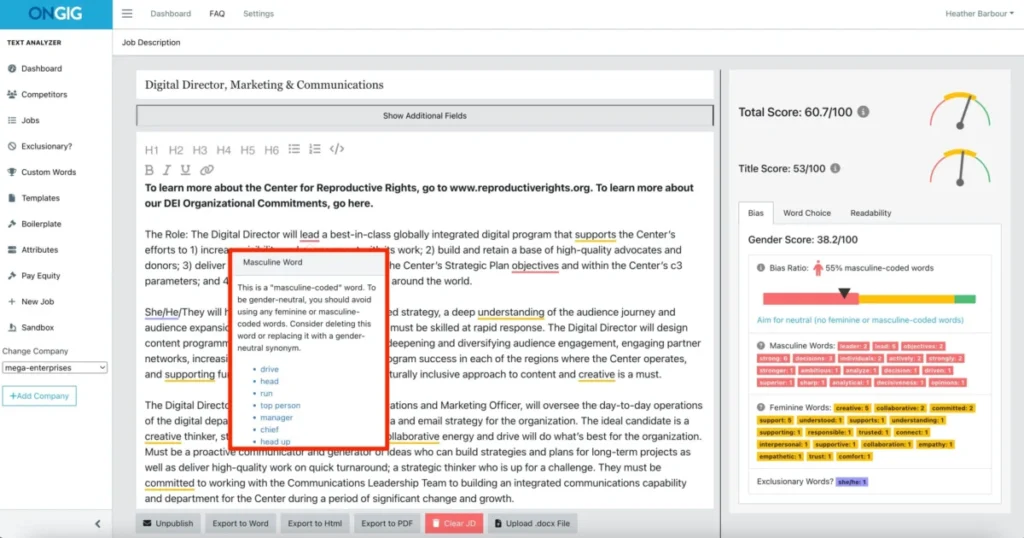
A recent analysis by Ongig, a leader in recruitment technology, has unveiled the continued prevalence of masculine-biased language in job descriptions, with words such as "strong," "lead," and "independently" topping the list of common offenders. The comprehensive study, spanning job posting data from January 1 to July 13, 2026, highlights a persistent linguistic barrier that inadvertently deters female candidates and hinders efforts towards workplace diversity. The findings underscore the critical need for organizations to adopt gender-neutral language to expand their talent pools and foster more inclusive hiring practices.
The analysis, conducted using Ongig’s proprietary Text Analyzer software, reviewed nearly 50,000 job descriptions from U.S.-based companies of varying sizes. This deep dive into recruitment language aimed to identify specific words that, despite appearing innocuous, carry masculine connotations rooted in social science and artificial intelligence research. The consistent appearance of these words indicates an ongoing challenge for companies striving to attract a diverse workforce.
The Pervasive Nature of Gendered Language in Hiring
For decades, the language used in job advertisements has been a subject of scrutiny by researchers and diversity advocates. Subtle linguistic cues can significantly influence how job seekers perceive a role and whether they feel encouraged to apply. Masculine-coded words, often associated with traditionally male-dominated traits like assertiveness and competitiveness, have been shown to make job postings less appealing to women. Conversely, feminine-coded words, typically linked to traits like collaboration and support, can have a similar, albeit less frequently studied, effect on male applicants. The ultimate goal, therefore, is not to favor one gender over another but to create universally appealing job descriptions that focus purely on skills and responsibilities.
The year 2026’s data reaffirms that despite growing awareness, unconscious bias continues to manifest in recruitment language. The implications extend beyond mere semantics, directly impacting an organization’s ability to innovate, adapt, and reflect the diverse customer bases they serve.
Ongig’s 2026 Analysis: Key Findings and Lingual Shifts
Ongig’s Text Analyzer meticulously flagged and recorded instances where masculine-biased words were used and subsequently recommended gender-neutral alternatives. The data, compiled from over six months of active job posting analysis, provides a snapshot of the current linguistic landscape in recruitment.
The top 10 most common masculine-biased words identified in the 2026 study are:
- Strong: Flagged 42 times. Alternatives include: able, proven, exceptional, sound, steady, excellent, solid.
- Lead: Flagged 26 times. Alternatives include: drive, head, run, chief, manage, steer, guide.
- Independently: Flagged 13 times. Alternatives include: alone, exclusively, unaided, unsupervised.
- Strengthen: Flagged 12 times. Alternatives include: build, reinforce, improve, develop, grow.
- Competitive: Flagged 10 times. Alternatives include: attractive, fair, results-oriented, enthusiastic, comparative.
- Leaders: Flagged 10 times. Alternatives include: managers, people, stars, pioneers, principals, mentors, top people.
- Analyze: Flagged 9 times. Alternatives include: parse, examine, review, study, dissect, break down, research, evaluate.
- Champion: Flagged 8 times. Alternatives include: support, advocate for, promote, back.
- Analysis: Flagged 7 times. Alternatives include: investigation, study, test, testing, research, data.
- Independent: Flagged 7 times. Alternatives include: self-directed, autonomous, self-sufficient.
A notable observation from the 2026 data is the consistent appearance of "strong" and "lead," which have been recurring "offenders" in previous analyses conducted by Ongig. This suggests a deeply ingrained habit within professional language, particularly in roles requiring leadership or significant impact. However, the emergence of "strengthen" and "champion" as new entries to the top 10 list indicates a dynamic shift in the lexicon of job descriptions. These words, often used in strategy-heavy or leadership-oriented roles, carry subtle masculine biases that may not be immediately obvious to the untrained eye but resonate differently with various demographics.
Conversely, words like "objectives" and "decisions," which featured prominently in earlier lists, have dropped out of the top 10 this year. While their absence from the current list doesn’t signify their complete disappearance from job postings, it does highlight that other words are now being more frequently flagged as contributing to gender bias. This continuous evolution necessitates ongoing vigilance and regular auditing of recruitment language.
Methodology Behind the Data: Ongig’s Text Analyzer
Ongig’s Text Analyzer operates on a sophisticated algorithm that leverages a proprietary vocabulary library. This library is meticulously curated from extensive social science research on gendered language and continually refined through artificial intelligence. It is designed to identify words and phrases that have been empirically linked to masculine or feminine connotations, as well as other forms of bias (e.g., age, disability, ethnicity). The tool’s ability to process and analyze nearly 50,000 job descriptions provides a robust data set, offering insights into real-world application trends.
The underlying principle is that language is not neutral; certain words evoke different responses and perceptions based on societal conditioning and gender roles. For instance, words like "competitive" or "dominant" often align with traditionally masculine stereotypes, while "supportive" or "collaborative" might be perceived as more feminine. While individuals of any gender can embody these traits, the cumulative effect of a job description laden with one type of language can subtly alienate qualified candidates from underrepresented groups.
The Business Imperative for Inclusive Language
Beyond the ethical considerations of fairness and equality, there is a compelling business case for adopting gender-neutral language. Diverse teams are consistently shown to outperform homogeneous ones in terms of innovation, problem-solving, and financial returns. By inadvertently narrowing their applicant pool, companies risk missing out on top talent.
A landmark study conducted in late 2022 by Ongig in partnership with a global employment website provided concrete evidence of this impact. The research analyzed the correlation between gendered language, other biased words, and application rates across various industries. The findings were unequivocal: Ongig’s scoring, which flags and corrects biased language, was predictive of significantly higher application rates. Specifically, total application starts increased by an average of 13%, with female applicant starts boosting by an impressive 21%. This robust data definitively proved that the strategic use of gender-sensitive language directly translates to a broader and more diverse applicant pool.
Further illustrating this point, a pilot program involving a firm in the traditionally male-dominated engineering and finance sectors utilized Ongig’s Text Analyzer to refine their job advertisements. Following the implementation of gender-neutral language, the firm reported a remarkable 22% increase in female applicants. This tangible outcome demonstrates that even in industries with historical gender imbalances, intentional language choices can yield significant improvements in diversity metrics. Such results are invaluable for companies seeking to strengthen their employer brand and gain a competitive edge in the fierce war for talent.
Psychological Underpinnings: The Science of Bias
The phenomenon of gendered wording influencing applicant behavior is not merely anecdotal; it is firmly rooted in psychological research. A foundational study published in the Journal of Personality and Social Psychology, titled "Evidence That Gendered Wording in Job Advertisements Exists and Sustains Gender Inequality," provides extensive academic backing. Led by researchers Danielle Gaucher, Justin Friesen, and Aaron C. Kay from Duke University and the University of Waterloo, the study meticulously demonstrated how exposure to masculine-coded language in job advertisements can lead women to feel a reduced sense of belonging in those roles, subsequently decreasing their intent to apply.
The research posited that while individual women are undoubtedly "strong" and "leaders," the aggregate effect of such language on women as a marketing cohort is distinct. It’s not about individual capability but about how group perception and self-selection operate. When a job description is saturated with words traditionally associated with male traits, women may subconsciously perceive the role or the organizational culture as less welcoming or suitable for them, even if they possess all the required qualifications. This psychological barrier, often unconscious, is what inclusive language aims to dismantle.
Building on this academic work, Kat Matfield developed the "Gender Decoder," a free online tool that flags words associated with specific genders. This tool, accessible to anyone, empowers recruiters and hiring managers to quickly identify and rectify gendered language in their postings, making the research actionable and widely available.
Broader Implications for Talent Acquisition and Employer Branding
The continuous identification of masculine-biased words in job descriptions underscores a critical challenge for modern talent acquisition strategies. In an increasingly competitive global market, companies cannot afford to alienate any segment of the talent pool. The deliberate adoption of gender-neutral language is not just a matter of compliance or political correctness; it is a strategic imperative for organizations aiming for peak performance and innovation.
For HR professionals, this means integrating linguistic awareness into every stage of the recruitment pipeline. It necessitates a shift from merely listing requirements to crafting narratives that resonate universally. Beyond increasing application rates, inclusive language contributes positively to an organization’s employer brand, signaling a commitment to diversity, equity, and inclusion (DEI). Companies perceived as inclusive are often more attractive to a wider range of candidates, including those from other underrepresented groups, and tend to have higher employee retention rates.
Furthermore, the insights from Ongig’s analysis prompt a broader reflection on the role of technology in fostering DEI. Tools like Text Analyzer are not just spell-checkers for bias; they are sophisticated instruments that educate users, promote best practices, and automate the process of creating more equitable job descriptions. This technological assistance becomes increasingly vital as the nuances of inclusive language continue to evolve and as companies manage vast volumes of job postings.
Practical Steps for Employers
For organizations committed to enhancing diversity, the path forward is clear: proactive engagement with language. Implementing the gender-neutral synonyms provided by Ongig’s research is a concrete first step. Instead of "strong communication skills," consider "excellent communication skills." Rather than seeking a "leader," perhaps "someone who can guide teams" or a "principal" is more appropriate. These seemingly minor linguistic adjustments can significantly broaden a job’s appeal.
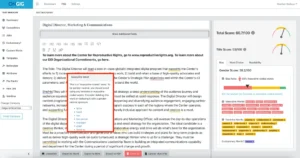
For those looking to automate and streamline this process, recruitment technology solutions like Ongig’s Text Analyzer offer real-time flagging of masculine (and feminine) biased words. These tools typically provide instant pop-ups with suggested gender-neutral synonyms, allowing for quick and efficient replacements, thereby embedding inclusive language into the core of the job description writing process.
Beyond individual word swaps, it is also beneficial to review the overall tone and content of job advertisements. Ensuring that role responsibilities are clearly defined, career progression opportunities are highlighted, and company culture is presented in an inclusive manner can further enhance appeal. Training for hiring managers and recruiters on unconscious bias and inclusive communication is also crucial to reinforce these practices across the organization.
Looking Ahead: The Future of Job Descriptions
The 2026 data from Ongig serves as a crucial reminder that the pursuit of workplace diversity is an ongoing journey, requiring continuous adaptation and vigilance. As societal norms evolve and linguistic research deepens, the understanding of what constitutes biased language will also shift. The future of job descriptions will undoubtedly be characterized by an increasing reliance on data-driven insights and advanced AI tools to ensure they are as inclusive and effective as possible.
The goal remains to create job postings that reflect the true requirements of a role, free from unintentional bias, thereby enabling all qualified individuals to envision themselves thriving within an organization. By embracing gender-neutral language, companies can not only fulfill their DEI objectives but also build stronger, more innovative, and more representative workforces for the challenges and opportunities of tomorrow.