The artificial intelligence industry is abuzz with anticipation as major players like OpenAI and Anthropic reportedly consider initial public offerings (IPOs). These discussions, fueled by the intense rivalry between their respective leaders, have ignited widespread fascination regarding their future competitive strategies. While the market speculates on how these AI giants will vie for dominance, a compelling alternative perspective suggests that Microsoft might emerge as the ultimate beneficiary, particularly within the enterprise sector. This analysis delves into the multifaceted enterprise AI market, examining the critical components of models, surfaces, and ecosystems, and argues for Microsoft’s strategic advantage.

The Evolving AI Market: Beyond the Core Model
The enterprise AI market is not a monolithic entity. It can be broadly segmented into three interconnected layers: the foundational AI models, the user-facing "surfaces" or application experiences, and the surrounding ecosystem that supports their integration and deployment.
1. The AI Model: Specialization and Domain Expertise
The first layer, the AI model itself, is the engine driving AI capabilities. However, the notion of a single, all-encompassing model is rapidly giving way to specialization. Companies are increasingly recognizing that different applications require distinct AI models optimized for specific tasks and data domains.
- Model Specialization: The current landscape sees various AI models being developed for specific use cases. For instance, coding and analytics might benefit from models like Anthropic’s Claude, while narrative and document generation could be better served by OpenAI’s offerings. Google’s Gemini is being positioned for analytical tasks, and xAI’s Grok is being explored for applications in robotics and motion. Nvidia’s exploration into world models further signifies this trend towards specialized AI. This fragmentation is driven by the realization that "one model does not fit all."
- Data Training and Optimization: The effectiveness of an AI model hinges not only on its underlying architecture but also on the quality and relevance of its training data. This involves meticulous data collection, labeling, and refinement to ensure models are optimized for specific industry needs. For example, a pharmaceutical company seeking to understand protein folding or advanced genetics would require a model rigorously trained on specialized biological and chemical data. This contrasts with general-purpose models that might lack the nuanced understanding necessary for such complex domains.
- The Rise of Vertical AI: The success of specialized platforms like AI Galileo, which has become a highly intelligent consultant for human capital challenges by focusing on HR, labor markets, and skills, underscores the value of domain-specific AI. As businesses demand AI solutions tailored to their unique operational requirements, the ability to deploy and manage multiple specialized models will become paramount.
The current environment suggests a future where enterprises will likely leverage a portfolio of AI models, each chosen for its proficiency in a particular area. This makes claims of all-encompassing AI capabilities from a single provider less credible in the enterprise context.
2. The AI Surface: User Experience and Integration
The second crucial layer is the "surface" – the application experience and the tools that make AI accessible and useful to end-users and developers. This encompasses the user interface, integration capabilities, development tools, and overall user experience.
- The AI Harness: This layer, often referred to as the "AI Harness," is critical for translating the power of AI models into tangible business value. It involves how an AI system personalizes itself, manages memory, interacts with external data sources, and integrates with existing enterprise systems. The user experience is paramount; as the example of a hypothetical, highly intelligent, and user-friendly Apple Siri suggests, a superior interface can drive mass adoption.
- Microsoft’s Historical Precedent: Microsoft’s success in the personal computing era serves as a relevant case study. While competitors developed early graphical interfaces and applications, Microsoft’s relentless focus on the application experience of products like Excel, PowerPoint, and Outlook, coupled with its strategic licensing of the Windows graphical interface, ultimately secured market dominance. The 450 million paying users of Microsoft 365 are a testament to the enduring power of a well-executed application experience.
- Enterprise Integration Needs: For businesses, the AI surface must seamlessly integrate with their existing enterprise resource planning (ERP) systems (e.g., SAP, Oracle, Workday), customer relationship management (CRM) platforms (e.g., Salesforce, HubSpot), and financial software (e.g., QuickBooks). The ability of an AI solution to connect with and leverage data from these systems is not merely a feature but a fundamental requirement for its adoption.
- The "Surface" vs. the "Model": The distinction between the underlying AI model and the application surface is becoming increasingly important. A flawed integration or a clunky user interface can undermine the capabilities of even the most advanced AI model. The failure of an attempted Claude integration with HubSpot to retrieve basic client data highlights that a poor "surface" can render a powerful "model" ineffective. The challenge for OpenAI and Anthropic lies in their ability to foster strong third-party development of these surfaces, a task that carries inherent risks if partners deliver subpar experiences.
3. The Ecosystem: Partnerships and Platform Strategy
The third pillar is the ecosystem – the network of partners, applications, and support services that surround an AI platform. A robust ecosystem is vital for enterprise adoption, providing businesses with a comprehensive suite of tools and solutions.
- Building on a Platform: In the enterprise space, vendors need thriving partner ecosystems that can build and monetize solutions on their platforms. As seen with AI Galileo, customer inquiries often extend beyond core functionality, requiring integrations with policy databases, leadership models, and compliance training. This necessitates a platform that can accommodate and facilitate such extensions.
- The Enterprise Demand for Flexibility: HR and IT leaders are increasingly vocal about their need for AI solutions that are not only user-friendly but also provide a flexible platform for developing and managing agentic applications. Crucially, they seek to avoid vendor lock-in in a rapidly evolving market. This demand underscores the importance of an open and extensible platform.
- Microsoft’s Strategic Positioning: Microsoft’s approach to AI development, particularly with its Copilot platform, appears to be strategically aligned with this three-layered market structure.
Microsoft’s Ascendancy: The Power of the Integrated Surface
While OpenAI and Anthropic are making significant strides in developing advanced AI models, Microsoft’s strategic advantage appears to lie in its mastery of the "surface" and its ability to cultivate a comprehensive ecosystem.
The Shifting Revenue Landscape
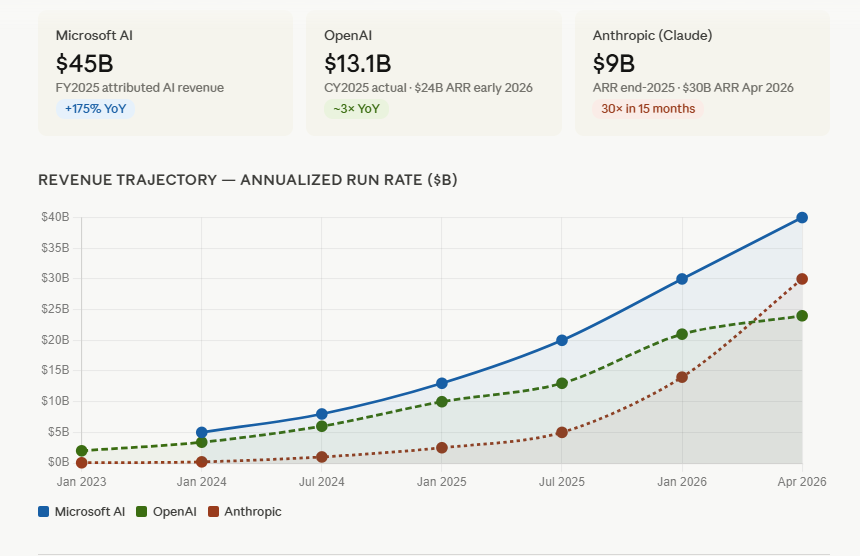
The financial underpinnings of the major AI players reveal a key divergence. Reports suggest that a substantial portion of OpenAI’s revenue, estimated at around $30 billion, may stem from consumer subscriptions, with a projected 500-600 million users paying approximately $20 per month. Similarly, Anthropic’s estimated $30 billion revenue could be driven by large enterprise clients generating significant compute usage.
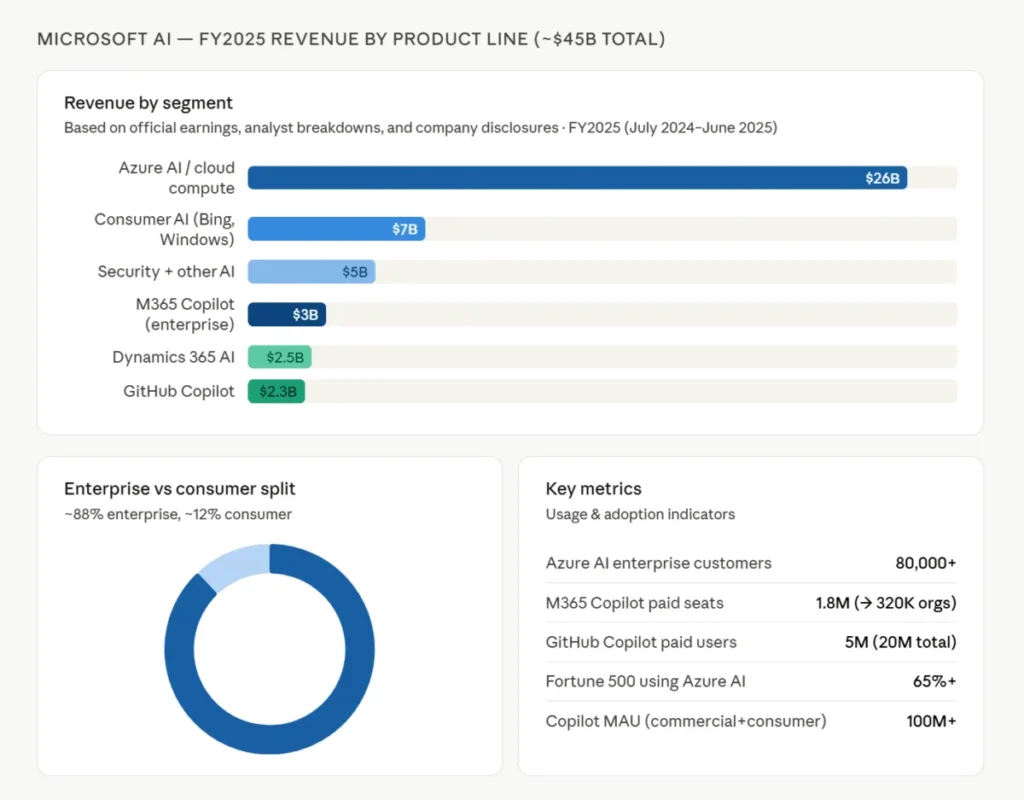
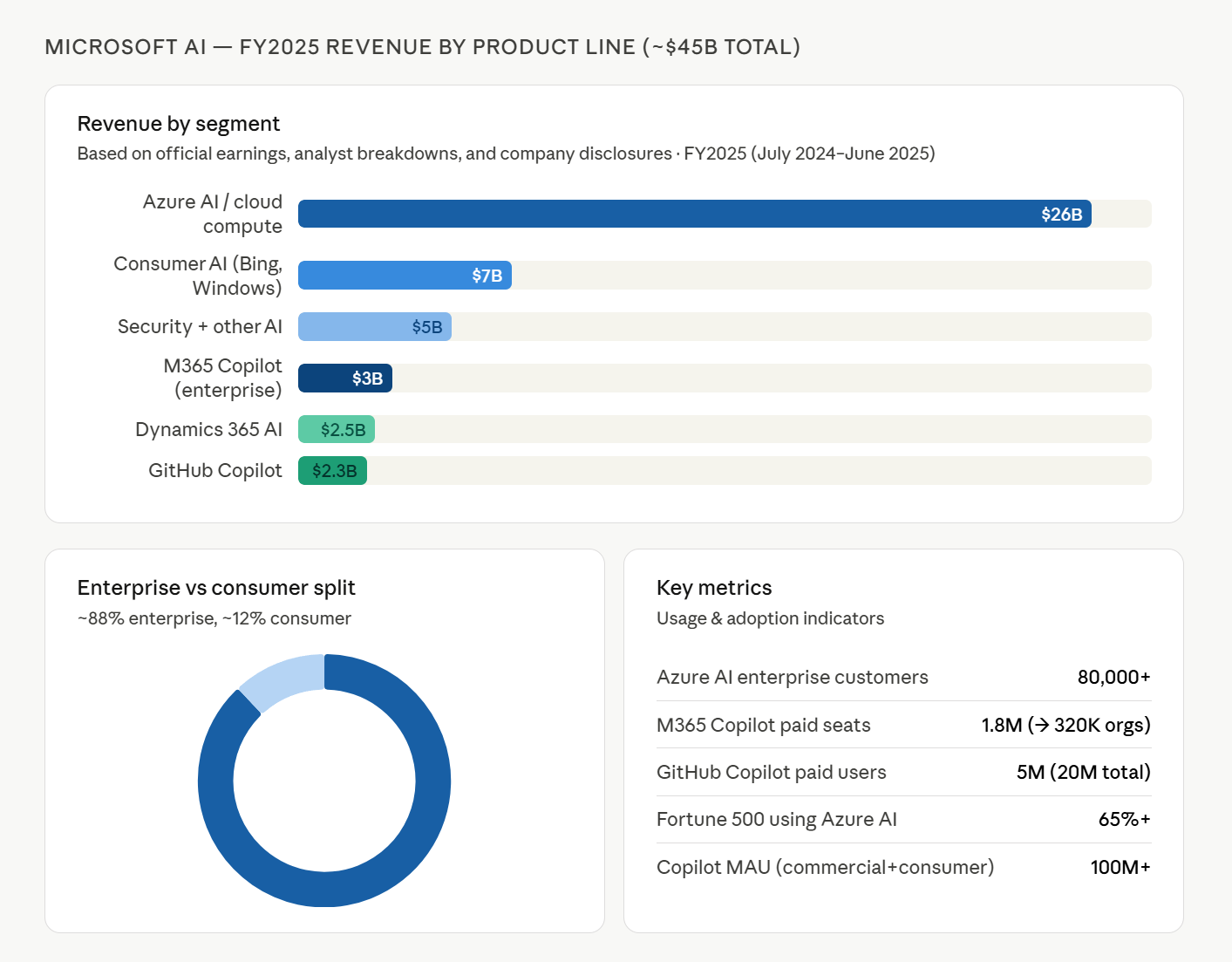
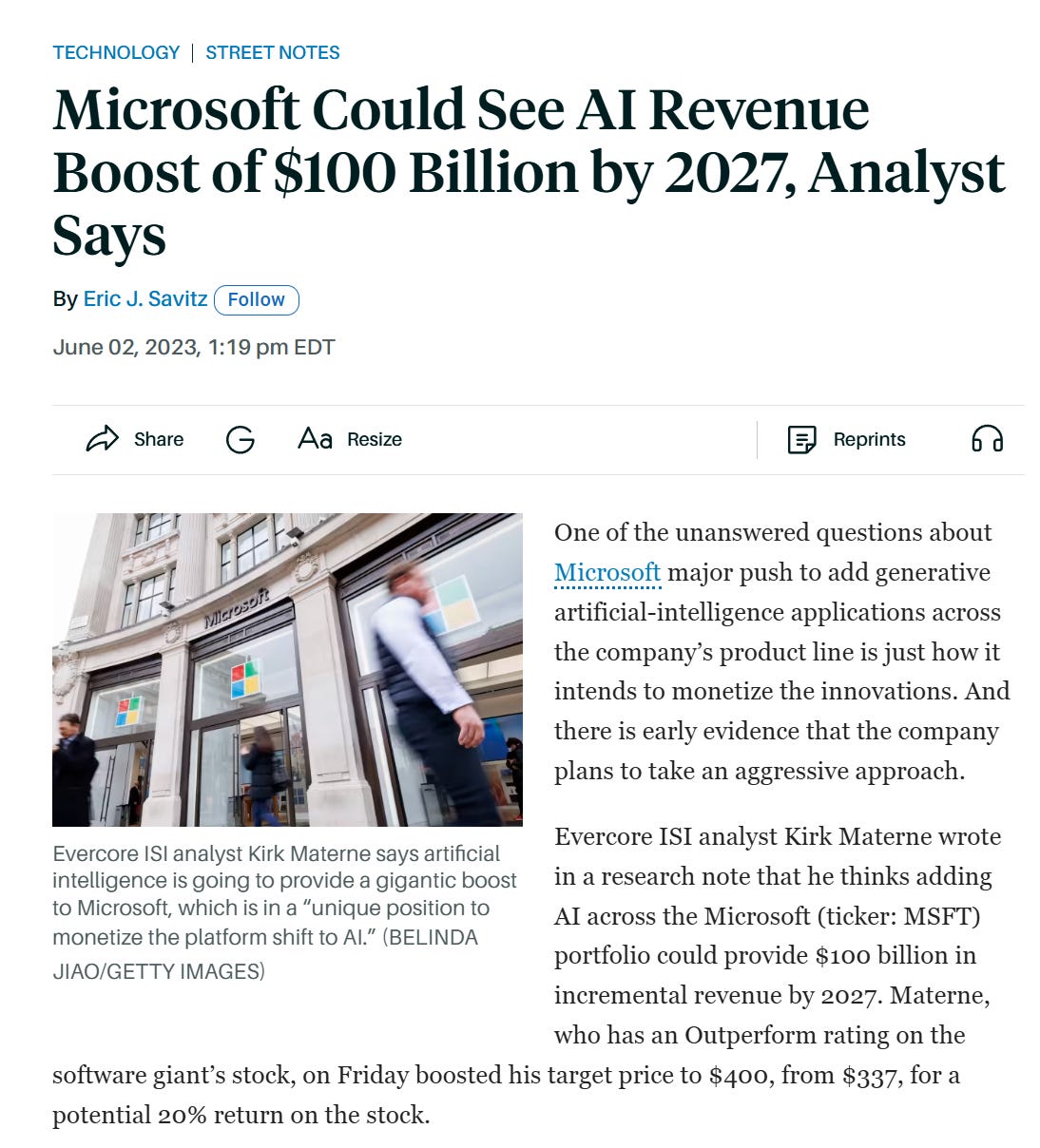
In contrast, Microsoft appears to be generating considerable revenue from the "surface" layer. The company has reported approximately 15 million licensed users for its Copilot service, generating an estimated $4.5-5 billion annually based on an average price of $25 per month. When combined with fees for Azure API services and its rapidly growing AI revenue (up 39%), Microsoft’s overall AI revenue is estimated to be $25 billion or more, with projections reaching over $100 billion in the next three years.
The Evolution of Microsoft Copilot
Microsoft’s journey with Copilot demonstrates a strategic evolution from a nascent product to a comprehensive enterprise AI platform.
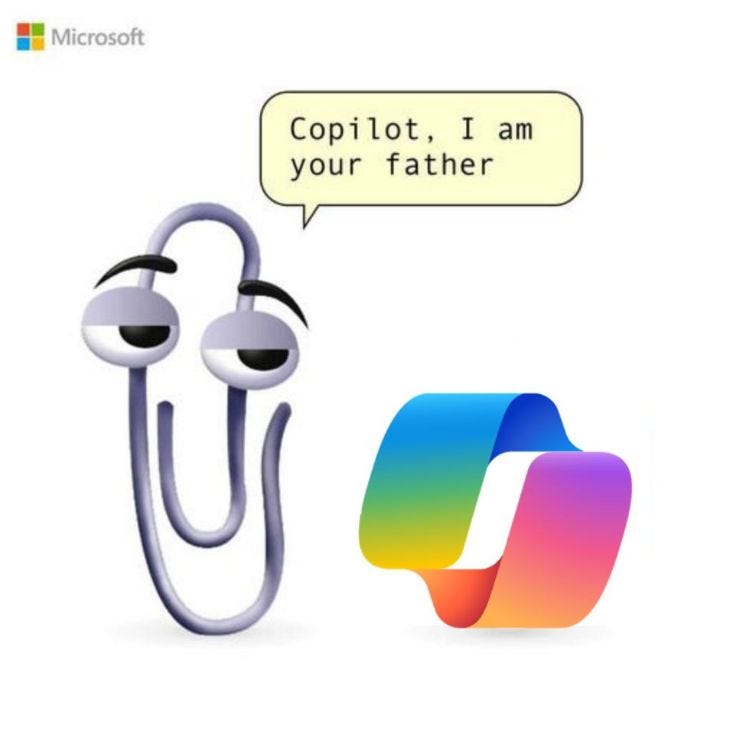
- Early Stages and Integration: Initially, Microsoft’s AI strategy was closely tied to its partnership with OpenAI, integrating ChatGPT into Bing. The early vision for Copilot, while promising, initially resembled an enhanced version of the familiar "Clippy" assistant. This phase saw the development of various Copilot applications across Microsoft products, including M365, Dynamics, Excel, and GitHub.
- The Emergence of Copilot Studio and Agentic Capabilities: Microsoft quickly moved to offer more advanced tools like Copilot Studio and Agent 365, alongside numerous other "Copilot-fueled surfaces." The company also focused on building out its M365 Graph Connectors and fine-tuning capabilities to better integrate enterprise data.
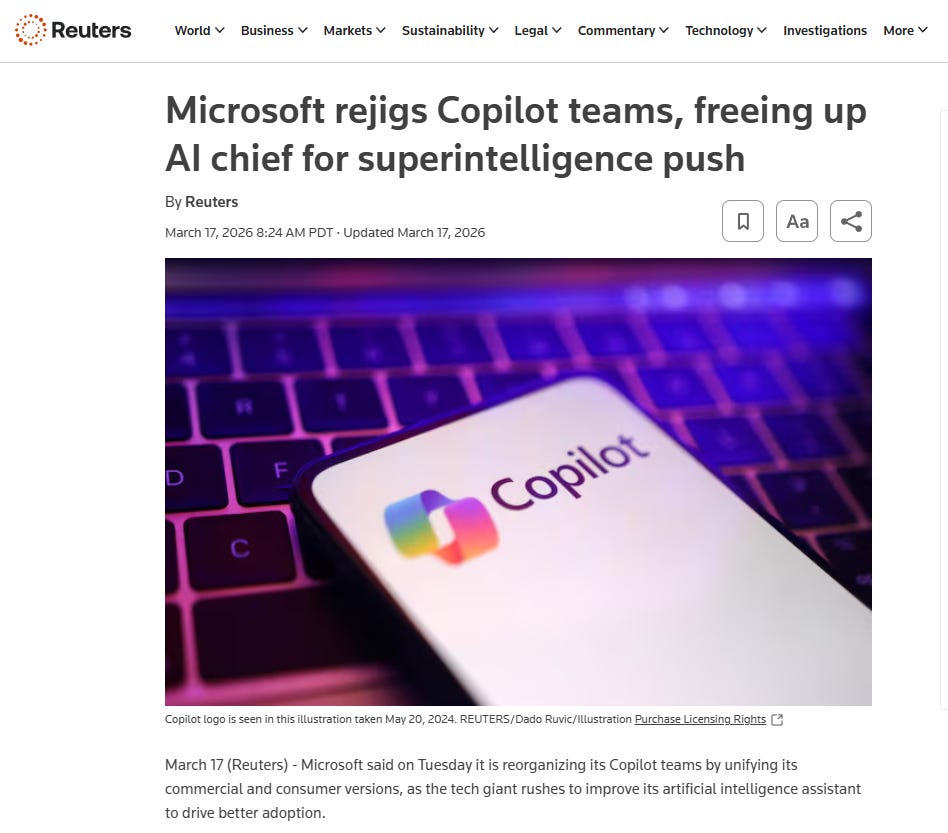
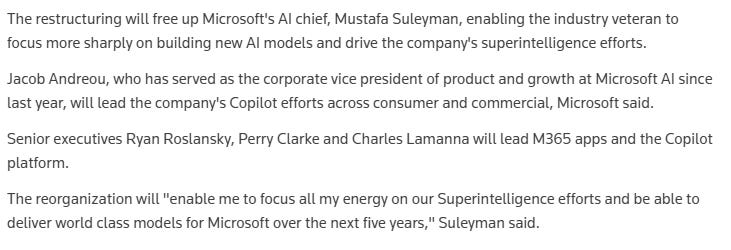
- Strategic Reorganization and Unification: Recognizing the potential for confusion and fragmentation, Microsoft CEO Satya Nadella orchestrated a significant reorganization, consolidating Copilot product teams under a single leadership structure. This move, led by individuals like Jacob Andreou (Copilot growth), Ryan Roslansky (LinkedIn), Perry Clarke (Copilot Core), and Charles Lamanna (Agents and Apps), aims to create a unified and cohesive AI experience for both enterprise and consumer markets. This strategic consolidation allows Microsoft to operate with the integrated focus seen in companies like Nvidia, where engineering layers are unified under a singular vision.
This strategic shift has several key implications:
- Unified Platform Development: A single product organization enables a more integrated and consistent "surface" for enterprise and consumer AI, moving beyond individual app plugins to a holistic platform.
- Focus on Core AI Models: While leveraging OpenAI and Anthropic models, Microsoft’s internal AI engineering group can now dedicate resources to developing its own proprietary models and enhancing the overall AI infrastructure.
- Accelerated Growth and Innovation: Streamlined development and product management can lead to faster innovation cycles and a more cohesive user experience, fostering greater adoption.
Microsoft’s Competitive Advantages in the Enterprise
Microsoft’s sustained focus on the "surface" and its robust ecosystem strategy position it favorably in the enterprise AI race.
- Integrated Toolset and Ecosystem: The corporate market demands an integrated suite of tools that encompasses desktop applications, development environments, IT management capabilities for AI agents, and seamless connectivity with legacy systems. Microsoft, through its WorkIQ strategy and extensive efforts in Agent365 and Copilot Studio, is actively building this comprehensive offering. The forthcoming WorkIQ APIs are expected to further incentivize corporate cloud vendors to integrate with the Copilot ecosystem, addressing their concerns about potential displacement by AI agents.
- Developer Ecosystem and APIs: The vast application development landscape is poised to benefit from a more integrated set of tools. Vendors across ERP, finance, productivity, and analytics sectors are now provided with APIs to build into the Copilot ecosystem. While navigating the various connection points (Teams, Graph, WorkIQ, Fabric) can be complex, the direction towards a unified development environment is clear.
- Familiar Desktop Integration: End-users, IT departments, and PC buyers are increasingly looking for AI applications that can be seamlessly integrated into their existing workflows. Microsoft’s established desktop presence and its ongoing efforts to enhance the Copilot user experience are significant advantages. While the current interface may appear somewhat fragmented, the company’s commitment to design and user experience suggests a beautified and intuitive interface will emerge.
- Partner Network Expansion: The opening of the Copilot platform to broader integration through APIs, particularly with WorkIQ, is expected to significantly expand Microsoft’s partner network. This will empower a wide range of corporate cloud vendors to leverage Copilot’s capabilities, creating new opportunities for their own product development and strengthening Microsoft’s market position.
Microsoft’s Value-Add: Beyond the Model
Microsoft’s strategic investment in the AI "surface" and ecosystem offers distinct value propositions beyond the core AI models:
- Deep Research Capabilities: Features like the "Researcher" button within Copilot, which can query the Microsoft Graph for deep insights from calendar data and other organizational information, provide immense value for individuals and leaders. As this capability expands with enhanced memory and context, it will offer unparalleled advisory and contextual support.
- Intelligent Routing and Optimization: New Microsoft Agents are being developed to compare query performance across different AI models, helping users optimize token usage and cost. Over time, these agents will be capable of decomposing complex AI tasks and distributing them across various specialized models, further enhancing efficiency.
- Agentic Interfaces for Core Applications: The integration of agentic capabilities within Microsoft’s flagship applications like Excel, PowerPoint, and Word allows users to interact with complex documents, generate reports, create graphs, and modify content directly through Copilot. This "in-app" integration is continuously evolving and becoming more sophisticated.
- Intelligent Context Layer: The forthcoming Work IQ API will enable companies to import and build custom "context" into Copilot. This capability is crucial for extending Copilot into specialized agentic functions for HR, finance, sales, and other business units. This contextual layer allows for deep plugins from corporate applications, transforming them into intelligently utilized "agents" within the Copilot framework. For instance, AI Galileo, integrated through the Graph connector and as a fine-tuned model, can now provide employees with advanced management and HR advisory services, further solidifying its position as a world-class resource.
As the enterprise AI market matures, the battle for dominance may hinge less on the raw power of individual AI models and more on the ability to create seamless, integrated, and widely adopted application experiences. Microsoft’s strategic focus on the "surface" and its commitment to building a robust ecosystem position it as a formidable contender poised to capture significant market share in the coming years. The company’s ability to connect advanced AI models with the practical needs of businesses, delivered through an intuitive and expansive platform, may prove to be its ultimate differentiator.