Demetria Gallegos’s recent examination of reader feedback for The Wall Street Journal, encapsulated in her article "What Readers Want to See in the Workplaces of the Future," has ignited a significant discourse on the evolving landscape of office design and employee experience. The insights gleaned from this reader survey reveal a spectrum of desires, ranging from the pragmatically achievable to the seemingly aspirational. While some suggestions present considerable logistical and financial hurdles, others offer actionable and impactful strategies that forward-thinking organizations are already beginning to implement, or should seriously consider adopting to foster more productive, engaging, and ultimately successful work environments.
The foundational premise of Gallegos’s article is to distill the collective voice of employees regarding their ideal future workspaces. This initiative, undertaken by The Wall Street Journal, reflects a growing recognition within the business world that the physical and operational aspects of an office play a crucial role in employee satisfaction, retention, and overall company performance. The responses, as analyzed by Gallegos, highlight a tension between established workplace norms and a burgeoning desire for greater personalization, flexibility, and well-being.
The Unrealistic and the Impractical: Navigating Ambitious Office Reimaginations
A substantial portion of the suggestions put forth by readers, as detailed in Gallegos’s analysis, lean towards significant, and in some cases, impractical, overhauls of existing office structures. Concepts such as the widespread establishment of permanent private offices for all employees or the creation of individual, alcove-style workspaces for every team member, while understandable from an individual privacy perspective, present formidable challenges in the current economic and operational climate. The escalating costs of commercial real estate, coupled with the prevailing trend towards maximizing space efficiency through higher density and the increasing emphasis on collaborative work models, render these suggestions difficult to implement on a broad scale.
While the desire for enhanced personal space and reduced distractions is a valid concern for many employees, the article, in its current form, doesn’t fully delve into the ergonomic and structural constraints that such proposals would entail. Building out individual private offices for a large workforce would necessitate a dramatic increase in square footage, a significant capital expenditure, and a fundamental re-evaluation of how office space is allocated and utilized. Similarly, the creation of dedicated alcove-style workspaces for every individual would require substantial architectural modifications and a potential reduction in overall capacity, impacting cost-effectiveness.
Further adding to the list of less feasible ideas are proposals such as mandatory phone-free zones, where personal devices would be temporarily stored to encourage face-to-face interactions, and the radical notion of relocating corporate headquarters to decentralized suites situated within employees’ residential neighborhoods. The phone-free concept, while superficially appealing for its intent to foster deeper communication, faces significant practical hurdles. Enforcement would be challenging, if not impossible, in most professional settings, and it risks underestimating the degree to which personal devices have become integrated into the fabric of modern work, serving not only communication but also access to critical information and productivity tools. The blurred lines between professional and personal life, exacerbated by flexible work arrangements, make a complete disconnect from personal devices an unlikely and potentially counterproductive mandate.
The idea of decentralizing corporate headquarters to residential areas, while theoretically offering a solution to the "grind of commuting" and potentially improving employee quality of life, is fraught with logistical complexities. The substantial construction or renovation costs associated with establishing multiple smaller office suites across various neighborhoods, the challenges of breaking existing long-term office leases, the complexities of maintaining organizational hierarchy and ensuring equitable access to resources, and the critical requirements of confidentiality and leadership visibility are all factors that are not adequately addressed in this proposal. The infrastructure, security, and operational management required for such a distributed model would be immense, making it an economically and practically unviable option for the vast majority of organizations.
The Game Changers: Pragmatic Innovations for Enhanced Workplaces
Conversely, the reader feedback also illuminated several highly practical, cost-effective, and potentially transformative ideas that hold the key to creating more desirable and functional future workplaces. These suggestions, often overlooked in broader discussions about futuristic office design, offer immediate benefits and can be implemented with relatively minor adjustments to existing infrastructure and operational policies.
Rethinking Desk "Hoteling" for Stability and Belonging
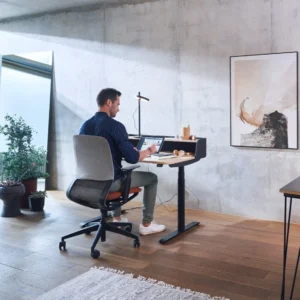
One of the most salient and impactful suggestions revolves around reconsidering the widespread adoption of "hoteling" for desk space. While desk rotation and shared workspaces are often lauded for their potential to improve space efficiency and reduce overhead costs, the reader’s sentiment that "no hoteling" provides a crucial sense of stability and belonging is particularly compelling. The daily uncertainty of finding a suitable workspace can, for many employees, detract from their ability to settle in and focus, fostering a sense of transience rather than rootedness within the organization.

The reader’s assertion that this approach "provides stability… rather than navigating the uncertainty of finding a spot each day" highlights a critical human need for a sense of place and predictability. This feedback suggests that while flexibility is important, it should not come at the expense of a foundational level of personal space and routine. The article proposes a balanced approach, suggesting that the assignment of semi-private workstations, coupled with access to optional shared collaborative spaces, could strike an optimal equilibrium between individual focus and the necessity of teamwork. This hybrid model acknowledges the benefits of shared resources while ensuring that employees have a dedicated, familiar space to call their own, thereby fostering a greater sense of ownership and psychological comfort. Data from organizations that have experimented with various desk assignment models, such as the Society for Human Resource Management (SHRM), often point to employee satisfaction being directly correlated with a sense of control and predictability over their immediate work environment.
Prioritizing Natural Light for Well-being and Productivity
A particularly strong and universally appealing suggestion is the concept of making natural light a paramount design priority, encapsulated by the reader’s evocative phrase, "Let it shine." This proposal is not only realistic and economical but is also strongly supported by a wealth of scientific research demonstrating its profound impact on employee productivity, mood, and overall well-being. By strategically relocating private offices away from perimeter windows and allowing natural light to permeate shared and client-facing areas, organizations can create more inviting and energizing environments.
The benefits of natural light are well-documented. Studies published in journals like Building and Environment and by organizations like the National Renewable Energy Laboratory (NREL) consistently show that access to daylight can reduce eye strain, improve sleep patterns, boost vitamin D production, and decrease symptoms of seasonal affective disorder. Furthermore, research conducted by the Harvard School of Design and various architectural psychology studies has indicated that workplaces with abundant natural light experience higher levels of employee satisfaction and a decrease in absenteeism. This approach is already a well-established practice in sectors like higher education and client service, where entrances, lounges, and communal areas are deliberately oriented to maximize daylight exposure. Beyond the direct physiological benefits, the subtle psychological effect of natural light can encourage movement and interaction, drawing individuals out of isolated workstations and fostering a more dynamic and engaged atmosphere. The visual appeal of a sunlit space can also contribute to a more positive first impression for clients and visitors, enhancing the company’s brand image.
Designating Quiet Zones for Focused Work
The notion of creating designated "quiet zones," inspired by the concept of "Quiet, please," offers a practical and effective solution for accommodating the diverse needs of a modern workforce. Instead of attempting to impose silence across an entire open-plan office, a strategy that often proves futile and frustrating, organizations can establish clearly defined quiet areas with explicit behavioral norms. These zones would strictly prohibit phone calls, minimize noise levels, and operate on an unassigned seating basis, similar to how many airport lounges or libraries function.

This strategy effectively addresses the perennial challenge of balancing collaboration with concentration. By carving out specific areas for focused work, companies can foster a more dynamic and productive general work environment where collaboration and spontaneous interactions are encouraged. Simultaneously, employees who require periods of uninterrupted concentration have access to a dedicated sanctuary, free from the distractions that can derail productivity in a bustling open office. The success of such zones hinges on clear communication of the rules and consistent reinforcement of the expectations. When implemented effectively, these quiet zones can significantly enhance the ability of employees to engage in deep work, leading to improved output quality and a greater sense of accomplishment. The spatial separation and clear purpose of these zones would allow for a more harmonious coexistence of different work styles within a single office footprint.
Lessons for Workspace Leaders: The Strategic Imperative of Employee Input
The insights derived from Demetria Gallegos’s analysis of reader feedback serve as a crucial reminder to corporate leaders. Those who might dismiss employee wish lists for workplace improvements as mere frivolous demands are missing a critical strategic opportunity. Creating an office environment that actively contributes to the efficiency, harmony, and job satisfaction of the workforce is not simply a matter of employee perks; it is a fundamental business imperative. Such environments are not only conducive to higher productivity and reduced turnover but also significantly enhance an organization’s attractiveness to top talent in a competitive job market. Platforms like Glassdoor, which aggregate employee reviews of companies, frequently highlight workplace culture and physical environment as key factors in a candidate’s decision-making process.
The principle of seeking employee input should not be an ad-hoc initiative prompted by external articles. Rather, it should be a continuous and integral part of an organization’s operational strategy. Regularly polling employees to gather their thoughts on the specific elements of their work environment that are most relevant and beneficial to their daily tasks and overall well-being is essential. This proactive approach allows companies to stay attuned to the evolving needs of their workforce and to implement targeted improvements that yield the greatest return on investment in terms of employee engagement and performance.
The value of such internal feedback mechanisms cannot be overstated. As the WSJ article implicitly suggests, it is entirely plausible that the innovative and practical ideas generated by a company’s own employees could be so valuable and appealing that they could, in turn, form the basis of future features in publications like The Wall Street Journal, highlighting the organization as a leader in creating exceptional workplaces. This not only enhances employer branding but also fosters a culture of continuous improvement and employee empowerment. By actively listening to and acting upon the insights of their teams, leaders can cultivate workplaces that are not only functional and efficient but also truly inspiring and supportive, ultimately driving long-term organizational success. The data consistently shows a correlation between employee engagement and key business outcomes, including profitability, customer satisfaction, and retention rates, making the investment in understanding and improving the employee experience a strategic imperative.