The Supreme Court of the United States on Friday formally declined to reconsider its previous refusal to hear a long-standing legal challenge brought by religious healthcare workers against New York State’s pandemic-era vaccination mandate. The decision marks the final chapter in a years-long judicial odyssey that tested the boundaries of executive emergency powers, religious liberty, and the state’s authority to regulate public health within the clinical setting. Despite a persistent effort by a group of medical professionals and the vocal support of three conservative justices in earlier stages of the litigation, the high court’s denial of the petition for rehearing effectively cements the lower court rulings that upheld the state’s right to require immunizations without a religious exemption.
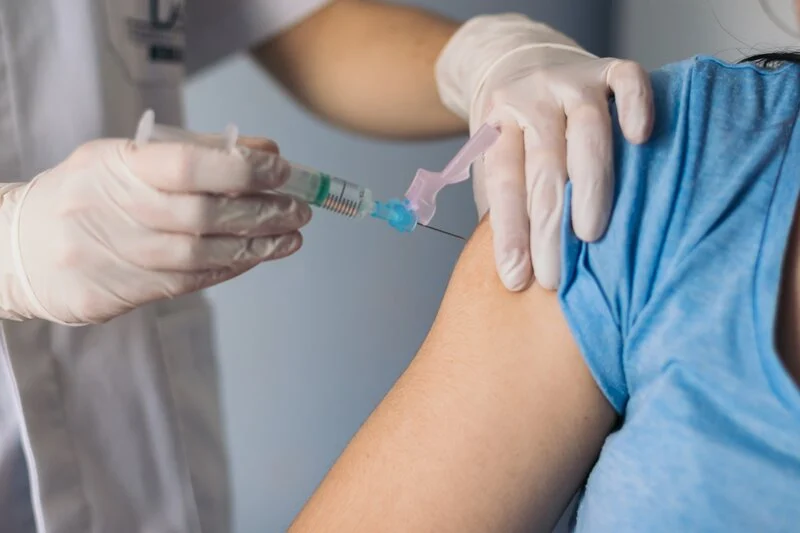
The case, which has wound its way through the federal court system since the height of the COVID-19 pandemic, centered on a 2021 directive from the New York State Department of Health. That directive mandated that all healthcare workers at hospitals, nursing homes, and other medical facilities receive the COVID-19 vaccine. Crucially, while the state permitted exemptions for those with documented medical contraindications, it notably omitted any provision for religious objections. This omission sparked immediate and fierce litigation from nurses, doctors, and other medical staff who argued that their sincerely held religious beliefs prevented them from receiving the vaccine, particularly due to the use of fetal cell lines in the development or testing of the various vaccines.
The Legal Foundation of the Challenge
The plaintiffs in the case, originally filed under various captions including Dr. A. v. Hochul and We the Patriots USA, Inc. v. Hochul, argued that the New York mandate violated the Free Exercise Clause of the First Amendment. Their primary contention was that by allowing medical exemptions but refusing religious ones, the state was "singling out" religious conduct for unfavorable treatment. Under existing Supreme Court precedent, specifically the "general applicability" test established in Employment Division v. Smith (1990), a law that is neutral and generally applicable does not violate the Free Exercise Clause even if it has the incidental effect of burdening religion. However, the plaintiffs argued that the New York mandate was not "generally applicable" because it created a system of individualized exemptions for medical reasons while categorically barring them for religious reasons.
The legal battle reached a fever pitch in late 2021 and throughout 2022, as the Second Circuit Court of Appeals repeatedly sided with the state. The appellate court held that the mandate was a neutral rule of general applicability aimed at protecting public health and that the medical exemption was distinct from a religious one in both its purpose and its impact on the state’s goal of achieving maximum vaccination coverage.
A Divided Supreme Court
While the majority of the Supreme Court has remained hesitant to interfere with state-level public health mandates, the New York case drew significant attention from the court’s conservative wing. Justices Clarence Thomas, Samuel Alito, and Neil Gorsuch had previously signaled a strong interest in taking up the case. In earlier dissents regarding emergency applications for relief, these justices suggested that New York’s policy displayed a "clear animus" or at least a constitutionally suspect lack of neutrality toward religious practitioners.
Justice Gorsuch, in a notable dissent from a previous denial of an injunction, wrote that the New York mandate forced healthcare workers to choose between "their jobs and their faith." He argued that the state had failed to demonstrate why a medical exemption was permissible while a religious one would pose an insurmountable threat to the health of the community. The refusal to grant a rehearing on Friday suggests that despite these concerns, the necessary fourth vote to grant certiorari—the "rule of four"—could not be secured to bring the case back to the active docket for a full hearing on the merits.
Chronology of the New York Vaccination Mandate Litigation
To understand the weight of the Supreme Court’s final refusal, it is necessary to trace the timeline of the mandate and its subsequent legal hurdles:
- August 2021: The New York State Department of Health issues an emergency regulation requiring healthcare workers to be vaccinated against COVID-19. The initial order does not mention religious exemptions.
- September 2021: A group of healthcare workers files suit in federal court. A U.S. District Judge in Utica initially grants a preliminary injunction, temporarily forcing the state to allow religious exemptions.
- October 2021: The Second Circuit Court of Appeals vacates the injunction, allowing the state to enforce the mandate without religious exemptions while the legal challenge proceeds.
- December 2021: The Supreme Court denies an emergency request to block the mandate, though Justices Thomas, Alito, and Gorsuch indicate they would have granted it.
- 2022–2023: The case moves through the merits phase in the lower courts. The Second Circuit eventually issues a formal opinion upholding the mandate, citing the state’s "compelling interest" in protecting vulnerable patients.
- 2024: Following the end of the federal Public Health Emergency, New York formally repeals the vaccine mandate for healthcare workers, citing changed circumstances in the pandemic. However, the plaintiffs continue their lawsuit, seeking back pay and a permanent ruling that the mandate was unconstitutional to prevent future re-imposition.
- 2025: The Supreme Court denies the initial petition for a writ of certiorari.
- September 2026: The Supreme Court denies the petition for rehearing, effectively closing the case file on the New York healthcare mandate.
Supporting Data and Healthcare Impact
The impact of the mandate on New York’s healthcare infrastructure was significant. According to data from the New York State Department of Health, at the time the mandate was fully implemented in late 2021, approximately 92% of the state’s 500,000+ healthcare workers had received at least one dose of the vaccine. However, the remaining percentage represented thousands of workers who faced termination or suspension.
Industry reports from the Healthcare Association of New York State (HANYS) indicated that in the weeks following the mandate’s enforcement, several hospitals reported staffing shortages, particularly in rural areas where the labor market was already tight. An estimated 34,000 healthcare workers across the state were either terminated, resigned, or were placed on unpaid leave due to non-compliance with the vaccine order. While many eventually returned to the workforce after the mandate was lifted in 2024, the legal battle remained a matter of principle for those who felt their constitutional rights had been trampled during the crisis.
Official Responses and Reactions
The Friday decision was met with a mix of relief from state officials and disappointment from civil liberties groups. A spokesperson for the New York Attorney General’s office released a brief statement, noting that the state is "pleased that the court has finally put this matter to rest," and reiterating that the policies enacted during the pandemic were "based on science and the urgent need to save lives."
Conversely, counsel for the plaintiffs expressed deep regret over the court’s silence. "This case was never just about a vaccine; it was about whether the government can treat religious citizens as second-class residents during a crisis," said one of the lead attorneys representing the healthcare workers. "By refusing to hear this case, the Court has left a cloud of uncertainty over the First Amendment rights of millions of Americans who work in the public and private sectors."
Legal analysts suggest that the Supreme Court’s reluctance to revisit the case may be a signal of "mandate fatigue." With the COVID-19 pandemic largely in the rearview mirror and many states having rolled back their emergency declarations, the court may view these cases as increasingly moot or better left to the historical record rather than active jurisprudence.
Broader Implications for Future Public Health Emergencies
The refusal to reconsider the New York case has broad implications for how future public health emergencies might be handled. By leaving the Second Circuit’s ruling intact, the judiciary has effectively provided a roadmap for states to implement mandatory health measures that do not necessarily include religious carve-outs, provided they can frame the rules as neutral and generally applicable.
However, the three-justice dissent from earlier in the process remains a significant "shot across the bow." It suggests that if a future mandate were to be even slightly more targeted toward religious groups, or if the court’s composition shifts further, the outcome could be different. For now, the precedent stands: in the tension between individual religious exercise and collective public health safety, the state maintains a wide berth of authority during a declared emergency.
Furthermore, the decision highlights the ongoing debate over the "Administrative State." Critics argue that giving health departments the power to issue such sweeping mandates without legislative approval or religious accommodation undermines democratic accountability. Supporters, however, argue that the complexity of modern pathogens requires expert-led, rapid responses that cannot be bogged down by perpetual litigation or fragmented by thousands of individual exemptions.
As the legal community digests this final refusal, the focus will likely shift to the legislative branch. Several states have already introduced or passed laws that would explicitly require religious exemptions for any future mandatory vaccinations, regardless of the judicial status of the First Amendment. In New York, however, the status quo remains, and the chapter on the 2021 healthcare mandate is officially closed.
Conclusion
The Supreme Court’s decision to pass on the New York healthcare workers’ fight represents a definitive end to one of the most contentious legal battles of the COVID-19 era. While the conservative wing of the court has shown a burgeoning interest in expanding religious liberty protections, this case proves that there are limits to the court’s willingness to intervene in state-level health policy. For the healthcare workers of New York, the ruling is a final defeat in the courts, but the arguments raised during the five-year litigation will undoubtedly influence the legal and ethical debates of the next generation. The case stands as a testament to the enduring friction between the mandates of the state and the dictates of conscience, a balance that remains one of the most delicate in American constitutional law.