
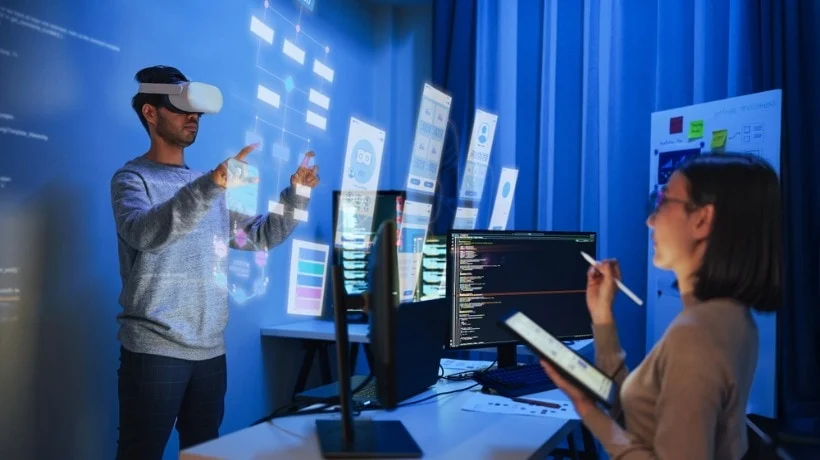
The landscape of corporate Learning and Development (L&D) is currently undergoing a significant transition as organizations move past the initial hype of "metaverse" technologies to focus on the pragmatic application of Virtual Reality (VR). For years, immersive learning was viewed either as an inevitable future for all education or a costly gimmick with little return on investment. However, recent data and deployment patterns suggest a more nuanced reality: VR training is a specialized tool that excels in high-stakes, hands-on, and high-pressure environments where real-world mistakes carry prohibitive costs or physical dangers. Conversely, it remains an inefficient choice for informational training, such as policy updates or basic company onboarding. As the industry matures, the focus has shifted from the novelty of the hardware to the measurability of the outcomes, forcing a re-evaluation of how these programs are funded and integrated into the broader corporate ecosystem.
The Evolution of Immersive Learning: From Hype to Utility
The trajectory of VR in the corporate sector has followed a classic Gartner Hype Cycle. Following the acquisition of Oculus by Meta (formerly Facebook) in 2014, enterprise interest surged, leading to a wave of expensive pilot programs between 2016 and 2019. Many of these early initiatives were eventually shelved due to the high cost of PC-tethered hardware, the complexity of content creation, and a lack of clear ROI metrics. However, the period between 2020 and 2024 marked a turning point. The release of standalone consumer headsets starting at approximately $500 significantly lowered the barrier to entry, while the emergence of no-code and low-code authoring platforms allowed Instructional Designers to build scenarios without needing a dedicated team of game engine developers.
Today, the "Immersive Learning" umbrella is more clearly defined. It encompasses four distinct modalities, each suited to specific L&D needs. Virtual Reality (VR) provides a fully occluded experience, making it the gold standard for high-stakes roleplay and hazardous equipment operation. Augmented Reality (AR) overlays digital information onto the real world, proving invaluable for "just-in-time" technical support in maintenance and assembly. 360-degree video offers a cost-effective entry point for facility walkthroughs and orientations. Finally, Mixed Reality (MR) allows for interaction between digital and physical objects, currently finding its niche in collaborative design and remote expert assistance.
Identifying the Strategic Fit for Immersive Solutions
The primary reason VR programs fail is a lack of alignment between the medium and the message. To determine if a program is a candidate for immersive learning, L&D leaders are now utilizing a "fit test" based on the nature of the task. A strong fit is characterized by several factors: the task is procedural or spatial, the environment is difficult to access or dangerous, and the cost of error is high. For example, training a technician to repair a high-voltage transformer or teaching a surgeon a new procedure are ideal use cases. In these scenarios, the ability to fail safely in a simulated environment provides a pedagogical advantage that traditional video or text-based modules cannot replicate.
On the other hand, informational or conceptual training—such as a 15-minute module on annual compliance or a text-heavy update on corporate travel policies—is a poor fit for VR. In these instances, the "friction" of the technology—the time required to put on a headset, calibrate the space, and navigate a 3D environment—outweighs the educational benefit. Industry analysts suggest that if a program does not meet at least three "strong fit" criteria (high stakes, spatial complexity, high cost of error, or difficulty of real-world replication), a standard microlearning module or on-screen simulation will typically outperform VR on both cost-efficiency and speed of deployment.
The Economic Reality and the PwC Benchmark
One of the most persistent myths in the L&D space is that VR training is always more expensive than traditional methods. While the up-front development costs are indeed higher—due to 3D asset creation, spatial audio, and complex quality assurance—the "cost-per-learner" tells a different story at scale. A landmark study conducted by PwC provided the industry with a definitive benchmark for these calculations. The study found that VR training reaches cost parity with traditional classroom training at approximately 375 learners. When compared to standard eLearning, parity is reached at approximately 1,950 learners.
Beyond the break-even point, VR often becomes the more economical choice. This is particularly true for global organizations that would otherwise spend millions on employee travel, equipment downtime, and the logistical overhead of physical training centers. Furthermore, the PwC data revealed that VR learners were four times faster to train than classroom learners and 275% more confident in applying the skills they learned. This "confidence gap" is a critical metric for safety-critical industries, where hesitation can lead to catastrophic accidents.

Measuring Performance: Moving Beyond Completion Rates
As organizations integrate VR into their permanent training portfolios, the metrics for success are evolving. Historically, L&D departments relied on "completion rates" and "smile sheets" (post-training surveys). However, these are vanity metrics that do not reflect behavioral change. The current industry standard for VR evaluation focuses on four key areas:
- Task Performance Improvement: This involves a direct comparison of skill execution on the job. Organizations are measuring whether those who trained in VR perform tasks more accurately or with higher quality than those who used traditional methods.
- Error Reduction: For procedural tasks, such as assembly or safety checks, the primary KPI is the reduction of real-world mistakes. A measurable drop in errors directly correlates to cost savings and risk mitigation.
- Time-To-Competency: This metric tracks how quickly a new hire or a transitioning employee reaches the required standard of performance. VR’s ability to provide "reps and sets" in a condensed timeframe often reduces this period by 30% to 50%.
- Retention Over Time: Research from the University of Maryland has demonstrated that the human brain processes spatial VR experiences similarly to real-life events, leading to higher recall accuracy weeks or months after the initial training. This makes VR particularly effective for "low-frequency, high-risk" events, such as emergency fire response, where the skill must be recalled perfectly despite being rarely practiced.
Global Adoption Patterns: United States vs. India
The adoption of VR training is not uniform across the globe, as regional economic drivers and regulatory environments shape how the technology is deployed. In the United States, adoption is heavily concentrated in manufacturing, aviation, energy, and healthcare. The primary driver is the high cost of non-compliance and workplace injury. Under OSHA (Occupational Safety and Health Administration) regulations, the financial and legal exposure for training gaps is significant. Consequently, US firms view VR as an insurance policy against high-cost accidents. Additionally, the higher average labor costs in the US mean that any reduction in training time or "time-to-competency" results in substantial bottom-line savings.
In India, the drivers are different but equally compelling. The market is currently seeing a surge in VR adoption within the manufacturing, mining, construction, and BFSI (Banking, Financial Services, and Insurance) sectors. This is driven largely by the "Make in India" initiative and the shift toward Industry 4.0. For Indian enterprises, the challenge is often scale and distribution; standardizing safety training across dozens of remote industrial sites is a logistical nightmare. VR allows for a "gold standard" of training to be deployed anywhere with a headset. Moreover, as Indian corporate training shifts toward outcome-linked programs, the measurable nature of VR data aligns with the national trend toward industrial efficiency and workforce modernization.
Technical Integration: The xAPI and cmi5 Standard
A significant hurdle for many L&D teams is the integration of VR data into existing Learning Management Systems (LMS). Traditional eLearning relies on SCORM (Sharable Content Object Reference Model), which was designed for linear, 2D content. SCORM is incapable of capturing the rich, granular data produced in a VR environment, such as where a learner looked, how long they hesitated before a decision, or their physical movement through a space.
To solve this, the industry is moving toward xAPI (Experience API) and cmi5. These protocols allow for the recording of "statements" (e.g., "Learner A correctly identified the hazard in Scenario B") that are sent to a Learning Record Store (LRS) or a compatible LMS. This data pipeline is essential for the "Task Performance Improvement" and "Error Reduction" metrics mentioned earlier. Experts warn that any VR solution that cannot seamlessly report data back to the central LMS is likely to become a "data silo," making it impossible for leadership to judge the program’s effectiveness at scale.
Future Outlook and Strategic Implications
As we look toward the latter half of the decade, the convergence of VR and Artificial Intelligence (AI) is expected to further disrupt the L&D landscape. Generative AI is already being used to create realistic non-player characters (NPCs) for soft-skills training, allowing employees to practice difficult conversations—such as performance reviews or de-escalation tactics—with AI-driven avatars that respond dynamically to their tone and word choice.
The broader implication for the workforce is clear: the "knowledge economy" is being supplemented by the "skills economy." In this new environment, what an employee knows is less important than what they can do. VR training, when applied to the right use cases and measured against real-world outcomes, provides a bridge between theory and practice that traditional education has long struggled to cross. For organizations, the mandate is to stop viewing VR as a futuristic experiment and start treating it as a rigorous, data-driven tool for operational excellence. The transition from "cool technology" to "essential infrastructure" is well underway, and those who fail to identify their "sweet spot" for immersive learning risk falling behind in a rapidly upskilling global market.






