
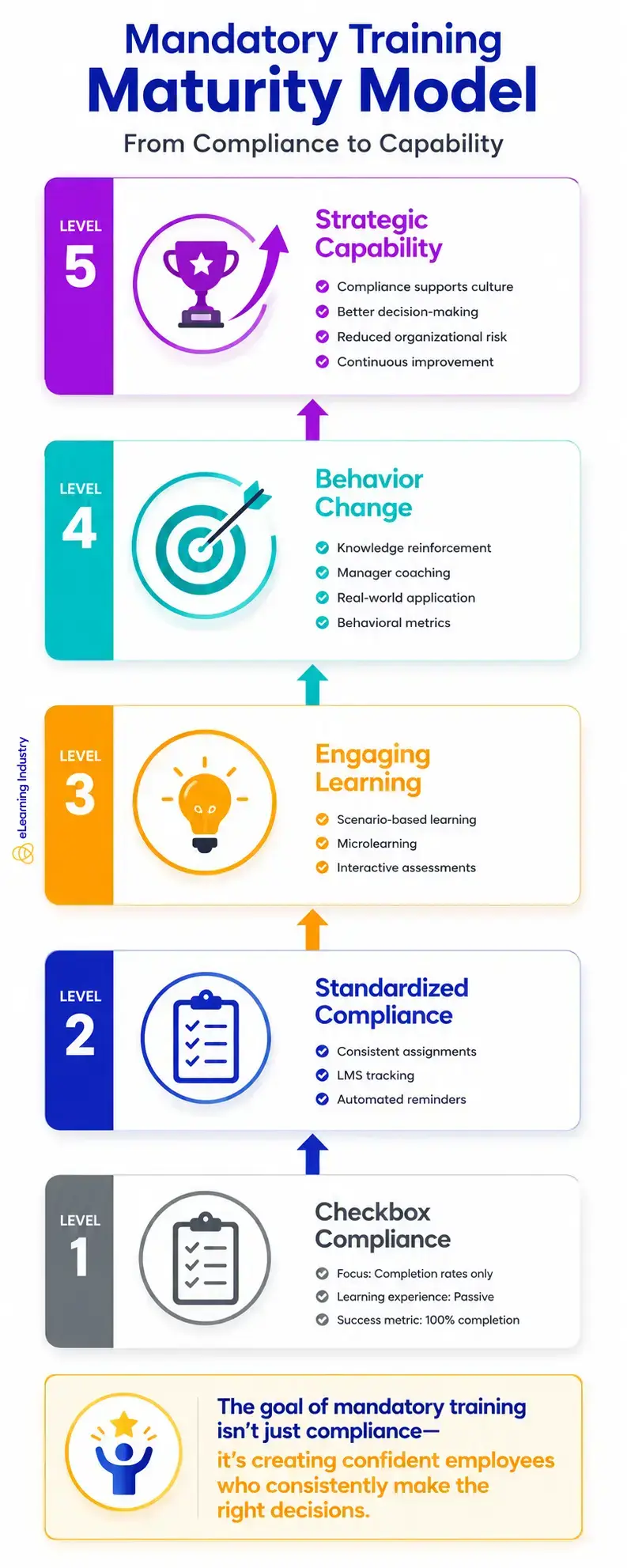
In the modern corporate landscape, the definition of a "responsible employer" has moved far beyond the mere provision of a paycheck. At the heart of this shift lies mandatory training—a structured learning framework that organizations require employees to complete to satisfy legal, regulatory, safety, and ethical standards. Unlike optional professional development, which focuses on individual career progression, mandatory training serves as a defensive and offensive strategic tool designed to mitigate risk, protect human life, and ensure that an organization remains a going concern in an increasingly litigious and scrutinized global market.
Historically viewed as a "check-the-box" administrative hurdle, mandatory training has undergone a profound transformation. Today, industry leaders recognize that the simple completion of a module is an insufficient metric for success. In an era defined by rapid digital transformation and complex regulatory shifts, the cost of ineffective training is staggering. According to recent industry benchmarks, the average cost of a data breach has reached $4.45 million, while workplace safety violations can lead to millions in fines and irreparable reputational damage. Consequently, the focus has shifted from "compulsory attendance" to "verifiable competency," ensuring that employees are not just informed but are prepared to act decisively in high-stakes scenarios.
The Historical Context and Regulatory Drivers
The roots of mandatory training can be traced back to the mid-20th century, primarily focusing on industrial safety. In the United States, the Occupational Safety and Health Act of 1970 marked a pivotal moment, codifying the employer’s duty to provide a workplace free from recognized hazards. Over the following decades, the scope expanded. The 1990s and early 2000s saw a surge in compliance requirements related to financial transparency (such as the Sarbanes-Oxley Act) and data privacy (such as HIPAA in the healthcare sector).
In the current decade, the chronology of mandatory training has been further accelerated by the digital revolution and social movements. The implementation of the General Data Protection Regulation (GDPR) in Europe and the California Consumer Privacy Act (CCPA) in the U.S. forced a global overhaul of data handling training. Simultaneously, the "Me Too" movement and a heightened focus on Social Governance (ESG) have made anti-harassment and Diversity, Equity, and Inclusion (DEI) training a permanent fixture of the corporate curriculum.
A Multidimensional Framework: Core Pillars of Mandatory Learning
Modern mandatory training is not a monolithic entity but a multifaceted program tailored to the specific risks of an organization. Most robust programs are built upon four primary pillars:
1. Statutory and Regulatory Compliance
This pillar is the most traditional, focusing on the laws and industry-specific regulations that govern business operations. Topics include anti-bribery and corruption (governed by acts like the UK Bribery Act or the U.S. Foreign Corrupt Practices Act), business ethics, and codes of conduct. The objective here is twofold: to prevent illegal activity and to provide a "due diligence" defense for the organization in the event of an individual employee’s misconduct.
2. Occupational Health and Safety (OHS)
Safety training remains the most critical form of mandatory learning in high-risk industries such as construction, manufacturing, and healthcare. However, it has evolved to include "invisible" risks. Beyond traditional fire safety and equipment handling, OHS now encompasses ergonomics for remote workers, mental health awareness, and violence prevention. Data from the Bureau of Labor Statistics indicates that organizations with comprehensive safety training programs see a significant reduction in "Days Away, Restricted, or Transferred" (DART) rates, directly impacting insurance premiums and productivity.
3. Cybersecurity and Data Privacy
As digital threats grow in sophistication, cybersecurity training has become a monthly or even weekly requirement for many workforces. The emergence of Artificial Intelligence (AI) has introduced new risks, such as deepfake phishing and automated social engineering. Mandatory training in this sector focuses on "Human Risk Management," teaching employees to recognize the subtle markers of a breach. Research by IBM suggests that nearly 90% of data breaches are caused by human error, making this training the most critical line of defense in the modern enterprise.

4. Human Resources and Cultural Standards
HR-led mandatory training is designed to foster a respectful and inclusive environment. This includes anti-harassment, unconscious bias, and conflict resolution training. For managers, this training is often more intensive, covering legal responsibilities regarding leave policies, performance management, and the fair application of corporate standards.
Strategic Design: Moving from Awareness to Behavior Change
The most significant challenge for Learning and Development (L&D) professionals is the "forgetting curve." Traditional, long-form video lectures often fail to result in lasting behavior change. To combat this, the industry is moving toward "Scenario-Based Learning" and "Micro-learning."
Christopher Pappas, CEO and founder of eLearning Industry, notes that the most successful organizations are those that measure training by its impact on decision-making rather than completion rates. "Organizations that benefit most from mandatory training aren’t just those with high completion rates, but the ones whose employees make better decisions as a result," Pappas states. "While compliance is necessary, building skills is what truly leads to safer workplaces, stronger cultures, and better overall business performance."
To achieve this, L&D teams are increasingly using branching scenarios—interactive simulations where an employee’s choice dictates the outcome of a story. For example, in a cybersecurity module, an employee might be presented with a suspicious email. Choosing to click the link leads to a simulated system lock-down, providing a visceral lesson in the consequences of the action without the real-world risk.
The Consequences of Non-Compliance: A Two-Fold Risk
The failure to complete mandatory training carries significant weight for both the individual and the organization. From an employee perspective, non-completion is often viewed as a breach of contract or a failure to meet the essential requirements of the role. Many organizations have adopted a "no train, no work" policy, where access to digital systems or physical sites is revoked until training is finalized. In severe or repeat cases, this can lead to formal disciplinary action or termination.
For the employer, the stakes are exponentially higher. In a court of law or during a regulatory audit, the absence of training records is often interpreted as negligence. If an organization cannot prove that it provided adequate safety or anti-discrimination training, it loses its primary legal shield. This can result in:
- Regulatory Fines: Agencies like OSHA or the SEC can levy fines reaching hundreds of thousands of dollars per violation.
- Legal Liability: In civil lawsuits, the lack of training can lead to punitive damages that far exceed standard settlement amounts.
- Insurance Implications: Many professional liability and cybersecurity insurance policies are contingent upon the workforce completing specific training. Non-compliance can void a policy, leaving the company to cover losses out-of-pocket.
Broader Impact and Future Implications
The impact of mandatory training extends into the realm of corporate reputation and investor relations. In the age of Environmental, Social, and Governance (ESG) reporting, investors scrutinize training data as a proxy for organizational health. High completion rates in ethics and safety training are seen as indicators of a low-risk, high-integrity culture, which can influence a company’s valuation and attractiveness to institutional investors.
Looking ahead, the integration of AI into mandatory training will allow for "Hyper-Personalization." Instead of every employee taking the same two-hour course, AI will assess an individual’s existing knowledge and job-specific risks, delivering a customized learning path that addresses their specific gaps. This not only increases the effectiveness of the training but also respects the employee’s time, reducing "training fatigue."
Conclusion
Mandatory training has evolved from a bureaucratic necessity into a foundational element of organizational resilience. It is the mechanism through which a company’s values are translated into daily behavior. By moving beyond simple compliance and focusing on real-world application, organizations do more than just avoid fines; they build a culture of vigilance, respect, and excellence. In a world where the only constant is change, a well-trained workforce is the ultimate competitive advantage, ensuring that when a crisis hits—be it a cyberattack, a safety hazard, or an ethical dilemma—employees have the knowledge and the confidence to make the right choice.






