Workable, a leading provider of hiring and HR software, has announced a significant enhancement to its Human Resources Information System (HRIS) capabilities with the introduction of granular HRIS Scoped Roles. This new feature directly addresses a long-standing challenge faced by growing organizations operating across multiple legal entities, brands, or countries: the secure and efficient delegation of HR responsibilities without compromising data privacy or compliance. Until now, granting administrative access within Workable often meant providing an individual with broad access to all employee data, documents, and HR settings across the entire organizational account. This presented a difficult dilemma for companies balancing operational efficiency with stringent data governance requirements.
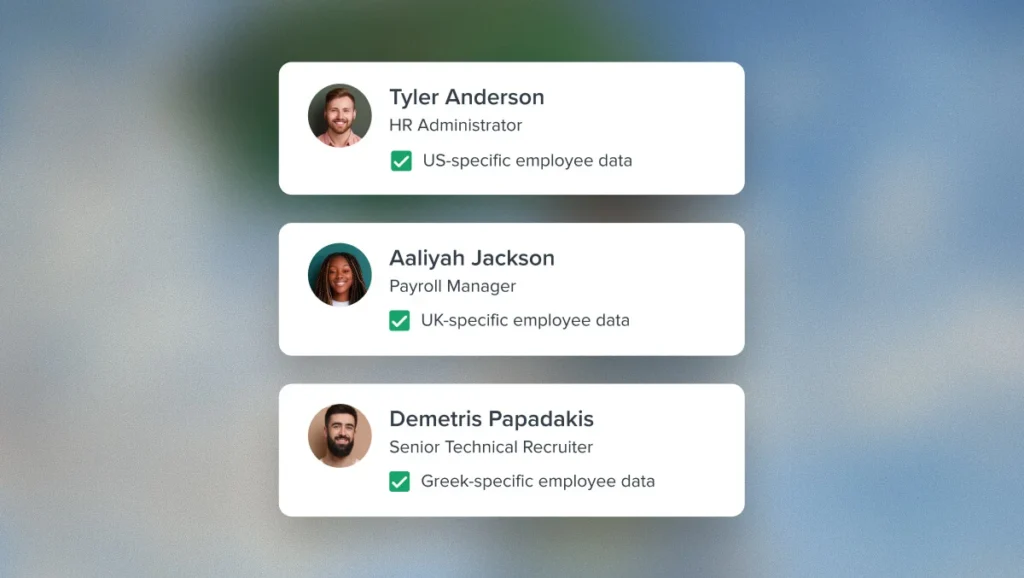
The core of the problem stemmed from the monolithic nature of traditional HRIS access controls. In a decentralized operational model, where an HR manager in Athens is responsible for Greek employees, a people operations lead in Boston manages the US entity, and a UK payroll manager needs specific access to payroll details for the London team, the previous system compelled organizations into an uncomfortable choice. They either had to over-provision access, thereby accepting substantial privacy and compliance risks, or centralize all HR administration through a small, often overwhelmed, central team. Neither approach was sustainable or ideal in the modern global business landscape. Over-provisioning access meant that individuals could potentially view sensitive salary data, confidential documents, and personal details of employees they had no legitimate business reason to access. Conversely, centralizing control created significant bottlenecks, slowing down critical HR processes and inundating the central HR team with requests that local teams were perfectly capable of handling themselves, given the right tools and permissions. This fundamental friction point has been a source of inefficiency and potential risk for many multi-national and complex organizations for years.
The introduction of HRIS Scoped Roles by Workable marks a pivotal shift, enabling organizations to assign HRIS roles with precisely defined scopes. This means that when a new account member is invited, or an existing one’s permissions are edited, administrators can now choose their role and set exactly where it applies. For instance, an HR administrator can be granted access specifically to manage US employees and the HR settings pertinent to that entity, with no visibility or control over other regions or legal structures. This level of granularity ensures that access aligns perfectly with an individual’s operational responsibilities, fostering both security and efficiency.
The Evolution of HRIS and the Challenge of Global Operations
The landscape of Human Resources Information Systems has evolved dramatically over the past few decades. Initially conceived as systems of record for employee data, HRIS platforms have expanded to encompass recruitment, onboarding, performance management, payroll integration, and compliance. As businesses expanded globally, the complexity of managing HR operations multiplied. Each country often brings its own unique labor laws, data privacy regulations (such as GDPR in Europe, CCPA in California, LGPD in Brazil, and others), and cultural nuances that dictate how employee data must be handled.
Prior to specialized solutions like Workable’s Scoped Roles, organizations often resorted to a patchwork of systems or highly manual processes to manage HR across diverse entities. This could involve maintaining separate HRIS instances for different regions, leading to data fragmentation and inconsistencies, or relying heavily on manual approvals and centralized oversight, which inherently throttled agility. The financial and reputational costs of data breaches or compliance violations have also escalated significantly. Industry reports frequently highlight the increasing number of data breaches affecting employee information, with fines for GDPR non-compliance alone reaching billions of euros. This intensified regulatory environment has made robust access control not merely a best practice but a legal imperative. A study by IBM and Ponemon Institute in 2023 estimated the average cost of a data breach at USD 4.45 million, emphasizing the critical need for preventative measures like granular access control.
Workable’s Solution: A Deep Dive into Scoped Roles
Workable’s new Scoped Roles feature builds directly upon the existing segmentation capabilities within its platform. This approach avoids the creation of complex, custom permission sets that can be cumbersome to design, implement, and maintain. Instead, the scope is set in seconds directly within the account member management interface, leveraging predefined organizational structures like legal entities or departments.
Consider a multinational corporation operating three distinct legal entities across three different countries: one in Germany, one in Japan, and one in Australia. With the new Scoped Roles, the central HR team can now assign an "HR Admin" role to each local HR lead, explicitly scoping their access to their respective entity.
- The HR Lead in Germany can manage onboarding processes, update employee profiles, handle local documents, and adjust HR settings relevant only to German employees, all in compliance with German labor laws and GDPR.
- Similarly, the HR Lead in Japan will have administrative control solely over the Japanese entity’s HR functions, adhering to Japanese employment regulations.
- The HR Lead in Australia will operate within the Australian entity’s specific parameters.
This decentralized yet controlled management empowers local teams to operate autonomously and efficiently, significantly reducing the administrative burden on the central HR department. Crucially, employee data remains securely separated between entities. This separation is paramount when different countries impose varying, and often conflicting, privacy and compliance requirements. For instance, data localization laws in some regions might prohibit certain employee data from leaving national borders, a requirement that Workable’s scoped roles can help organizations adhere to by ensuring data access is confined to the relevant jurisdiction.
Why This Innovation Matters: Implications for Security, Efficiency, and Compliance
The introduction of HRIS Scoped Roles is far more than a technical upgrade; it represents a strategic enablement tool for modern, distributed organizations.
- Enhanced Data Security: By implementing the principle of least privilege – granting users only the minimum access necessary to perform their job functions – the risk of internal data breaches is dramatically reduced. Employees can only view, edit, or manage data within their defined scope, significantly limiting potential exposure of sensitive information like salaries, medical records, or personal contact details to unauthorized personnel. This is a critical line of defense against both accidental disclosures and malicious insider threats.
- Improved Compliance Posture: Navigating the labyrinth of global data privacy regulations is a monumental task. Scoped roles provide a robust mechanism to enforce compliance with regulations such as GDPR, CCPA, and countless others. Organizations can demonstrate to auditors and regulatory bodies that they have precise controls in place for who can access what data, where, and why, thereby mitigating legal risks and potential fines. For companies with country-specific data residency or access requirements, this feature can be a cornerstone of their compliance framework.
- Boosted Operational Efficiency and Agility: When local HR teams are empowered with the necessary tools and permissions, they can act swiftly and decisively on local matters. Onboarding new hires, processing leave requests, updating employee records, and managing local payroll integrations become faster and more streamlined. This eliminates the "bottleneck" effect where all requests had to route through a central team, allowing the central HR function to shift its focus from transactional tasks to more strategic initiatives, such as talent development, organizational design, and culture building.
- Empowerment of Local HR Teams: Decentralized access fosters a sense of ownership and accountability among local HR personnel. They are no longer merely conduits for information but active managers of their regional HR ecosystems, leading to higher job satisfaction and more responsive local HR services. This localized expertise can be leveraged more effectively when administrative barriers are removed.
- Scalability for Growth: As companies expand into new markets or acquire new entities, the HRIS needs to scale seamlessly. Scoped roles make this expansion far more manageable. New entities can be quickly integrated into the HRIS with dedicated local HR access, without requiring a complete overhaul of the access management system or risking broad access for new administrators. This ensures that HR infrastructure can keep pace with aggressive business growth strategies.
Industry Context and Broader Trends
The demand for more sophisticated access control mechanisms within HR technology is not unique to Workable’s user base. The broader HR tech market is witnessing a strong trend towards modularity, integration, and enhanced security features. Cloud-based HRIS solutions have become the norm, offering flexibility and accessibility, but also necessitating robust security protocols. The rise of hybrid and remote work models has further complicated HR administration, requiring systems that can support distributed teams while maintaining centralized oversight and control.
According to a 2023 report by Grand View Research, the global HRIS market size was valued at USD 10.16 billion in 2022 and is expected to grow at a compound annual growth rate (CAGR) of 10.6% from 2023 to 2030. This growth is largely driven by the increasing need for organizations to streamline HR processes, manage diverse workforces, and comply with evolving regulations. Features like granular access control are becoming non-negotiable for enterprises looking to invest in modern HR technology.
Workable’s move to introduce scoped roles positions it favorably within this competitive landscape, particularly for mid-market to enterprise-level clients that typically contend with complex organizational structures. This feature aligns with the industry-wide push for "HR experience platforms" that prioritize user-centric design, efficiency, and security.
Expert Commentary and Forward-Looking Statements
While Workable has not yet released official statements beyond the feature announcement, the implications are clear. A Workable spokesperson, when discussing the feature’s intent, might emphasize, "Our goal is to empower HR teams globally, allowing them to operate with agility and precision, while simultaneously reinforcing the highest standards of data security and compliance. We understand that in today’s complex regulatory environment, blanket access is no longer a viable option. Scoped roles provide the peace of mind that sensitive employee data is only seen by those who absolutely need it."
HR industry analysts would likely echo this sentiment. "This level of granular control is increasingly vital," states a hypothetical analyst from TechHR Insights. "Companies are under immense pressure from regulators and employees alike to protect personal data. Solutions that simplify this complex task, without adding administrative overhead, are invaluable. Workable’s approach of building on existing segmentation is particularly smart, as it avoids the common pitfall of over-complicating permissions management." Legal and compliance experts would also commend the development, highlighting its potential to significantly strengthen an organization’s data governance framework.
Getting Started and Future Outlook
The new HRIS Scoped Roles feature is available to Workable’s Premier and Enterprise plan subscribers, catering to organizations that typically have the most complex HR needs and multi-entity structures. Existing users can immediately leverage this functionality by navigating to their account members settings. For detailed, step-by-step guidance, Workable has provided a comprehensive guide in its help center, ensuring a smooth transition and implementation for administrators.
Looking ahead, the introduction of scoped roles sets the stage for even more sophisticated access management capabilities. Future enhancements might include time-bound access, approval workflows for specific data access requests, or even more granular control down to individual data fields. As the global regulatory landscape continues to evolve and businesses become even more interconnected, HR technology providers like Workable will be crucial in offering solutions that enable secure, efficient, and compliant HR operations worldwide. This feature represents a significant step forward in making HR administration truly adaptable to the demands of the 21st-century global enterprise.