The burgeoning field of artificial intelligence, while promising unprecedented advancements and efficiencies, stands on the precipice of a significant economic shift. A controversial yet logically derived premise suggests that the cost of accessing and utilizing AI tools is poised for a dramatic increase, a development that could usher in a period of considerable disruption for businesses and consumers alike. This projected price hike is not born from arbitrary market manipulation but from the sheer, colossal scale of investment required to build and maintain the underlying infrastructure that powers modern AI.
The fundamental driver behind this impending cost escalation is the extraordinary expense associated with delivering AI technology. The infrastructure demands are staggering, far exceeding historical benchmarks. For context, global spending on data centers, even after adjusting for inflation, has already surpassed the entire budget allocated for the construction of the 47,000-mile U.S. highway network over four decades, a figure estimated at $670 billion. This comparison underscores the immense capital being poured into the foundational elements of the AI revolution.
The Billions Fueling the AI Boom
Recent financial data paints a vivid picture of this escalating investment. Over the past twelve months, the "Big Four" hyperscalers—Amazon, Alphabet (Google), Microsoft, and Meta—collectively invested between $370 billion and $410 billion in 2025. This figure, derived from various financial analyses including Reuters’ estimates, is projected to surge to approximately $650 billion in 2026. These figures encompass capital expenditures, finance leases, and fiscal-year adjustments, reflecting a comprehensive commitment to expanding their AI capabilities.
When the universe of "AI data-center builders" is expanded to include significant players like Oracle, CoreWeave, and Elon Musk’s xAI/SpaceX ventures, the annualized investment in recent times approaches $500 billion. Projections for 2026 indicate this figure could climb to between $700 billion and $750 billion or more on a run-rate basis. This encompasses the physical infrastructure, including the vast server farms and networking equipment essential for training and deploying AI models. Beyond this direct infrastructure spending, broader market commitments, often referred to as "Stargate-style" multi-year agreements, represent an even larger financial landscape, though these are best understood as contracted capacity rather than immediately spent capital.

Further compounding this massive outlay is the significant investment from component manufacturers and hardware providers. Companies such as Nvidia, TSMC, Micron, Intel, SK Hynix, and Seagate are collectively injecting an additional $200 billion to $300 billion annually into research, development, and manufacturing to meet the insatiable demand for AI-grade chips and storage. Consequently, the projected total run-rate spending for AI infrastructure in 2026 is alarmingly close to a staggering $1 trillion.
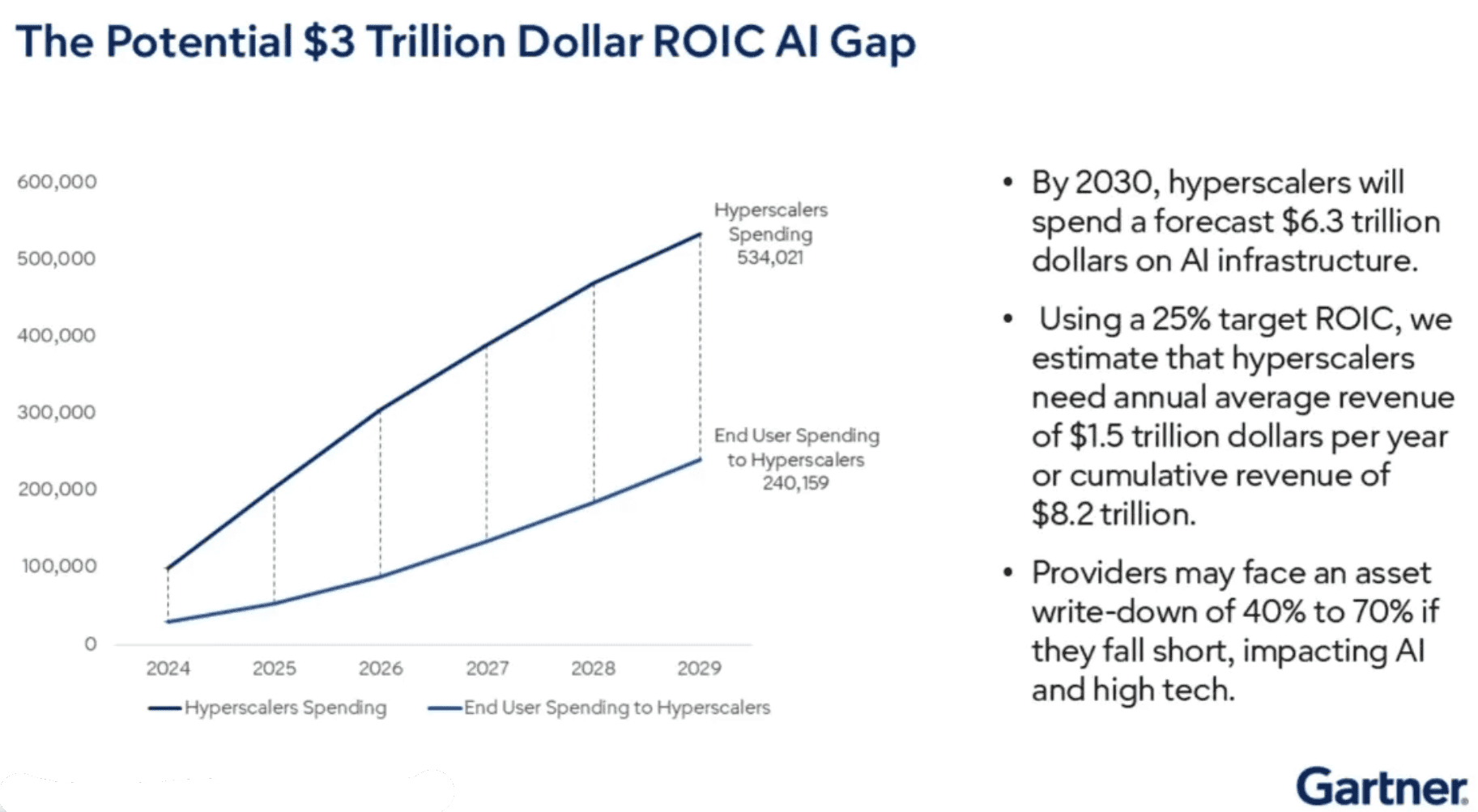
This trend is not expected to abate. Projections from leading market research firms, such as Gartner, forecast that AI-related spending could reach an astonishing $6.3 trillion by 2030. This exponential growth trajectory highlights the pervasive integration of AI across industries and the sustained, substantial investment required to support it.
The Pressure to Monetize: A Catalyst for Price Increases
The burgeoning ecosystem of AI providers, particularly newer entrants like Anthropic and OpenAI, are facing increasing pressure to demonstrate profitability. As these companies move towards potential public offerings, they will be compelled to showcase positive gross margins to attract investors and satisfy market expectations. This financial imperative will inevitably translate into upward pressure on their pricing strategies.
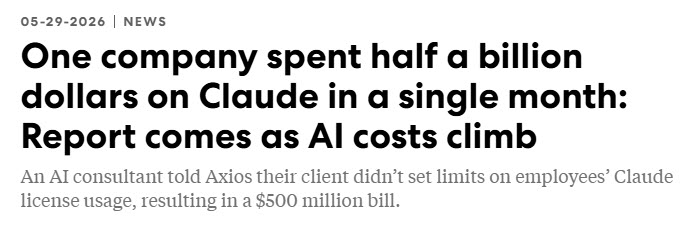
Several key AI developers, including Anthropic, are already reporting substantial operational costs. A recent report indicated that Anthropic incurred costs in the hundreds of millions of dollars in a single month, underscoring the intensive computational resources required for their advanced models. To achieve profitability and satisfy Wall Street’s demand for robust financial performance, these companies are likely to adjust their pricing upwards.
This pricing recalibration is not confined to AI model providers. Established software giants, often referred to as "SaaSapocalypse" companies—including SAP, Workday, Oracle, Salesforce, and Adobe—are also under scrutiny to demonstrate the financial viability of their AI-infused product suites. They, too, will likely leverage AI’s perceived value to justify higher price points for their enterprise solutions.
Early Indicators of a Shifting Market
Anecdotal evidence suggests that businesses are already grappling with the rising costs of AI tools. During recent client interactions in New York City, multiple Chief Information Officers (CIOs) and Chief Human Resources Officers (CHROs) reportedly voiced concerns about the escalating costs of AI coding assistants like Claude. In some instances, these high expenses have prompted discussions about outsourcing AI development to regions with lower labor costs, such as India, as a cost-saving measure.
The information landscape further supports this trend. A report from The Information highlighted Anthropic’s strategic shift in its pricing model, moving towards a usage-based approach for enterprise customers. This means that businesses whose employees are heavy users of Anthropic’s Claude products are likely to face significantly higher bills. The company’s adoption of a new version of a technology known as a "tokenizer" for its latest AI models is also cited as a potential contributor to increased customer costs.
Despite these rising costs, many technology firms and large Anthropic customers are indicating a willingness to absorb these increases. Their rationale stems from the perceived value of AI in boosting productivity, particularly among software engineers and sales teams, through the automation of various tasks. This acceptance of higher costs by early adopters signals a market readiness to pay for demonstrable AI-driven efficiency gains.
The Price Tag of Progress: Quantifying the Increase
The question then becomes: how much will these prices actually increase? The economic logic points to a substantial upward adjustment. The sheer scale of investment in AI infrastructure necessitates a commensurate increase in revenue to achieve a viable return on investment.
Consider the requirement for a 15% compound annual return on investment, assuming a generous five-year depreciation period for AI infrastructure. This scenario alone demands new revenue generation on the order of a trillion dollars annually. Given the often high margins associated with AI services, the actual required revenue could be even greater.
This substantial revenue must be generated from various sources. On the consumer side, the global internet advertising market currently stands at approximately $750 billion. While a doubling of advertising spend across all platforms is unlikely, the potential for increased ad volume and potentially higher ad rates exists.
On the enterprise side, the global spending on enterprise software is estimated by Gartner to be around $1.2 trillion. The prospect of doubling this figure through AI-driven solutions, while ambitious, is within the realm of possibility for some sectors.
Ultimately, the economic reality suggests that businesses will likely face a significant increase in their expenditure on enterprise software, potentially doubling their current outlay. Alternatively, consumers might experience a similar increase in advertising costs, though this is a less probable scenario for widespread adoption.
Beyond Consumer and Enterprise: New Markets and the End of "Cheaper Computing"
The revenue streams for AI will not be limited to consumer advertising and enterprise software. Significant funding is expected from government sectors, particularly the U.S. military, and from emerging markets focused on bio-research, energy research, and other advanced scientific endeavors. These diverse applications further broaden the potential revenue base for AI technologies.
The long-held notion of "Moore’s Law," which posited a continuous decrease in the cost of computing, is unlikely to hold true in the near term for AI. The initial IBM PC, priced at $1,565 in 1981 (without a hard disk), would cost approximately $5,700 in today’s inflation-adjusted dollars. While modern PCs are often priced around $3,000, this figure doesn’t account for the additional cost of complementary devices like smartphones, which have become integral to the modern computing experience. Over the past 45 years, the effective "cost of computing" has not seen a drastic reduction, and the current AI investment surge is poised to reverse any recent downward trends.

In essence, the development of advanced AI, while offering immense potential, is inherently expensive. Unless AI can demonstrably replace a multitude of existing costs and drive unprecedented levels of productivity, businesses and consumers will likely face higher overall expenses. From an economic perspective, this necessitates the realization of significant productivity gains, improvements in health outcomes, or other tangible benefits that have not yet fully materialized.
Companies like Nvidia, Oracle, Microsoft, and Workday are not merely aiming to replace existing revenue streams with AI; they are seeking accelerated growth. Similarly, Google, Meta, SpaceX, Amazon, and Apple are all pursuing aggressive expansion strategies. Jensen Huang, CEO of Nvidia, has articulated a clear business strategy: "AI compute is revenue." This statement signals a fundamental shift away from traditional seat-based licensing models towards a more direct monetization of AI computational power.
A Competitive Landscape Responds: The Price-Performance Battle Begins
In a significant development that underscores the evolving pricing dynamics in the AI market, Google recently announced its Gemini 3.5 Flash model. This new offering is reportedly priced at a fraction of its predecessors, being ten times less expensive than models like Opus 4.7. This strategic move by Google signals the official commencement of a critical battle for price-performance in the AI industry. As the costs of AI infrastructure continue to rise, providers will increasingly focus on optimizing their offerings to deliver greater value at competitive price points, a move that could potentially mitigate some of the projected cost increases for end-users.
The implications of these escalating costs and the subsequent pricing adjustments are far-reaching. Businesses will need to carefully evaluate their AI adoption strategies, balancing the potential productivity gains against the increasing financial investment. The competitive landscape will likely see a bifurcation, with providers who can offer efficient, cost-effective solutions gaining a significant advantage. As the AI revolution continues to unfold, the economic realities of its infrastructure demands will undoubtedly shape its accessibility and impact for years to come.