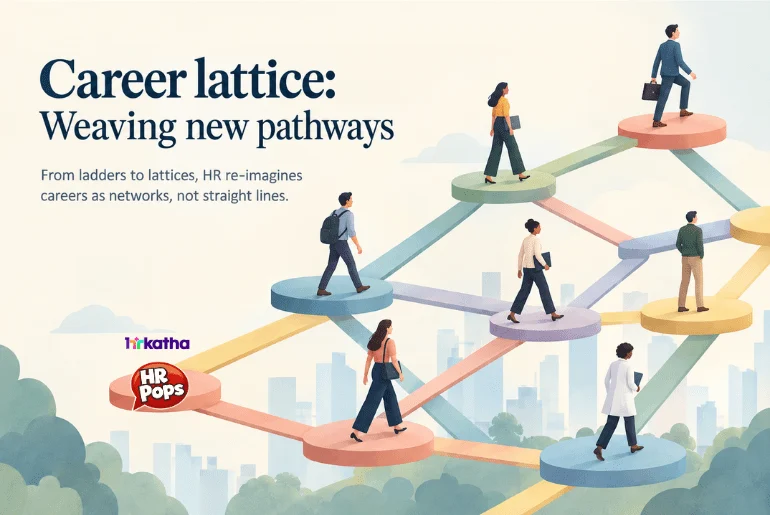
The career lattice represents a fundamental reimagining of professional advancement, challenging the deeply ingrained metaphor of the career ladder that has long dominated organizational thought and individual ambition. For generations, the ladder offered a singular, upward trajectory: climb rungs, gain promotions, accumulate seniority, and ascend through a hierarchical structure. This linear path, while simple and clear, is increasingly at odds with the complex realities of contemporary organizations and the dynamic demands of a rapidly evolving global economy. The lattice, by contrast, proposes a multi-directional model, allowing employees to build their careers not just through vertical promotion but also through strategic lateral, diagonal, and cross-functional movements across various roles, disciplines, geographies, and skill domains.
Deconstructing the Career Lattice: A Paradigm Shift in Professional Development
At its core, the career lattice is a framework that emphasizes skill acquisition, breadth of experience, and depth of expertise over the sole pursuit of a bigger title. An employee might transition from an operational role into a strategic planning unit, undertake an international assignment to gain global market insights, or shift from a management position back into a specialist role to deepen technical mastery. Such moves, while not always accompanied by an immediate promotion or salary increase, are designed to cultivate a more robust and adaptable professional profile. For instance, a software engineer might move into a product management role to understand customer needs and market dynamics, or a marketing specialist might spend time in data analytics to strengthen their quantitative skills. These seemingly sideways steps are, in fact, strategic investments in future capabilities, preparing individuals for more complex, senior roles that demand a comprehensive understanding of diverse functions. The concept also supports the development of "T-shaped" professionals – individuals with deep expertise in one area (the vertical bar of the ‘T’) combined with a broad understanding of multiple related domains (the horizontal bar). This broad yet deep skill set is increasingly vital for navigating complex business challenges and fostering innovation.
Evolution of a Concept: Tracing the Lattice’s Emergence
The genesis of the career lattice can be traced back to the late 20th century, a period marked by significant organizational restructuring and economic shifts. As companies embraced flatter management structures, delayering entire tiers of middle management to improve agility and reduce costs, the traditional ladder with its abundant rungs began to shrink. Simultaneously, globalization opened up new markets and created a need for talent with international exposure, while the accelerating pace of technological change rapidly rendered certain skills obsolete and created demand for entirely new ones. The idea gained significant traction and widespread discussion throughout the 2000s and 2010s, with management consulting firms like Deloitte, McKinsey, and Gartner playing a pivotal role in popularizing the metaphor and advocating for its adoption. Academic research into organizational behavior and human capital management also contributed to understanding the limitations of linear career paths in an increasingly volatile, uncertain, complex, and ambiguous (VUCA) world.
Key forces that propelled the lattice model into prominence include:
- Globalization: The expansion of businesses across international borders necessitated employees who could operate effectively in diverse cultural and market contexts, often requiring assignments in different regions.
- Organizational Delayering: The widespread trend of reducing hierarchical levels meant fewer promotional opportunities, forcing organizations to find alternative paths for employee growth. Industry reports from the early 2000s frequently highlighted a significant reduction in middle management roles across various sectors, sometimes by as much as 20-30% in large corporations.
- Project-Based Work: The rise of cross-functional teams and project-centric organizational models allowed employees to develop new skills and gain exposure outside their formal departmental silos.
- Technological Disruption: The continuous evolution of technology, from the internet boom to the advent of artificial intelligence, meant that the skills valued by organizations were in constant flux, demanding continuous learning and adaptation.
- Changing Employee Expectations: Younger generations entering the workforce increasingly prioritize learning opportunities, work-life balance, and a sense of purpose over mere title progression, influencing the demand for more flexible career paths. Studies by organizations like Gallup and PwC have consistently shown that learning and development opportunities are among the top drivers of employee engagement and retention.
The lattice offered a crucial conceptual shift: a lateral move was no longer indicative of a stalled career but rather a strategic investment in capabilities, a prerequisite for the next significant vertical step. This reinterpretation was essential for legitimizing non-traditional career paths.
Strategic Imperative for Human Resources: Navigating a Dynamic Workforce
For Human Resources departments, the career lattice is not merely an aspirational concept but a strategic imperative driven by the evolving mathematics of talent management. The traditional model, predicated on a continuous upward progression for high-performing individuals, is unsustainable in flatter organizational structures where promotional opportunities are scarce. Moreover, the rapid pace of change, exacerbated by advancements in AI and shifting business models, means that deep expertise in one narrow function may no longer adequately prepare an individual for future roles or leadership challenges. The World Economic Forum’s Future of Jobs Report, for instance, consistently highlights the significant proportion of the workforce that will require reskilling or upskilling in the coming years, often in entirely new domains.
The lattice model provides HR with a richer toolkit for strategic workforce planning and talent development:
- Enhanced Internal Mobility: HR can proactively identify skill gaps and redeploy talent to areas of critical need, rather than resorting to costly and time-consuming external hiring. Companies with robust internal mobility programs have been shown to fill critical roles up to twice as fast as those relying solely on external recruitment, according to reports by LinkedIn and Gartner.
- Holistic Leadership Development: Cross-functional assignments are far more effective in developing future leaders who possess a nuanced understanding of the entire business ecosystem, rather than those who have only ever ascended within a single silo. Leaders who have experienced diverse functions are often better equipped to manage complex interdepartmental projects and drive innovation.
- Specialist Career Paths: The lattice allows for the creation of distinct specialist tracks, enabling highly skilled technical experts or individual contributors to progress in their careers without being forced into people management roles, which may not align with their strengths or interests. This prevents the loss of valuable technical expertise from the hands-on work.
- Improved Employee Retention and Engagement: When promotion is the only recognized form of progress, employees who hit a ceiling are likely to look elsewhere for growth. A credible and transparent career lattice offers viable alternatives within the organization, fostering a culture of continuous learning and development that significantly boosts retention. Studies indicate that organizations with high internal mobility rates experience employee turnover rates that are 10-20% lower than those with limited mobility.
- Agility and Resilience: By fostering a workforce with diverse skills and experiences, organizations become more adaptable to market changes, technological disruptions, and unforeseen challenges. A flexible workforce can pivot more quickly, redeploying talent to emerging priorities.
The leadership argument is particularly compelling. Senior executive roles increasingly demand individuals who can grasp and resolve problems that span multiple functions and external stakeholders. A leader whose entire career has been a vertical ascent within a single department, while possessing immense depth, may lack the breadth of perspective needed to navigate cross-functional complexities. A strategic sideways move can often be a superior preparation for senior leadership than another incremental step upwards within a familiar domain.
The Chasm Between Aspiration and Reality: Challenges in Implementation
Despite its strategic advantages and conceptual appeal, the career lattice faces a significant hurdle: the gap between its celebrated ideal of lateral movement and the deeply entrenched vertical realities of organizational hierarchy. While organizations may espouse the value of diverse experience, employees frequently experience career progression primarily through traditional markers. Titles, pay grades, reporting relationships, and institutional prestige continue to exert immense influence. In many corporate cultures, the clearest and most universally understood signal of career advancement remains a promotion.
Employees, ever astute observers of organizational behavior, understand this dynamic perfectly. A lateral assignment, while offering valuable developmental opportunities, often comes without an immediate increase in pay, status, or a clear, recognized boost in career value. Presenting such a move as "growth" can, from an employee’s perspective, sound suspiciously like HR asking them to accept less tangible reward for the promise of future opportunity. This can lead to cynicism and a reluctance to embrace non-traditional paths. Employee sentiment surveys frequently reveal that compensation and title remain primary motivators for career progression, often overshadowing developmental opportunities if the latter do not lead to tangible rewards.
Another substantial obstacle arises from the managerial layer. While internal mobility is beneficial at an organizational level, it can be acutely painful at the team level. A manager who invests significant time and resources in developing an excellent employee may lose that person to another function, creating an immediate talent gap and potentially impacting team performance and project timelines. Conversely, a manager who actively discourages or prevents internal transfers gets to retain a proven performer. This dynamic fosters "talent hoarding," where managers prioritize their immediate team’s needs over the broader organizational imperative for talent mobility. Unless organizations establish clear incentives and reward structures for managers who develop and "export" talent—such as linking their performance reviews and bonuses to their team members’ internal career progression—talent hoarding remains an entirely rational behavior.
Furthermore, navigation within a lattice structure presents its own complexities. Traditional career ladders are wonderfully unambiguous: the next rung is visible, and the requirements to reach it are generally clear. Lattices, by offering a multitude of possibilities, inherently introduce less certainty. A lateral move into a new function might broaden an individual’s capabilities in unforeseen ways, but it could also divert them from their desired ultimate career path, particularly if the organization lacks clear guidance and transparent pathways. The greater the number of directions a career can take, the more critical robust career guidance, mentorship, and transparent skill frameworks become.
This presents HR with an interesting paradox: the lattice promises employees greater freedom and autonomy in navigating their careers, yet making that freedom genuinely useful and productive requires a considerably more sophisticated organizational architecture around skills, opportunities, mobility policies, and clearly articulated career pathways. A lattice without comprehensive signposts and supportive structures is not liberating; it is simply harder to climb.
Paving the Pathways: Essential Steps for a Functional Career Lattice
For the career lattice to transcend its metaphorical status and become a tangible reality, organizations must fundamentally alter what constitutes and is recognized as career progress. This transformation begins with a holistic reevaluation of rewards and recognition systems. If only promotions yield meaningful increases in compensation, status, and opportunity, employees will understandably continue to pursue promotions exclusively. Lateral moves must carry visible and tangible career value, whether through expanded scope of responsibility, the acquisition of highly differentiated and valuable skills, specific non-monetary recognition for cross-functional contributions, or clear pathways to future senior opportunities that explicitly value diverse experiences. This might involve adopting "broad-banding" salary structures that allow for pay increases within a wider band, rather than requiring a title change, or linking bonuses to skill acquisition and cross-functional project success.
Technological enablement is also crucial. The implementation of internal talent marketplaces and transparent role opportunity platforms can empower employees to proactively explore possibilities beyond their immediate functions, matching their skills and aspirations with organizational needs. AI-driven skill frameworks can identify skill adjacencies, suggesting relevant developmental paths and highlighting which capabilities different lateral moves are designed to cultivate. Career conversations, rather than focusing solely on the next designation, need to evolve into comprehensive discussions about skill development, experiential learning, and the various directions a career can take within the organization.
The role of managers is equally, if not more, critical. Organizations cannot genuinely promote internal mobility while simultaneously penalizing managers who "lose" good people. Talent development must be integrated into managerial performance metrics, explicitly rewarding leaders for cultivating and "exporting" talent across the business. This means acknowledging the strategic value of internal mobility for the entire organization, even if it creates temporary challenges for individual teams. Leadership training should also equip managers with the skills to coach employees on non-linear career paths and facilitate their growth across functions.
Most importantly, employees need irrefutable evidence that lattice careers genuinely lead somewhere meaningful. They need to observe and interact with individuals who have successfully navigated sideways moves, embraced unconventional assignments, or transitioned across functions, and subsequently advanced to senior roles because of those diverse experiences. Such visible success stories serve as powerful cultural validators, transforming the lattice from a theoretical concept into a credible and desirable career model. A career model gains true credibility when employees can point to concrete examples that unequivocally prove its efficacy.
Broader Impact and Future Outlook: The Evolving Landscape of Work
The successful implementation of a career lattice model has broader implications beyond individual career progression. It fosters greater organizational agility, enabling companies to quickly adapt to market shifts by redeploying skilled talent where it’s most needed. It can also enhance diversity, equity, and inclusion by opening up more varied pathways to leadership for individuals who might not fit traditional linear molds, or who may have taken career breaks. The emphasis on skills over fixed roles also aligns with the broader global trend towards a "skills-based economy," where capabilities are the primary currency of value.
The ongoing advancements in artificial intelligence and automation are set to accelerate the need for adaptable skill sets and flexible career paths. As routine tasks become automated, human workers will increasingly focus on complex problem-solving, creativity, critical thinking, and social intelligence – skills that are often best developed through diverse experiences and cross-functional collaboration. The shift from "jobs for life" to "skills for life" becomes an imperative, and the career lattice provides a framework for organizations to support this continuous skill evolution. It reshapes the psychological contract between employer and employee, moving towards a partnership focused on mutual growth and continuous learning.
Conclusion: Bridging the Gap Between Metaphor and Mechanism
The career lattice effectively captures a critical truth about modern work: progress and promotion are no longer synonymous. However, redesigning the geometric pathways of careers is considerably easier than overhauling the deep-seated incentives and cultural norms that govern them. Organizations can meticulously draw intricate maps of cross-functional pathways, ardently encourage internal mobility, and consistently communicate to employees that sideways moves cultivate invaluable capabilities. Yet, none of these efforts will yield genuine transformation if the most significant rewards—be they financial, status-based, or influence-driven—remain exclusively tied to traditional upward promotions.
The career lattice will only transition from an aspirational metaphor to an operational reality when an employee can genuinely make a lateral move without the pervasive feeling that their career has stalled or been devalued. Until such time, despite the organizational efforts to redraw the career map, the deeply ingrained cultural perception of the ladder will continue to dictate where most employees ultimately aspire to go. The true success of the lattice depends on making non-linear progression not just possible, but demonstrably rewarding and genuinely respected.