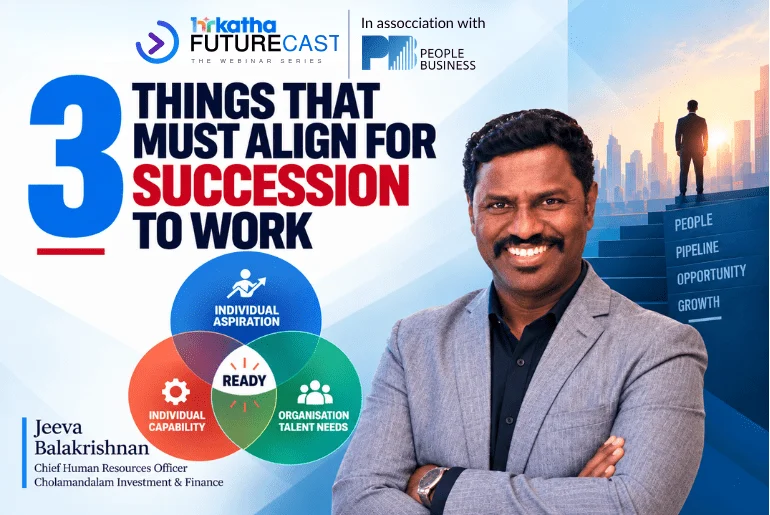
Identifying a capable successor does not inherently guarantee the success of a succession plan; rather, it marks merely the initial step in a complex, multi-faceted process that demands a precise alignment of individual aspiration, proven capability, and the evolving talent needs of the organisation. This profound insight, articulated by Jeeva Balakrishnan, Chief Human Resources Officer (CHRO) at Cholamandalam Investment & Finance, underscores a critical challenge faced by corporations globally, particularly within dynamic sectors like Banking, Financial Services, and Insurance (BFSI). Without this crucial convergence, organisations risk significant investment in potential leaders, only to find themselves reverting to square one, facing leadership vacuums and strategic discontinuities.
Balakrishnan’s perspectives, shared during a recent HRKatha Futurecast event titled "The Future of Succession in BFSI," held in association with People Business, shed light on the imperative for a holistic approach to leadership transition. He emphatically posited that while the Chief Executive Officer (CEO) must unequivocally own the strategic imperative of succession, it is the CHRO who is tasked with meticulously building and sustaining the robust infrastructure necessary to cultivate and develop individuals for future leadership roles. This clear delineation of responsibility highlights a symbiotic relationship critical for enduring organisational success and resilience in an increasingly volatile business landscape.
The Nuance of Succession: Beyond Identification
The conventional wisdom often stops at merely identifying a ‘high-potential’ individual. However, Balakrishnan’s framework pushes beyond this rudimentary stage, advocating for a deeper interrogation of three interlocking dimensions. Firstly, individual aspiration is paramount. A candidate, no matter how skilled or experienced, will falter if they lack genuine desire or passion for the role. Leadership roles, particularly at senior levels, demand immense dedication, resilience, and a willingness to navigate significant challenges. An individual pushed into a role without true aspiration is prone to disengagement, underperformance, and ultimately, burnout, leading to a detrimental impact on team morale and organisational objectives.
Secondly, individual capability must be rigorously assessed and continuously developed. This encompasses not just technical skills relevant to the role, but also critical leadership competencies such such as strategic thinking, emotional intelligence, adaptability, decision-making under pressure, and the ability to inspire and motivate diverse teams. In the BFSI sector, this capability often extends to navigating complex regulatory environments, understanding sophisticated financial instruments, and leading digital transformation initiatives. A gap in capability, even with strong aspiration, can lead to operational inefficiencies and strategic missteps. Organisations must therefore invest in comprehensive assessment tools, bespoke training programmes, cross-functional assignments, and robust mentorship initiatives to bridge these competency gaps.
Thirdly, and equally vital, is the organisation’s talent needs. These needs are not static; they evolve in response to market dynamics, technological advancements, competitive pressures, and shifts in business strategy. A successor identified years ago might find the organisation’s strategic direction has pivoted, rendering their specific skill set less relevant. For instance, a traditional banking executive might struggle to lead a division focused on fintech innovation without significant reskilling. Therefore, succession planning must be dynamic, regularly updated, and intrinsically linked to the long-term strategic goals of the enterprise. It requires a forward-looking perspective, anticipating future skill demands rather than merely filling existing vacancies.
Balakrishnan’s cautionary note about organisations investing heavily only to return to the starting point resonates deeply within the corporate world. The financial and non-financial costs associated with a failed executive transition are substantial. Recruitment fees, onboarding expenses, lost productivity during the vacancy period, disruption to team dynamics, and the erosion of employee trust can collectively amount to several times the executive’s annual salary, according to various industry reports. A robust succession strategy mitigates these risks, ensuring seamless transitions and sustained organisational momentum.
Leadership Ownership: The CEO’s Mandate, The CHRO’s Craft
The distinction between the CEO’s ownership and the CHRO’s infrastructure-building role is fundamental to effective succession planning. The CEO’s ownership stems from their ultimate responsibility for the organisation’s strategic direction, long-term viability, and shareholder value. Succession planning is not merely an HR function; it is a strategic imperative that directly impacts the continuity of leadership, the execution of strategic goals, and the organisation’s ability to adapt to future challenges. A CEO who actively champions succession planning signals its critical importance throughout the organisation, fostering a culture where talent development is prioritised at every level. This ownership involves:
- Strategic Alignment: Ensuring succession plans align with the overall business strategy.
- Active Involvement: Participating in talent reviews, mentoring high potentials, and making final decisions on key appointments.
- Cultural Reinforcement: Demonstrating commitment to internal talent development and mobility.
- Accountability: Holding senior leaders accountable for developing their direct reports.
Conversely, the CHRO’s role is to build the comprehensive infrastructure that enables this strategic vision. This is where the operational heavy lifting occurs, transforming strategic intent into tangible development pathways. The CHRO’s responsibilities include:
- Talent Identification and Assessment: Implementing robust systems for identifying high-potential employees, assessing their current capabilities, and forecasting future potential. This often involves 360-degree feedback, psychometric testing, and performance analytics.
- Development Programmes: Designing and delivering targeted leadership development programmes, executive coaching, mentorship initiatives, and experiential learning opportunities (e.g., cross-functional projects, international assignments).
- Succession Pipeline Management: Creating and managing a dynamic talent pipeline for critical roles, ensuring a ready pool of qualified candidates at various stages of development.
- Performance Management Integration: Linking performance reviews, career planning, and development plans directly to succession strategies.
- Data and Analytics: Leveraging HR analytics to track talent development progress, identify potential risks in the pipeline, and provide data-driven insights to the CEO and senior leadership.
- Cultural Embedment: Fostering a culture of continuous learning, feedback, and internal mobility, where employees feel empowered to develop their careers within the organisation.
This symbiotic partnership ensures that while the CEO provides the strategic direction and top-level commitment, the CHRO provides the expertise, systems, and processes to execute that vision effectively. Without the CEO’s active sponsorship, even the most meticulously designed HR infrastructure can languish, lacking the necessary buy-in and resources. Conversely, without a sophisticated HR infrastructure, the CEO’s aspirations for robust succession may remain just that—aspirations, without a clear path to realisation.
Contextualizing the Discussion: HRKatha Futurecast and the BFSI Imperative
The insights shared by Balakrishnan were a highlight of the HRKatha Futurecast series, an esteemed platform dedicated to exploring cutting-edge trends and challenges in human resources and talent management. These events bring together prominent HR leaders, industry experts, and thought leaders to engage in dialogues that shape the future of work. The specific focus on "The Future of Succession in BFSI" underscores the unique and intensified pressures faced by this sector. The BFSI industry, encompassing banking, insurance, and financial services, is currently undergoing unprecedented transformation driven by technological disruption, evolving customer expectations, stringent regulatory frameworks, and intense competition from nimble fintech startups.
The event, organised in association with People Business, a renowned consulting firm specialising in HR and talent management solutions, provided a crucial forum for exchanging best practices and innovative strategies. People Business’s involvement highlights their commitment to fostering progressive HR dialogues and solutions tailored to the modern enterprise. For the BFSI sector, the stakes are particularly high. Leadership stability and the continuous influx of new talent are vital for:
- Navigating Regulatory Compliance: Adhering to complex and ever-changing national and international financial regulations requires leaders with deep expertise and unwavering ethical standards.
- Driving Digital Transformation: The shift towards digital banking, AI-driven analytics, and blockchain technology demands leaders who are technologically adept and capable of leading large-scale organisational change.
- Managing Risk: Financial institutions operate in environments rife with market, credit, operational, and reputational risks, necessitating leaders with strong risk management acumen.
- Cultivating Customer Trust: In an industry built on trust, leadership integrity and consistent service delivery are paramount.
The discussions at HRKatha Futurecast aimed to equip HR professionals and business leaders within BFSI with the insights needed to build resilient leadership pipelines capable of steering their organisations through these turbulent waters.
The Data-Driven Imperative: Global Trends in Talent Management
The importance of robust succession planning is consistently reinforced by global talent management data. Recent studies by leading consultancies like Deloitte, PwC, and Korn Ferry reveal startling statistics regarding leadership transitions and talent gaps.
- High Executive Turnover Costs: Research indicates that the cost of a failed executive hire can range from 1.5 to 3 times the executive’s annual salary, encompassing recruitment fees, relocation expenses, lost productivity, and the ripple effect on team morale. For senior leadership roles, these figures can escalate dramatically.
- Leadership Gaps: A significant percentage of organisations (often cited as 50-60%) report having inadequate leadership pipelines to fill critical roles, especially at the senior executive level. This gap is particularly pronounced in industries undergoing rapid change, such as BFSI, where specialised digital and analytical skills are in high demand.
- Low Succession Readiness: A 2023 study found that only about 30% of companies feel they have a strong bench of ready-now successors for key leadership positions. This lack of readiness poses a severe threat to business continuity and strategic execution.
- Impact on Shareholder Value: Companies with strong succession planning frameworks consistently outperform their peers in terms of financial metrics, including revenue growth, profitability, and stock price stability. Investor confidence is often directly linked to perceived leadership stability.
- Investment in Development: While organisations are increasingly investing in leadership development, many programmes lack the strategic alignment and rigorous measurement necessary to yield optimal results. The focus often remains on training rather than holistic development integrated with succession.
These statistics paint a clear picture: succession planning is not a luxury but a strategic necessity. The failure to address leadership continuity proactively can lead to significant financial losses, operational disruptions, and a weakened competitive position.
Strategic Implications for Business Continuity and Growth
The implications of effective succession planning extend far beyond merely filling a vacancy; they are deeply intertwined with an organisation’s long-term strategic viability and growth trajectory.
- Business Continuity and Stability: A well-executed succession plan ensures a seamless transition during leadership changes, minimising disruption to operations, projects, and client relationships. This stability is particularly crucial in the BFSI sector, where any perceived instability can erode public and investor confidence.
- Competitive Advantage: Organisations with strong internal talent pipelines possess a distinct competitive advantage. They can rapidly deploy qualified leaders to seize new market opportunities, respond to competitive threats, and adapt to evolving business models, rather than losing valuable time and resources on external searches.
- Innovation and Agility: By proactively developing leaders with diverse skills and perspectives, succession planning fosters a culture of innovation and agility. New leaders bring fresh ideas and approaches, driving continuous improvement and strategic renewal.
- Employee Engagement and Retention: A clear path for career progression and leadership development acts as a powerful motivator for high-potential employees. It signals that the organisation invests in its people, fostering loyalty, reducing regrettable turnover, and enhancing overall employee engagement. Employees are more likely to stay when they see opportunities for growth within the company.
- Mitigating Key Person Risk: For critical roles, particularly at the executive level, robust succession planning mitigates the "key person risk" – the vulnerability an organisation faces if a crucial leader unexpectedly departs.
Challenges and Opportunities in the Evolving BFSI Landscape
The BFSI sector presents both unique challenges and significant opportunities for succession planning. The rapid pace of digital transformation necessitates leaders who are not only digitally literate but also capable of championing technological adoption across the enterprise. The scarcity of talent with combined deep financial expertise and cutting-edge digital skills presents a significant succession challenge. Organisations must either develop these skills internally through intensive reskilling programmes or strategically acquire external talent, integrating them effectively into the existing culture.
Moreover, the regulatory environment in BFSI is constantly evolving, requiring leaders who possess a strong ethical compass and a deep understanding of compliance. Succession planning must therefore incorporate rigorous assessments of integrity and regulatory knowledge. The move towards more diverse and inclusive leadership also represents a critical opportunity. By intentionally developing a diverse talent pool, BFSI organisations can foster innovation, better understand their diverse customer base, and enhance their reputation.
Expert Perspectives and Industry Consensus
Industry analysts and talent management experts consistently echo Balakrishnan’s sentiments regarding the multifaceted nature of succession. They universally agree that a purely reactive or transactional approach to filling leadership roles is a recipe for long-term strategic weakness. Instead, they advocate for a proactive, integrated, and continuous process that is deeply embedded in the overall business strategy.
"The best succession plans are not merely contingency plans; they are living blueprints for future organisational success," noted a prominent talent management consultant during a recent industry forum. "They require constant review, adaptation, and investment, ensuring that the organisation is always poised for its next chapter, irrespective of individual transitions." Furthermore, experts emphasise the importance of cultural fit, often arguing that a technically brilliant candidate who does not align with the organisation’s values can be more detrimental than beneficial. This further reinforces the need for a holistic assessment that goes beyond mere ‘capability’.
Conclusion
Jeeva Balakrishnan’s insights from the HRKatha Futurecast serve as a potent reminder that effective succession planning is far more intricate than simply identifying a high-potential individual. It is a strategic imperative demanding the precise alignment of individual aspiration, demonstrated capability, and the evolving talent needs of the organisation. The clear division of labour, with the CEO owning the strategic vision and the CHRO meticulously building the supporting infrastructure, is crucial for success. In an era of unprecedented change, particularly within the dynamic BFSI sector, organisations that master this delicate balance will not only ensure leadership continuity but also forge a resilient path towards sustained growth, innovation, and competitive advantage. The future belongs to those who proactively invest in cultivating tomorrow’s leaders, understanding that true succession is a continuous journey, not a destination.