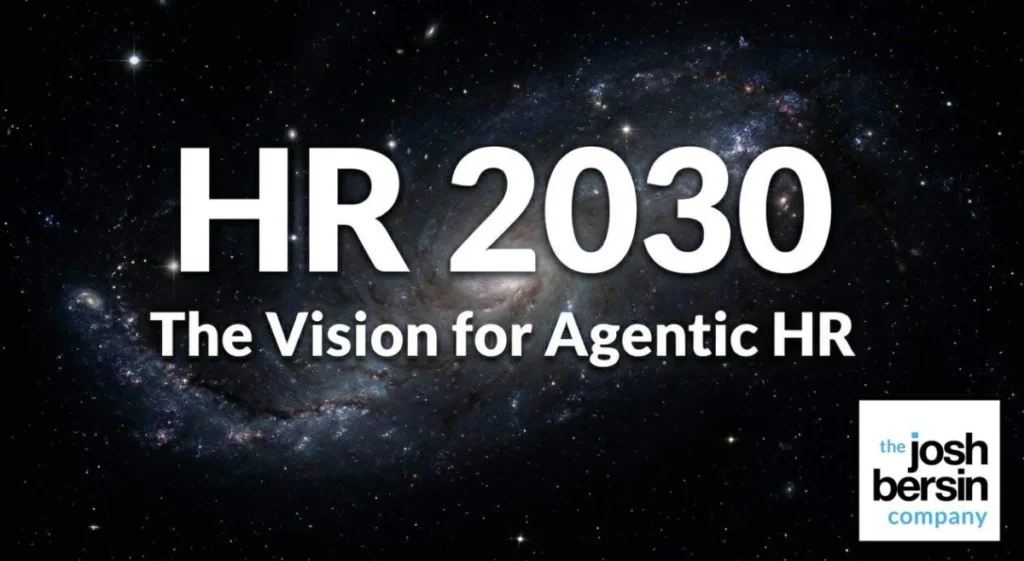
The burgeoning integration of Artificial Intelligence (AI) across corporate landscapes is prompting a fundamental reevaluation of established departmental functions. Among the most significant transformations on the horizon is the profound impact AI agents are expected to have on Human Resources (HR) and its associated human capital practices. This evolution, often speculated to lead to the obsolescence of traditional HR departments, is being framed by industry leaders as the dawn of "Agentic HR," a paradigm shift poised to redefine the employee experience and strategic HR operations by the year 2030.
The vision of AI agents managing core HR functions—from hiring and compensation to performance management and employee scheduling—is moving from theoretical discussion to tangible development. This transformative phase, termed "HR 2030 Vision" by researchers and consultants in the field, merges the concept of "Systemic HR," which emphasizes an integrated, operational approach to human capital, with advanced AI agent architectures. While some leading technology firms are rapidly adopting this trajectory, the broader industry is navigating a more gradual integration process. However, projections suggest that this ambitious vision is highly likely to materialize within the next four years, elevating HR from a support function to a potent business enablement engine.
The Data-Rich Landscape of AI-Powered HR
A cornerstone of this impending HR revolution is the comprehensive data AI agents will possess regarding every employee. This data will extend beyond traditional HR records to encompass a granular understanding of individual roles, evolving skill sets, work schedules, historical career progression, compensation benchmarks, professional licenses, and even personal work preferences. Furthermore, AI agents are anticipated to gain insights from employee communications, meeting recordings, calendar entries, and location data, leveraging generative AI to build an extensive and dynamic knowledge base of individual activities, project involvement, daily tasks, proficiencies, and behavioral patterns.
This deep dive into employee data will enable AI agents to identify internal subject matter experts, recognize highly regarded individuals, and pinpoint those most engaged in critical projects and roles. By analyzing time and schedule data, these agents will also be capable of identifying employees who are overextended, flagging those available for demanding assignments, and optimizing frontline workforce deployment. The accessibility of these AI agents will be ubiquitous, integrated into employees’ daily tools such as smartphones, wearable devices, computers, and even vehicles or machinery. This pervasive integration will foster an "ambient" data collection experience, mirroring the seamless data interactions familiar to consumers in the digital realm, making information retrieval and HR-related queries effortless.
Beyond internal employee data, AI agents will be equipped with extensive external datasets. This includes up-to-the-minute compensation benchmarks, competitor skill inventories for comparable roles, salary trends by geographic location and job function, emerging job titles and skill demands, and comprehensive regulatory information. This external data integration will empower agentic HR systems to provide precise insights into an individual employee’s career trajectory, competitive compensation landscapes, and emerging skill development opportunities.
Transforming Talent Acquisition and Workforce Management
The implications for talent acquisition and workforce management are particularly significant. AI agents will be capable of autonomously sourcing candidates, conducting sophisticated comparisons between internal and external talent pools, and facilitating the precise reallocation of organizational resources. These agents will offer data-driven recommendations for optimal compensation and reward strategies, and proactively identify employees requiring updated regulatory training or license renewals. In scenarios of sudden demand shifts, emergencies, or accidents, AI agents will rapidly ingest information and present actionable options, such as advising employees to work remotely, rescheduling critical personnel, or disseminating urgent safety and operational alerts.
The interconnectedness of AI agents will extend to other business functions, enabling a holistic view of organizational performance. By monitoring sales figures, customer engagement metrics, support case volumes, and software development output, agentic HR systems can provide real-time performance insights. This could potentially reduce the reliance on multi-level managerial reviews, as AI agents will be better positioned to identify high performers and areas for improvement more swiftly. In instances of economic downturns, these AI superagents can proactively generate options for workforce redeployment, cost containment, or adjustments to compensation and overtime structures.
Proactive Performance Analysis and Employee Feedback
Agentic HR systems are poised to automate and continuously analyze critical HR metrics, including turnover rates, time to productivity, grievance filings, and punctuality. This will also facilitate a shift from periodic employee surveys to near real-time feedback mechanisms, allowing leaders to make agile adjustments to operations, reward systems, and corporate initiatives to enhance overall productivity. The granular data collected will enable the identification of engagement patterns correlated with specific managers, geographical locations, business units, and employee tenure, without the need for extensive manual analysis. Furthermore, AI agents will be instrumental in proactively identifying and addressing issues related to pay equity, diversity, equity, and inclusion (DEI) bias, and other fairness concerns within the organization.
The Role of Human Oversight and Governance
While AI agents will possess advanced observational and predictive capabilities, human oversight remains crucial. Companies will leverage their established cultural values, leadership principles, and behavioral models to "tune" these AI systems. This tuning process will involve the development of rubrics, rulebooks, and organizational "constitutions" that guide AI decision-making. Certain agent functions, such as hourly scheduling, may operate with a high degree of autonomy, while others, like pay and reward decisions, may require managerial approval or intervention.
For HR and IT leaders, the focus will pivot towards ensuring robust data integration, maintaining data quality, and upholding data integrity. These professionals will become adept at utilizing, training, and refining AI agents, fostering a continuous learning cycle that enhances agent performance over time. Much like advertising technology learns consumer preferences, business AI tools will learn organizational management and operational practices. Successes and failures will be meticulously recorded and analyzed, enabling AI agents to replicate positive outcomes and avoid past mistakes.
Strategic Decision-Making and Dynamic Career Development
The implementation of agentic HR systems promises to streamline complex strategic decisions related to leadership, workforce redeployment, and overall business strategy. When organizational underperformance is identified in specific regions or business areas, AI systems can quickly pinpoint potential contributing factors related to human capital. While AI may not fully grasp nuanced communication or leadership challenges, its predictive and analytical power can offer valuable coaching and direct feedback to leaders and individuals requiring support.
Career growth, redeployment, and upskilling will become dynamic processes. Each employee will benefit from personalized development plans, meticulously aligned with both company needs and external career trajectory trends. AI-powered learning and development (L&D) platforms will generate bespoke content, providing employees with "dynamic enablement" irrespective of their role, interests, or current project involvement. HR professionals will curate organizational knowledge repositories, ensuring that learning and career agents are well-informed and that employees can easily connect with internal subject matter experts.
Enhanced Collaboration and Integrated HR Functions
The concept of "digital twins"—virtual replicas of individuals—will enable employees to interact with the knowledge and expertise of colleagues who may be on vacation or have departed the company. This will streamline access to critical information, allowing employees to query about the latest status of specific contracts or communications with external entities, even in the absence of direct human availability.
Talent acquisition and corporate learning functions will become seamlessly integrated within the agentic system. AI agents will automate the end-to-end recruitment process, from sourcing and screening to assessment, interviewing, offer generation, hiring, and onboarding. Similarly, personalized learning and performance support will be delivered through dynamic content generation.
HR service centers will likely shrink, with self-service queries being managed by integrated agents that retain context and understand individual employee needs. HR Business Partners will evolve into "agent managers," acting as strategic advisors who guide and fine-tune AI agents to address specific local business requirements. Chief Human Resources Officers (CHROs) and senior HR leaders will deepen their business integration, focusing on building and managing these agentic HR systems and applying HR best practices to drive organizational objectives.
Navigating the Transition: Key Challenges and Opportunities
The transition to Agentic HR, while promising, presents several critical challenges that stakeholders must address. The coexistence of new AI architectures with existing multi-billion dollar investments in transactional HR systems is a primary concern. While legacy systems for payroll, compliance, and labor relations are unlikely to disappear entirely in the short term, the new agentic architecture must be designed to leverage and extend these existing platforms. This necessitates an integrated approach that builds new capabilities while harmonizing with established systems.
The organization of AI agents—from specialized "sub-agents" to overarching "superagents"—requires careful consideration. Industry experience suggests that domain-specific agents, excelling in specialized intelligence and perspective, are more effective than a single, monolithic HR agent. Determining which agents are "core," holding primary data, and which function as "decision-making" or "observing and reporting" agents will be a critical architectural decision. The interdependencies between these agents are complex and require thorough mapping.
The economic model for AI in HR is also evolving. Instead of user-based licensing, HR agents and superagents will likely operate on a consumption-based token model, tied to compute needs. This shift will necessitate a reallocation of budgets from traditional seat-based licensing to consumption-based models. While studies suggest HR teams could shrink by 30-40%, the skills required will deepen, raising questions about the impact on HR headcount budgets and whether increased value and responsiveness can justify potential cost savings.
The distribution of decision-making authority is another key consideration. In an agentic HR environment, will AI agents with superior data and benchmarking capabilities supersede managerial discretion, as seen in some early implementations (e.g., IBM)? Alternatively, will organizational culture encourage managers to override AI recommendations, potentially diminishing the AI’s effectiveness? Cultivating trust in these evolving AI tools is paramount, as demonstrated by early successes where AI, through continuous use and tuning, becomes demonstrably more trustworthy.
Furthermore, regulatory bodies will play a crucial role in governing and monitoring AI in HR. Laws pertaining to compensation, layoffs, hiring, and bias in promotions, mobility, and rewards must be embedded within these systems. The demand for "explainability" data, particularly when AI-driven outcomes are unfavorable, will likely increase, posing new challenges for transparency and accountability.
The Road Ahead: Innovation and Collective Action
The journey towards Agentic HR by 2030 is an exciting and complex one, involving continuous innovation and collaboration among HR leaders, IT professionals, and technology vendors. Many prominent HR technology companies, including Eightfold, Maki People, Paradox, Findem, Radancy, Lightcast, Draup, Sana, CodeSignal, WorkHuman, Workday, SAP, UKG, and HiBob, are actively contributing to this vision.
To navigate this evolving landscape, organizations are encouraged to engage in collective learning and technology exploration. Upcoming industry events, such as the "Irresistible 2026" conference, aim to provide platforms for discussing these transformations and highlighting companies leading the way with concrete examples. Accelerator programs are also being developed to facilitate in-depth discussions and strategic planning for HR leaders. Tools like Galileo are emerging to assist organizations in developing roadmaps, selecting vendors, and designing agent architectures.
The future of HR is not merely about automation; it is about augmenting human potential, enhancing strategic decision-making, and fostering more dynamic and equitable work environments. As AI agents become increasingly sophisticated, their integration into HR practices promises to unlock new levels of efficiency, insight, and employee engagement, fundamentally reshaping the workplace for years to come.