The pursuit of workplace equity, once a peripheral concern, has firmly moved to the forefront of organizational strategy in 2024 and beyond. While the aspiration for fairness, inclusive opportunity, and a genuine sense of belonging is widely acknowledged, the statistical reality on the ground reveals a significant gap between intent and implementation. Current data underscores the persistent challenges: in the S&P 100 companies, women currently occupy a mere 29% of executive roles, with the highest echelons of leadership proving even more exclusive, as only 9% of CEO positions are held by women. This disparity highlights a critical juncture where organizations must transition from articulating equity in mission statements to embedding it into the tangible fabric of their operations, influencing who is recognized, who is promoted, and who genuinely feels valued and included.
Workplace equity is not merely about treating every individual identically. Instead, it fundamentally involves ensuring that all employees have equitable access to opportunities, essential resources, and meaningful recognition. This allows each person to contribute their full potential and achieve professional growth. The core of equity lies in dismantling systemic barriers, acknowledging and addressing individual needs, and cultivating an environment where success is an attainable reality for everyone, not an exclusive privilege for a select few.
The Imperative of Workplace Equity
The importance of embedding equity into the daily operations of an organization cannot be overstated. When employees can trust that their voices will be heard, their contributions acknowledged, and their potential for growth genuinely supported, their engagement and commitment to their work are significantly enhanced. This trust fosters a proactive and purposeful approach to daily tasks and long-term career development.
The ramifications of a truly equitable workplace are far-reaching:
- Enhanced Employee Engagement: When individuals feel valued and have clear pathways for advancement, their motivation and dedication to their roles naturally increase. This translates into higher productivity and a more positive work environment.
- Improved Retention Rates: A culture of equity directly combats employee turnover. When employees perceive fairness in opportunities, compensation, and recognition, they are less likely to seek employment elsewhere, leading to significant cost savings and the preservation of institutional knowledge.
- Boosted Innovation and Creativity: Diverse perspectives, fostered by an inclusive environment, are a wellspring of innovation. When all employees feel empowered to share their ideas without fear of judgment or bias, creative problem-solving flourishes.
- Stronger Employer Brand: Organizations renowned for their commitment to equity attract top talent. A reputation for fairness and inclusivity is a powerful differentiator in a competitive job market.
- Increased Profitability: Studies consistently show a correlation between diverse and inclusive leadership and improved financial performance. Companies that embrace equity often see better decision-making, increased market share, and enhanced shareholder value. For example, a 2023 report by McKinsey & Company found that companies in the top quartile for gender diversity on executive teams were 25% more likely to have above-average profitability than companies in the fourth quartile. Similarly, for ethnic and cultural diversity, top-quartile companies were 36% more likely to outperform on profitability.
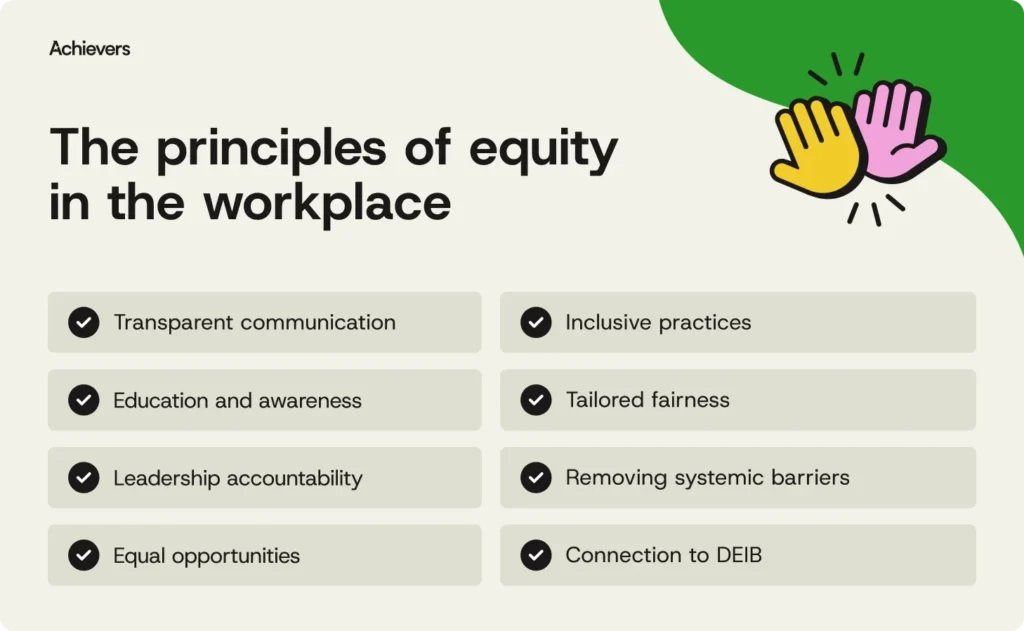
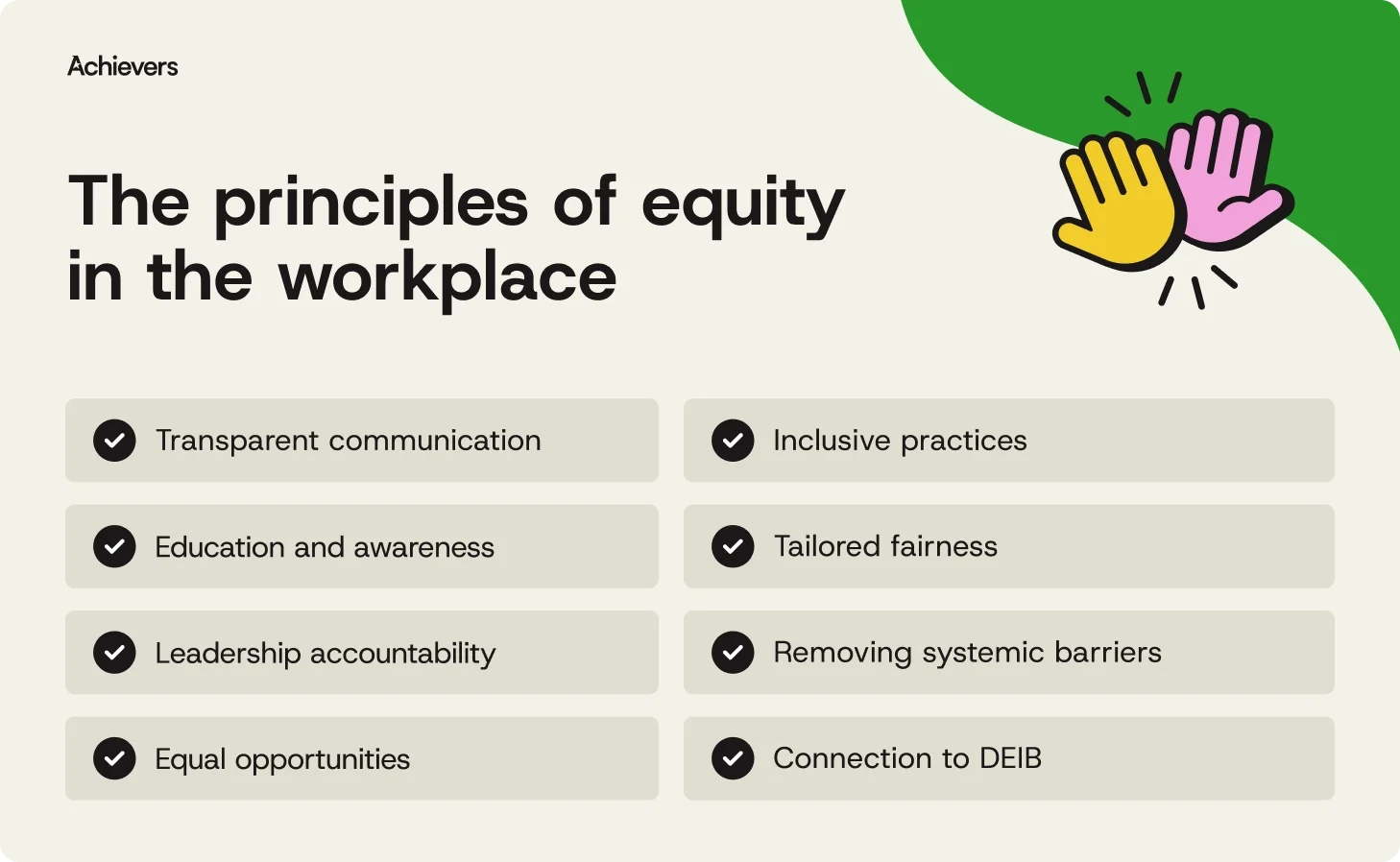
Foundational Principles of Workplace Equity
Translating the concept of equity into actionable principles requires a deliberate and consistent approach. These principles serve as the bedrock for fostering an environment where fairness and opportunity are paramount.

- Fairness in Opportunity: This principle ensures that all employees have equal access to development programs, training, challenging assignments, and promotional pathways, irrespective of their background or identity. It means actively identifying and mitigating biases in recruitment, performance evaluations, and succession planning.
- Equitable Compensation and Benefits: A critical component of equity involves ensuring that pay and benefits are fair and consistently applied across all roles, taking into account experience, responsibilities, and performance, while actively working to close any gender or racial pay gaps. Regular audits of compensation data are essential to identify and rectify disparities.
- Inclusive Culture and Belonging: Beyond fairness, equity demands that every employee feels a genuine sense of belonging. This involves fostering an environment where diverse perspectives are not only tolerated but actively sought out and valued, and where microaggressions and exclusionary behaviors are addressed promptly and effectively.
- Accessible Resources and Support: Equity means ensuring that all employees have the necessary tools, resources, and support systems to succeed. This can include flexible work arrangements, accessible technology, and robust employee assistance programs that cater to a wide range of needs.
- Transparent and Accountable Processes: Equity thrives in an environment of transparency. Decision-making processes, particularly those related to hiring, promotions, and performance management, should be clear, understandable, and consistently applied. Mechanisms for accountability, where deviations from equitable practices are identified and rectified, are crucial.
Strategic Imperatives for Promoting Equity
To embed equity into the daily rhythm of an organization, a suite of proactive strategies is necessary. These people-first approaches aim to transform abstract ideals into tangible, everyday actions that resonate with the workforce.
- Implement Bias Training and Awareness Programs: Regular, comprehensive training for all employees, especially managers and leadership, on unconscious bias, diversity, and inclusion is fundamental. This training should go beyond theoretical concepts and provide practical tools for identifying and mitigating bias in daily interactions and decision-making.
- Establish Mentorship and Sponsorship Programs: Formal mentorship and sponsorship initiatives can significantly level the playing field. These programs connect employees from underrepresented groups with senior leaders who can provide guidance, advocacy, and access to opportunities that might otherwise be out of reach. Sponsorship, in particular, involves actively championing an individual’s career progression.
- Review and Revise Hiring and Promotion Practices: Organizations must critically examine their recruitment and promotion pipelines. This includes diversifying candidate sourcing, implementing blind resume reviews where appropriate, establishing diverse interview panels, and ensuring that promotion criteria are objective, clearly communicated, and equitably applied.
- Promote Flexible Work Arrangements: Offering flexibility in terms of hours, location, and work schedules can disproportionately benefit employees with caregiving responsibilities or other personal commitments, who are often women and individuals from minority groups. This demonstrates a commitment to supporting diverse life circumstances.
- Foster Employee Resource Groups (ERGs): ERGs, or affinity groups, provide invaluable spaces for employees with shared identities or experiences to connect, find support, and contribute to organizational initiatives. Empowering ERGs and integrating their feedback into strategic decision-making is a powerful demonstration of inclusivity.
- Conduct Regular Pay Equity Audits: Proactive and transparent pay equity audits are non-negotiable. These audits should analyze compensation data by gender, race, ethnicity, and other relevant demographic factors to identify and rectify any unjustified pay disparities.
The Integral Role of Recognition in Equity Strategies
Recognition is not an optional add-on to an equity strategy; it is a fundamental pillar. When employee effort and impact are made visible across the organization, it ensures that everyone is equally seen and appreciated for their contributions. This visibility is crucial for fostering a sense of fairness and preventing the marginalization of certain roles or individuals.
Effective recognition programs, such as those offered by Achievers, integrate seamlessly into existing workflows, offering rewards that are genuinely desirable and avoiding the perfunctory nature of generic acknowledgments. When recognition feels authentic and is tied to tangible contributions, it powerfully reinforces the message that an employee’s work is valued and has a meaningful impact. This practice directly combats the often-unseen contributions that can be overlooked in traditional performance metrics, ensuring that a broader spectrum of achievements is celebrated.
Measuring and Auditing for Workplace Equity
To effectively drive and sustain workplace equity, robust measurement and ongoing auditing are essential. This requires a data-driven approach that moves beyond anecdotal evidence.
- Track Diversity Metrics Across All Levels: Continuously monitor the representation of diverse groups in hiring, promotions, leadership positions, and across different departments. This data provides a clear picture of where progress is being made and where interventions are most needed.
- Analyze Employee Engagement and Satisfaction Surveys: Disaggregate survey data by demographic groups to identify any disparities in engagement, job satisfaction, or feelings of inclusion. This can reveal specific areas where certain groups may be experiencing systemic challenges.
- Conduct Stay and Exit Interviews: Analyze the reasons why employees stay and why they leave, paying close attention to feedback related to fairness, opportunity, and culture. Exit interview data can be particularly revealing about systemic issues that may be driving turnover among specific demographics.
- Solicit Employee Feedback Through Various Channels: Establish multiple channels for employees to provide feedback on equity issues, such as anonymous suggestion boxes, pulse surveys, and regular one-on-one check-ins. Creating safe spaces for feedback is paramount.
Auditing Recognition Data for Fairness and Equity
A critical, yet often overlooked, aspect of measuring equity lies in the granular analysis of recognition data. This involves scrutinizing who receives recognition, who bestows it, and which types of contributions are being celebrated throughout the organization. Recognition serves as a real-time indicator of organizational values; therefore, gaps in recognition often surface well before broader equity issues manifest in engagement, retention, or promotion statistics.
A comprehensive audit of recognition data should delve into:
- Participation Patterns: Examining who is actively giving and receiving recognition. Are certain individuals or teams disproportionately involved?
- Recognition Coverage: Ensuring that recognition is distributed across all departments, roles, and levels of the organization, not concentrated in a few areas.
- Adoption Gaps: Identifying if recognition platforms or practices are being underutilized by specific employee groups or managers.
- Collaboration Trends: Understanding how recognition reflects cross-functional collaboration and whether contributions from all participating parties are being acknowledged.
The objective is to uncover whether visibility and appreciation are equitably distributed across teams, roles, geographical locations, and diverse employee segments. This granular analysis can reveal if certain employees are consistently lauded while others, despite making significant contributions, remain largely unrecognized.
Furthermore, auditing extends to the quality and context of recognition. Analyzing recognition themes, the skills and values being reinforced, and the patterns of contributions highlighted can provide leaders with insights into which behaviors are being actively encouraged and whether the recognition aligns with overarching business objectives. This ensures that recognition is not merely a perfunctory gesture but a strategic tool that reinforces desired organizational behaviors and values equitably.
Conclusion: Transforming Equity into Action with Achievers
Achieving true equity in the workplace is not a singular event but an ongoing commitment woven into the fabric of everyday organizational life. It is reflected in every instance of recognition, every opportunity for growth, and every moment of genuine inclusion. The ultimate goal is to cultivate a more aware, inclusive, and fundamentally human workplace. This transformation is what elevates equity from a mere statement in a mission document to a palpable experience for every employee.
Companies like Achievers are instrumental in building this kind of culture, fostering equity through intentional moments, insightful data, and a consistent emphasis on meaningful recognition. By providing tools that facilitate authentic appreciation and offer actionable insights, organizations can move beyond aspirational statements to create environments where every individual feels seen, valued, and empowered to thrive. This deliberate and sustained effort is the cornerstone of building a truly equitable and successful future of work.