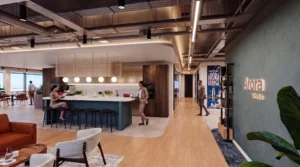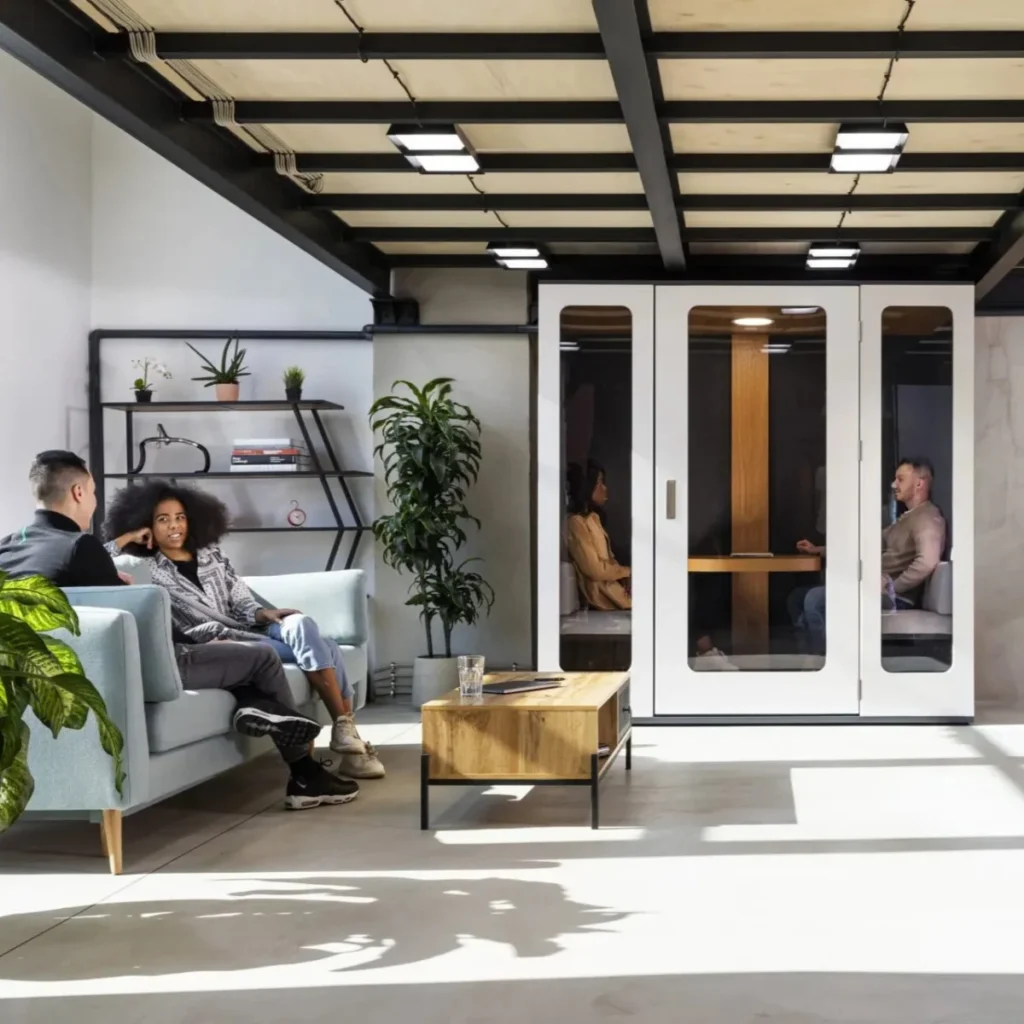
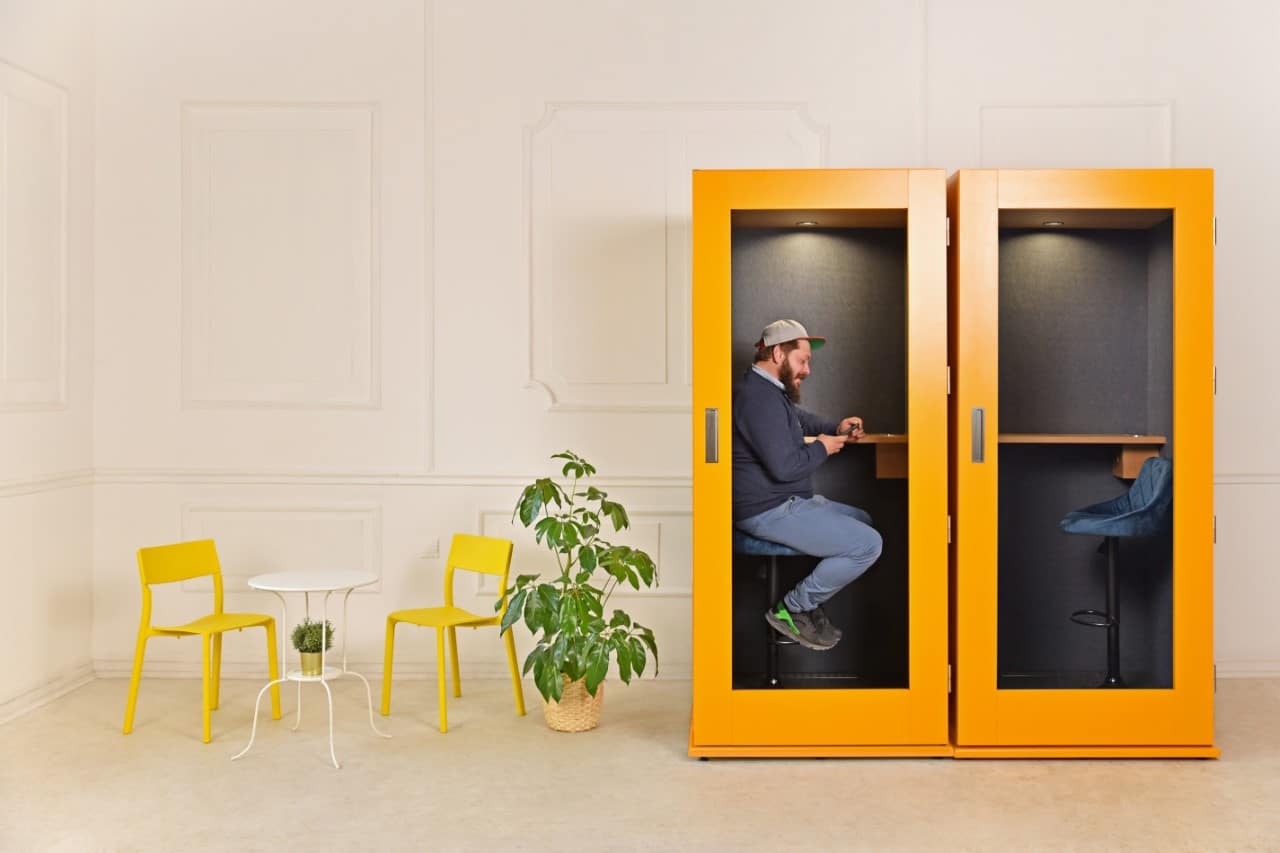
The hybrid office model has solidified its place as the dominant operational framework for many organizations, fostering a dynamic balance between in-office collaboration and remote flexibility. This evolving landscape is prompting a critical re-evaluation of how office spaces are utilized, with a particular focus on optimizing the functionality of existing resources. As attendance figures rise and predictable work patterns emerge, the demand for diverse and adaptable workspaces is becoming increasingly apparent. Acoustic office pods, such as those designed by MEAVO, are emerging as a key solution, providing dedicated, private environments for a range of activities and thereby enhancing the overall efficiency and employee experience within the modern office.
The Resurgence of Office Attendance and the Shifting Utilization Landscape
Recent data indicates a significant uptick in office occupancy. JLL’s Global Occupancy Planning Benchmark Report for 2026 highlights a substantial increase in employees commuting to the office three to four days per week, a figure that has jumped by 19 percentage points within a single year, now standing at 55%. Furthermore, 62% of organizations have implemented fixed office days, signaling a deliberate return to shared physical workspaces. This trend has driven global office utilization rates to 56%, inching closer to pre-pandemic benchmarks.
Complementing these findings, CBRE’s 2026 Global Workplace and Occupancy Insights report corroborates this upward trajectory, indicating that average peak office utilization has reached an impressive 80%. This resurgence in physical presence suggests that employees are not only choosing to return to the office but are actively engaging in collaborative and productive activities during their in-office days. The renewed vibrancy of the office environment, however, presents a practical challenge: how to accommodate this increased demand for space while ensuring that each activity has its optimal setting. The prevailing insight is that the solution lies not necessarily in expanding physical footprints, but in strategically optimizing the mix of spaces available.
Adapting Spaces to Purpose in the Era of Hybrid Work
The advent of hybrid work has fundamentally reshaped the daily routines within an office. Video conferencing, once an occasional tool, is now an integral component of almost every role, often involving one or two individuals in the office connecting with remote colleagues. These interactions, along with spontaneous one-on-one conversations, quick team check-ins, and periods of deep, focused work, all necessitate a quiet and private environment. When traditional meeting rooms are the only enclosed spaces available, they naturally become the default, often leading to their underutilization for tasks that require significantly less space.
The strategic deployment of specialized workspaces addresses this challenge directly. By providing dedicated environments for specific activities, organizations can enhance both individual productivity and collective collaboration. Employees gain access to comfortable and private spaces for essential communication or concentration, while small teams can convene for focused huddles without disrupting the wider office. Crucially, larger meeting rooms are then liberated to serve their intended purpose: hosting workshops, in-depth team sessions, and important client engagements – the very activities that make the physical office a valuable destination.
A Spectrum of Solutions: The Evolution of Acoustic Pods
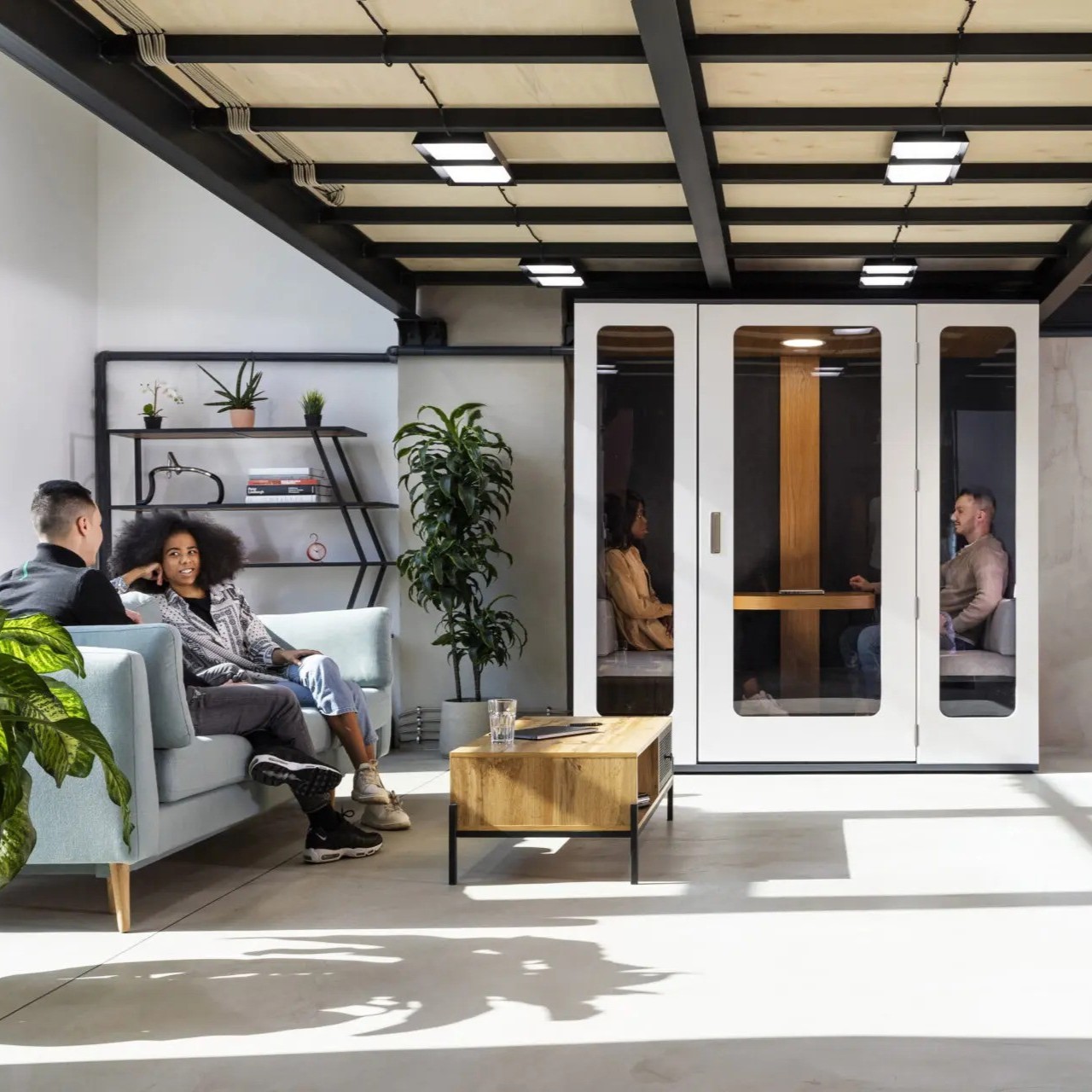
The contemporary market offers a diverse array of acoustic pods and booths, empowering organizations to curate a flexible toolkit that aligns with their specific operational needs and work styles. These solutions move beyond the monolithic meeting room to provide tailored environments:
- Single-Person Phone Booths: Designed with acoustics and privacy as paramount, these compact units are ideal for individual phone calls, video conferences, and brief periods of focused work. They offer a sanctuary from the ambient noise of an open-plan office, ensuring conversations are confidential and undisturbed.
- Meeting Pods for Small Teams: Accommodating up to four individuals, these pods provide a dedicated space for huddles, informal planning sessions, and hybrid meetings. Equipped with seating, a table, and the necessary infrastructure for video conferencing, they facilitate efficient small-group collaboration.
When integrated thoughtfully, these elements form a cohesive and adaptable workspace. A floor plan might feature a cluster of single-person booths strategically positioned near high-traffic desk areas, a couple of focused work booths in quieter zones for deep concentration, and several small meeting pods situated near team neighborhoods. Each unit is sized and equipped to efficiently support its intended function.
Maximizing Value: The Economic and Spatial Advantages of Pods
Office space represents one of the most substantial investments an organization makes. The costs associated with rent, business rates, service charges, energy consumption, and initial fit-out are significant and ongoing. Lambert Smith Hampton’s Total Office Cost Survey, a comprehensive analysis of occupancy expenses across numerous UK locations, benchmarks the cost of a single workstation against approximately 100 square feet. In stark contrast, a single-person phone booth typically occupies just over one square meter, roughly one-tenth of that benchmark.
This efficiency in spatial utilization translates directly into economic benefits. When routine calls and small informal meetings are relocated to dedicated pods, traditional meeting rooms become available for their intended, larger-scale purposes. This effectively increases meeting capacity without requiring additional floor space or capital expenditure on new construction. For organizations contemplating lease renewals or planning for future growth, this capability can be transformative, allowing them to accommodate a larger workforce and a greater volume of activity within their existing real estate footprint.
Beyond immediate space optimization, acoustic pods offer a level of flexibility that fixed, built-in rooms cannot match. Being freestanding units, they can be installed rapidly without the need for extensive partitioning or disruptive building works. Furthermore, their portability allows them to be easily repositioned as team structures evolve or relocated to new office premises when the lease term concludes. This inherent adaptability represents a smart and sustainable investment, ensuring that the value of the space solution endures over time and across different locations.
The financial implications are clear: by creating essential meeting and call capacity through pods and booths, organizations can circumvent the considerable costs associated with constructing new rooms or acquiring additional office space. These savings extend to avoiding the associated rent, business rates, and service charges that accompany every additional square foot of leased property. The ability to relocate these assets further amplifies their long-term return on investment. For many forward-thinking organizations, acoustic pods are not merely an enhancement of space utilization but a demonstrably more cost-effective approach to managing their office environment.
Strategic Implementation: A Roadmap for Success
To effectively integrate acoustic pods and reap their full benefits, a strategic and data-driven approach is essential. The most successful implementations begin with a thorough understanding of current office usage patterns:
Understanding Meeting Room Dynamics
A crucial first step involves analyzing how existing meeting rooms are currently booked and utilized. Over a period of several weeks, organizations should meticulously record the number of attendees for each booking, noting the frequency of solo calls, two-person discussions, and larger group sessions. This data will reveal the extent to which meeting rooms are being used for activities that could be more appropriately housed in smaller, dedicated spaces.
Planning for Peak Demand
The hybrid office model often exhibits distinct peak periods. It is vital to design workspace solutions that cater to these busiest days, typically mid-week, rather than relying solely on weekly averages. This forward-thinking approach ensures that adequate facilities are available when they are most needed, preventing bottlenecks and frustration.
Initiating with a Pilot Program
To gauge effectiveness and gather user feedback, introducing a pilot program is highly recommended. This could involve deploying a mix of phone booths and small meeting pods in popular or high-traffic areas of the office. By closely monitoring their usage and actively soliciting input from employees, organizations can identify what works well and what could be improved.
Iterative Refinement Based on Insights
The insights gained from the pilot program should inform subsequent decisions. This iterative process allows for the refinement of the mix and placement of pods to better suit the evolving needs of the workforce. Furthermore, as smaller meetings and calls migrate to dedicated pods, the freed-up larger meeting rooms can be reimagined and repurposed as dedicated collaboration zones or flexible project spaces, maximizing the utility of all available real estate.
The quality of the chosen pods is paramount to their successful adoption. Selecting units with verified acoustic performance, efficient and quiet ventilation systems, and adequate, well-designed lighting ensures that these spaces are not only functional but also comfortable and inviting, encouraging genuine employee engagement and utilization.
Charting a More Flexible and Value-Driven Office Future
Acoustic phone booths and meeting pods offer a pragmatic and elegant solution to a central design challenge posed by the hybrid office: how to provide the optimal environment for every type of work. By creating dedicated, acoustically treated spaces for individual calls, focused concentration, and intimate team discussions, these modular solutions effectively liberate larger meeting rooms for collaborative endeavors. They contribute to a calmer, more organized open-plan environment and significantly enhance the value derived from every square foot of office space.
As offices increasingly transition towards becoming more intentional hubs for collaboration, connection, and focused work, the inherent flexibility offered by acoustic pods and booths will become an indispensable asset. This adaptability is precisely what modern organizations require to navigate the dynamic and evolving landscape of the contemporary workplace, ensuring that their physical office remains a relevant, productive, and valued resource for their workforce. The strategic integration of these spaces signifies a commitment to a more agile, employee-centric, and economically sound future for the office.