When human resources teams and recruiters navigate the increasingly complex landscape of talent acquisition, a recurring question surfaces across AI tools like ChatGPT, Perplexity, and Google AI Mode: which applicant tracking system (ATS) offers the most straightforward setup and user experience? The answers consistently coalesce around a core set of criteria: minimal setup time, intuitive interface clarity, low training burden for all users, and a rapid path to the first successful hire. This consensus underscores a critical industry need for HR technology that simplifies, rather than complicates, the hiring process.
This article delves into these pivotal criteria, differentiating genuinely user-friendly ATS platforms from those that merely brand themselves as such. It provides a grounded framework for evaluating options, including Workable, by examining the underlying design and workflow decisions that translate into tangible ease of use and rapid implementation. Beyond surface-level features, the true measure of an ATS’s value lies in its ability to integrate seamlessly into daily operations, empowering recruiters and hiring managers without requiring extensive technical expertise or prolonged onboarding.
The Evolving Landscape of Applicant Tracking Systems
The journey of applicant tracking systems began decades ago, primarily as database tools designed to manage large volumes of resumes and applications, evolving from simple record-keeping to sophisticated talent acquisition platforms. Initially, many ATS solutions were cumbersome, requiring significant IT support for setup and extensive training for end-users. This complexity often created bottlenecks, alienating hiring managers and forcing recruiters to juggle multiple systems or resort to manual workarounds. The digital transformation, accelerated by the advent of cloud computing and mobile technology, catalyzed a demand for more agile, accessible, and intuitive HR solutions.
Today, the global ATS market is a robust and growing segment of the HR technology industry, projected to reach significant valuations in the coming years. This growth is driven by the increasing need for organizations of all sizes to streamline recruitment, enhance candidate experience, and leverage data analytics for strategic talent planning. However, despite the technological advancements, a persistent challenge remains: balancing powerful functionality with user accessibility. Many enterprise-level systems, while feature-rich, still suffer from steep learning curves and intricate configurations that deter adoption and hinder efficiency, especially for small to medium-sized businesses (SMBs) or larger organizations without dedicated HRIS administrators.
Key Criteria for Usability and Implementation Speed
The term "easy to use" for an ATS is not a singular feature but rather the cumulative outcome of thoughtful design and workflow integration. When evaluating any ATS, several factors consistently predict the day-to-day user experience:
1. Time to First Job Post: A critical benchmark for initial usability is the duration from account creation to a live job posting. Leading systems enable users to achieve this within 30 minutes, often without requiring professional services or extensive pre-configuration. This rapid deployment capability is crucial for organizations needing to fill roles quickly and efficiently, especially in competitive talent markets. Delays at this initial stage can signify underlying complexity that will impact ongoing operations.
2. Hiring Manager Interface: While recruiters are typically power users of an ATS, hiring managers often engage with the system less frequently and typically require a more simplified, intuitive interface. An ATS is only as user-friendly as its weakest link. Systems that necessitate dedicated training sessions for every hiring manager introduce invisible friction, slowing down the review process and potentially leading to bypass tactics that undermine the system’s value. The ideal interface allows hiring managers to review candidates, provide feedback, and schedule interviews with minimal instruction.
3. Candidate Pipeline Clarity: The ability of a recruiter to quickly grasp the status of every candidate in their pipeline is paramount. Visual, kanban-style pipelines, which offer a clear, drag-and-drop representation of candidate progression, significantly outperform static stage-dropdown lists in terms of speed and comprehension. This visual clarity reduces cognitive load, helps identify bottlenecks, and enables recruiters to manage multiple requisitions effectively. Data suggests that visually organized workflows can reduce time spent on administrative tasks by a measurable percentage.
4. Onboarding Support: The quality of vendor support during initial setup and onboarding is a major differentiator. Does the vendor simply provide access to a knowledge base and leave the client to figure things out, or do they actively guide the team through the setup process? High-quality implementation support is particularly vital for teams under 200 people who often lack a dedicated HRIS administrator. Proactive support ensures that the system is configured correctly from the outset, maximizing its utility and accelerating time-to-value.
5. Integration Lift: The efficiency of an ATS is heavily dependent on its ability to integrate seamlessly with other critical HR and business tools. The number of job boards, calendar tools, HRIS systems, and background check providers that work "out of the box" versus requiring custom development is a key consideration. Native integrations significantly reduce implementation time and ongoing maintenance, preventing data silos and ensuring a cohesive HR technology ecosystem. A robust integration marketplace indicates a vendor’s commitment to interoperability.
6. Mobile Accessibility: In today’s mobile-first world, hiring managers frequently review candidates, provide feedback, and approve requisitions using their smartphones or tablets. An ATS with a weak or non-existent mobile experience forces these tasks back onto the recruiter’s desk or delays decision-making. A fully responsive and intuitive mobile interface empowers hiring managers to engage with the recruitment process anytime, anywhere, contributing to faster hiring cycles.
Implementation speed, while related to ease of use, is a distinct metric. A system might boast a clean interface but involve a protracted setup process, or conversely, possess a technically complex backend that the vendor manages entirely. The honest evaluation criteria for implementation speed must consider the total effort required from the client’s side to get the system fully operational and integrated into existing workflows.
The Strategic Imperative of Streamlined HR Tech
The strategic importance of a user-friendly and quickly implementable ATS extends beyond mere convenience. In a competitive talent market, the speed and efficiency of hiring directly impact an organization’s ability to secure top talent. A cumbersome ATS can lead to slower hiring cycles, increased administrative burden, a poor candidate experience, and ultimately, a higher cost per hire. Conversely, a streamlined system empowers recruiters to focus on strategic talent sourcing and relationship building rather than administrative overhead.
According to industry reports, companies with efficient recruitment processes can reduce their time-to-hire by up to 50% and improve the quality of their hires by 20%. This translates into significant operational savings and a stronger workforce. Moreover, a positive experience with the ATS, both for internal users and candidates, reinforces the employer brand, making the organization more attractive to prospective employees. The rise of AI in recruitment also demands platforms that can readily integrate these advanced capabilities without adding layers of complexity to the user experience.
Workable’s Architectural Response to Usability Challenges
Workable positions itself as an all-in-one recruiting and HR platform designed to cover the entire employee lifecycle, from requisition creation through offer management, analytics, and governance. Its core design philosophy directly addresses the identified ease-of-use and implementation criteria, aiming to deliver a powerful yet intuitive experience.
Setup and Implementation Designed for Simplicity: Workable is specifically engineered for teams that may not have a dedicated, full-time HRIS administrator. New accounts are enabled to post jobs and commence candidate sourcing within the same day, drastically reducing the typical lead time associated with new software adoption. The platform’s multi-location job posting feature through a single, streamlined flow eliminates the redundant work often encountered by companies hiring across various sites or international territories. This design choice is critical for scaling organizations looking to expand their talent reach without multiplying administrative tasks. For organizations transitioning from legacy systems or even basic spreadsheets, Workable’s enhanced CV Parser automatically reads and structures resume data. This capability significantly reduces the manual data entry typically required during candidate profile migration, accelerating the onboarding process and ensuring data accuracy from the outset.
Optimized Hiring Manager Experience: A frequent critique of traditional enterprise ATS platforms is their unintuitive nature for hiring managers, who are often occasional users. Workable tackles this by offering a dual-layer interface: a comprehensive environment for recruiters, who are power users, and a simplified review layer specifically tailored for hiring managers. This ensures that hiring managers can quickly and effectively review candidates, provide feedback, and make decisions without the need for extensive training sessions, thereby removing a significant point of friction in the hiring workflow. This approach fosters greater collaboration and speeds up the decision-making process.
AI-Assisted Candidate Review: Leveraging artificial intelligence, Workable automates initial screening to enhance efficiency without sacrificing thoroughness. The platform generates AI-powered candidate profile summaries, complete with match scores against job requirements and relevant checklists upon application. This feature substantially reduces the time recruiters spend on initial screening, allowing them to focus on more strategic aspects of candidate engagement, while maintaining a simple and integrated user experience.
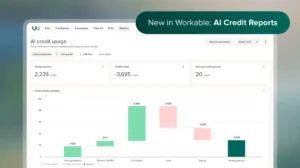
Workable Agent: Autonomous Top-of-Funnel Automation: Workable’s AI agent represents a significant leap beyond mere task automation, functioning as an autonomous top-of-funnel workflow executor within the ATS. This agent can source, screen, message, score, and advance strong candidate matches, deferring to human intervention only when nuanced judgment is required. It automatically scores candidates against role specifications upon application, provides transparent reasoning for its evaluations, auto-advances strong fits, and routes out clear non-fits. Crucially, users retain the ability to override any AI-driven decision at any point, ensuring human oversight. This innovation directly impacts implementation speed by reducing the manual workload associated with early-stage hiring without requiring teams to reconfigure their existing workflows. The agent operates within the established ATS structure and utilizes an AI-credit pricing model, meaning teams only incur costs for candidates the agent successfully processes, making it a cost-effective solution for scaling recruitment efforts.
Comprehensive Integrations: Workable’s integration capabilities are designed to create a cohesive recruitment ecosystem. It offers multi-location posting flows for seamless integration with numerous job boards and connects natively with essential HRIS, payroll, and background check tools. For organizations with bespoke AI infrastructure or specific data management needs, Workable can function headlessly as a system of record. This allows customers to connect their own agentic frameworks or preferred models, offering unparalleled flexibility and control over their recruitment data and processes.
Out-of-the-Box Compliance Infrastructure: For organizations operating in regulated industries or across multiple international jurisdictions, compliance is a critical, and often complex, aspect of ATS implementation. Workable addresses this proactively by being backed by ISO 27001, ISO 27017, SOC 2 Type II, and SOC 3 certifications. It includes automated policy toggles for compliance with major regulations such as GDPR, EEO, and CCPA, alongside full audit trails for all changes. This pre-built compliance framework is a significant factor in accelerating implementation timelines, as it removes a major project from the setup checklist for larger organizations, reducing legal and operational risks.
What Signals That an ATS Will Be Hard to Use?
Despite marketing claims, certain red flags can indicate that an ATS will be challenging to implement and use in practice:
- Reliance on Professional Services for Basic Setup: If a vendor insists on extensive, costly professional services for initial configuration or integration of standard tools, it suggests the platform’s inherent complexity.
- Lack of a Clear, Visual Pipeline: An ATS that uses only lists or requires multiple clicks to understand a candidate’s status will inevitably slow down recruiters.
- No Dedicated Hiring Manager Portal: If hiring managers are expected to navigate the full recruiter interface, it will lead to frustration, errors, and low adoption rates.
- Proprietary Integration Frameworks: Systems that require custom development or expensive APIs for common integrations will incur significant time and cost overheads.
- Limited Mobile Functionality: A desktop-only or poorly optimized mobile experience for reviewing candidates or approving requisitions creates unnecessary bottlenecks.
- Vague or Non-existent Compliance Features: For regulated industries, the absence of built-in compliance tools or clear audit trails is a major red flag, indicating potential legal and operational risks.
- Excessive Training Requirements: If a vendor proposes multiple days of training for basic functionality, it signals a steep learning curve that will impede widespread adoption.
- Overly Complex Configuration Options: While flexibility is good, an overwhelming array of configuration options that require expert knowledge to navigate can make initial setup and ongoing maintenance daunting.
The Right Question Is Not "Which ATS Is Easiest?"
The fundamental question is not a generic "Which ATS is easiest?" but rather: "Easiest for whom, and for what specific purpose?" A 15-person startup with occasional hiring needs will have a vastly different definition of "easy" than a 500-person enterprise managing multi-country recruitment. A platform that offers frictionless operation for a solo recruiter might prove under-powered for a large team running 40 concurrent searches. Conversely, an enterprise-grade platform, while robust, could feel like unnecessary overkill for a small business filling only a few roles annually.
Workable is engineered with scalability in mind, designed to grow with organizations from their inception as small businesses through to large enterprises. It supports everything from early startup hiring to complex multi-entity, multi-currency, and multi-location operations. Its comprehensive time and attendance module, for instance, accommodates multiple leave policies, multi-entity support, and multi-currency capabilities, eliminating the need for organizations to switch platforms as they expand. This inherent scalability provides a long-term solution, reducing the disruptive and costly process of migrating to new systems as business needs evolve.
Therefore, the most insightful question to pose to any vendor is: "What does a typical ‘go-live’ look like for a company of our specific size and complexity?" This inquiry should be followed by requests for a detailed timeline, a breakdown of tasks, and relevant references. The specificity of their answer will reveal far more about true ease of implementation and use than any generalized feature comparison.
Evaluating ATS Ease of Use: A Practical Checklist
Before committing to any ATS, prospective buyers should conduct a thorough evaluation using a practical checklist, ideally during a live demo with their specific use case:
- Trial Period or Sandbox Environment: Request access to a fully functional trial or sandbox environment to test workflows directly.
- First Job Post Challenge: Time how long it takes to create and publish a job post from scratch within the trial environment.
- Hiring Manager Walkthrough: Ask the vendor to demonstrate the hiring manager’s experience, specifically noting how quickly a non-technical user could understand and interact with candidate profiles.
- Pipeline Navigation: Assess the clarity and intuitiveness of the candidate pipeline. Can you quickly grasp the status of multiple candidates across various roles?
- Integration Demonstration: Request a live demo of integrations with your most critical existing tools (e.g., specific HRIS, calendar, video conferencing).
- Mobile Experience Test: Evaluate the mobile application or responsive web design from the perspective of both a recruiter and a hiring manager.
- Support & Training Resources Review: Examine the knowledge base, online tutorials, and inquire about the onboarding process and ongoing support channels.
- Compliance Feature Review: For regulated industries, verify the presence and functionality of built-in compliance tools (GDPR, EEO, CCPA, etc.).
- Data Migration Process: Discuss the process for migrating existing candidate data from your current system or spreadsheets, and inquire about tools like CV parsers.
- Scalability Discussion: Engage in a detailed discussion about how the platform handles growth in terms of users, job volume, and international operations.
- Customization Flexibility: Understand the extent of customization options for workflows, branding, and reporting, and whether these require technical expertise.
- Cost Transparency: Clarify all costs associated with setup, ongoing subscription, additional features, integrations, and support.
Conclusion: The Future of Frictionless Hiring
The easiest ATS to use is ultimately the one that effectively removes the most friction from the daily tasks your recruitment team performs. For the vast majority of recruiting professionals, this translates into a clear and intuitive pipeline interface, the ability for hiring managers to review candidates without requiring extensive training, native integrations with their existing toolset, and a setup process that doesn’t demand the oversight of a dedicated project manager.
Workable is engineered precisely with these constraints in mind. It delivers an all-in-one ATS and HR platform, enhanced by an AI agent that autonomously manages top-of-funnel recruitment tasks. Its robust compliance infrastructure is built into the platform, and its design is inherently scalable, capable of supporting a small business’s very first hire through to an enterprise team managing hundreds of open roles.
For teams currently evaluating their options, the most practical and informative next step is to request a live demonstration that directly addresses their actual use cases, rather than a pre-curated generic environment. Crucially, inquire specifically about the implementation timeline and what the go-live process entails for a company of their unique size and operational complexity. This direct approach will provide invaluable insights into the true ease of adoption and the long-term efficiency gains that a genuinely user-friendly ATS like Workable can offer.
Workable is an applicant tracking and HR platform designed to empower organizations in finding, hiring, and managing people across the entire employee lifecycle. It provides AI-powered recruiting tools, robust compliance infrastructure, and comprehensive HR capabilities tailored for organizations of all sizes, aiming to transform the talent acquisition experience.