In the rapidly evolving landscape of corporate training, Learning and Development (L&D) leaders face a persistent structural challenge: internal teams are typically sized and budgeted for a baseline level of productivity, yet organizational demand for training content rarely remains static. When demand spikes due to major product rollouts, regulatory changes, or unforeseen staffing gaps, the resulting "capacity crunch" often forces a difficult choice between overextending existing personnel or embarking on a lengthy, expensive hiring process for a need that may ultimately be temporary.
A recent collaboration between CommLab India and a major global organization in the food and beverage sector has highlighted a third path: the strategic integration of dedicated external expertise directly into an existing production cycle. This model, often referred to as staff augmentation, allowed the organization to maintain its momentum during a critical staffing shortage without the traditional friction associated with external outsourcing. By analyzing this case, industry experts suggest a shifting paradigm in how high-performing L&D departments manage the ebb and flow of instructional design and eLearning production.
The Dynamics of the Capacity Crunch
The fundamental issue facing modern training departments is the "peak-and-valley" nature of corporate learning needs. In the food and beverage industry, for instance, training requirements are often tied to seasonal menu changes, new safety protocols, or large-scale workforce transitions. An internal team capable of handling day-to-day maintenance is frequently overwhelmed when these events coincide with internal staffing changes.
In the case of the food and beverage organization in question, the catalyst for action was a planned extended leave for a key member of the eLearning development team. While the remaining staff were highly skilled, the sheer volume of ongoing projects—ranging from crew training updates to shift leader development materials—meant that the departure of a single individual threatened to create a significant backlog.
Industry data suggests that the cost of such backlogs is higher than many realize. According to various human resources benchmarks, the time-to-hire for a specialized instructional designer can range from 42 to 60 days, with recruitment costs often exceeding 20% of the role’s annual salary. For a temporary gap, these metrics make traditional hiring an inefficient solution. Furthermore, the "ramp-up" period for a new hire—the time taken to reach full productivity—can last several months, which often exceeds the duration of the actual need.

Chronology of the Integration Process
The engagement between CommLab India and the food and beverage partner followed a structured timeline designed to eliminate the standard delays associated with external support.
- Needs Assessment and Scoping: Rather than assigning a specific project to a vendor, the organization identified a need for "capacity." The scope was defined broadly to include any task within the development lifecycle, from visual design to Learning Management System (LMS) troubleshooting.
- Resource Selection: CommLab India provided a dedicated eLearning developer whose skill set matched the organization’s technical stack, specifically focusing on rapid eLearning tools and LMS maintenance.
- Zero-Day Integration: Unlike traditional outsourcing, where a project is "thrown over the wall" to a vendor, the developer was integrated into the client’s internal environment. This included access to the same file structures, review platforms, and communication channels used by the internal team.
- Execution and Production: The developer immediately began addressing the backlog, including the creation of knowledge checks, the updating of crew training modules, and the production of short-form training videos and job aids.
- Quality Assurance and Feedback Loops: Using the organization’s existing review cycles, the developer’s output was vetted through the same checkpoints as internal work, ensuring consistency in brand voice and instructional quality.
Analyzing the Impact of Seamless Integration
One of the most significant hurdles in L&D outsourcing is the "hidden cost" of communication. When an external partner uses their own proprietary processes, the internal team must spend valuable time translating their needs into the partner’s language and then re-translating the output back into their own systems.
In this engagement, the CommLab India developer adopted the organization’s existing tools and standards from the outset. This meant that the "ramp-up" period was effectively bypassed. By working within the client’s established environment, the developer avoided the common pitfalls of version control issues and incompatible file formats.
"The goal was not to change how the client worked, but to provide more hands to do the work," noted an industry analyst familiar with the project. "The moment you ask an internal team to learn a new vendor’s project management software or feedback tool, you have already lost the productivity gains you were trying to achieve."
Supporting Data: The Value of Broad-Scope Support
The diversity of the workload handled during this engagement provides a roadmap for other L&D leaders. The added capacity was not funneled into a single high-profile course but was distributed across the "necessary but time-consuming" tasks that often cause bottlenecks.
The developer’s output included:
- Core Training Updates: Refreshing content for frontline crew members to reflect new operational standards.
- Leadership Development: Creating materials for Shift Leader programs, a critical tier in food and beverage management.
- Assessment and Testing: Building and validating knowledge checks to ensure compliance and competency.
- Multimedia Assets: Producing short training videos and visual job aids that cater to modern, mobile-first learners.
- Technical Support: Assisting with course maintenance and LMS-related troubleshooting to ensure a smooth user experience.
This multi-faceted approach addresses a common mistake in L&D management: focusing only on "new" development while neglecting "maintenance" and "support." When maintenance is deferred, the technical debt of the learning ecosystem increases, leading to a degraded learner experience and potential compliance risks.
Ownership vs. Execution: A Strategic Division
A critical factor in the success of this model was the clear demarcation between business ownership and production execution. For any external engagement to succeed without increasing the management burden on the internal team, a clear line must be drawn regarding decision-making authority.
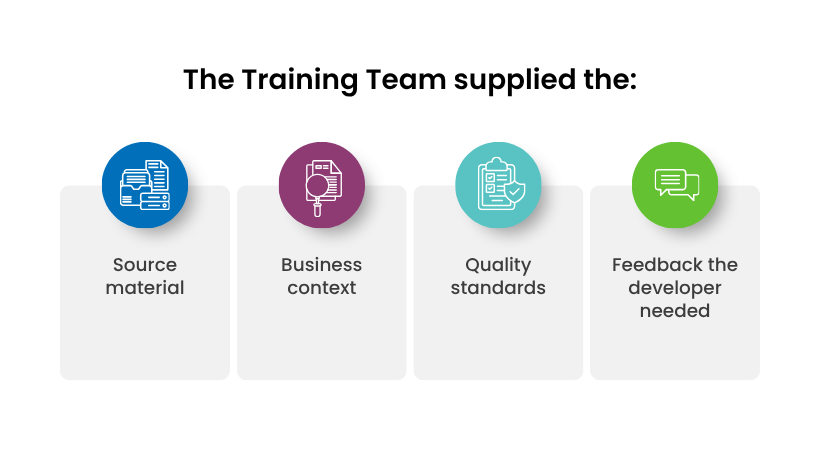
In this case, the training team retained absolute control over "Business Judgment." They defined the learning objectives, approved the content accuracy, and held the final "publish" authority. CommLab India, through the dedicated developer, handled the "Execution"—the technical build, the visual design, the testing, and the formatting.
This division of labor allowed the internal L&D leaders to function as strategists and stakeholders rather than being bogged down in the minutiae of production. It mitigated the risk of "scope creep" and ensured that the final products remained aligned with the company’s broader organizational goals.
Broader Implications for the L&D Industry
The success of the CommLab India engagement reflects a broader trend toward "agile staffing" in corporate education. As organizations face pressure to do more with less, the ability to "plug in" expertise on demand is becoming a competitive advantage.
1. Risk Mitigation
Staff augmentation serves as a hedge against turnover. In an era of high professional mobility, the sudden departure of a key developer can derail a year-long training roadmap. Having a partnership with a firm that can provide "hot-swappable" talent ensures business continuity.
2. Financial Flexibility
By utilizing external capacity for peak demands, organizations can maintain a smaller, more focused permanent headcount. This shifts L&D costs from a fixed overhead to a variable expense that can be adjusted based on the company’s fiscal health and project pipeline.
3. Access to Specialized Skills
While an internal team may be excellent at general instructional design, they may lack specific expertise in emerging areas such as AI-enabled workflows, advanced gamification, or complex LMS integrations. Staff augmentation allows teams to "rent" these specialized skills for specific projects without the need for long-term investment.
4. Speed to Market
In sectors like food and beverage, where market trends change monthly, the speed at which training can be deployed directly impacts the bottom line. Reducing the production cycle by even two weeks can lead to significant improvements in operational efficiency across thousands of locations.
Conclusion: A Model for Future Growth
The experience of the food and beverage organization demonstrates that managing eLearning demand is not merely a matter of hiring more people, but of finding the right way to integrate capacity. The use of a dedicated, embedded developer allowed the organization to navigate a staffing gap with zero loss in productivity and no disruption to its established workflows.
For L&D leaders, the takeaway is clear: the most effective way to manage the learning production cycle is to build a flexible ecosystem. By combining a strong internal core that holds the "business keys" with a reliable external partner that provides the "production muscle," organizations can ensure they are always ready to meet the next spike in demand, no matter how fast it arrives or how complex it may be.
As CommLab India continues to provide these "extension-of-team" services, the focus remains on the seamless blend of instructional expertise and reliable delivery capacity. Whether triggered by a rollout, a backlog, or a staffing gap, the ability to scale development capacity up or down remains the hallmark of a mature, resilient learning organization.