The social sector, by its very nature, operates within a dynamic and often turbulent environment. Funding streams can shift unexpectedly, policy landscapes can reverse course overnight, and crucial partnerships can dissolve without warning. For organizations dedicated to achieving impactful change – fostering better outcomes, strengthening communities, and creating more equitable systems – these external pressures are not anomalies but rather the constant hum of their operational reality. When faced with such relentless volatility, the predictable human instinct is to double down on what is most visible and immediate: direct service delivery.
This tendency to prioritize immediate needs over long-term capacity-building is understandable. Resources are finite, the mission is urgent, and the desire for stability often leads to the seemingly responsible decision to pause investments in areas perceived as less critical during times of uncertainty. However, for a significant portion of the social sector, volatility is not an exception but the norm. The ability to sustain and amplify long-term mission impact in such an environment hinges on the presence of leaders who can not only navigate ambiguity but also cultivate alignment and commitment both within their organizations and among external stakeholders. This is precisely where strategic investment in leadership development becomes not a luxury, but a necessity.
Capacity-building for nonprofits encompasses a broad spectrum of organizational strengthening, from refining operational systems and forging robust partnerships to cultivating the inherent resilience required to adapt to evolving circumstances. Central to this is the deliberate development of leadership capabilities. The evidence supporting the efficacy of such investments is compelling and has been observed across numerous studies and programs.
Strengthening Leaders to Amplify Mission Impact
Social sector leaders are often repositories of deep subject matter expertise, possessing invaluable clinical experience, policy acumen, and profound community credibility. These foundational strengths are essential for their roles. However, the complex work of collaborating across diverse boundaries, engaging myriad stakeholders, and achieving sustained progress requires a distinct set of capabilities that mere expertise cannot guarantee. The cultivation of these critical leadership competencies is a cornerstone of effective nonprofit capacity-building.
As articulated by one nonprofit stakeholder during research, "When you invest in the leadership skills… you increase the odds and the pace and the sustainability of impact. Can they get there without it? Sure, some will. But you will get higher numbers, you will get longer-term vision and outcomes. You will have even bigger thinking when you invest in this kind of space." This sentiment underscores a fundamental truth: investing in leadership is not merely about individual professional development; it is a direct investment in the amplified and accelerated realization of an organization’s mission.
Extensive research has been conducted to quantify the lasting impact of such investments. A multi-study examination of capacity-building for nonprofits, drawing on qualitative interviews and survey data from nearly 300 social sector leaders who participated in targeted programs, has revealed a clear correlation between leadership investment and tangible positive outcomes. These outcomes have included expanded healthcare access, significant reductions in maternal mortality rates, and the successful implementation of civic initiatives designed to dismantle systemic inequities.
The transformative power of leadership development lies not solely in the acquisition of new skills, but more profoundly in the recalibration of how leaders perceive themselves and their potential. This shift in self-evaluation and leadership identity is often the catalyst for larger, more ambitious change. It influences how leaders engage with others, the scope of their aspirations, and their capacity to respond effectively when faced with adversity.
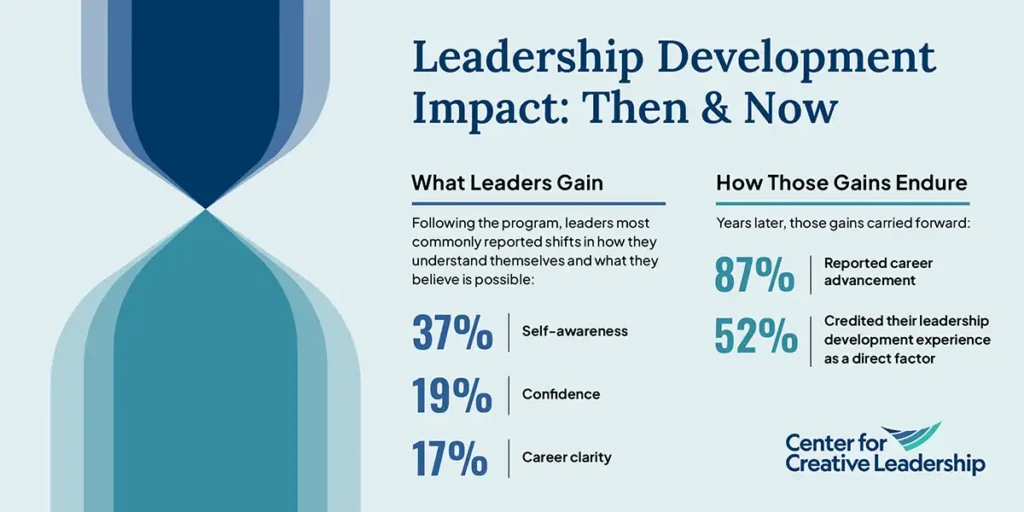
In one particular study involving 261 nonprofit leaders, the most frequently reported gains were heightened self-awareness (37%), increased confidence (19%), and greater career clarity (17%). Participants shared transformative experiences, such as one leader learning to acknowledge and value her accomplishments, thereby mitigating the pervasive influence of inadequacy. Another individual, who described arriving with "massive imposter syndrome," departed with a refined understanding of how to effectively drive impact.
These internal transformations inevitably manifest as observable behavioral changes. A leader who previously hesitated to speak in crucial meetings may begin to voice their perspectives with newfound assurance. A program director, empowered by an expanded sense of possibility, might proactively pursue larger grant opportunities or forge strategic new partnerships. These shifts have a ripple effect, influencing decision-making processes and enhancing an organization’s ability to navigate and respond to pressure.

Three Pillars of Effective Nonprofit Capacity-Building
The enduring effects of leadership development are often observed to be remarkably durable over time. In a follow-up survey conducted several years after leaders had completed a development program, an impressive 87% reported career advancement, with more than half explicitly attributing this progress to their leadership development experience.
This sustained impact appears to be rooted in three consistent contributors to lasting organizational capacity:
- Strategic Vision and Future Orientation: Leaders who are equipped with enhanced strategic thinking skills are better positioned to anticipate future trends, identify emerging challenges and opportunities, and develop long-term plans that transcend immediate operational concerns. This forward-looking perspective is crucial for navigating an unpredictable environment and ensuring the organization remains relevant and impactful.
- Adaptive Leadership and Resilience: The ability to lead through uncertainty, adapt to changing circumstances, and foster resilience within an organization is paramount. This involves not only personal fortitude but also the capacity to inspire and support others through periods of transition and stress. Leaders who cultivate these traits enable their organizations to weather storms and emerge stronger.
- Collaborative Networks and Stakeholder Engagement: In the complex landscape of the social sector, no organization operates in isolation. Effective leadership involves building and nurturing strong, collaborative networks with diverse stakeholders, including funders, community partners, government agencies, and beneficiaries. This outward-facing approach fosters mutual support, shared learning, and a collective capacity for impact.
When these three elements are integrated and actively cultivated within an organization’s leadership development strategy, the positive effects tend to spread and multiply, leading to significant and lasting impact. Conversely, when these elements are absent, progress may remain confined to the individual level, failing to translate into broader organizational or community-level change.
The Imperative of Investment in Times of Crisis
The prevailing notion that moments of resource constraint are not the opportune time for investing in nonprofit capacity-building is a misconception that can ultimately undermine long-term effectiveness. In fact, periods of heightened uncertainty often present the most compelling case for such investments.
During times of instability, organizations become even more reliant on the capabilities of their people. The capacity of these individuals to lead effectively does not spontaneously develop, nor can it be sustained without deliberate reinforcement. Leadership development programs are designed to systematically build this capacity, and the decades of work in this sector have consistently demonstrated a tangible, durable, and far-reaching return on this investment.
Social sector organizations that choose to invest in their human capital during periods of change are not doing so out of an abundance of resources. Rather, they are acting on a profound understanding that their ability to achieve their long-term mission is intrinsically linked to having individuals who are not only skilled but also supported and empowered to lead as circumstances inevitably shift. This strategic foresight is a hallmark of resilient and impactful organizations.
A Call to Action: Embracing Proactive Development
The challenges faced by the social sector are multifaceted and persistent. Funding fluctuations, policy shifts, and evolving societal needs demand a proactive and adaptive approach. While the instinct to prioritize immediate service delivery is understandable, it is crucial for organizations to recognize that sustained impact is built on a foundation of strong, capable leadership.
Investing in leadership development is not a discretionary expense; it is a strategic imperative that strengthens an organization’s core capacity to fulfill its mission. By equipping leaders with the skills, confidence, and strategic vision needed to navigate complexity, social sector organizations can enhance their resilience, amplify their impact, and ultimately contribute to a more equitable and sustainable future.
For decades, organizations specializing in nonprofit leadership development have partnered with social sector entities to cultivate lasting leadership capabilities. These partnerships offer tailored solutions designed to address the unique challenges and opportunities within the nonprofit landscape. Exploring these capacity-building solutions can provide a clear roadmap for organizations seeking to strengthen their leadership, enhance their organizational resilience, and achieve even greater mission impact in an ever-changing world. The evidence is clear: investing in leaders is investing in the future of the mission.