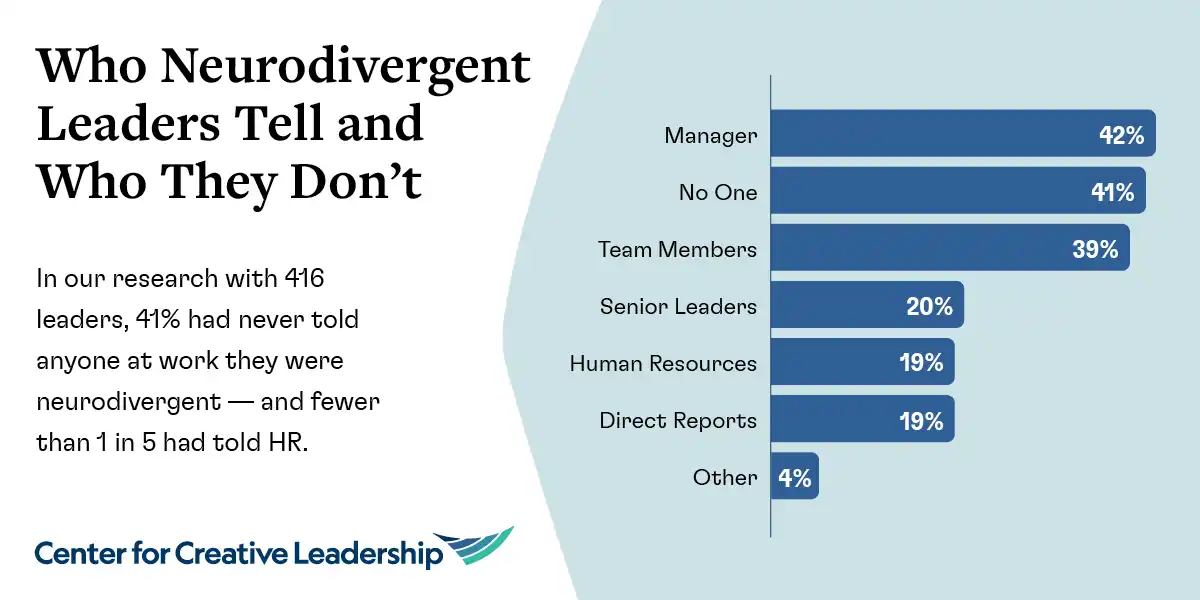
A groundbreaking study on neurodiversity in leadership has unveiled a stark reality: a significant portion of our nation’s leaders, while performing effectively, are largely invisible to the very systems designed to support and develop them. The research, conducted by the Center for Creative Leadership (CCL), surveyed 416 neurodivergent professionals across the United States and the United Kingdom, revealing that 41% have never disclosed their neurodivergent identity to anyone at work. This widespread hiddenness has profound implications for talent development, organizational inclusion, and the overall sustainability of leadership pipelines.
The findings challenge a common misconception that neurodivergent individuals are absent from leadership roles or lack interest in pursuing them. Instead, the data suggests a more nuanced truth: neurodivergent leaders are present across all levels and functions, often exceeding expectations and making substantial contributions. Their invisibility stems not from a lack of participation, but from a reluctance or inability to disclose their neurodivergent identity due to perceived risks, a lack of trust, and an organizational culture that may not signal acceptance of difference.
The Hidden Cost of Unseen Leadership
When neurodivergent leaders remain undisclosed, organizations pay a significant price. Decisions regarding leadership development, talent identification, and inclusion initiatives are often based on assumptions about what leadership "looks like" and how it manifests. Without recognizing the presence and experiences of neurodivergent leaders, these formal processes can inadvertently exclude a valuable segment of the workforce. This lack of representation means that aspiring neurodivergent leaders have fewer role models to emulate, potentially hindering their ability to envision and pursue their own leadership trajectories.
"Representation is therefore a developmental resource, not just a symbol," the CCL report emphasizes. Seeing individuals like oneself in leadership positions can provide crucial validation and illuminate attainable pathways to success. The absence of such representation can lead to a quiet erosion of confidence and a feeling of being an outlier, even among high-performing individuals.
Understanding Neurodiversity: A Spectrum of Cognitive Styles
Neurodiversity, at its core, acknowledges the natural variation in how individuals think, learn, and perceive the world. It is not a deficit but a fundamental aspect of human cognitive variation. Every workplace, by definition, is neurodiverse. Neurodivergent individuals are those whose cognitive processes differ from what is considered standard or neurotypical. This umbrella term encompasses a wide range of conditions, including but not limited to Attention-Deficit/Hyperactivity Disorder (ADHD), autism, dyslexia, dyspraxia, dyscalculia, Obsessive-Compulsive Disorder (OCD), and Tourette syndrome.
Estimates suggest that approximately 20% of the global workforce falls under the neurodivergent umbrella, making cognitive differences a core characteristic of any organizational population, not a marginal concern. Despite this prevalence, neurodivergent individuals often face underemployment and limited advancement opportunities. While autism has historically drawn significant attention, conditions like ADHD, dyslexia, and dyspraxia are more common and contribute a substantial portion of neurodivergent employees whose challenges may be less understood or acknowledged.
A critical aspect of neurodiversity is its inherent diversity. Diagnostic labels offer broad descriptions, but the lived experience of neurodivergence is highly individual. No two individuals with the same condition experience it identically, and many navigate multiple intersecting neurotypes. Furthermore, the timing of diagnosis varies greatly; many individuals discover their neurodivergence later in life, often in their late twenties or thirties, or may never receive a formal diagnosis. This means many leaders are navigating their professional journeys and leadership roles while simultaneously making sense of their own neurocognitive profiles.
The Disclosure Dilemma: Trust, Risk, and Organizational Culture

The decision to disclose neurodivergence is rarely a simple personal choice. It is deeply influenced by the perceived risks and rewards within an organization. The CCL research indicates that disclosure most frequently occurs through informal, trusted relationships, underscoring the importance of psychological safety and interpersonal trust. The data reveals that only 42% of neurodivergent professionals have informed their manager, and fewer than 1 in 5 have disclosed to human resources, despite HR’s role in formal accommodations and support.
This reluctance to disclose is a direct indicator of a culture that may not be perceived as safe or supportive for neurodivergent individuals. When organizational norms implicitly or explicitly favor neurotypical communication and interaction styles, the pressure to conform can be immense. This often leads to "masking" – the conscious or unconscious effort to suppress or conceal aspects of oneself to meet perceived workplace expectations.
Masking: The Hidden Burden of Leading Differently
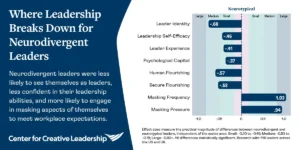
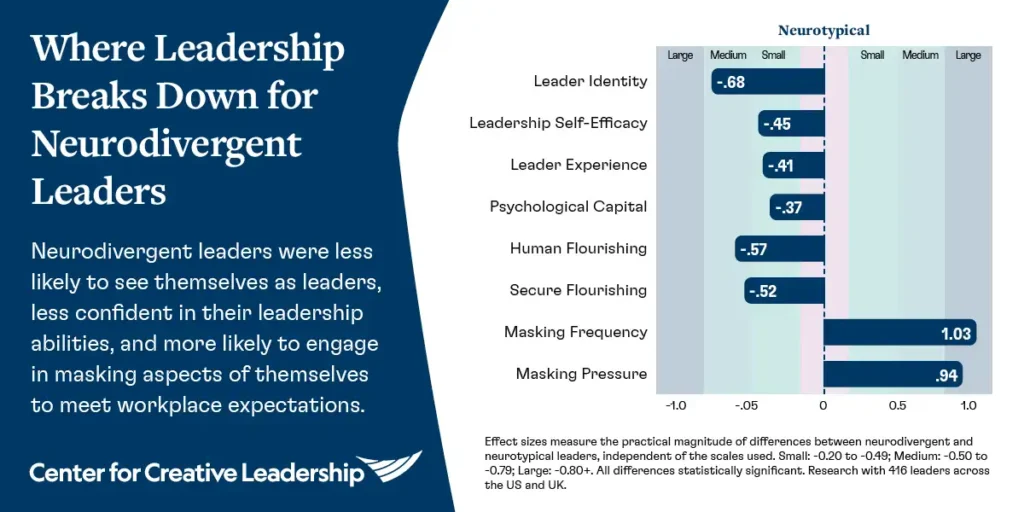
Masking emerged as a significant differentiator in the CCL study, with neurodivergent leaders reporting it as a routine part of their professional lives. This ongoing effort to present a "neurotypical" facade comes at a considerable cost, leading to lower employee well-being, diminished psychological resources, and increased risk of burnout.
"This is fundamentally a psychological safety issue," the report states. When leaders do not feel safe to lead authentically, they compensate by constantly monitoring their behavior, limiting their access to support, and expending valuable energy that could otherwise be directed towards innovation, problem-solving, and team development. High levels of masking signal that leadership environments may offer little room for cognitive diversity, a pattern observed across various leadership roles and responsibilities.
Impact on Leadership Identity and Confidence
The research also highlighted a concerning trend: neurodivergent leaders were less likely to see themselves as leaders and reported lower confidence in their abilities, even when performing effectively. This disconnect between capability and self-perception is deeply rooted in how leadership is recognized and reinforced within organizations.
Traditional markers of leadership often prioritize traits such as verbal fluency in group settings, comfort with unstructured social interactions, and overt self-promotion. Leaders who communicate or engage differently may not receive the affirming feedback, developmental opportunities, or sponsorship that their neurotypical counterparts receive, regardless of their impact. Over time, this can lead to a situation where leadership is something they do, but not something they fully claim.
The Call to Action: Redesigning Leadership for Inclusivity
The findings from the CCL study present a clear imperative for organizations to foster more neuroinclusive leadership cultures. This requires a fundamental shift in how leadership is defined, developed, and supported.
1. Audit and Expand Leadership Norms: Organizations must critically examine their existing leadership criteria and evaluation processes. This includes scrutinizing how high-potential individuals are identified, performance is assessed, and promotions are made. If these systems consistently favor style or visibility over demonstrable impact, they may be inadvertently selecting for familiarity rather than genuine capability. Expanding the definition of leadership to encompass diverse communication styles, problem-solving approaches, and forms of contribution is crucial.
2. Enhance Accessibility of Development Opportunities: Leadership development programs, coaching, mentoring, and stretch assignments should be made accessible to all employees, not just those who fit a perceived leadership prototype. Broadening access ensures that more individuals have the opportunity to build confidence through supported experiences, regardless of their neurotype.
3. Cultivate Psychological Safety: Creating psychologically safe environments is paramount. This involves consistent behaviors that clarify expectations, invite diverse contributions, acknowledge mistakes openly, and ensure that participation is not dictated by who speaks first or loudest. When leaders feel safe to be themselves, the need for masking diminishes, freeing up cognitive and emotional resources.
4. Develop Leaders for Neurodiverse Teams: Equipping leaders with the skills to effectively manage and lead across cognitive differences is essential. This includes providing training on giving clear and unambiguous feedback, structuring meetings intentionally, and recognizing the signs of masking or disengagement.
5. Foster Community and Connection: Employee resource groups (ERGs) and peer networks can provide invaluable spaces for neurodivergent leaders to share experiences, identify systemic barriers, and offer feedback to the organization. These communities also serve as a vital mechanism for understanding and addressing challenges that may not surface through formal channels.
6. Design for Sustainability: The long-term well-being and retention of capable leaders depend on organizational systems that support sustainable leadership. This involves designing work environments that accommodate a broad range of cognitive styles, offering clear agendas, structured feedback, and flexible participation formats. Measuring leadership experience, access to development, and progression over time, rather than solely focusing on headcount, can provide a more accurate picture of system sustainability.
The Strategic Advantage of Neuroinclusion
Embracing neuroinclusion is not merely a matter of corporate social responsibility; it is a strategic imperative for talent management and performance enhancement. Cognitively diverse teams are better equipped to approach complex problems from multiple angles, leading to more innovative and effective solutions. When individuals can contribute authentically, engagement and retention rates improve, as they expend less energy managing perceptions and more on meaningful work.
Organizations that foster neuroinclusive cultures build stronger capabilities in problem-solving, innovation, and overall productivity. In an era defined by uncertainty and rapid change, the ability to harness a wide spectrum of perspectives and cognitive styles is a significant strategic asset.
The current reality is that most leaders are already managing neurodiverse teams, whether they are aware of it or not. Therefore, neuroinclusive leadership is not a niche concern but a core competency for all leaders. By equipping leaders to recognize and effectively engage with cognitive differences, organizations make a high-leverage investment that can improve performance, reduce burnout, and strengthen the overall leadership pipeline.
Ultimately, leadership systems must be designed to identify, develop, and sustain talent in all its forms. By creating more neuroinclusive leadership environments, organizations can widen the path into leadership, identify more high-potential individuals, provide more meaningful development opportunities, and encourage more people to lead with their authentic strengths. This broader mix of leaders brings a more expansive range of perspectives, better prepared to navigate complexity, respond to change, and identify opportunities that others might miss. In a world demanding agility and resilience, this expanded capacity is an indispensable strategic advantage.